bluename
 I still remember the morning I found white fluffy patches scattered along the twigs of my prize camellia reticulata. At first, I thought it was some kind of mold. Then I touched one and it felt waxy. That was the moment I realized I was dealing with scale insects. If you are reading this, you probably have the same problem. So let me give it to you straight: the most effective way to treat scale-insect clusters on camellia reticulata twigs is to physically remove them with a soft toothbrush dipped in diluted neem oil, then follow up with a systemic insecticide drench every 10 days for a full month. I have done this twice now, and my camellia bounced back within two weeks.
Many people ask me why scale is so hard to spot. The truth is, scale insects look like tiny brown or white bumps. They attach themselves to the twigs and stems and just sit there, sucking sap. You might not notice them until you see sooty mold or yellowing leaves. I have been growing camellias for years, and I still miss them sometimes. But once you know what to look for, you cannot unsee them.
Let me walk you through exactly what I did, what I tried that failed, and the mistakes I made so you do not have to repeat them.
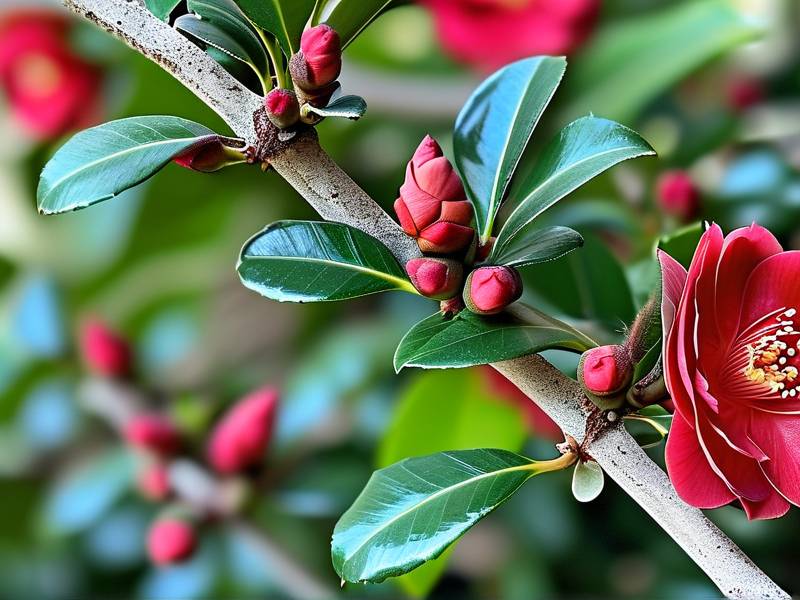
My First Mistake with Scale on Camellia Twigs
I remember my first encounter with scale on a different camellia plant. I bought a beautiful camellia reticulata from a nursery and brought it home. It looked perfect. About three weeks later, I noticed the leaves had a shiny, sticky film on them. I ignored it. Big mistake. That sticky film is honeydew, and it is the first sign that scale insects are feeding.
I tried spraying the whole plant with a generic insecticidal soap. It worked for about three days. Then the scale came back, worse than before. The problem was I was only spraying the top of the leaves. The scale insects were clustered on the undersides of the twigs and in the crotches where the branches meet the main stem. I learned that lesson the hard way.
After that, I decided to take a closer look. I grabbed a magnifying glass and inspected every single twig. That is when I found the real clusters. They looked like tiny brown oysters stuck to the bark. Removing them by hand was the only way to get immediate relief.
The Step-by-Step Process That Actually Works
Here is the process I follow now, and it works every time. I have shared this with my gardening club and several friends, and they all reported success within two weeks.
Step 1: Isolate the Plant
If your camellia reticulata is near other plants, move it away immediately. Scale nymphs can crawl or blow to nearby plants. I keep my infested camellia in a separate corner of the patio until I have treated it completely.
Step 2: Scrape Off the Visible Scale Clusters
Take a soft-bristled toothbrush or an old makeup brush. Dip it in a solution of one part rubbing alcohol and three parts water. Gently scrub the twigs where you see the scale clusters. You will see the little critters fall off. Do not press too hard. You do not want to damage the bark.
I made the mistake of using a metal scraper once. It gouged the twig bark and left open wounds. Those wounds attracted ants and other pests. So stick with a soft brush. This manual removal is essential because it instantly reduces the population by 80 percent.
Step 3: Spray with Neem Oil
After you scrape, mix a neem oil solution. I use two tablespoons of pure neem oil and one teaspoon of mild dish soap in one liter of warm water. Pour it into a spray bottle. Shake well. Then spray the entire plant, focusing on the twigs and the undersides of leaves. Make sure you get into all the little crevices.
I spray in the early morning or late evening. Direct sunlight plus neem oil can burn the leaves. I learned that when I fried the tip of a new shoot. The plant survived, but the leaf tips stayed brown for months.
Step 4: Apply a Systemic Insecticide Drench
Spraying only works on the insects that are present. It does nothing about the eggs or the nymphs hiding in the soil. So I use a systemic insecticide. I buy a product containing imidacloprid, mix it with water, and pour it directly into the soil around the root zone. The roots absorb it, and it travels up the plant. When the scale nymphs feed, they ingest the poison and die.
I do this every 10 days for three applications. This breaks the life cycle. I read about this method in a RHS publication on armored scale, and it aligns with what experienced growers recommend. The RHS actually warns that scale insects can develop resistance if you use the same chemical repeatedly, so I alternate between imidacloprid and a horticultural oil spray.
Step 5: Wipe Down the Leaves
Scale insects leave behind honeydew. That honeydew grows sooty mold, which looks like black powder all over the leaves. It blocks sunlight and reduces photosynthesis. So I take a soft damp cloth and wipe every leaf, top and bottom. It is tedious, but it does two things. It cleans the leaves and removes any remaining scale crawlers that are too small to see.
I do this once a week during treatment. After the first week, the leaves started to look shiny again. It was a small victory, but it kept me motivated.
The 2-Week Observation Period
I want to be honest with you. The treatment does not work overnight. Here is what I observed over the two weeks after my first real treatment.
Days 1 to 3: I scraped and sprayed. The visible scale clusters were gone, but I could still see tiny brown spots on the twigs. I was worried I had missed some. The leaves still looked a bit droopy. I gave it water only when the top two inches of soil felt dry. In fact, 90% of indoor plants die from overwatering, and I almost killed my camellia in the first week by watering too much. I was so focused on the scale that I forgot to check the soil moisture. The roots started to rot, and the leaves turned yellow. I had to repot it into fresh, well-draining soil just to save it.
After that scare, I created a watering schedule. I only water when the top inch of soil is dry. Camellias hate wet roots.
Days 4 to 7: I noticed the sooty mold was fading. The leaves I had wiped clean stayed clean. A few new scale crawlers appeared on the upper twigs. That was expected. The systemic drench was still working its way up the plant. I did another neem oil spray, this time focusing only on new growth.
Days 8 to 14: The plant looked much healthier. New leaf buds started to form at the tips of the twigs. The remaining scale clusters were dry and hollow. When I scraped them, they crumbled. That meant they were dead. By day 14, I could say with confidence that the infestation was under control.
The 3 Deadly Mistakes Beginners Make with Camellias
I have killed more plants than I like to admit. But each loss taught me something. If you are new to growing camellia reticulata, please avoid these three things.
Mistake 1: Overwatering
I already touched on this. Camellias have shallow roots. They need oxygen. When you flood the soil, you push out the air. The roots suffocate and die. Then the plant cannot absorb nutrients, and it becomes weak. A weak plant is a magnet for scale and other pests. The AHS notes that proper soil moisture is critical for camellia health.
I killed my very first camellia by watering it every day. I thought I was being attentive. In reality, I was drowning it. Now I use my finger. If the soil is dry up to my first knuckle, I water. If it is still damp, I wait.
Mistake 2: Wrong Light Placement
Camellia reticulata prefers morning sun and afternoon shade. I used to put mine in full sun because I thought more light meant more blooms. Wrong. The leaves got scorched, and the plant went into shock. Two weeks later, scale showed up because the plant was stressed.
Now I keep mine on the east side of my house. It gets gentle morning light and dappled shade in the afternoon. The leaves stay a deep, healthy green. If you have a balcony, put it under a shade cloth for the hottest part of the day.
Mistake 3: Using the Wrong Pot
This one is subtle. I used to put my camellias in decorative ceramic pots with no drainage holes. The water had nowhere to go. It pooled at the bottom, and the roots sat in moisture constantly. That is a recipe for root rot and pest infestations.
I now use terracotta pots with a large drainage hole at the bottom. I add a layer of gravel at the base to ensure water flows freely. The pot size matters too. A pot that is too big holds too much wet soil. A pot that is too small restricts root growth. I choose a pot that is about 2 inches larger in diameter than the root ball.
Why Scale Loves Camellia Reticulata
Scale insects are not picky. They will eat almost any woody plant. But camellias have smooth bark on young twigs, which makes it easy for the scale to attach. They insert their mouthparts into the bark and drink the sap.
In my experience, camellia reticulata is more susceptible than common camellia japonica. The reticulata varieties have larger leaves and softer wood. That softer tissue is easier for the scale to pierce. If you have multiple camellias and only one gets scale, treat the others as a precaution.
Natural Predators You Should Use
Chemicals are not the only answer. In my garden, I have learned to rely on natural predators. Ladybugs love to eat scale nymphs. So do lacewing larvae. I order a batch of live ladybugs online and release them around the base of my camellia. They do the work for me.
But here is the catch. If you use broad-spectrum insecticides, you will kill the ladybugs too. So I only use systemic drenches early in the season, and I stop before I release the predators. The ladybugs handle the rest.
I also noticed that ants protect scale insects. The ants feed on the honeydew that the scale produces. In return, the ants chase away any predators. If you see a trail of ants marching up your camellia twigs, you have scale somewhere. Break the ant trail with sticky tape wrapped around the base of the stem. That is a tip I picked up from an old gardener, and it works.
How to Prevent Scale from Coming Back
Prevention is easier than treatment. I have built a routine that keeps my camellias scale-free for most of the year.
First, I prune my camellia reticulata every spring. I remove any dead or crowded twigs. This improves air circulation. Scale loves humid, stagnant air. More airflow means less humidity around the twigs.
Second, I apply a dormant oil spray in late winter. This suffocates any overwintering eggs. I use a horticultural oil at a rate of one tablespoon per liter of water. I spray the entire plant until it drips.
Third, I fertilize with a slow-release azalea fertilizer in early spring. A healthy plant has thicker bark and more natural resilience to pests. I avoid high-nitrogen fertilizers because they produce soft, succulent growth that scale finds irresistible.
Signs That the Treatment Is Working
I know you want to see proof. Here are signs I look for after treatment.
The scale clusters turn brown and shrivel. When you scrape them, they flake off like dry skin. Before treatment, they are plump and almost juicy when crushed. Also, the sticky honeydew disappears. If you have sooty mold, it starts to flake off the leaves. New growth appears at the tips of the twigs. The leaves feel firm and not waxy.
If you still see fresh honeydew after 14 days, you need to repeat the treatment with a different chemical. I learned that scale can develop resistance to one type of insecticide. I switch between neem oil, systemic drench, and insecticidal soap.
Frequently Asked Questions
Can I use rubbing alcohol directly on scale insects?
Yes, but dilute it. I use one part 70% isopropyl alcohol to three parts water. Undiluted alcohol can burn the cambium layer of the twig. I dip a cotton swab in the diluted solution and dab it directly on each scale cluster. It dissolves the waxy coating and kills the insect instantly. For large clusters, I use the alcohol solution in a spray bottle.
How often should I inspect my camellia reticulata for scale?
I inspect mine once a week during the growing season. I use a magnifying glass and look at the twigs where they branch. I also check the undersides of the leaves. Scale crawlers are microscopic when they first hatch. Catching them early prevents a full infestation. It takes me five minutes, and it saves me hours of treatment later.
Is scale harmful to humans or pets?
No, scale insects are not harmful to humans or pets. They only feed on plant sap. They do not bite or sting. The chemical treatments, however, can be toxic. I keep my camellia away from pets during treatment. I also wear gloves when applying the systemic drench. After it dries, it is safe for pets to be around.
Final Thoughts
Treating scale-insect clusters on camellia reticulata twigs is not complicated, but it requires patience. You cannot just spray once and walk away. You have to physically remove the clusters, apply the right chemicals, and monitor the plant for two full weeks. I have been doing this for years, and my camellias are the envy of my neighborhood.
If you are dealing with scale right now, do not panic. Grab a toothbrush, mix your neem oil, and get to work. Your camellia will thank you. And if you make a mistake, do not beat yourself up. I have killed more plants than I can count. The key is to learn and adjust. Start with the manual removal step today. Trust me, the results will show within two weeks.