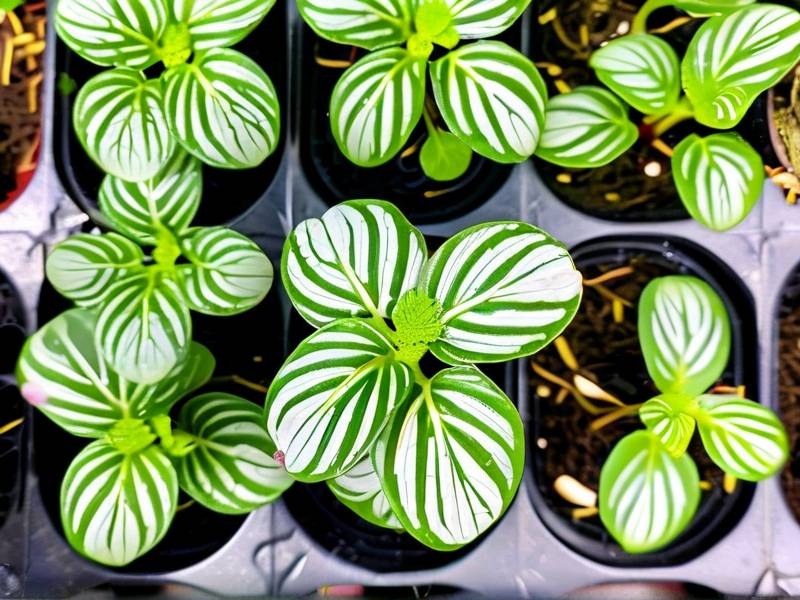
bluename
 How to Treat Thrips-Scarred Leaves on Maranta Fascinator
If your Maranta fascinator looks like someone took a fine needle to every leaf, you are almost certainly dealing with thrips. Don't panic. The good news is that thrips-scarred leaves on a Maranta fascinator are cosmetic damage, not a death sentence, and the plant can bounce back. The bad news is thrips are persistent little pests that will keep coming back if you don't break their life cycle. I have dealt with this exact mess on three different prayer plants, and I have killed more than one before I figured out what actually works.
Quick answer: You cannot "heal" the scars themselves. Damaged leaf tissue stays damaged. What you can do is stop the thrips from causing new damage, remove the worst leaves, and support the plant so it pushes out clean new growth. In my experience, you will see the first sign of improvement in about two weeks if you stay consistent.
What Thrips Damage Actually Looks Like on Maranta Fascinator
Thrips are tiny, slender insects, often pale yellow, brown, or black. They feed by piercing plant cells and sucking out the contents. On a Maranta fascinator, that feeding shows up as silvery or whitish streaks, often with tiny black specks nearby (that's their poop, sorry).
The leaves may also look dull, patchy, or slightly bronzed. New leaves can come out distorted or with brown edges.
I remember staring at my first affected Maranta and thinking it was a fungal issue. I sprayed it with everything I had. Nothing worked. Then I flipped a leaf over and saw tiny moving specks. That was my "aha" moment.
Thrips love the undersides of leaves. That's where they hide, lay eggs, and feed. If you only inspect the top, you will miss them every time.
The Three Beginner Mistakes That Make Thrips Worse
I made all three of these. You probably will too if nobody warns you.
Mistake 1: Overwatering While Treating Pests
Here's a blunt fact you need to hear: 90% of indoor plants die from overwatering. That includes Marantas. When a plant is stressed by thrips, it's tempting to baby it with extra water. Don't. Thrips don't care about moisture, but your Maranta's roots do. Soggy soil leads to root rot, which looks a lot like pest damage at first (yellowing, drooping, brown tips). You end up treating the wrong problem.
I killed my second Maranta this way. I thought it was thrips making it limp. It was root rot from my "helpful" extra watering.
Mistake 2: Putting It in the Wrong Light While It Recovers
Maranta fascinator likes bright, indirect light. Not direct sun. Not deep shade. When thrips hit, some growers move the plant to a dark corner to "rest" it. That's a mistake. Low light slows down new growth, which means the plant takes longer to outgrow the damage.
I tried the dark-corner approach once. My plant just sat there, sad and scarred, for weeks. Once I moved it back to a bright spot with a sheer curtain, new leaves started unfurling within ten days.
Mistake 3: Using the Wrong Pot or No Drainage
A pretty ceramic pot with no drainage hole is a death trap. Water pools at the bottom. Roots suffocate. Thrips or no thrips, your Maranta will decline. I now use only plastic nursery pots inside decorative covers. I take the inner pot out to water, let it drain completely, then put it back.
This one change has saved more of my plants than any pesticide.
My Two-Week Thrips Treatment Plan That Actually Worked
I am not a fan of complicated schedules. Here is what I did, step by step, over fourteen days.
Day 1: Isolate and Inspect
Move the affected Maranta away from all other plants. Thrips spread easily. I use a separate room or a bathroom with a closed door. Then inspect every leaf, especially undersides. Use a flashlight. The light catches their movement.
Day 2: Shower and Prune
Take the plant to a sink or shower. Gently rinse every leaf, top and bottom, with room-temperature water. This physically removes many thrips. Then prune the worst-scarred leaves. I know it hurts to cut leaves. Do it anyway. Those leaves are not coming back, and they give thrips places to hide.
I use clean, sharp scissors. I wipe them with rubbing alcohol between cuts.
Day 3: Apply Insecticidal Soap or Neem Oil
I alternate between insecticidal soap and neem oil. Both work on contact. Neither kills eggs. That's why you must reapply every five to seven days for at least three rounds.
Spray in the evening. Wet the undersides thoroughly. Let the plant dry in a shaded spot. Direct sun on wet leaves can burn them.
The RHS recommends repeated applications for thrips because their life cycle is fast—eggs to adults in as little as two weeks. Miss one round and you start over.
Day 5 and Day 10: Repeat Sprays
I set phone reminders. It's easy to forget. I also check for new silvery streaks. If I see fresh damage, I know I missed some thrips.
Day 14: Evaluate and Adjust
By day fourteen, I look for new leaves. Are they clean? If yes, I keep going for one more week just to be safe. If no, I switch products. Thrips can develop resistance to the same pesticide used over and over.
I also add a systemic granule to the soil if the infestation is stubborn. Systemic means the plant takes up the pesticide, and thrips die when they feed. It's slower but very effective. Just follow label directions carefully, especially if you have pets.
How to Support Recovery Without Making Things Worse
While you treat the pests, you also need to keep the plant alive. That means:
- Water only when the top inch of soil is dry. Stick your finger in. If it's damp, wait.
- Keep humidity moderate to high. Marantas love 50–60% humidity. I use a pebble tray or a small humidifier nearby.
- Avoid fertilizing heavily during treatment. A stressed plant can't use it. Wait until you see active new growth, then use a diluted liquid fertilizer at half strength.
- Wipe leaves weekly with a damp cloth. This removes dust and lets you spot new thrips early.
The AHS notes that healthy plants resist pests better, but no plant is immune. So think of this as recovery care, not just pest control.
What About Those Scars? Can They Ever Go Away?
No. Thrips-scarred leaves on a Maranta fascinator will never look normal again. The cells are dead. The leaf may continue to function for a while, but it will always have that silvery, patchy look.
Your goal is not to fix old leaves. Your goal is to grow new ones. Maranta fascinator grows slowly, maybe one new leaf every week or two in good conditions. So be patient. Over two to three months, you can gradually trim off the worst old leaves as new ones replace them.
I once spent a whole afternoon trying to "heal" scarred leaves with various sprays and leaf shines. Total waste. The plant doesn't care about how its leaves look. It cares about light, water, and not being eaten.
Long-Term Prevention for Thrips on Maranta Fascinator
Once you beat thrips, you don't want them back. Here's what I do now:
- Quarantine every new plant for two weeks before adding it to my collection. No exceptions.
- Inspect leaf undersides weekly. It takes thirty seconds per plant. Call it pest yoga.
- Avoid overcrowding. Good air circulation makes it harder for thrips to move from plant to plant.
- Keep sticky traps nearby. Yellow or blue sticky traps catch adult thrips. They won't solve an infestation alone, but they give you early warning.
- Shower your Maranta every month or two. A gentle rinse knocks off dust and any stray pests.
These habits have kept my current Maranta fascinator thrips-free for over a year. It now has about fifteen clean leaves. Two years ago, I would have thrown it out.
Common Questions I Get About Thrips-Scarred Maranta Leaves
Can I just cut off all the damaged leaves at once?
You can, but I don't recommend it. Marantas need leaves to photosynthesize. If you remove more than a third of the foliage, the plant struggles to recover. Remove the worst leaves first. Wait for new growth. Then remove more if needed.
Do I need to throw away the soil?
Not necessarily. Thrips can pupate in soil, but most species in indoor conditions stay on the leaves. If you are repotting anyway, go ahead and use fresh soil. Otherwise, you can keep the existing soil and just keep treating the plant. I have never thrown out soil because of thrips alone.
How long until I see new, clean leaves?
In my experience, two to four weeks if the plant was otherwise healthy. If your Maranta was already weak from overwatering or bad light, it can take longer. Fix those issues first. Then the new growth will come.