bluename
 How to Eliminate Powdery Mildew Infection on Passiflora Caerulea Foliage
Powdery mildew on Passiflora caerulea foliage is one of those problems that sneaks up on you. One week your blue passionflower looks fine, and the next thing you know, there's a dusting of white powder across the leaves like someone spilled flour in your garden. I've dealt with this exact issue on my own passionflower vine, and I can tell you right now: the fix isn't complicated, but timing matters. If you catch it early and stay consistent for about two weeks, you can eliminate powdery mildew infection on Passiflora caerulea foliage without reaching for harsh chemicals. That's the short answer. The longer version involves understanding why it happens, what you're doing wrong, and how to adjust your routine so it doesn't come back.
I killed my first passionflower vine because I panicked and did everything at once — fungicide, heavy pruning, repotting, the whole circus. The plant went into shock and never recovered. Since then, I've learned to slow down and work with the plant instead of against it. Let me walk you through everything I've figured out.
Why Passiflora Caerulea Gets Powdery Mildew in the First Place
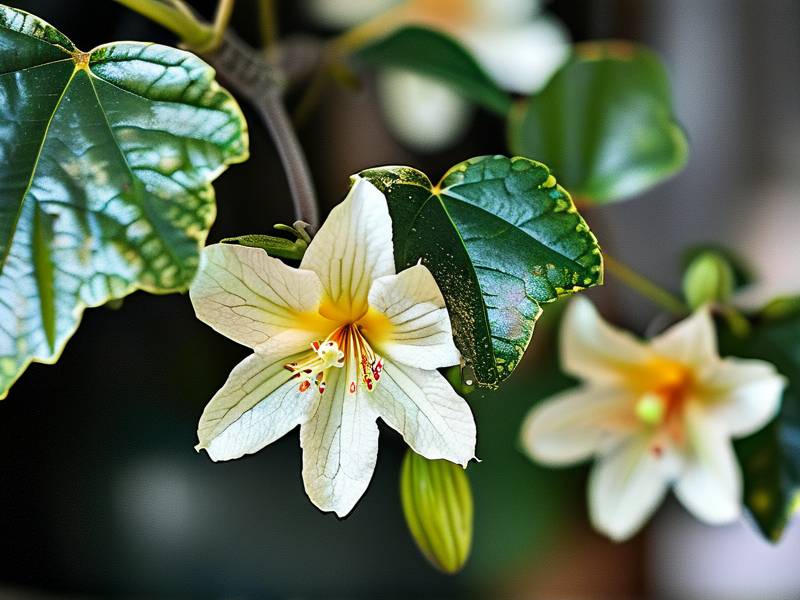
Passiflora caerulea, the blue passionflower, is a vigorous climber that a lot of home gardeners grow for those incredible alien-looking blooms. It's actually one of the easier passionflowers to grow indoors or in a container. But it's not bulletproof.
Powdery mildew is a fungal disease caused by various species in the Erysiphales order. Unlike downy mildew, which needs wet leaves to spread, powdery mildew actually thrives in dry conditions with high humidity around the plant canopy. That sounds contradictory, but it's true. The fungus doesn't need standing water on leaves. It needs warm days, cool nights, and poor air circulation.
This is why indoor passionflowers and those grown in greenhouses or against walls get hit hardest. The air around the leaves stays still. Humidity builds up. And boom — white patches start appearing.
The RHS notes that powdery mildew is one of the most common fungal problems on ornamental climbers in the UK, and their guidance applies just as well to growers in the US, Canada, and Australia. The AHS also emphasizes that prevention through good airflow and proper spacing is more effective than treating an active infection.
What Powdery Mildew Actually Looks Like on Passionflower Leaves
Before you start treating anything, make sure you're dealing with powdery mildew and not something else. Here's what I look for:
White or grayish powdery patches on the upper leaf surface. They start small, like a few specks, and spread outward. You can usually wipe some of it off with your finger, but it comes back.
Yellowing underneath the white patches. The fungus is feeding on the leaf tissue, so the area beneath the powder turns pale green, then yellow.
Curling or distortion of new growth. If the infection is severe, new leaves come out twisted and stunted.
Leaf drop in advanced stages. I've seen this happen when I ignored the problem for three weeks. Don't be like old me.
The powder usually shows up first on the older leaves near the base of the vine, then works its way up. That's because airflow is worst down there.
My Two-Week Treatment Plan That Actually Worked
I'm going to give you the exact steps I followed. I tracked this over 14 days and took notes, so this isn't guesswork.
Day 1: Isolate and Prune
First thing I did was move the plant away from my other indoor plants. Powdery mildew spores travel through the air, and I wasn't about to lose my monstera or my pothos.
Then I grabbed clean scissors and removed every leaf that had visible white patches. I didn't compost them. I bagged them and threw them in the trash. Spores can survive in compost piles, and I wasn't taking chances.
I also thinned out the interior of the vine. Passiflora caerulea grows dense fast. If you don't open it up, air can't move through it. I removed maybe 20% of the inner growth. Just enough to let light and air penetrate.
Day 1 Afternoon: Apply a DIY Spray
I mixed one tablespoon of baking soda with one teaspoon of liquid dish soap in a gallon of water. That's it. No fancy fungicide. I sprayed every surface of every remaining leaf, top and bottom, until it was dripping.
Baking soda changes the pH on the leaf surface, which makes it harder for the fungus to establish. The soap helps it stick.
I did this in the morning so the leaves had time to dry before evening. You don't want wet leaves sitting overnight.
Days 2-3: Improve Airflow
I set up a small oscillating fan near the plant, running on low for about four hours a day. Not directly blasting the leaves, just moving air around them. This alone made a visible difference. The white patches stopped spreading by day three.
I also moved the plant to a spot with better natural ventilation. It was previously jammed in a corner between a wall and a bookshelf. Bad idea. Now it sits near a window that gets good cross-breeze when open.
Days 4-7: Repeat the Spray Every Other Day
I sprayed the baking soda solution on days 4 and 6. By day 7, the existing white patches had dried up and turned brownish. No new patches appeared.
I also checked the undersides of leaves daily. Powdery mildew can hide there too, though it prefers the top surface.
Days 8-14: Maintenance and Observation
I stopped spraying on day 8 because the infection looked dead. But I kept the fan running and continued checking leaves every morning.
By day 10, the plant was pushing out new growth. The new leaves were clean, no white powder.
By day 14, I was confident the infection was gone. No new spots for a full week. The vine looked healthier than it had in months.
One thing I noticed: the leaves I had pruned on day 1 were starting to regrow. Passiflora caerulea is a fast grower when it's happy.
The Three Beginner Mistakes That Cause This Problem
I've made all three of these. That's how I know they're the real culprits.
Mistake 1: Overwatering
Here's a stat that should be on every plant tag: 90% of indoor plants die from overwatering. I'm not exaggerating. I've killed more plants from being too generous with the watering can than from neglect.
Overwatering doesn't just cause root rot. It creates a humid microclimate around the plant. The soil stays wet. Moisture evaporates into the air around the leaves. Powdery mildew loves that.
Passiflora caerulea wants well-draining soil. Let the top inch or two dry out between waterings. Stick your finger in the soil. If it feels moist, wait.
Mistake 2: Wrong Light
I used to think passionflowers wanted full shade indoors. Wrong. They want bright, indirect light. A south or west-facing window is ideal in most climates.
If the plant doesn't get enough light, it gets weak. Weak plants are more susceptible to fungal infections. It's that simple.
But too much direct afternoon sun in a hot window can scorch the leaves. Scorched leaves have damaged tissue, which is basically an open door for mildew.
Mistake 3: The Wrong Pot
I once planted a passionflower in a decorative pot with no drainage holes. I thought I was being careful with watering. I wasn't. Water pooled at the bottom, roots sat in it, and the plant was miserable.
Always use a pot with drainage holes. Terra cotta is great because it wicks moisture away from the soil. Plastic works too, but you need to be more careful with watering.
Also, don't go too big. A pot that's way oversized holds more soil than the roots can use, and that excess soil stays wet. Match the pot to the root ball.
Watering Passiflora Caerulea Without Triggering Mildew
Water at the base of the plant. Not on the leaves. I know it's tempting to just spray everything, but wet foliage is an invitation for problems.
Water deeply but less frequently. I water my passionflower about once every seven to ten days in summer, less in winter. When I water, I soak the soil until it runs out the drainage holes, then I don't water again until the top inch is dry.
Use room temperature water. Cold water can shock the roots.
If you're in a humid climate, consider a dehumidifier near the plant. I run one in my basement grow area during summer, and it's made a huge difference for all my tropicals.
Soil and Repotting for Long-Term Health
Passiflora caerulea isn't picky about soil as long as it drains well. I use a mix of two parts potting soil, one part perlite, and one part coco coir. That gives me moisture retention without waterlogging.
Repot every one to two years in spring. If the roots are circling the bottom of the pot, it's time.
When you repot, shake off as much old soil as you can without damaging the roots. Check for rot. If roots are brown and mushy, trim them with sterilized scissors.
Fertilizing Without Making Things Worse
I feed my passionflower with a diluted liquid fertilizer every two weeks during the growing season. Half-strength is plenty.
Don't fertilize in winter. The plant is resting. Fertilizer just builds up in the soil and causes problems.
Don't fertilize a plant that's actively fighting powdery mildew. Stressed plants can't handle the nutrient boost, and excess nitrogen actually promotes fungal growth by encouraging soft, sappy new growth.
Seasonal Care to Prevent Powdery Mildew
Spring: This is when I do my major pruning. I cut back any dead or weak growth and thin out the vine to improve airflow. I also repot if needed and start fertilizing.
Summer: Watch for heat stress. If temperatures climb above 85°F, I move the plant away from the window to avoid scorching. I keep the fan running and check leaves weekly.
Fall: I reduce watering and stop fertilizing by mid-fall. I clean up any fallen leaves around the base of the plant. Spores can overwinter in debris.
Winter: Indoors, I keep the plant in a cool room with bright light. I water sparingly, maybe once every two to three weeks. No fertilizer. If the air is dry from heating, I run a small humidifier nearby but keep it pointed away from the leaves.
Common Questions I Get About This
Can I use neem oil instead of baking soda?
Yes, and I've tried it. Neem oil works well for powdery mildew. Mix it according to the label and spray in the evening to avoid leaf burn. I just prefer baking soda because it's cheaper and I always have it.
Will powdery mildew kill my passionflower?
Not usually, unless you ignore it for months. It weakens the plant and makes it ugly, but it's rarely fatal on its own. The bigger risk is that a weakened plant becomes vulnerable to other problems.
Should I cut off all the affected leaves?
Just the ones with visible infection. Don't strip the plant bare. It needs leaves to photosynthesize. Prune selectively and let the plant recover.
A Few Final Thoughts
I've been growing Passiflora caerulea for years now, and I still get powdery mildew occasionally. It happens. The key is catching it early and not freaking out. Two weeks of consistent care, better airflow, and smarter watering will clear it up almost every time. Your passionflower is tougher than you think. Just give it what it needs and stay patient.