bluename
 How to Treat Botrytis Flower Blight on Camellia Sasanqua Buds
If your camellia sasanqua buds are turning brown, mushy, and dropping before they ever open, botrytis flower blight is almost certainly the culprit. I know how frustrating it is because I lost an entire autumn bloom season on a ten-year-old 'Yuletide' shrub before I figured out what was happening. The short answer: remove every affected bud and flower immediately, stop overhead watering, improve airflow around the shrub, and apply a copper-based fungicide on a seven-day schedule until new buds open cleanly. That routine turned my plants around in about two weeks.
Let me walk you through exactly what I did, what I got wrong first, and what actually worked.

What Botrytis Flower Blight Actually Does to Sasanqua Buds
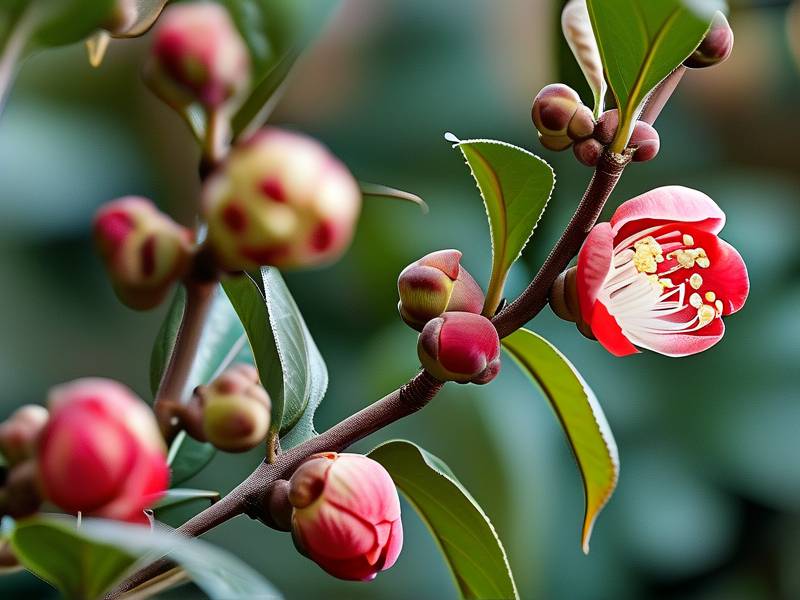
Botrytis cinerea is a fungal pathogen that shows up when cool, wet conditions hang around too long. Sasanqua camellias bloom in fall and early winter, which is exactly when humidity spikes and temperatures drop. Bad combination.
The first sign is usually a small brown spot on the petal edge or the base of the bud. Within a day or two that spot turns into a fuzzy gray-brown mess. You will see the classic gray mold if you look closely — that fuzzy coating is the spore mass.
The bud either rots on the stem or drops off entirely. Sometimes the fungus moves down into the stem tissue and you get dieback.
Most people miss the early stage because sasanqua buds are tight and you do not notice one browning among twenty healthy ones. By the time you see five or six ruined buds, the spores have already spread.
Why This Happens More Often Than You Think
Botrytis needs three things: moisture, moderate temperatures, and poor airflow.
Fall weather delivers the first two for free. The third is on you.
I used to plant my sasanquas close together because I wanted a dense hedge look. Big mistake. Air could not move through the shrubs at all. After a rainy week, every bud on the interior branches was toast.
The RHS notes that botrytis is one of the most common fungal problems in home gardens, especially when plants are overcrowded or watered from above. They are not wrong.
The AHS also points out that camellias in particular are vulnerable during their bloom period because the flowers stay on the plant for weeks, giving the fungus plenty of time to establish.
Step-by-Step Treatment That Worked for Me
Here is the exact sequence I followed after doing way too much reading and a few frustrating trial-and-error rounds.
First, grab a pair of clean pruning shears and a paper bag. Not plastic — paper. You want the infected material to dry out, not stew in a plastic bag on your way to the bin.
Snip off every bud and flower that shows any sign of browning or fuzz. Go further than you think you need to. If a bud looks slightly off-color, take it. Botrytis spreads fast and you will regret being conservative.
Cut back to healthy green tissue on the stem if you see dieback. Wipe your shears with rubbing alcohol between cuts so you are not spreading spores from one branch to another.
Second, clean up the ground. Fallen buds and petals around the base of the shrub are a spore reservoir. Rake them up and dispose of them. Do not compost them. Home compost piles rarely get hot enough to kill botrytis spores.
Third, switch your watering method. If you are using a sprinkler or watering from above, stop. Water at the base of the plant only. Keep the foliage and buds dry. This single change made the biggest difference in my garden.
Fourth, thin out the canopy if it is dense. I removed maybe fifteen percent of the interior branches on my worst-affected sasanqua. It looked a little sparse for a month. Then it filled back in and the airflow improvement was obvious.
Fifth, apply a copper-based fungicide. I used a copper octanoate spray, which is approved for organic gardening in most areas. Spray in the early morning on a dry day. Cover the buds, stems, and surrounding foliage.
Repeat every seven to ten days. I did three applications over two weeks and saw new buds open without any sign of blight.
What I Observed Over Two Weeks
Day one through three: I removed about thirty affected buds from three shrubs. It felt like I was stripping the plants bare.
Day four through seven: A few more buds showed browning. I removed those too. The copper spray went on at day three and again at day seven.
Day eight through ten: New bud development started on the healthiest shrub. No new blight spots on those buds.
Day eleven through fourteen: The second shrub pushed out clean flowers. The third one, which had the worst infection, still had a couple of spots but nothing like before. By day fourteen I went almost forty-eight hours without finding a new infected bud.
That two-week window is realistic. Do not expect overnight results. Botrytis is a marathon, not a sprint.
Three Mistakes That Made Everything Worse
I made all three of these before I got smart. Learn from my pain.
Overwatering
This is the big one. 90% of indoor plants die from overwatering. That number applies outdoors too when you are dealing with container camellias or freshly planted shrubs. Sasanquas hate wet feet and wet foliage.
I used to water on a fixed schedule. Every Tuesday and Friday, no matter what. That is a terrible idea for camellias. They need the top inch or two of soil to dry out between waterings.
Now I stick my finger in the soil. If it is damp two inches down, I skip watering. Simple.
The whole "water more to help it recover" instinct is wrong when you are dealing with fungal disease.
Light Placement Errors
I had one sasanqua in a spot that got morning shade and afternoon sun. Sounds fine, right? The problem was the dense shrub next to it blocked airflow from the east. The morning dew never dried off the buds.
Botrytis loves that. Wet buds that stay wet for hours.
Move potted camellias to a spot with morning sun and good air movement. If they are in the ground, prune back neighboring plants that block airflow. I had to cut back a loropetalum that was crowding one of my sasanquas and the difference was night and day.
Wrong Container
I tried growing a sasanqua in a glazed ceramic pot with one tiny drainage hole. Every time it rained, water sat in the bottom of that pot for days. The roots stayed wet. The buds rotted.
Terracotta or unglazed ceramic is better for camellias in containers because it breathes. Make sure there are multiple drainage holes. And use a potting mix that drains fast — I mix in about thirty percent perlite by volume.
If you are stuck with a decorative pot that has poor drainage, use it as a cachepot. Keep the actual growing container inside it and empty the cachepot after every rain.
What About Prevention for Next Season
Once you get through the current outbreak, think ahead. Botrytis spores overwinter in plant debris and in the soil surface. They will be back if you give them the same conditions.
Clean up all fallen leaves and petals in late fall. Do not leave them on the ground.
Space your camellias properly. If you are planting a hedge, leave at least three feet between sasanqua varieties that have a spreading habit. They will fill in, but they will also have airflow.
Water at the base. Always. Drip irrigation or a soaker hose is ideal.
Avoid high-nitrogen fertilizer in late summer and fall. Soft, lush growth is more susceptible to botrytis. I switched to a low-nitrogen, phosphorus-heavy fertilizer in September and saw firmer buds as a result.
If you have had severe botrytis in previous years, start a preventive copper spray program when buds first begin to swell in early fall. Spray every two weeks until flowers open.
Frequently Asked Questions
Can I save buds that already have botrytis?
No. Once the fuzzy gray mold is visible, that bud is done. Remove it immediately. The goal is protecting the buds that have not been infected yet.
Does botrytis kill the whole camellia?
Usually not. It damages flowers and buds, and sometimes causes stem dieback, but healthy sasanqua shrubs can survive a botrytis outbreak. The key is acting fast and correcting the growing conditions.
Is there a homemade spray that works?
Some gardeners use a baking soda solution — one tablespoon of baking soda, one teaspoon of liquid soap, and one gallon of water. It can help slightly by changing the pH on the leaf surface, but it is not as effective as copper fungicide for an active infection. I tried it and honestly it did not do much once the blight was established. Copper spray is worth the investment.
The Bottom Line
Botrytis flower blight on camellia sasanqua buds is a moisture and airflow problem more than anything else. You cannot control the rain, but you can control how you water, how you space your plants, and how quickly you remove infected material. Fix those three things, add a copper fungicide if the infection is active, and you will see clean buds again within a couple of weeks. I have been through it, and I promise it is fixable with patience and a good pair of shears.