bluename
 How to Eliminate Whitefly Nymphs Under Peperomia Obtusifolia Leaves
If you've ever flipped over a peperomia obtusifolia leaf and seen what looks like tiny specks of dandruff that move — congratulations, you've met whitefly nymphs. Those flat, translucent, almost scale-like little bugs cluster on the undersides of leaves and suck the sap out of your plant while you're busy admiring its glossy foliage. The fastest way to eliminate them is a three-part routine: physically remove the nymphs with a damp cloth or cotton swab, spray the leaf undersides with insecticidal soap or neem oil every 5 to 7 days, and isolate the plant so the adults can't keep laying eggs on your other houseplants. I've done this exact routine twice, and the second time it took 14 days to fully clear the infestation. Here's everything I learned, including the mistakes that made round one drag on for almost two months.
Why Whiteflies Love Peperomia Obtusifolia (And Why You Probably Missed Them)
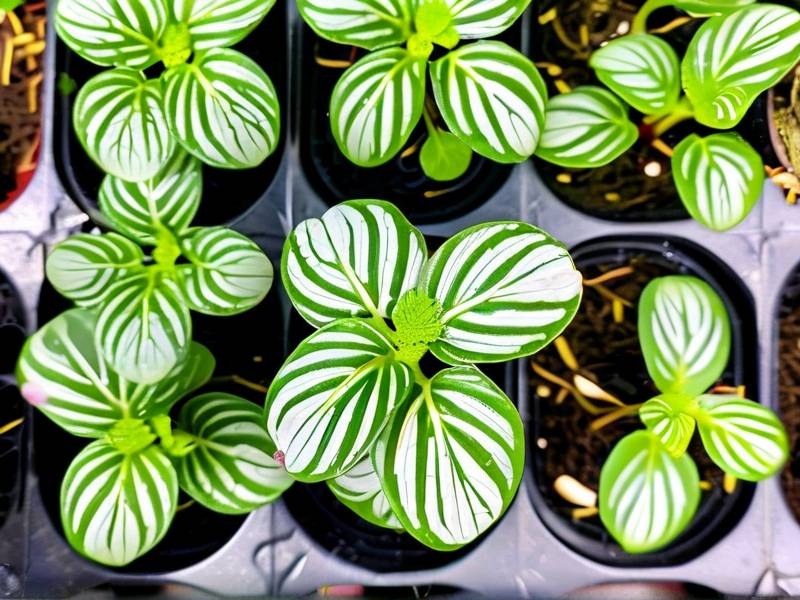
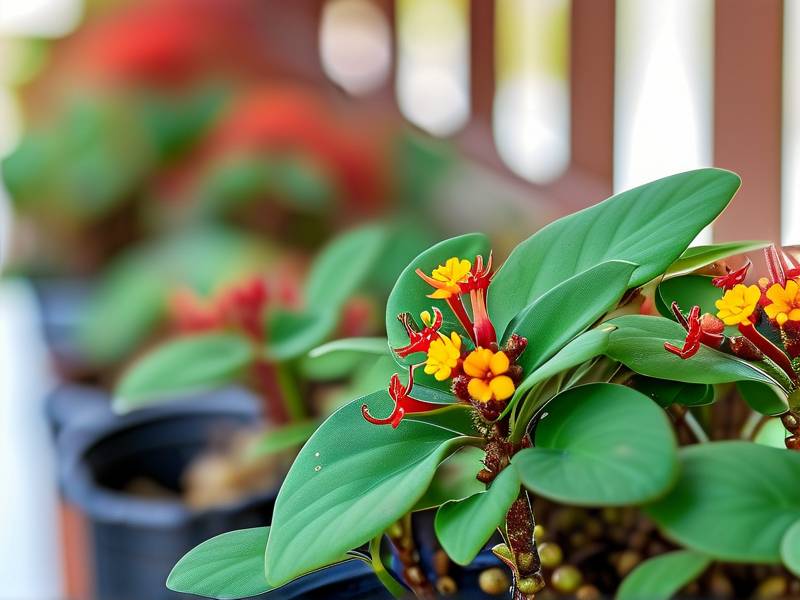
Peperomia obtusifolia, the baby rubber plant, has thick, waxy, spoon-shaped leaves. That waxy surface is exactly why whitefly nymphs thrive there. The adults lay eggs in clusters on the underside, and when the eggs hatch, the nymphs settle down, flatten themselves against the leaf, and basically stop moving. That's the key thing people miss.
A nymph doesn't crawl around like an aphid. It plants itself, loses its legs after the first instar, and just sits there feeding. So if you're scanning for movement, you'll miss it. You're not looking for bugs scurrying — you're looking for pale, oval, slightly translucent discs on the underside of leaves.
The other reason they go unnoticed is that peperomia leaves are naturally a bit matte or dark on the reverse side, depending on the variety. Whitefly nymphs blend right in.
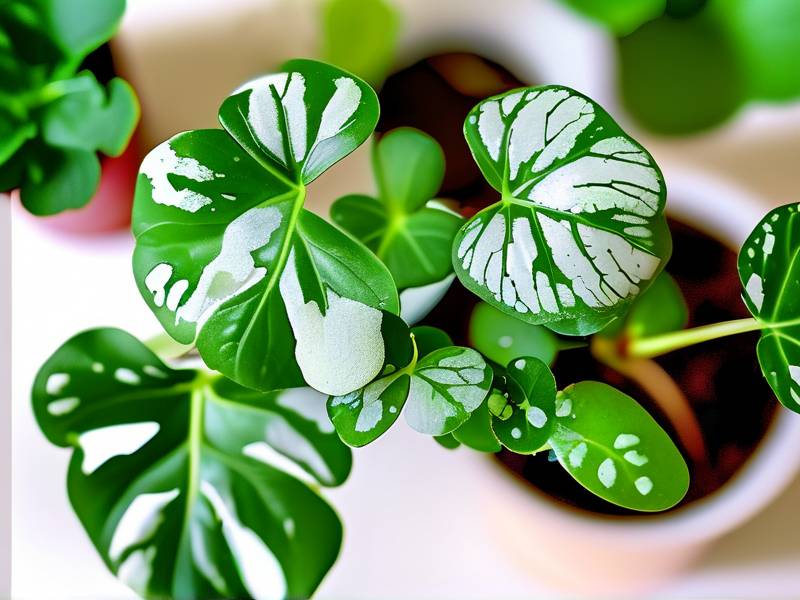
I'll be honest, my first infestation was on a variegated peperomia I bought from a big-box store. I checked the top of the leaves, saw nothing, brought it home, and three weeks later every new leaf was sticky and stunted. That sticky stuff is honeydew, the sugary waste whitefly nymphs excrete. If your peperomia leaves feel tacky, that's your alarm bell.
Step 1: Confirm You're Actually Dealing With Whitefly Nymphs
Before you spray anything, get a clear look. Take the plant to a bright window or use your phone flashlight at an angle across the leaf underside. Nymphs look like tiny flat ovals, roughly the size of a pinhead or smaller, pale yellow to translucent. Adults look like tiny white moths that flutter up when you jostle the plant.
Sooty mold is another confirmation sign. It's a black, powdery fungus that grows on honeydew. If the honeydew is there, mold usually follows.
RHS notes that whitefly populations explode fastest in warm, still indoor air, which is basically every living room in winter with the heat on. That matches what I saw — my infestation got dramatically worse in January, not summer.
Step 2: Isolate the Plant Immediately (I Learned This the Hard Way)
The single biggest mistake I made the first time was leaving the infested peperomia next to my other plants because "it didn't look that bad yet."
Within ten days, my pothos and my string of hearts both had adults fluttering around them. Whitefly adults fly. They will hop from plant to plant in a matter of hours.
So do this first, before any treatment: move the peperomia at least six feet away from every other plant, ideally into a separate room or bathroom with a door you can close. Check every neighboring plant's leaf undersides too, because you may already have a second infestation brewing.
Step 3: Physically Remove the Nymphs First
This step matters more than people think. Spraying without wiping just knocks some nymphs loose while others keep feeding under a protective layer of honeydew.
Here's what I do. I dampen a soft microfiber cloth or a cotton round with room-temperature water, then gently wipe the underside of every single leaf. Wipe from the stem outward, toward the leaf tip, so you're not pushing debris into the leaf axils where it'll rot.
For nymphs tucked tightly near the leaf base or the stem, I use a cotton swab dipped in a little diluted isopropyl alcohol and dab them off individually. It's tedious. I won't pretend otherwise. But it removes the waxy coating that protects nymphs from sprays, and it lets the next treatment actually penetrate.
I did this wiping every three days during my two-week treatment window, and by day six the leaf undersides looked dramatically cleaner.
Step 4: Spray With Insecticidal Soap or Neem Oil (Every 5 to 7 Days)
After wiping, I spray. I alternate between insecticidal soap and diluted neem oil, mostly because I've read that whiteflies can build tolerance to a single product if you use it repeatedly without rotation.
Mix per label instructions. Spray the undersides of leaves thoroughly, but don't soak the soil. I also spray the stems and the top of the soil surface lightly, because adults and eggs can hide there.
The timing matters. You need to reapply every 5 to 7 days because the spray kills nymphs and adults but not eggs. So you're catching the newly hatched nymphs before they settle and harden. Missing a spray by even three days lets a new generation start.
After my first spray, I checked 24 hours later and saw dead nymphs — they turn brownish and dry-looking. Live ones stay pale and plump. That contrast is actually a useful way to check if your spray is working.
Step 5: The Two-Week Observation Log (What Actually Happened)
I tracked this carefully the second time around, and here's the honest timeline.
Day 1: Wiped every leaf underside. Removed dozens of nymphs. Sprayed with insecticidal soap.
Day 3: Wiped again. Saw fewer adults flying when I jostled the plant.
Day 5: Second spray. Noticed some new tiny nymphs near the leaf base, so I did an extra alcohol swab on those specific spots.
Day 7: Wiped. Honeydew was noticeably reduced. Leaves felt less sticky.
Day 10: Third spray. I saw maybe two adults total. No visible new nymphs.
Day 12: Wiped and found no nymphs. I kept checking every day.
Day 14: Final check with a flashlight on all 18 leaves. No nymphs, no adults, no honeydew. I waited another week before moving the plant back with the others, just to be safe.
The key lesson: two weeks is realistic if you're consistent. My first attempt took almost eight weeks because I skipped wiping, missed sprays, and left the plant next to others. Consistency beats intensity here.
The Three Beginner Mistakes That Keep Whiteflies Coming Back
These are the same three traps I see people fall into with almost every houseplant pest, and they're worth spelling out because they affect how fast you clear whiteflies.
Mistake 1: Overwatering
This is the big one. 90% of indoor plants die from overwatering. That's not an exaggeration — it's practically a rule of thumb in the houseplant community. Overwatered plants sit in soggy soil, their roots suffocate, and the plant becomes stressed. Stressed plants release different chemical signals and have weaker natural defenses, and pests like whitefly find them easier targets.
Peperomia obtusifolia is a semi-succulent. It stores water in its thick leaves and stems. It wants the soil to dry out between waterings. I water mine every 10 to 14 days in winter and roughly every 7 to 10 days in summer, and I always check the top inch or two of soil with my finger first. If it's even slightly damp, I wait.
Mistake 2: Wrong Light
Whiteflies are drawn to stressed plants, and light stress is real. Peperomia obtusifolia wants bright, indirect light. Not direct afternoon sun, which scorches the leaves, and not deep shade, which makes it leggy and weak.
I once put mine on a south-facing windowsill in July thinking "more sun equals happier plant." By August the leaves had bleached patches and the whiteflies had multiplied dramatically. Stressed plant, happy pests. Now it sits about three feet back from an east-facing window, and it's thriving.
Mistake 3: Wrong Pot
Drainage is not optional. I've killed two peperomias by leaving them in decorative pots with no drainage holes. Water pools at the bottom, roots rot, the plant weakens, and suddenly every pest in the building finds it.
Use a pot with at least one drainage hole. Terra cotta works beautifully for peperomia because it wicks excess moisture. And size matters — a pot that's too big holds too much wet soil around the roots. Go one size up at most when repotting.
A note from the American Horticultural Society: proper potting and drainage are foundational to pest prevention, not just plant health. It sounds obvious, but I ignored it for years.
What About Heavy Infestations?
If half the leaves are covered in nymphs and the plant is dropping leaves, you may need to go nuclear. That means removing the worst-affected leaves completely, treating with a stronger product like a pyrethrin-based spray, and repeating every 4 to 5 days for three weeks.
I did this once on a rescue peperomia. It lost about 40% of its leaves. It looked terrible for six weeks. But it came back with new growth, and the whiteflies never returned because I stayed on the spray schedule and kept it isolated the entire time.
Don't be afraid to prune hard. Peperomia obtusifolia is forgiving and puts out new leaves from the stem nodes.
Preventing Whiteflies From Coming Back
Once you've cleared them, a few habits keep them away.
Check every new plant before it enters your collection. Quarantine it for two weeks in a separate room. I now do this with every single purchase, no exceptions, because I got burned twice.
Wipe leaf undersides every couple of weeks with a damp cloth as part of routine care. It takes two minutes and lets you spot problems early.
Keep air moving. A small fan on low, pointed near but not directly at your plants, discourages whiteflies because they dislike turbulent air.
And keep your plant healthy. Healthy peperomia, watered correctly, in the right light, in a draining pot, resists pests far better than a struggling one.
Common Questions About Whitefly Nymphs on Peperomia
Can I just use water to get rid of whitefly nymphs?
Water alone knocks off adults and some nymphs, but it won't penetrate the waxy layer protecting settled nymphs. You need the wiping plus a soap or oil spray combo to actually break the cycle.
How long until I know the infestation is gone for good?
Give it a full 14 days of consistent treatment, then keep checking for another week. If you see zero nymphs and zero adults for seven straight days after your last spray, you're in good shape.
Do whitefly nymphs bite humans or pets?
No. Whiteflies and their nymphs feed only on plant sap. They're harmless to people and pets, just destructive to your plants.
It takes patience, and honestly, the first round usually doesn't go perfectly. But if you isolate, wipe, spray on schedule, and fix the underlying care issues, whitefly nymphs don't stand a chance against your peperomia.