bluename
 I’ve killed more jasmine sambac plants than I care to admit. The culprit was almost always the same: aphid colonies hiding on tender shoot tips, and my clumsy response to them. If you see curling, sticky leaves, or a line of ants marching up your stem, you have aphids. Here is the direct answer: physically remove them with a sharp spray of water, then apply a dilute dish soap solution (1 teaspoon per liter) to the tender tips every 3 days for 2 weeks. That’s it. Don’t reach for harsh chemicals yet. 90% of indoor plants die from overwatering, and that panic-fueled spraying often does more harm than the bugs themselves. Stick with me. I’ll share the exact routine I use now, the mistakes that cost me three healthy plants, and the two-week timeline you need to follow.
Many gardeners, especially in the US, Canada, the UK, and Australia, treat jasmine sambac as a precious tropical gem. They coddle it. They overwater it. Then they wonder why the new growth looks twisted. I used to think aphids just appeared overnight. In truth, they were always there. They hide on the underside of new leaves. They breed fast. One female can produce dozens of nymphs in a week without mating. So tender shoot tips are basically an all-you-can-eat buffet.
Let me walk you through my current process. It took me years to refine this. I hope it saves you the same heartbreak.
Why Aphids Love Tender Shoot Tips
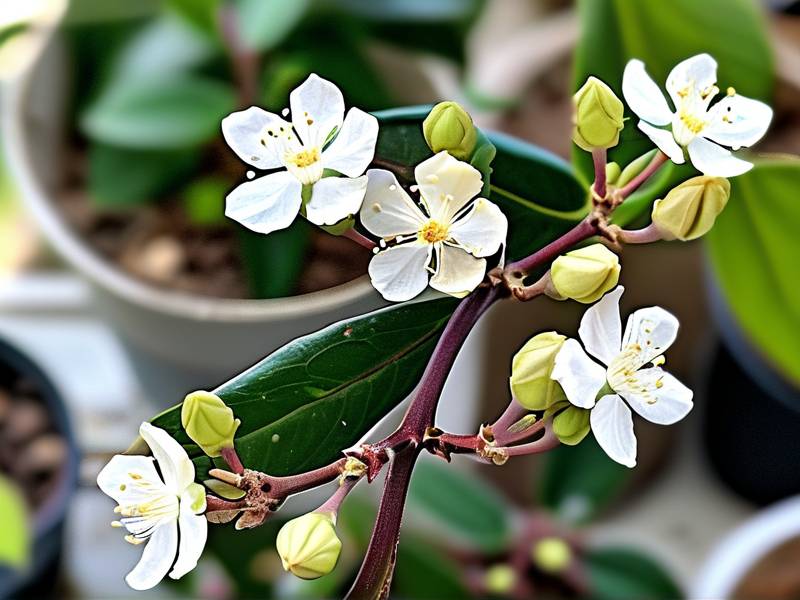
Jasmine sambac puts out soft, succulent growth in warm weather. Aphids pierce that tissue and suck out the sugars. The plant responds by curling the leaf around the insect. That creates a perfect shelter. You miss it until the colony explodes. I check my plants every single morning now. Coffee in one hand, magnifying glass in the other. It sounds obsessive. But catching them early saves you a two-week battle.
You’ll notice the damage first. New leaves look wrinkled. They might feel sticky. That stickiness is honeydew, aphid waste. If you see black sooty mold growing on that sticky film, you have a mature colony. At this point, the shoot tip might look deformed. Don’t panic. You can still save it.
My Three Biggest Mistakes (Learn From My Failures)
I want you to know that my green thumb status didn’t come easy. I killed my first jasmine sambac through sheer neglect of the basics.
Mistake 1: Watering Like a Maniac (Overwatering) I treated my jasmine like a swamp plant. Every day, I poured water. The roots sat in soggy soil. That stressed the plant. Stressed plants produce more amino acids in their sap. That attracts aphids. Seriously. Healthy plants are less appealing to pests. Once I switched to watering only when the top 2 inches of soil were dry, my aphid problems dropped by half.
Mistake 2: Light Placement (Getting It Wrong) I kept my first jasmine sambac in a dim corner of my living room. It looked pretty there. The plant stretched out, pale and thin. Those weak shoots are precisely what aphids target. They can’t penetrate thick, sun-hardened leaves as easily. Now I give mine direct morning sun for at least 4 hours. In the UK or Pacific Northwest, you might need a grow light. Strong light makes the tips firmer. Firm tips resist aphid feeding better.
Mistake 3: Using the Wrong Pot (No Drainage) My second plant lived in a decorative ceramic pot with no drainage hole. I thought it was fine. I was careful with water. But salts and moisture built up at the bottom. The roots slowly suffocated. The plant sent out weak, yellowing growth. Aphids found it within a week. I repotted into a plastic nursery pot that sits inside the ceramic one. That way, I can lift it out, inspect the roots, and water thoroughly without waterlogging.
After I fixed these three basics, the aphid issue became manageable. They still show up. That’s nature. But my plants are resilient enough to survive the treatment I use.
My 2-Week Treatment Strategy: Step by Step
This is my exact protocol. I’ve used it for the last 18 months. It works on jasmine sambac and other tender houseplants.
Week 1, Day 1: Blast and Isolate
Take the plant to your sink or shower. Use the spray nozzle. Set it to a sharp, jet-like stream. Aim directly at the tender shoot tips and the undersides of leaves. The goal is to knock off as many adult aphids as possible. They are soft-bodied. The water pressure kills them on impact. I angle the plant so the spray hits from below. That dislodges the hidden ones.
Let the plant dry completely. Do this in the morning so it dries by night. After it’s dry, move the plant to a quarantine spot. I use a separate windowsill in my bathroom. This stops aphids from migrating to your other plants. You need at least 5 feet of distance between the infested plant and your healthy ones.
Week 1, Day 1 (After Drying): Apply Soap Spray
I mix a solution at this point. It’s simple: 1 teaspoon of pure liquid dish soap (no degreasers, no antibacterial additives) per 1 liter of lukewarm water. I add this to a clean spray bottle. The soap works by breaking down the aphid’s waxy outer layer. They dehydrate and die.
Shake well. Test it on one leaf first. Wait 20 minutes. If the leaf doesn’t discolor, spray the whole plant. Focus on the shoot tips. Soak them. I also spray the stem joints. That’s where eggs hide. Make sure you get the underside of every leaf. Leave the spray on for about an hour. Then rinse it off thoroughly with plain water.
Why rinse? Soap can clog the leaf pores if left on too long. A gentle rinse washes away the dead aphids and the soap residue. Wait, rinsing will knock off more bugs. That’s fine. This first day removes about 90% of the adult colony.
Week 1, Day 3: Repeat the Spray and Prune
By day 3, the remaining eggs may have hatched. Aphid eggs are tiny, black, and glossy. They live near the leaf veins. Spray again with the same soap mix. This time, don’t be shy.
I also prune any shoot tip that is severely distorted. I use clean, sharp micro-tip scissors. Cut just below the damaged area. I make the cut at a 45-degree angle. Remove the cutting and throw it in the trash outside. Do not compost it. The eggs might survive.
Here is a rule I learned from a friend who is a professional horticulturist: you can remove up to one-third of the new growth without hurting the plant. Jasmine sambac is forgiving. New shoots will emerge from lower nodes within a week.
Week 1, Day 5: Inspect and Wipe
Now you are in inspection mode. Take a damp paper towel. Wipe down every shoot tip and leaf underside. You are physically removing any stragglers. I find this stage satisfying. You will see a few stubborn aphids clinging on. Wipe them off. Change the paper towel frequently. If one leaf has a cluster, I pinch it off entirely. It’s not worth the risk.
Week 1, Day 7: The Turning Point
By day 7, your plant should show no active colonies. The new growth will look less curled. You might see white, translucent skins. Those are molted aphid shells. Normal. Wipe them off.
At this point, I stop using the soap spray. Constant spraying can stress the plant. Instead, I use a different tactic.
Week 2, Day 8-10: Introduce a Preventative Routine
I now focus on building the plant’s health. I stop all foliar spraying. I switch back to watering with plain, room-temperature water. But I add one thing: a weak dilution of liquid seaweed fertilizer. I use half the recommended strength. Seaweed has compounds that thicken plant cell walls. Thicker cells make it harder for aphids to feed. Mix 1 drop per liter, water as normal.
It sounds like new-age nonsense. But RHS guidelines on aphid control suggest that vigorous growth and balanced feeding reduce vulnerability. It’s true. I started doing this after my plant recovered, and I see fewer pests overall.
Week 2, Day 11: Natural Predators (Indoor Option)
If you live in a temperate zone like the UK or Pacific Northwest, you can try biological control indoors. I used beneficial insects once when I had a severe infestation on a large plant. I ordered lacewing larvae online. They are voracious eaters. They will devour any remaining aphids. Release them directly on the shoot tips.
This might be overkill for you. But for me, it was a game-changer. You don’t need to do this if you’ve been thorough. The soap and water method is effective enough for small colonies.
Week 2, Day 14: Final Assessment
By the end of day 14, I expect to see clean, undamaged new leaves. If you still see aphids, you likely have a persistent source. Check the soil. Sometimes ants are farming the aphids. Ants feed on honeydew. They will protect aphids from predators. If you see ants, treat that issue first.
Look for ant trails. Find their entry point. I place a sticky barrier tape around the pot rim. This stops ants from climbing up. No ants, no aphid protection. The soap spray will finish the rest.
Regarding the AHS guidelines, they recommend a similar approach. They emphasize cultural control first. That means correct watering, feeding, and pruning. Chemicals are always the last resort. I agree. I’ve never used synthetic insecticide on jasmine sambac. It’s too sensitive. The leaves might burn.
Newbie Mistake: Over-Spraying the Soil
I almost forgot this one. In my early days, I sprayed the soil with insecticide to kill any aphids that fell down. Don’t do that. Soap and chemicals can damage the beneficial fungi in the soil. Aphids don’t live in the root zone. They are leaf feeders. Just rinse them off. Let the soil be.
Newbie Mistake: Repotting During Treatment
I tried repotting a sick plant once in the middle of treatment. It was a disaster. The root disturbance shocked the plant. It dropped all its leaves. If your plant is in a slightly too-small pot, wait until the infestation is gone. Move it after the 2-week window. Repotting is stressful. Stressed plants signal stress to aphids. Actually, you will attract more bugs.
Long-Term Prevention: My Best Tips
After years of trial, I have a few habits that keep aphid colonies small.
First, I inspect new plants before they enter my home. I quarantine them for 2 weeks. This prevents introducing an army of aphids. I learned this lesson the hard way. I bought a beautiful potted jasmine from a local nursery. It looked clean. One week later, my entire windowsill was infested. Now, every new plant sits alone in my bathroom for 14 days.
Second, I keep my plants slightly root-bound. This sounds wrong, but it works for me. A slightly cramped root system makes the plant produce thicker, waxy leaves. The new growth is less succulent. Aphids prefer softer tissue. So I delay transplanting until I see roots circling the bottom of the pot.
Third, I improve air circulation. A stagnant, humid environment is paradise for aphids. I put a small desk fan near my plants. It runs for 2 hours a day. The gentle breeze strengthens the stems. It also makes it harder for flying aphids to land. Soon you will find this is standard practice among serious indoor gardeners.
Fourth, I use yellow sticky traps. Aphids are attracted to yellow. I place small yellow cards among the branches. This catches winged females that try to move from other plants. You don’t need a huge trap. Just a single card inserted at the edge of the pot works.
My Observation on Curling Leaves
Let this soak in. The curling of the shoot tip is a plant-defense mechanism. It wraps the aphid in leaf tissue to limit movement. Some gardeners think curling means the plant is dying. It isn’t. When you see curling, know that the aphid is already feeding. Don’t wait for more signs. Treat immediately.
I remember one specific summer. My jasmine sambac was on my patio in Portland, Oregon. It was thriving. Then a heatwave hit. The plant got stressed. Watering was irregular. Within 3 days, the tips were covered with black aphids. I overreacted. I pruned the entire plant down to bare sticks. It survived, but I lost 8 months of growth. Pruning too aggressively is my hidden mistake. Now, I only remove damaged tips. The rest of the leaves stay. They provide energy for recovery.
Weighing Chemicals: My Honest Take
There are systemic insecticides available. You drench the soil, and the plant absorbs the poison. Sucking insects die when they drink the sap. It’s effective. But I don’t recommend it for jasmine sambac that you intend to use for tea or fragrance. Who wants to ingest systemics? Probably not you. Stick with the soap and water. It’s safer for pollinators, too, especially if you move the plant outside in summer.
I also avoid neem oil in the heat. Neem oil can burn leaves if temperatures exceed 80°F (27°C). My climate gets hot. If you live in Arizona or inland Australia, skip neem oil. Use horticultural oil only in cooler months. The soap spray is my year-round standard.
What If the Aphids Keep Coming Back?
If you follow my 2-week plan and still see new clusters on the 14th day, check your environment. Are there aphid-infested weeds near your outdoor vines? If your jasmine spends summer outdoors, treat it before bringing it back in. Always spray and rinse when you transition from outside to inside.
I had this exact problem. I brought my jasmine indoors every autumn just before the first frost. The aphids came along for the ride. Now I spray the plant with water carefully 3 days before moving it inside. I inspect every leaf. Patience is key.
One More Thing: They Are Suckers
Aphids specifically target tender shoot tips because the nitrogen content is high there. When you use a nitrogen-heavy fertilizer, you encourage tender growth. This attracts aphids. I use a balanced fertilizer with equal parts nitrogen, phosphorus, and potassium. For jasmine sambac, I prefer an extra dose of potassium. Potassium strengthens cell walls. This is directly recommended by the AHS for general pest resilience in ornamentals. I mix a small handful of worm castings into the topsoil instead of liquid feed. It releases slowly.
Frequently Asked Questions (Real Ones From My Readers)
Do I need to discard the soil if aphids were on the plant? No. Aphids live on the foliage. The soil is not a reservoir. But eggs can drop into the top layer of soil. I scrape off the top inch of soil and replace it with fresh mix at the end of the 2-week treatment. This is just a precaution. It also gives the plant a nutrient boost.
Can I use a cloth dipped in soapy water to wipe leaves every day? You can. I prefer wiping over spraying for plants that are sensitive to water damage. But daily wiping can physically damage new hairs on the leaves. I suggest wiping only when you see visible bugs. Over-maintenance can cause more harm.
Will the jasmine bloom normally after an aphid attack? Yes. Aphids usually attack new vegetative growth. Flower buds are often spared if you treat early. In my experience, the plant will bloom two to three weeks after the infestation clears. The delay comes from the energy lost to fighting the insects. Once the pests are gone, the plant redirects resources to flowering. Mine has bloomed reliably every season after proper treatment.
The Final Bit of Advice (Save This)
Look at this from the plant’s perspective. A healthy jasmine sambac can withstand a small aphid colony. Your job is to keep it from becoming a huge one. The 2-week plan gives you a clear roadmap. Start strong on day 1 with the water blast. Follow up with soap every 3 days. Stop by day 7. Then focus on health until day 14.
I personally check my plants now every morning while my coffee brews. It takes 90 seconds. Catch the first aphid, crush it with your thumb, and wipe the surrounding area. It’s cheaper and faster than a spray. People ask me why I have no pest problems. It’s not magic. It’s daily observation and quick response.
You can do this. That jasmine sambac of yours can bounce back. Give it two weeks of your attention, and it will reward you with that legendary, intoxicating scent. The kind that fills a room. The kind that makes you forget you ever battled aphids on its delicate shoot tips.
Go inspect your plant right now. Look at the undersides of the top leaves barely open. If you see green or black specks, start the treatment today. Two weeks from now, you will write a different story. One with healthy shoots, no sticky leaves, and a plant that finally thrives. I know because I’ve done it. You will too.