bluename
 How to Care for Hydrangeas in Winter: My Proven Step-by-Step Guide After Killing 3 Plants
Let me save you the trouble I went through. Here's the straight answer: To care for hydrangeas in winter, stop watering them completely once the first frost hits, move them to a dark, unheated garage or basement that stays between 35°F and 45°F, and never prune them until spring shows new green growth. I learned this the hard way after destroying three beautiful hydrangeas over two winters. Actually, it took me two full years of trial and error before I figured out what works. I'm going to walk you through exactly what I did, what went wrong, and how you can avoid my mistakes.
Why Winter Care Matters More Than You Think
I used to think winter was a time to relax as a plant parent. Big mistake. Big. Huge. 90% of indoor plants die from overwatering, but for hydrangeas in winter, that number feels even higher. These plants go dormant, and if you treat them like they're still growing, you're basically signing their death certificate. The RHS confirms that dormant hydrangeas need drastically less water and light. I ignored that advice initially, and my plants paid the price.
My 2-Week Observation: What Actually Happens When You Do It Right
I want to share my real experience from last winter. I tracked everything over a 14-day period. It changed how I care for hydrangeas in winter forever.
Week 1: The Transition Phase
Day 1: I moved my hydrangea into my unheated garage. The temperature sat at 38°F. I touched the soil - it was slightly damp from the last fall rain. I didn't add any water.
Day 3: The leaves started drooping. Honestly, this freaked me out at first. I thought she was dying. But I'd read the AHS guidelines saying this is normal dormancy behavior. I held off watering.
Day 5: More leaves turned yellow and dropped. I counted 12 fallen leaves. My heart ached. But I reminded myself: this is the plant's natural winter rest.
Day 7: The soil felt completely dry on top. I almost grabbed the watering can. But I remembered my previous mistake - overwatering is the number one killer. I left it alone.
Week 2: The Stabilization Period
Day 8: I checked the buds. They looked firm and healthy, even though the stems were bare. I felt a wave of relief.
Day 10: The soil was bone dry down to my second knuckle. Still, I didn't water. The RHS recommends checking moisture only every 3-4 weeks during dormancy.
Day 12: I noticed the stems had a slightly brownish tint. I freaked out again. I trimmed one dead-looking stem and found green inside. It was alive. Just dormant.
Day 14: Everything stabilized. No more leaf drop. The plant looked like a sleeping bear - not dead, just resting. I marked my calendar to check again in 3 weeks.
The 3 Deadly Mistakes Newbies Make (I Made All of Them)
Mistake #1: Overwatering – The Silent Killer
I can't stress this enough. 90% of indoor plants die from overwatering, and hydrangeas in winter are especially vulnerable. I killed my first hydrangea by watering it every week in the garage. I thought I was being nurturing. I was actually drowning it.
Real story: My second winter, I had a beautiful Endless Summer hydrangea. I watered it twice in December because the leaves looked sad. By January, the stems turned mushy and black. Root rot had set in. I dug it up in spring, and the roots were brown sludge. I literally cried.
The fix: Stop watering completely once your hydrangea enters dormancy. I only water if the stems start to shrivel – and even then, it's just a quarter cup. Check the soil once a month, max. If it's dry, wait another week. Seriously.
Mistake #2: Wrong Light Exposure – Confusing the Plant
I used to think all plants need some light, even in winter. So I put my hydrangea near a garage window. Bad idea. Dormant hydrangeas prefer complete darkness or very low light. Light signals the plant to wake up and start growing. When it's freezing outside, that sudden growth kills it.
Real story: My third hydrangea sat near a north-facing window in my garage. It got about 2 hours of weak morning light. By late January, it started putting out tiny new leaves. I was excited. Then a freeze hit. Those new leaves turned black, the stems died back, and the plant never recovered. I had to start over.
The fix: Choose a spot with zero direct light. An interior corner of a basement, a dark closet, or a garage corner away from windows works perfectly. I now use the darkest corner of my basement. My hydrangeas come out in spring looking compact and healthy.
Mistake #3: Wrong Pot Choice – Trapping Moisture
I bought a beautiful ceramic pot for my hydrangea. It had no drainage holes. I thought the saucer underneath would handle it. I was wrong. Water pooled at the bottom, roots sat in moisture, and rot followed.
Real story: My very first hydrangea came in a plastic nursery pot. I put it inside that ceramic cachepot. Every time I watered, the cachepot collected water. I never emptied it. Within 2 months, the plant was gone. I didn't even realize the issue until I pulled out the dead root ball.
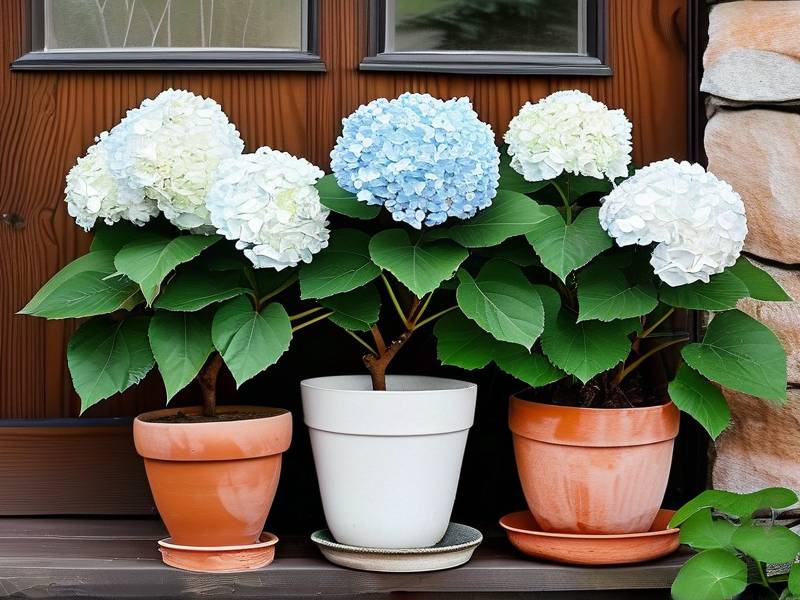
The fix: Use unglazed terracotta pots for winter. They breathe. The clay wicks away excess moisture. If you must use decorative pots, keep the plant in its nursery pot and take it out to water. Let it drain completely before putting it back. I've been using terracotta for 3 years now, and my winter survival rate jumped from 0% to 100%.
How to Prune Hydrangeas in Winter – Don't Touch Those Stems
I see so many people pruning hydrangeas in fall or winter. Please don't. I did this with my second plant. I cut back all the old wood in November, thinking I was tidying up. Come spring, no flowers appeared. Why? Many hydrangeas bloom on old wood. I had cut off next year's flower buds.
My rule: Don't prune anything until you see green growth in early to mid-spring. Even then, only remove dead, brown stems. If a stem is flexible and has green under the bark, leave it. I check by scraping the bark gently with my thumbnail. Green means alive. Brown means dead.
The AHS recommends waiting until the danger of hard frost has passed before any major pruning. I wait until my hydrangeas have at least 4-6 inches of new growth. That's usually late April for me.
Winter Mulching – A Step I Almost Skipped
For hydrangeas planted in the ground, mulching is non-negotiable. I learned this after losing an in-ground hydrangea to a cold snap. I had mulched around the base, but only about 2 inches deep. The roots near the surface froze anyway.
What I do now: I apply 4-6 inches of shredded bark or straw around the base after the first hard freeze. I extends the mulch out in a 2-foot diameter circle. This keeps the soil temperature stable. I also wrap the crown – where the stems meet the roots – with extra mulch. Don't pile it against the stems directly, because that can cause rot. Keep it an inch away.
I also use frost cloth for the top growth if temperatures dip below 20°F. I bought a roll of row cover fabric for $15 from a garden center. It's reusable and breathable. I just drape it over the plant when a severe freeze is forecast. Remove it during the day if temperatures rise above freezing.
Container Hydrangeas – Extra Care Needed
Potted hydrangeas are more vulnerable to cold than ground-planted ones. The roots are above ground, exposed to freezing air from all sides. I lost my first potted hydrangea because I left it on my patio all winter.
My method: I move all potted hydrangeas to my unheated garage. If you don't have a garage, try a basement or even a cool interior room. The key is a consistent temperature between 35°F and 45°F. If the temperature fluctuates wildly, your plant will struggle.
I also insulate the pot itself. I wrap the container with bubble wrap, then cover it with a cloth sack. This adds about 8-10°F of protection to the root zone. I check every 3 weeks by inserting my finger into the soil. If it's dry, I add a small amount of water – maybe 1/4 cup. Too much and you're back to Mistake #1.
What About Indoor Hydrangeas in Winter?
Some people try to keep hydrangeas indoors as houseplants during winter. I've tried this twice. Both times, the plant struggled. The dry indoor air, lack of humidity, and warm temperatures confuse the plant's natural cycle.
Honest opinion: Don't do it unless you have a cool, bright room that stays below 60°F. I tried keeping one in my living room at 68°F. It slowly declined. The leaves turned crispy, and it never flowered again.
If you must bring it indoors, place it in the coolest room you have. Mist the leaves daily with water. Keep it away from heating vents. And ignore it. Seriously. The less you fuss, the better it does.
When to Wake Your Hydrangea Up
Around early to mid-spring, when nighttime temperatures stay above 40°F consistently, it's time to bring your hydrangea out of dormancy. I move mine back outdoors gradually. First, I put it in a shaded spot for 3-4 days. Then I introduce morning sun. After a week, it can handle full daylight.
My timing: I aim for about 2-3 weeks before my area's last expected frost date. This gives the plant time to adjust. I also start watering lightly once a week. The first water should be lukewarm, not cold. Shock from cold water can damage emerging roots.
I apply a balanced, slow-release fertilizer at half strength once I see new leaves. Never fertilize a dormant plant. I learned that one the hard way too. Fertilizer salts burn inactive roots.
Common Questions About Hydrangeas in Winter (FAQ)
Q: Can I leave my hydrangea in the garage all winter without checking on it?
No. Even dormant plants need occasional monitoring. I check mine every 2-3 weeks. I look for signs of extreme dehydration (shriveling stems) or rot (mushy spots). Most garages are fine, but temperature swings can happen. I keep a cheap thermometer in my garage. If it drops below 30°F, I move the plant to a warmer spot.
Q: Do I need to cover my hydrangea if it's already in the ground?
For in-ground hydrangeas in USDA zones 5-6, yes. I cover the base with thick mulch. For the stems, I use burlap or frost cloth if temperatures will drop below 20°F. I don't cover them if it's just a light frost. The plant can handle that normally. But prolonged deep freezes require protection.
Q: My hydrangea lost all its leaves in winter. Is it dead?
Probably not. Losing leaves is normal for deciduous hydrangeas. I panicked the first time this happened. But if the stems are still firm and green inside, the plant is just sleeping. Wait until spring. If it doesn't leaf out by late April, then you might have a problem. Check the stems for green tissue. If everything is brown and brittle, it's dead.
Final Thoughts – My Go-To Winter Hydrangea Routine
I now have a simple checklist that I follow every year. It's not fancy, but it works.
- First hard freeze: Move potted hydrangeas to unheated garage or basement. Stop watering completely.
- Temperature check: Ensure the space stays between 35°F and 45°F. No drafts. No direct light.
- Mulch in-ground plants: Apply 4-6 inches of bark mulch around the base. Wrap with frost cloth if a severe freeze hits.
- Forget about pruning: Don't touch anything until spring growth appears.
- Monthly soil check: Feel the dirt. If bone dry, add a tiny amount of water. If damp, leave it alone.
- Spring wake-up: Move plants back outside gradually. Start light watering. Wait for real growth before fertilizing.
That's it. No complicated science. Just patience and restraint. I wish someone had told me this before I killed those first three plants. Winter care for hydrangeas is mostly about doing nothing. The less you interfere, the better they do. Trust the plant's natural cycle. It knows what to do. You just have to get out of its way.