bluename
 How to Care for Variegated Green Plants - Bright Patterns No Degeneration Essentials
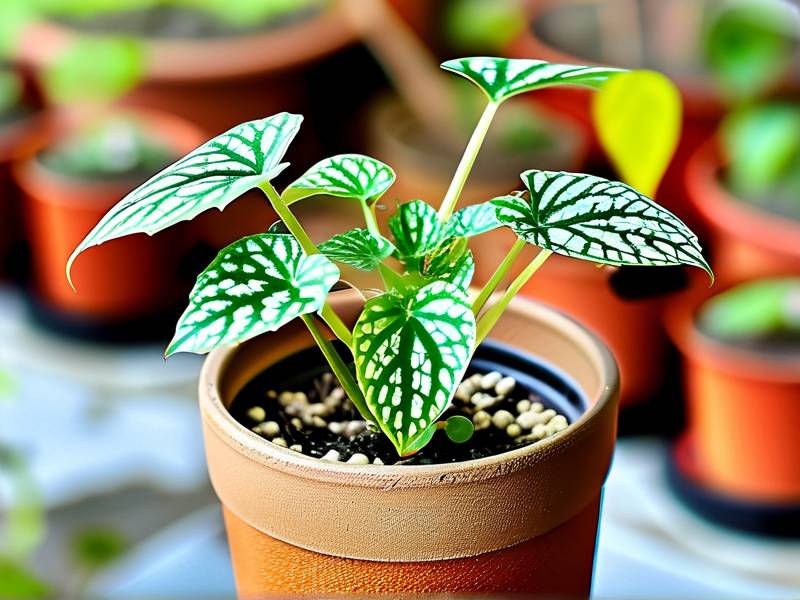
You finally found the perfect variegated plant. Its leaves are a stunning mosaic of emerald green and creamy white, a living piece of art. But now, a creeping anxiety sets in. What if those beautiful, bright patterns start to fade? What if the new leaves come out plain, solid green? You’re not just caring for a plant; you’re a curator trying to preserve its unique, painted foliage. This fear of variegation loss is the single biggest worry for collectors of these special plants. The good news? With the right knowledge, you can absolutely maintain those spectacular patterns. This guide will walk you through the essential, science-backed strategies to ensure your variegated green plants not only survive but thrive, keeping their bright patterns vibrant for years to come.
Understanding Variegation: It’s All in the Cells
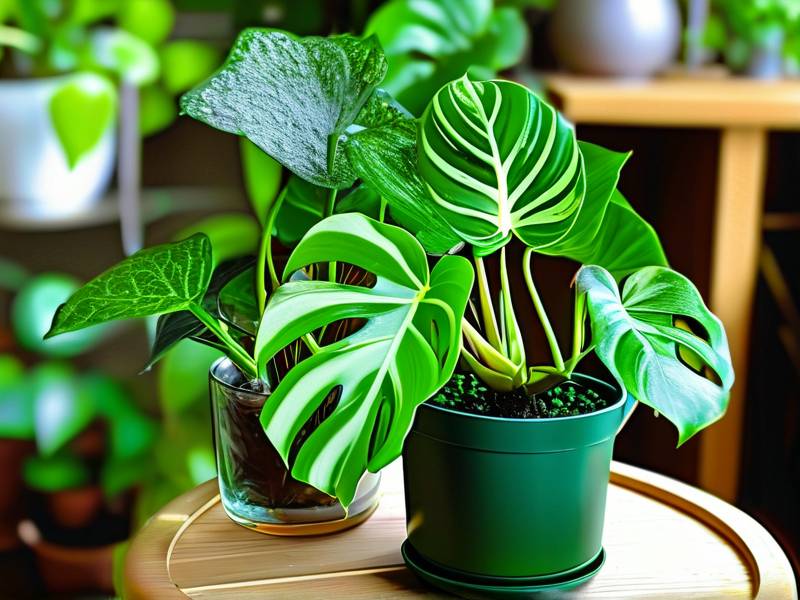
Before we dive into care, let's understand what we're working with. Variegation isn't just a surface-level paint job; it's written into the plant's very DNA. There are two main types: chimeral and pigment-based.
Chimeral variegation is the most common. Here, the plant has two distinct types of genetic tissue layered together—one that produces chlorophyll (green) and one that doesn't (white or yellow). This is why plants like the Monstera deliciosa 'Albo-Variegata' or many Philodendron varieties have such dramatic, sectoral patterns. This type is stable but can revert if the green tissue outcompetes the white.
Pigment-based variegation, seen in plants like Tradescantia or some Calatheas, involves the suppression of green chlorophyll in certain areas, allowing other pigments like anthocyanins (reds/purples) or carotenoids (yellows) to show through. This type is generally more stable but can still fade with poor care.
The Royal Horticultural Society (RHS) notes that variegated plants often grow more slowly than their all-green counterparts. The non-green sections lack chlorophyll, the engine of photosynthesis. This inherent weakness is the root cause of their sensitivity and our number one care priority: optimizing light.
Light: The Non-Negotiable Key to Vibrant Patterns
This is the most critical factor. Insufficient light is the fastest route to lost variegation. Why? The plant is a survival machine. In low light, it's struggling to produce enough energy. It will instinctively prioritize the production of chlorophyll-rich, all-green leaves to capture every possible photon. You'll see your plant "reverting."
To prevent this, provide bright, indirect light. Think of the light in a spot near a north or east-facing window, or behind a sheer curtain in a south or west window. Direct, harsh sun can scorch the delicate, pigment-lacking white and yellow areas, causing brown, crispy patches.
Aim for 6-8 hours of good indirect light daily. If your home is naturally dim, consider a grow light. LED full-spectrum bulbs are energy-efficient and excellent for maintaining variegation without the risk of burn. Observe your plant: strong, consistent variegation in new growth is a sign your light is perfect.
Watering with Precision: The Balance of Health
Variegated plants often have less robust root systems and slower metabolism. Their watering needs are a delicate dance. The American Horticultural Society (AHA) emphasizes that overwatering is a leading cause of houseplant failure, and variegated specimens are particularly vulnerable.
The golden rule: water deeply, but only when needed. Never water on a schedule. Instead, check the soil. For most variegated aroids (Monstera, Philodendron, Epipremnum), allow the top 1-2 inches of soil to dry out completely before watering again. For more moisture-loving plants like variegated Maranta or Stromanthe, let just the top inch dry.
Use your finger or a moisture meter. When you water, do so thoroughly until water runs freely from the drainage holes, ensuring the entire root ball is hydrated. Then, let it drain completely. Soggy soil suffocates roots, leading to rot, which stresses the plant and can trigger reversion as it fights for survival.
Soil and Fertilization: Building a Strong Foundation
Your plant's soil is its home. It needs to be airy and well-draining to prevent root rot while retaining enough moisture for uptake. A standard houseplant mix often needs amendment. A great base recipe is: 50% high-quality potting soil, 30% orchid bark or perlite for aeration, and 20% horticultural charcoal or coco coir for moisture management.
Fertilization supports growth but must be done judiciously. Remember, these plants grow slower. A weak, all-purpose, balanced liquid fertilizer (with equal NPK numbers like 10-10-10) applied at half-strength every 4-6 weeks during the active growing season (spring and summer) is sufficient. Over-fertilizing, especially with high-nitrogen formulas, can encourage rapid green growth at the expense of variegation. In fall and winter, fertilize monthly or not at all.
Pruning and Propagation: Steering Growth
Sometimes, despite your best efforts, a shoot may revert to solid green. This is your plant's survival instinct in action. You must act decisively.
As soon as you spot a fully reverted stem or leaf, prune it off. Cut back to a point on the stem where you can see variegation in the node (the little bump where leaves and roots emerge). This redirects the plant's energy back to the variegated sections.
This is also where propagation comes in. When you prune, you can propagate the healthy, well-variegated cuttings to create new plants. Always choose a cutting with strong variegation on the stem and at least one node. By selectively propagating only the most beautifully patterned pieces, you are, in essence, guiding the evolution of your plant collection toward more stable variegation.
Troubleshooting Common Variegation Problems
- Brown, Crispy Edges on White Variegation: This is almost always sunburn. The white tissue has no protective pigments. Move the plant to a spot with gentler, filtered light.
- New Leaves Are Smaller and Less Variegated: This typically signals insufficient light. Gradually increase light exposure.
- General Yellowing or Pale Leaves: Could be overwatering, nutrient deficiency, or, ironically, too much direct light. Check your watering habits and soil moisture first.
- Sudden, Widespread Reversion: A major stress response. Review all care factors—has light changed dramatically? Was it overwatered? Is it rootbound? Address the core stressor.
FAQ
Can a completely reverted plant ever get its variegation back? Once a stem has genetically reverted to all-green tissue, it cannot spontaneously become variegated again. The only solution is to prune it out entirely. However, if the reversion was caused by environmental stress (like low light) and the stem still carries some variegated genes, improving conditions might encourage future variegated growth from other nodes. Don't count on it; pruning is the surest method.
Are some variegated plants more stable than others? Absolutely. Plants with "sectoral" or "chimeral" variegation (like Monstera Albo) are more prone to reversion as the green and white tissues compete. Plants with "pattern-gene" or "blister" variegation (like many Philodendron 'Birkin' or some Hoya varieties) and pigment-based variegation (like Tradescantia 'Nanouk') tend to be more stable and less likely to revert under suboptimal conditions.
Is more variegation always better? Not necessarily. High levels of variegation, especially large white sectors, are stunning but come at a cost. Leaves with very little chlorophyll are inefficient, grow extremely slowly, and are fragile. A plant with a healthy balance of green and white/color will often be more vigorous and sustainable in the long run than a "full-moon" specimen that struggles to photosynthesize.
Caring for variegated plants is a rewarding practice in mindful horticulture. It requires you to become an astute observer, learning to read the subtle signals in leaf color, texture, and growth patterns. By mastering the balance of intense but indirect light, precise watering, and strategic pruning, you move from a passive owner to an active cultivator. You're not just preventing the degeneration of bright patterns; you're creating the ideal environment for those patterns to express themselves in their full, dazzling glory. The vibrant, painted leaves of your thriving plant will be the ultimate testament to your skill and dedication.