bluename
 How to Care for Bougainvillea: Master Water Control for Fast Blooming & Full Pots
You’ve brought home a vibrant bougainvillea, dreaming of a cascade of brilliant magenta, purple, or orange bracts. But instead of a full, floriferous spectacle, you’re facing sparse leaves, leggy growth, or worse—no blooms at all. The most common culprit behind a bougainvillea’s disappointment isn’t a lack of effort, but a fundamental misunderstanding of its most critical need: water. Achieving that coveted explosion of color and achieving full pots of bougainvillea hinges almost entirely on mastering the art of water control for fast blooming. This guide will transform your approach, turning your bougainvillea from a finicky diva into a prolific bloomer.
Understanding the Bougainvillea’s Natural Blueprint
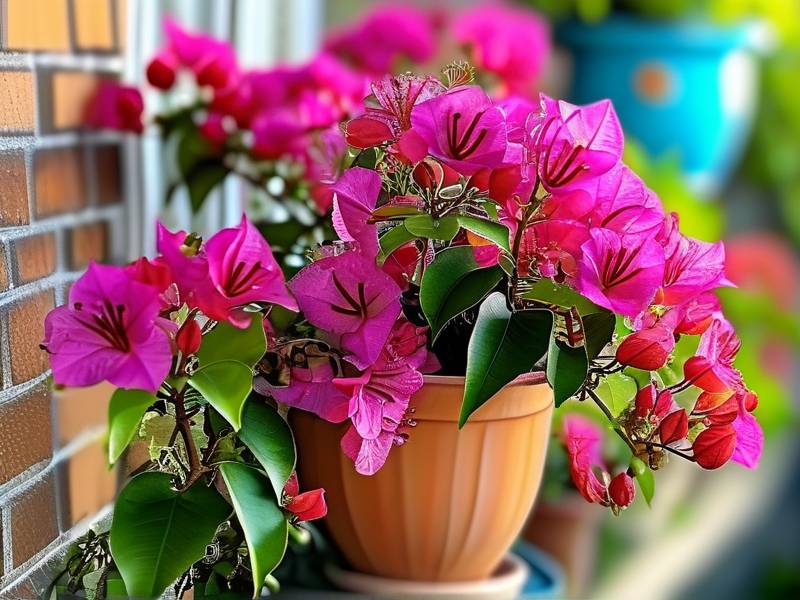
To care for bougainvillea successfully, you must think like one. Native to arid, sunny slopes of South America, these plants are drought-adapted survivors. Their spectacular blooms are not a sign of abundance, but a survival strategy. In their natural habitat, a period of dry stress followed by rain triggers a reproductive frenzy—flowering to ensure seed production. When we provide constant, abundant water, we signal “eternal spring,” encouraging lush vegetative growth at the expense of flowers. The Royal Horticultural Society (RHS) notes that bougainvilleas flower best when their roots are confined and under slight stress, a condition directly influenced by watering practices.
The Golden Rule: The “Soak and Dry” Method
This is the non-negotiable cornerstone of bougainvillea care for abundant flowers. Abandon any schedule-based watering (e.g., “once a week”). Your plant’s needs change with temperature, humidity, wind, and season.
- Step 1: The Thorough Soak. When it’s time to water, do so profoundly. Water slowly at the base of the plant until you see water freely running out of the drainage holes. This ensures the entire root ball is moistened, encouraging roots to grow deep and strong.
- Step 2: The Crucial Dry-Out. Here is the key to fast blooming. Do not water again until the top 2-3 inches of soil are completely dry. Stick your finger into the soil. It should feel dry, not just cool. For potted plants, you can also gauge weight—a pot that feels light indicates dry soil. This dry period is the “stress” that triggers the plant to shift energy from leaf production to flower formation.
- Visual Cues: Your bougainvillea will tell you when it’s approaching its dry limit. Slight wilting of the newest, tender leaves is your signal that it’s almost time. Watering at the first sign of this mild wilt is perfect. Avoid waiting until stems are shriveled or older leaves are dropping.
Seasonal Watering Adjustments for Year-Round Success
Your watering strategy must evolve with the seasons to continuously promote full pots of color.
- Spring & Summer (Active Growth & Bloom Season): This is when water demand is highest due to heat and growth. The “soak and dry” cycle may occur every 5-7 days in hot climates. Consistent moisture during active blooming supports the show, but always verify soil dryness first.
- Fall: As temperatures cool and growth slows, extend the dry periods significantly. Water may only be needed every 10-14 days. This gradual increase in stress can encourage a final bloom flush.
- Winter (Dormancy): Water very sparingly. The goal is to prevent the root ball from turning into a dust bowl, but the plant should be kept quite dry. In cool climates, monthly watering might suffice. Overwatering in winter is a leading cause of root rot and plant loss.
The Critical Partnership: Watering and Soil Drainage
Perfect watering means nothing if your soil holds water like a sponge. Bougainvillea demands exceptionally well-draining soil. A heavy, water-retentive mix will stay soggy for days, suffocating roots and preventing the necessary dry cycle.
- Recommended Mix: Use a cactus or succulent potting mix as a base. For even better drainage, create your own blend: 2 parts standard potting soil, 1 part perlite, and 1 part coarse sand or orchid bark. This creates an airy, fast-draining environment that mimics their preferred gritty conditions.
- The Pot Matters: Always use a pot with ample drainage holes. Terracotta pots are excellent as they are porous, allowing soil to dry from the sides as well as the top. Ensure pots are not excessively large; a slightly root-bound bougainvillea blooms more readily.
Supporting Practices: Fertilization and Sunlight
While water is the primary driver, it works in concert with other factors.
- Fertilizer for Flowers, Not Leaves: Use a fertilizer high in potassium (K) and lower in nitrogen (N). Nitrogen promotes green growth, while potassium supports flower development and hardiness. The American Horticultural Society (AHS) recommends a fertilizer with a ratio similar to 1-1-2 (N-P-K) or a “bloom booster” formula. Feed every 4-6 weeks during the growing season, and never on dry soil—water lightly first to prevent root burn.
- Non-Negotiable Sunlight: Bougainvillea requires a minimum of 6 hours of direct, unfiltered sunlight daily. More is better. Without this, even perfect watering will not result in fast blooming. It is the engine that powers the entire flowering process.
Troubleshooting Water-Related Issues
- Leaf Drop: Sudden leaf drop is often a reaction to a change in environment or watering routine. A consistent “soak and dry” approach minimizes this. Yellowing leaves that drop can indicate overwatering.
- Lush Growth, No Blooms: This is the classic sign of overwatering and/or over-fertilizing with nitrogen. Immediately extend your dry periods and switch to a bloom-type fertilizer.
- Brown Leaf Tips/Edges: This can indicate a buildup of salts in the soil from fertilizer or hard water, often exacerbated by inconsistent watering. Periodically water deeply to flush the soil (let water run freely from the pot for a minute).
Why does my bougainvillea wilt right after watering? This is often a sign of root rot caused by chronic overwatering. Soggy soil damages the roots, making them unable to absorb water, so the plant wilts even though the soil is wet. Check the roots—healthy ones are firm and white/tan. Soft, brown roots indicate rot. Repot into fresh, dry, well-draining soil and prune damaged roots. Water very sparingly until new growth appears.
Can I use a moisture meter for my bougainvillea? Yes, a moisture meter can be a helpful tool, especially for deep pots. Use it to confirm the soil is dry at the root level (a reading in the “dry” zone) before watering. However, always double-check with the finger test, as meters can sometimes be inaccurate.
How do I water bougainvillea in very hot, dry climates? In extreme heat, the “dry” phase may happen very quickly. You may need to water every 3-4 days. The principle remains the same: wait for the top few inches of soil to dry. Providing afternoon shade in blistering climates can prevent excessive stress and reduce water loss.
Mastering bougainvillea care is an exercise in disciplined neglect. By embracing the “soak and dry” method, you directly harness the plant’s natural instinct to produce breathtaking blooms. Pair this strategic water control for fast blooming with gritty soil, ample sun, and the right fertilizer, and you will be rewarded with the ultimate goal: resilient, healthy plants boasting full pots of vibrant, long-lasting color that will make your garden the envy of the neighborhood.