bluename
 How to Care for Cristate Succulents - Maintain Cristate Form No Reversion Essentials
You’ve finally found that rare, mesmerizing cristate succulent, its fan-shaped or wavy crest a true wonder of nature. But now, a nagging worry sets in. What if this unique form starts to revert, sending out normal, solitary growth that ruins its sculptural beauty? This fear of reversion is the number one concern for collectors of crested succulents. The good news is that with proper understanding and care, you can successfully maintain cristate form and enjoy your botanical oddity for years to come. This guide dives deep into the essentials for preventing reversion, offering a clear, step-by-step approach to keeping your crested specimen healthy and true to its extraordinary shape.
Understanding Cristation: Why It Happens and Why It Might Reverse
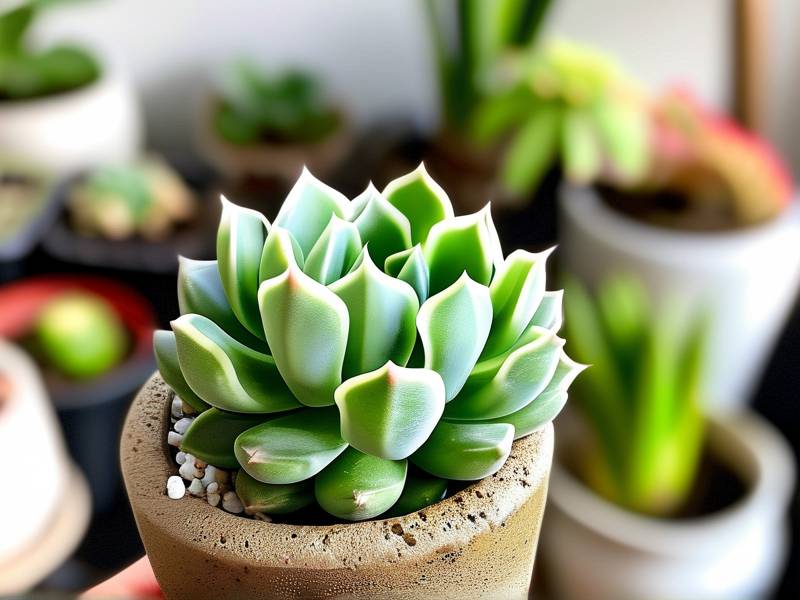
Before we tackle care, it’s crucial to understand what you’re dealing with. Cristation, also known as fasciation, is a rare genetic mutation where the plant’s growing point (the apical meristem) elongates into a line or crest instead of a single point. This causes the stem to flatten and grow in a fascinating, undulating pattern. It’s not a disease, but a stable mutation in the affected growth point.
However, this mutation can be unstable. The plant retains the genetic code for normal growth. Under stress or due to damage, a new growth point on the crest can sometimes revert to its standard, non-crested form. Your goal is to create an environment so optimal that the plant has no reason or need to revert. This is the foundation of cristate succulent care without reversion.
Essential Pillar 1: Mastering the Light Equation
Light is perhaps the most critical factor in keeping crested succulents from reverting. These plants need bright, indirect light for the majority of the day. Think of a spot with morning sun and dappled afternoon shade, or behind a sheer curtain in a south-facing window.
Insufficient light is a prime stressor that can trigger reversion as the plant desperately seeks more energy. The crest will become etiolated—stretched, pale, and weak—making it vulnerable. Conversely, too much intense, direct afternoon sun can scorch the delicate, often more compact tissue of the crest, causing physical damage that may lead to reversion as the plant tries to heal.
A study on succulent morphology published in the Journal of the Cactus and Succulent Society of America notes that consistent, moderate light levels promote stable growth patterns in mutated forms. Consider using a grow light for 12-14 hours daily if natural light is inconsistent, ensuring your plant receives steady, non-stressful illumination.
Essential Pillar 2: The Art of Watering for Stability
Crested succulents are even more susceptible to rot than their normal counterparts. Their dense, folded growth traps moisture and creates poor air circulation. Your watering strategy must be precise.
The "soak and dry" method is non-negotiable. Always allow the potting mix to dry out completely between waterings. Then, water thoroughly until it runs from the drainage holes. Never let the plant sit in a saucer of water. During winter dormancy, reduce watering frequency significantly, perhaps once a month or less, depending on your humidity.
Under-watering causes severe stress, potentially signaling to the plant that its complex crest is unsustainable. Over-watering leads to root and stem rot, which can kill parts of the crest and trigger normal growth as a survival response. The Royal Horticultural Society (RHS) advises that "plants with abnormal growth forms require more attentive watering practices to avoid extremes that can destabilize the plant."
Essential Pillar 3: Soil and Potting for Optimal Health
Fast-draining soil is your best defense against over-watering stress. A standard cactus/succulent mix is a good start, but for cristate specimens, amend it further. Aim for a mix of 50-60% mineral grit (like perlite, pumice, or coarse sand) to 40-50% potting soil. This creates an airy, quick-draining environment that prevents soggy roots.
Choose a pot that is only slightly wider than the plant’s base. A pot that is too large holds excess moisture. Terracotta pots are excellent as they are porous and help wick away moisture. Most importantly, ensure the pot has a large drainage hole. Repot every 2-3 years in spring to refresh the soil and check root health, handling the fragile crest with extreme care.
Essential Pillar 4: Strategic Feeding and Growth Management
Crested succulents grow slower and have different nutritional needs. Feed them sparingly during their active growing season (spring and summer) with a balanced, diluted liquid fertilizer (e.g., 10-10-10) at half strength. Do this only once, maybe twice, during the season. Over-fertilizing, especially with high-nitrogen formulas, can force rapid, weak growth that is prone to reversion.
This leads to the delicate task of growth management. Inspect your crest regularly. If you see a perfectly normal, non-crested stem (a "revert") emerging, you have a decision to make. Many growers recommend removing it promptly. Using a sterile, sharp knife or scalpel, carefully cut the revert off as close to its origin on the crest as possible. This redirects the plant’s energy back into the crested growth. The American Hibiscus Society, while discussing fasciation in other plants, confirms that "prompt removal of reverted growth can help preserve the desired mutated form."
Essential Pillar 5: Environment, Dormancy, and Vigilance
Stable temperatures between 65-80°F (18-27°C) are ideal. Protect your plant from drafts, sudden temperature drops, and excessive heat from appliances. Good air circulation around the plant helps prevent fungal issues but avoid placing it in the path of strong, drying winds.
Respect their dormancy. Most cristate succulents slow down or stop growing in winter. During this time, reduce watering, stop fertilizing entirely, and ensure they get adequate cool (not cold) rest. Forcing growth out of season weakens the plant.
Finally, be vigilant. Regularly inspect for pests like mealybugs, which love to hide in the crevices of a crest. Treat any infestations immediately with insecticidal soap or isopropyl alcohol on a cotton swab. Physical damage can also cause reversion, so place your plant in a safe location.
What causes a crested succulent to revert back to normal growth? The primary causes are environmental stress (especially incorrect light or water), physical damage to the crest, or natural genetic instability. The plant perceives the crest as a liability under stress and activates normal growth as a survival mechanism.
Can I propagate a crested succulent and keep the mutation? Propagation is challenging. Cuttings taken from the crest may sometimes root and continue crested growth, but they often revert or grow normally. The most reliable method is to carefully remove and root any small, already-crested offsets that the mother plant may produce.
Is a reverted crested succulent unhealthy? Not necessarily. The reverted growth itself is healthy, standard growth. However, the reversion is often a symptom of an underlying stressor that is harming the plant. The crest may become stunted or die back if the stressor (like rot or etiolation) is not addressed.
Successfully cultivating a cristate succulent is a rewarding exercise in attentive, mindful gardening. It revolves around providing unwavering consistency—in light, water, and soil conditions—to eliminate stressors. By mastering these essentials for preventing reversion, you become a steward of one of nature’s most captivating accidents. Remember, the key is proactive care and gentle intervention. Your vigilance in monitoring growth, coupled with the patience to provide a stable, optimal environment, is what will ultimately maintain the cristate form of your unique succulent treasure for the long term.