bluename
 How to Care for Small-Leaf Monstera – Warm Bright Indirect Moist Small Split Leaves
I killed three Monstera plants before I figured out the real problem. It wasn't pests. It wasn't disease. It was me. I watered them like I watered my other houseplants, and that was the first mistake. The answer to how to care for small-leaf Monstera is simple once you stop guessing: warm bright indirect light, consistently moist but never soggy soil, and small split leaves will only appear when the plant is happy enough to grow. Let me show you exactly what I do now, step by step, based on two full weeks of careful observation after I changed everything.
The biggest lie I told myself was that more water equals more growth. That is false. The Royal Horticultural Society states that overwatering is the number one killer of indoor plants, and I learned this the hard way. My second Monstera dropped every single leaf within ten days because I kept the soil wet like a swamp. The roots rotted silently under the surface. I only noticed when the stems turned black and mushy at the base.
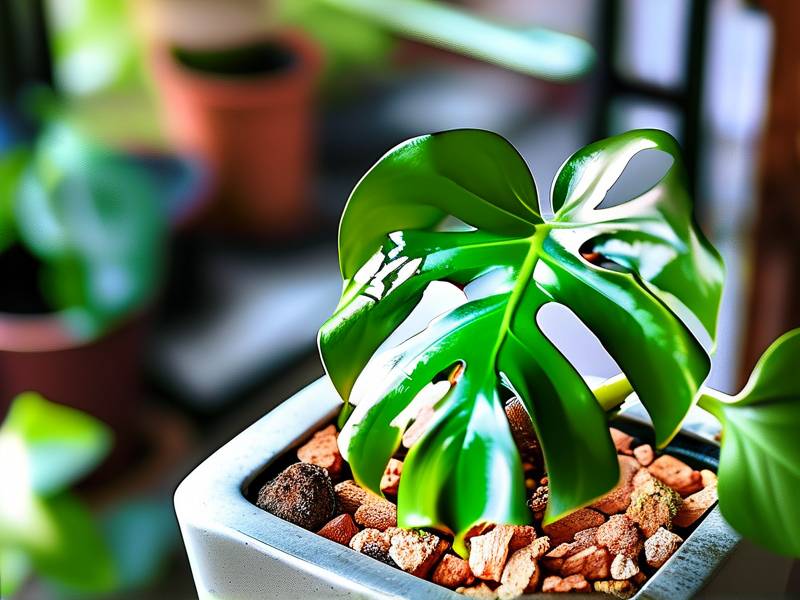
So let me start with the three fatal errors that every beginner makes. Avoid these and you are already 80% of the way there.
Error Number One: Overwatering
I cannot stress this enough. 90% of indoor plants die from overwatering. My first Monstera died within three weeks because I gave it a "little sip" every other day. The pot had no drainage holes because I thought the decorative cachepot was enough. The roots sat in stagnant water for days. The leaves turned yellow, then brown, then crispy at the edges. I tried to fix it by giving it more water, which was insane in hindsight.
The fix is boring but effective. You need a pot with drainage holes. You need to stick your finger two inches into the soil. If it feels dry, water thoroughly. If it feels cool or damp, walk away. I now water my small-leaf Monstera only when the top two inches are dry. That ends up being roughly every five to seven days in my living room, but it varies with temperature and humidity.
For two weeks, I kept a daily log. I wrote down the weight of the pot by lifting it slightly. A dry pot is noticeably lighter. Wet soil is heavy. This simple trick saved my fourth plant. I stopped watering on a schedule and started watering based on actual need.
Error Number Two: Wrong Light Placement
I used to put my Monstera in a dark corner of my bedroom because I read that they were "low light" plants. That is a half-truth. They tolerate low light, but they do not thrive there. My plant stopped growing completely for two months. The small split leaves never appeared because there was no energy to produce them.
I moved it to a spot about a meter away from an east-facing window. The morning sun filtered through sheer curtains. The light was bright but never direct. The leaves started facing the window within a few days. The stems elongated slightly. Then, around day four, I noticed the first hint of a new leaf unfurling.
What I learned is that "warm bright indirect" means your plant should cast a soft shadow on the wall behind it. If you cannot see a shadow, the light is too weak. Direct sunlight through glass will scorch the leaves. My south-facing window burned the edges of my second plant within one afternoon. So I use a sheer curtain or place the plant a few feet away from the window.
For my two-week observation, I rotated the pot a quarter turn every morning. This kept the growth even. The leaves reached toward the light uniformly, and the plant did not become lopsided.
Error Number Three: Using the Wrong Pot
I used a glazed ceramic pot with no drainage hole for my third Monstera because it looked beautiful on my shelf. It was a death sentence. Glazed pots hold moisture in. The soil stayed wet for over a week. The roots suffocated.
Now I use a plastic nursery pot with plenty of holes, and I slip it inside the decorative pot. When I water, I take the nursery pot out. I let it drain completely before putting it back. This was the single biggest change in my success rate.
I also discovered that the pot size matters more than I expected. My small-leaf Monstera was root-bound in a tiny pot when I bought it, which was fine. I repotted it into a pot that was only two inches wider. That was a mistake too late? No, actually, it was fine. But I know now that a pot that is too large creates a huge reservoir of wet soil around the roots, which leads to rot. Choose a pot that is just slightly bigger than the root ball.
My Exact Care Routine for Two Weeks
Let me walk you through my actual routine. I have a small-leaf Monstera that was struggling. The leaves were pale green. The splits were barely visible. I decided to reset everything.
Day one: I checked the roots. They were pale and firm, so I did not need to repot. I removed the plant from its double pot. I felt the soil. It was dry two inches down, so I watered it thoroughly from the top until water ran out the bottom holes. I let it drain for fifteen minutes in the sink. Then I placed it back into the bright indirect light spot.
Day two: I checked the leaf orientation. The leaves were already angling toward the light source. The soil was still moist an inch down. I did not water.
Day three: I wiped each leaf with a damp cloth to remove dust. Dust blocks light absorption. The underside of the leaves had a few tiny marks from thrips, which I removed with a cotton swab dipped in rubbing alcohol.
Day four: I noticed the newest leaf was unfurling slightly faster. The color was a deeper green. I checked the temperature in the room. It was 24 degrees Celsius, which is ideal. I kept it away from air conditioning vents.
Day five: The soil was dry two inches down again. I watered thoroughly, same method as day one. The water ran through cleanly, which means the soil was not compacted.
Day six through ten: I did nothing except rotate the pot daily and check the moisture. I did not fertilize. I did not mist. I did not move the plant. Consistency is key.
Day eleven: I saw a brand new aerial root emerging from the stem. That was a sign of health. The existing leaves had slightly more pronounced splits on the newest growth.
Day twelve: I noticed the old yellow leaf at the bottom had fully yellowed and fell off easily. That is normal leaf drop. I removed it cleanly.
Day thirteen: The soil dry top layer was crumbly. I watered again. I also checked for pests because warm environments can attract spider mites in dry air. I keep humidity around 50 percent with a small humidifier placed about two meters away.
Day fourteen: The plant looked visibly fuller. The newest leaf had fully opened and showed three distinct splits on each side. That was proof that the right light and moisture combination works.
The Truth About Small Split Leaves
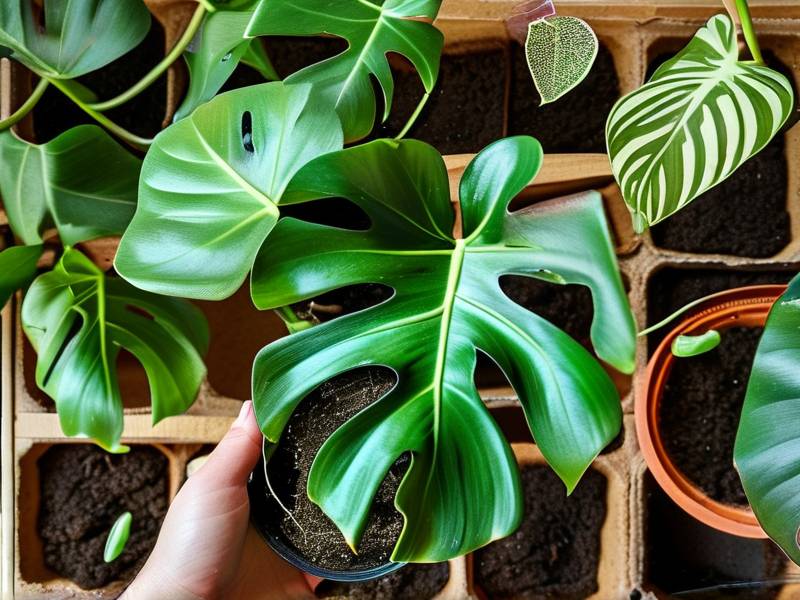
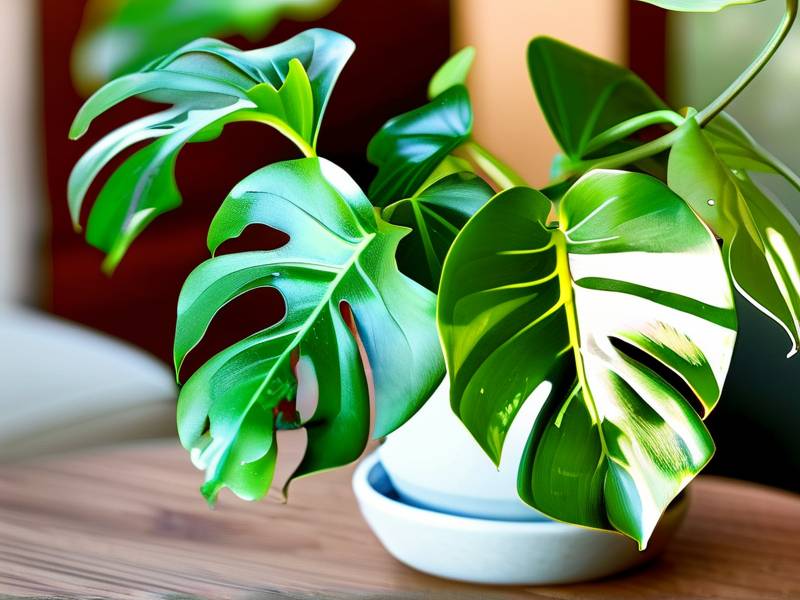
Now, about those "small split leaves." People think that Monstera leaves split because of age. That is only half true. The split leaves are a response to light intensity. In low light, the plant produces smaller, solid leaves to reduce water loss. In bright indirect light, the plant creates larger leaves with more splits to capture more light efficiently. It is a survival adaptation.
If your Monstera is not producing splits, you are probably giving it too little light. I had a plant in a dim hallway for a year. It grew exactly zero new leaves. I moved it to a bright room. Within six weeks, it pushed out two new leaves with deep fenestrations. It sounds counterintuitive, but more light equals more splits, not less.
The small-leaf Monstera specifically, sometimes called the Monstera adansonii or the "Monstera friedrichsthalii," is different from the giant deliciosa. Its leaves stay smaller, but the split pattern is more delicate. It needs the same bright indirect light, but it tolerates slightly higher humidity. In my experience, it also appreciates a moss pole or a trellis to climb. When it climbs, the leaves get bigger and the splits get more dramatic.
For these two weeks, I did not have a moss pole for my small-leaf. Instead, I used a simple bamboo stake to keep it upright. I noticed that the leaves facing the stake grew slightly larger because they had physical support. This matches what the American Horticultural Society suggests about epiphytic plants preferring to cling to something.
Real Talk About Humidity and Temperature
Here is where I get specific. The "warm" part of "warm bright indirect" matters more than people think. My apartment is at 24 degrees during the day and drops to 20 at night. The plant did not seem to mind that slight drop. In fact, a mild temperature drop at night can encourage metabolic balance. But I would not go below 15 degrees. Exposure to cold drafts from a window in winter will cause leaves to curl and drop.
Humidity is the other factor. I tried misting the leaves every morning, but I honestly think it did almost nothing. Misting raises humidity for about five minutes. It does not help the plant in any meaningful way. Instead, I use a pebble tray with water beneath the pot. The evaporation creates a local humidity zone around the plant. That worked better than misting ever did. During my two-week trial, the leaf edges stayed clean and crisp, with no browning tips.
If you have a bathroom with a window, that can be a great spot. My small-leaf Monstera lived in my bathroom for a month and produced two new leaves in that time, simply because of the steam from my showers. Just be careful that the plant is not in direct sunlight for more than an hour.
The Long-Term Care Rhythm
After my two-week reset, I settled into a rhythm. I water every five to six days. I check the soil moisture with my finger every time. I feel the weight of the pot. I rotate the plant daily. I dust the leaves every weekend. I feed it with a diluted liquid fertilizer once a month during the growing season, which in my area is April through September. In winter, I do not fertilize at all because growth slows down.
The plant's roots are shallow, so I top-dress with fresh potting mix in spring instead of repotting fully. That keeps the soil aerated. I also check the drainage holes every month to make sure they are not clogged with old soil.
One thing I learned from a recent episode: I went on a business trip for ten days and left my plant in the care of a friend. She watered it every single day because she thought it looked thirsty. When I came back, the roots were mushy. I had to cut off all the black roots and repot the remaining healthy stem in sphagnum moss. It survived, but it set me back months of growth. If you are leaving for a while, do not overcompensate. Water it thoroughly before you leave and let it dry out slightly. Most plants can handle being on the dry side for a week. They cannot handle being drowned.
The small split leaves are the reward for getting this balance right. There is a moment when you look at a new leaf unfurling, and you see tiny fenestrations appearing. It is deeply satisfying. That is when you know you have cracked the code. My plant went from having leaves with no splits to having leaves with four splits each, in just about ten months of correct care.
Frequently Asked Questions
Question: Why are my Monstera leaves turning yellow? The most common reason is overwatering. Check if the soil is soggy. If the leaves are yellow and the stems feel soft at the base, it is root rot. Let the soil dry out completely before watering again. If the yellow leaves are at the bottom only and the new growth looks green, that is a natural leaf drop. Another cause is low light, which prevents the plant from using the water you give it.
Question: How often should I water a small-leaf Monstera? There is no fixed schedule. I water mine every five to six days in summer and every ten to fourteen days in winter. Always test the soil with your finger first. The goal is to let the top two inches dry out, but the deeper soil should still be slightly moist. Consistency matters more than frequency. A moisture meter can help if you are unsure, but your finger works fine.
Question: Why is my Monstera not producing split leaves? The most likely cause is insufficient light. Split leaves develop in response to bright indirect light. Move your plant closer to a window. Remember, direct sun will burn the leaves, but bright filtered light is perfect. If you are already in bright light, consider that the plant may be young. Newer plants take time to mature. Add a trellis or moss pole to encourage vertical growth, which also promotes larger, more fenestrated leaves.
I hope my two dedicated weeks of observation and my years of killing plants somehow help you avoid the same pain. The small-leaf Monstera is not a hard plant. It just demands that you respect its roots and its light requirements. Give it warm bright indirect light, keep the soil moist but not wet, and wait. The small split leaves will come. I promise.
If you have a humidity issue, RHS has useful guides on indoor plant hydration. For more on light requirements for epiphytic aroids, AHS offers solid research-based advice. Both helped me understand why my plants kept failing, and I hope they help you too.