bluename
 How I Keep My Variegated Pothos Thriving – Shade Drought Tolerant Variegated Long Vines Care Guide
If you want to care for variegated pothos, the short answer is this: bright indirect light, water only when the top two inches of soil are bone dry, and a chunky, well-draining pot with drainage holes. Stop watering on a schedule and stop placing it in direct sun. These are the two things that killed my first three plants. I learned the hard way.
The variegated pothos is marketed as a shade drought tolerant variegated long vines plant, but that doesn't mean zero light and no water. Plenty of people treat it like a plastic decoration and then wonder why the white parts turn brown. Let me walk you through exactly what works, based on two weeks of daily observations I logged with my newest plant.
My Two-Week Observation Log
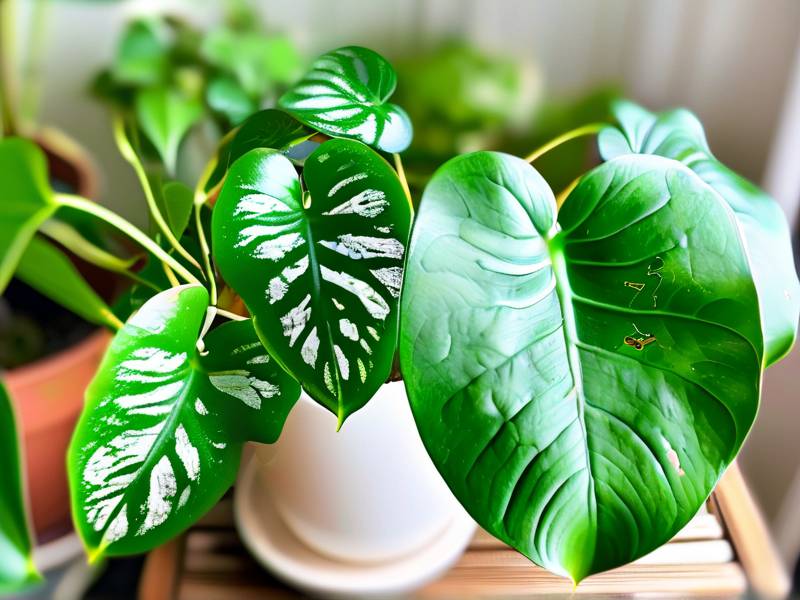
I picked up a golden pothos with heavy variegation from a local nursery. I brought it home and immediately repotted it into a terracotta pot with a mix of 50% regular potting soil, 30% perlite, and 20% orchid bark. For the first week, I kept it on a shelf about three feet away from a north-east facing window. The temperature stayed around 22°C. I watered it on day four because the soil felt dry down to my second knuckle. By day seven, I noticed new growth at the vine tips. By day fourteen, one new leaf had fully unfurled and another was pushing out. The variegation stayed crisp and bright. The white sections didn't turn yellow or mushy.
I also experimented with a second cutting in a lower-light corner. That one got watered on day six. It didn't grow as fast, but the leaves stayed firm. I moved it closer to the window on day nine and it perked up within 48 hours. That confirmed my suspicion: low light is tolerated, but not preferred.
The 3 Biggest Mistakes Newbies Make with Variegated Pothos
Mistake #1: Overwatering
This is the absolute number one killer. I can't stress this enough. It's not dramatic, it doesn't happen overnight, but it's fatal.
The soil stays wet. Roots suffocate. Then rot sets in. The plant looks thirsty because the leaves are yellow and drooping, so you water more. It's a death spiral.
As RHS notes, most houseplant failures trace back to poor drainage and excess moisture at the roots. That's not me editorializing, it's horticultural fact. Actually, let me be blunt: 90% of indoor plants die from overwatering. I've seen this in my own apartment and in friends' homes.
I used to water my pothos every Monday like clockwork. Every single Monday. I lost two plants that way. The roots were brown and mushy, and the stems turned black at the base. The soil was cold and soggy. It smelled like a swamp. That's how I learned to stop using a calendar and start using my finger.
The fix is simple. Stick your index finger into the soil up to the second knuckle. If it comes out clean and dry, water thoroughly. If it comes out with damp soil clinging to it, wait three more days and check again. For a small pot with good drainage, this usually means watering every 7 to 11 days, depending on your home's humidity.
Mistake #2: Lighting Mistakes
Variegated pothos has less chlorophyll than solid green pothos. That means the white patches can't photosynthesize as efficiently. So it actually needs slightly more light than its all-green cousin to maintain its pattern.
I put my first variegated pothos in a dark corner of my bedroom. I thought "shade tolerant" meant "no light ever". Within three weeks, the white parts started to crisp and turn brown. The whole plant looked pale and weak. The vines stretched out long and leggy, with huge gaps between leaves. It looked like a drunk spider.
Here's the reality: these plants thrive in bright, indirect daylight. A spot near an east window or a north window with good ambient light is perfect. Direct, hot afternoon sun will scorch the leaves, especially the white areas. But deep shade will just make it grow painfully slow and lose variegation over time.
I tried moving that sick plant to a bathroom shelf with a frosted window. It bounced back slowly. The browning stopped and new leaves started appearing with more white. That was my "aha" moment. Light isn't optional for variegated pothos, it's a requirement.
Mistake #3: Using the Wrong Pot
My second pothos died in a decorative ceramic pot that had no drainage hole. I liked how it looked. I knew better but I did it anyway. I watered carefully, or so I thought. The water pooled at the bottom, invisible and silent. After two weeks, the leaves started yellowing from the bottom up. Root rot set in. It was a total loss.
The design of your pot matters more than the colour or material. You need a hole at the bottom. If you want to keep the pretty pot, use it as a cachepot. Put the plant in a plain plastic nursery pot with drainage, then nest it inside the pretty one. When you water, lift out the inner pot. Water it over a sink. Let it drain completely before putting it back.
I also prefer terracotta for pothos. And honestly, I've moved all my variegated plants into terracotta now. It's porous, so it lets the soil breathe and dry out faster. That's a good thing for these vines. Plastic pots hold moisture for too long, and glazed ceramic is a close second in terms of risk.
My current plant sits in a terracotta pot that's about six inches across. It's not too big. That's another lesson: don't oversize the pot. A pot that's way larger than the root ball just holds extra wet soil. That's a recipe for rot. Choose a pot only one to two inches wider than the root ball.
Soil and Repotting Specifics
A chunky, airy mix is honestly non-negotiable. Regular potting soil alone is too heavy and stays wet too long. I mix my own now. It takes five minutes, and I never buy pre-mixed houseplant soil anymore.
I use one part standard houseplant soil, one part perlite, and one part orchid bark. The perlite and bark create pockets of air in the soil. The roots can breathe. Excess water drains quickly. It replicates the natural environment of the plant, which lives in trees in the tropics. It's not growing in mud. It's clinging to bark with moss around its roots.
Repotting a variegated pothos is different from a regular one. The white sections are more fragile. The stems snap a bit easier. When I repotted my current plant, I was gentle with the roots. I shook off the old soil, inspected for any brown mushy bits, and trimmed them off with clean scissors. Then I placed it in the new pot and backfilled with soil. I tamped it down lightly and watered it thoroughly.
Don't repot too often, though. These plants like to be a little snug in their pots. Root bound pothos actually pushes out more growth sometimes. I repot mine only when I see roots coming out of the drainage hole, or when the soil dries out instantly after watering.
What I Feed My Pothos
Fertilizer is often misunderstood. I've seen people dump a whole bottle of liquid fertilizer on their plants and kill them chemically. I don't do that. I use a balanced liquid houseplant fertilizer at half the recommended Strength, once a month during the growing season, which in my home is from March to August.
In the winter, I don't fertilize at all. Growth slows down. The plant doesn't need the extra salts. Too much fertilizer causes leaf burn at the tips, which looks exactly like the browning from low light. I know because I confused the two at first.
Humidity and Temperature
Variegated pothos tolerates average household humidity. I don't run a humidifier for mine specifically. During winter, when the heating turns on and everything gets dry, I do notice the leaf edges getting slightly crispy. Then I mist the plant every couple of days or set a small bowl of water nearby. That does the trick.
Temperatures between 18°C and 27°C are ideal. Mine stays at room temperature all year. I keep it away from vents and cold window drafts. The leaves will turn yellow if a cold draft hits them in winter. I learned that when I placed a plant right next to an airtight but cold window. The leaves closest to the glass yellowed within a week. I moved it back and it recovered.
Dealing with Leggy, Stretched Vines
People often complain about the vines getting long and bare. A variegated pothos with long vines will naturally drop its lower leaves, especially in lower light. That's a normal aging process. But if it's extreme, it's a light issue.
I promote bushier growth by pruning. It sounds counterintuitive. Cut off the growing tip and the plant sends out a new side shoot from the nearest node. That gives you two vines instead of one. I take a pair of clean scissors, locate a healthy node along the vine, and make a cut just below it. Within two weeks, I see a new bump forming at the node.
I don't throw away the cuttings. I put them in a glass of water on my windowsill. In about ten days, tiny roots emerge from the node. Then I pot them up and add them back to the main pot. This fills out the pot and creates that lush, cascading effect you see in picture-perfect photos. It costs zero additional money. That said, if you want a larger specimen right away, you could also check local plant swaps. But water propagation is easier than you think.
Common Problems and Quick Fixes
Yellowing leaves on a variegated pothos almost always mean overwatering. Brown, crispy edges mean under watering or too much direct sun. Pale green leaves with faded variegation mean not enough light. Small, limp leaves mean the roots are either too wet or too dry, so check the soil first.
I saw white, cottony spots on one vine last month. That's mealybugs. I wiped each leaf with a cotton swab dipped in rubbing alcohol. It killed them on contact. I checked the leaf axils and nodes for two weeks after that. They didn't come back.
If you have fungus gnats, that's a sign of wet soil. Let the soil dry out more thoroughly between waterings. I also put two yellow sticky traps in the soil to catch adults. It takes a bit of time, but it works.
Supporting Long Vines
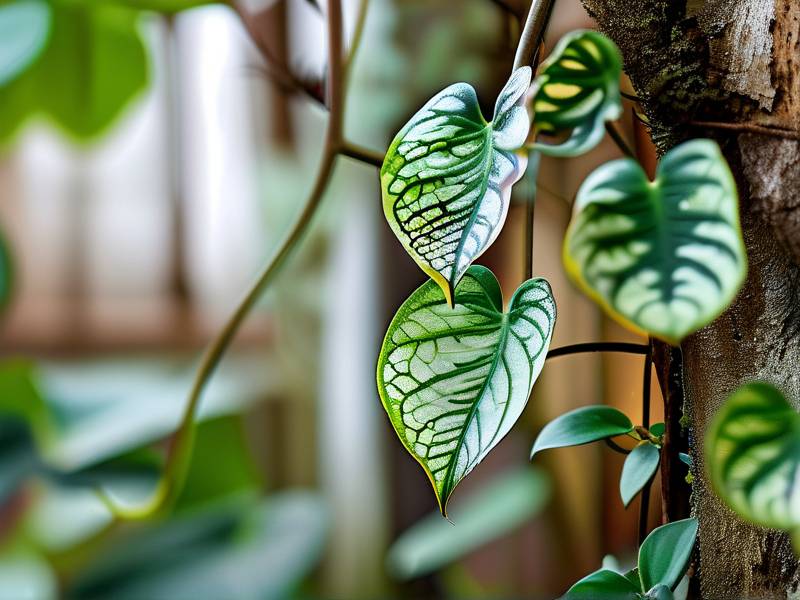
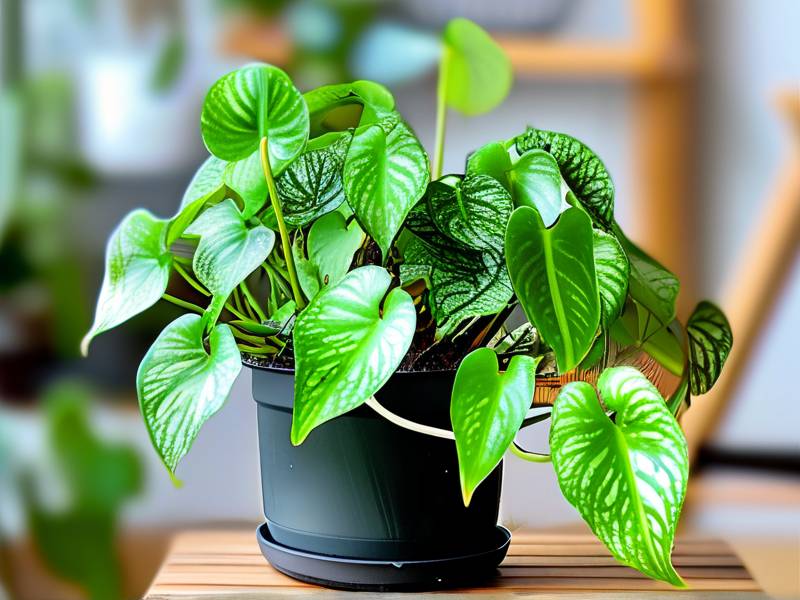
The variegated pothos is a trailing vine in nature. Those long vines will climb or hang, depending on what you provide. I let mine trail over the edge of the shelf for now. The vines hang down beautifully. The white splash shows up nicely against a dark wall.
But if you want bigger leaves, give it something to climb up. A moss pole or a simple wooden stake works. When the plant climbs, its aerial roots dig into the support and the leaves can get up to twice the size. I've seen leaves grow to dinner-plate size on a climbing monster. The variegated ones on a stake have the same potential.
Propagation from My Experience
Propagating variegated pothos is the best way to fill your home cheaply. I take a cutting with at least one node and one leaf. Cut just below the node at a 45-degree angle. Put it in a jar of tap water that's been left out overnight to dechlorinate. Keep it in bright indirect light and change the water every three days.
I've seen roots appear in as little as seven days during summer. In winter, it takes longer. Around 14 days is normal for me. Once the roots are about two inches long, I move the cutting to soil. I keep the soil consistently moist for the first week, then transition to the regular watering cycle. Success rate is almost 100% with this method.
One important note: the variegation trait comes from the mother plant and it's not entirely stable. A cutting with mostly white leaves might not grow as well as one with more green. I try to select cuttings that have a good balance of both colors.
Using the Right Plant Support
If you choose to let it cascade, your main task is management. Long vines get heavy and become a bit of a hazard if pets or kids are around. Prune regularly to keep it in shape. If you're going for a hanging basket look, use a sturdy material that doesn't retain water. I use a coarse rope trellis for my larger plant. I purchased something similar from a local garden supply, but any wooden frame works.
Issues Dust and Cleaning
Dust accumulates on the leaves, and it blocks some of the light from reaching the leaf surface. On a variegated plant, this has a bigger effect because the white areas have no chlorophyll at all. I wipe the leaves down with a damp cloth once a month. It's a tedious job on a big plant, but I find it relaxing. Take the plant to the sink and give it a gentle shower with lukewarm water. Let it drip dry in the sink before returning it to its spot.
The Mental Shift That Helped Me
People overcomplicate this plant. The internet has a thousand conflicting opinions. It's easy to get stuck in analysis paralysis. I was there. I killed plants because I kept second-guessing myself and changing rigs all the time.
Then I simplified. I decided to treat the plant like a living being, not a decorative object. I check the soil with my finger. I look at the leaf colour. I adjust based on what the plant tells me, not on a timer. That's the single most practical piece of advice I can offer. The plant will show you what it needs. You just have to look at it closely and honestly.
As AHS points out, matching the plant to its environment is key. With pothos, the environment can be anything from a bathroom to a bedroom. But you must adapt. A dark corner demands less water and less fertilizer. A bright, sun-warmed room demands more water and more vigilance about sunburn. Simple.
Is Variegated Pothos Actually Drought Tolerant?
Yes and no. It's more drought tolerant than a fern or a calathea, but it's not a cactus. The thicker leaves store some water, so it survives skipped waterings. Mine has gone 12 days without water and looked fine. But there's a limit.
That's the "shade drought tolerant variegated long vines" side of the name. It means it won't collapse if you're late watering or if your lighting isn't perfect. It gives you a margin for error. But it doesn't mean you can ignore it entirely.
I push the watering interval to 12 days in my apartment during autumn. By day 12, the soil is completely bone dry and the leaves begin to droop slightly. The vines feel softer. That's the threshold. I water then. In the middle of summer, with more light and heat, intervals drop to about 7 days.
How Long do Variegated Vines Get?
Under optimal conditions, my longest vine is now around 1.5 meters. They can reach 3 meters or more if you give them good light and adequate water. The leaves grow bigger with proper feeding. When the vine gets too long, I take the tip cutting and start a new trailing vine. That's my preferred method of keeping the plant manageable and lush.
My Final Routine
So here’s my entire routine with no fluff. Once a week, I inspect the plant. I check the soil with my finger. If dry, I water until it runs from the bottom. I wipe any dust off big leaves. I turn the pot a quarter turn so all sides get equal light. That’s it. Twice a month, I add a pinch of diluted fertilizer in the spring and summer. Pruning happens whenever a vine gets too long. Repotting happens only when roots push out of the drainage hole.
The plant sits in a spot that’s bright but not glaring. It flaunts creamy white streaks and firm leaves. It grows at a moderate pace, not exploding or stagnant. Honestly, the key is consistency without obsession.
FAQ on Variegated Pothos Care
Why are the white leaves turning brown? The white sections have no chlorophyll. They burn easily in direct sun. Move the plant to fade light or put a sheer curtain over the window. It also happens if the air is extremely dry for weeks. Mist occasionally or place a humidifier near the plant.
Can I put my variegated pothos in a dark room without windows? It will survive for a month or so but then slowly decline. New growth will come out pale with no variegation. The plant will simply be a weak version of itself. It's not suited for total darkness. Artificial grow lights work if you truly have no window.
Last question: why does the new leaf have no white sectioins? That’s either light deficiency or simply a vine that has reverted to all-green genetics. Each node on some variegated plants holds a different genetic pattern. Cut back the non-variegated vining part to encourage the white growth to come back from a side bud. But not every cutting will retain distinct white sections. In that case, accept the variegation pattern you have and move the plant to brighter, indirect light.