 bluename
 How to Care for Kalanchoe Thyrsiflora - Sufficient Light for Red & Bright Leaves
You've brought home a stunning Kalanchoe thyrsiflora, captivated by its promise of sculptural, paddle-shaped leaves that blush a brilliant red. But weeks later, your plant remains stubbornly green, its leaves stretching out or losing their compact form. The vibrant display you envisioned seems out of reach. This common frustration almost always points to one crucial, often misunderstood, factor: light. Achieving those iconic red and bright leaves isn't a mystery; it's a precise science of providing sufficient light for Kalanchoe thyrsiflora. This guide will walk you through exactly how to master light exposure, transforming your plant into the fiery showstopper it's meant to be.
Understanding Your Kalanchoe Thyrsiflora's Light Language
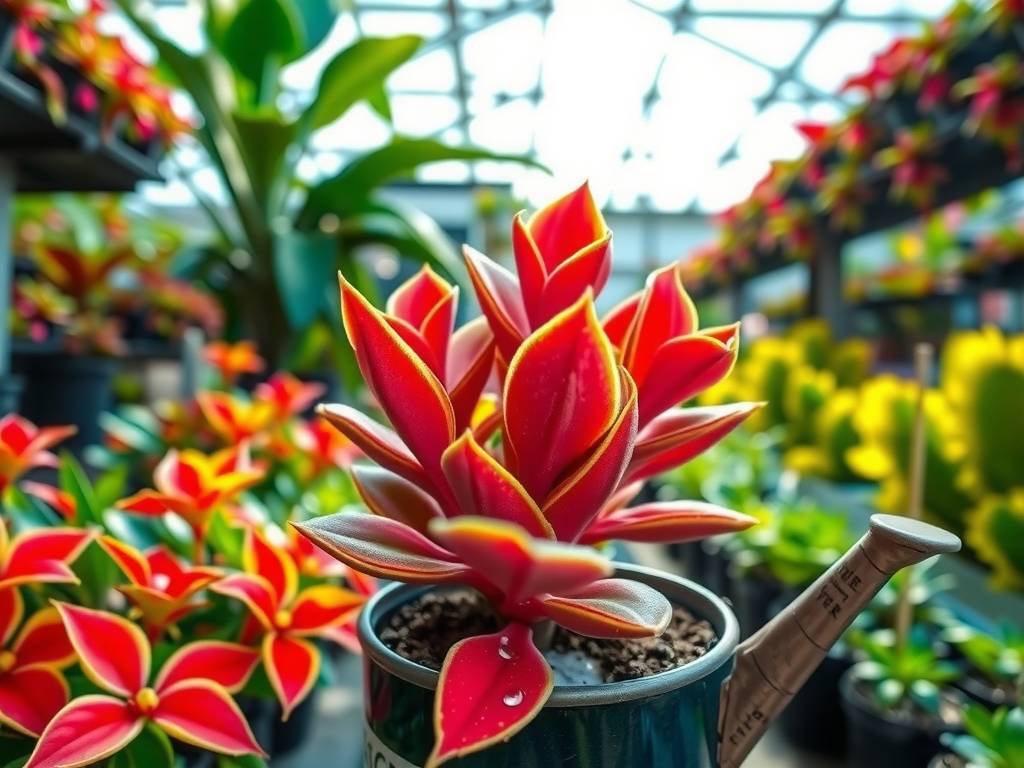
Before we dictate the rules, it's essential to understand what your plant is telling you. Kalanchoe thyrsiflora, also commonly known as the Flapjack or Paddle Plant, is a succulent native to South Africa. In its natural habitat, it thrives under intense, direct sunlight for most of the day. The red pigmentation—primarily anthocyanins—acts as a natural sunscreen, protecting the plant's tissues from potential photodamage. This means the red color is a direct, stress-induced response to high light levels. No stress from light, no red hue.
Signs of Insufficient Light:
- Etiolation: This is the most telling sign. The stem becomes abnormally elongated, stretched, and weak as the plant desperately reaches for a light source. The spaces between leaves (internodes) increase.
- Persistent Green Color: The leaves remain uniformly green or develop only a faint, pale red tinge on the very edges.
- Flattening or Drooping: While mature leaves naturally flatten, new growth may be floppy and fail to develop the characteristic upright, stacked form.
- Reduced or No Blooming: Mature plants produce a tall flower spike. Inadequate light saps the energy needed for this reproductive process.
Signs of Too Much Light (Sunburn):
- Crispy, Brown Scorched Patches: These are permanent, scarred areas, often on the leaf surfaces most exposed to the sun, particularly during a sudden increase in intensity (like a sudden move outdoors in summer).
- Bleached or White Marks: The chlorophyll gets destroyed, leaving faded, damaged tissue.
The Golden Rule: Providing Optimal Light Exposure
So, what constitutes sufficient light for vibrant Kalanchoe thyrsiflora leaves? It's a balance of intensity, duration, and quality.
Light Intensity and Type: Direct vs. Bright Indirect For the Flapjack plant to develop deep red margins and tips, it requires direct sunlight. Aim for at least 4-6 hours of direct sun daily. A south-facing window is ideal in the Northern Hemisphere. An unobstructed east or west-facing window can also work, though the red coloring may be less intense on the east side due to milder morning sun.
"Bright indirect light," which is perfect for many tropical houseplants, is often insufficient for achieving the full red potential of Kalanchoe thyrsiflora. It may survive, but it will not thrive or show its best colors. According to horticultural best practices from institutions like the Royal Horticultural Society (RHS), succulents of this type require the highest possible light levels indoors to maintain compact growth and stress coloration.
Duration: The Role of Photoperiod Longer daylight hours in spring and summer support robust growth and color development. However, the intensity is more critical than the sheer number of hours. Six hours of direct southern sun will be far more effective than 12 hours in a bright but shaded spot.
Seasonal Light Adjustments
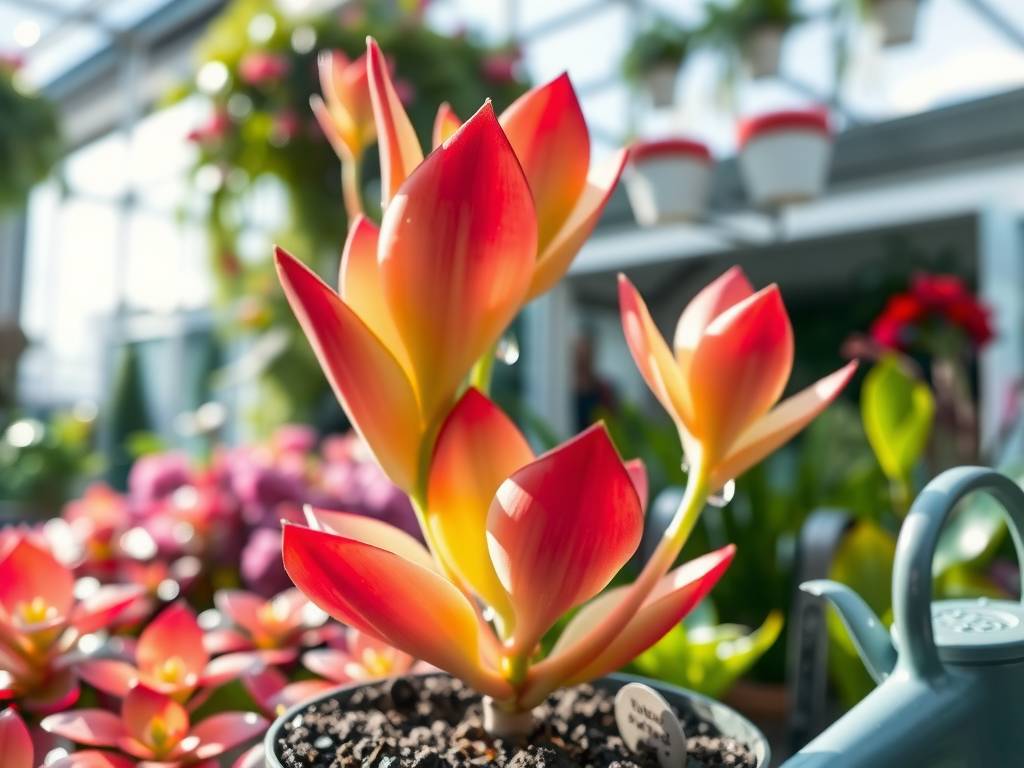
- Spring & Summer: This is the prime growing and coloring season. Your plant can handle—and needs—maximum light. If moving outdoors for the summer, acclimate it gradually over 7-10 days to prevent sunburn. Start in dappled shade, then partial sun, before finally placing it in a location with full morning sun and some protection from the harshest afternoon rays if in a very hot climate.
- Fall & Winter: Light levels drop significantly. Do your best to provide the brightest spot available. A south-facing window is crucial. The cooler temperatures combined with still-decent light can sometimes enhance red coloring. Be cautious with watering during this low-growth period.
Complementary Care: The Support System for Light Success
Light is the primary driver, but it doesn't work in isolation. These factors support your plant's ability to process that light and develop strong, colorful leaves.
Watering in Sync with Light Watering needs are directly tied to light exposure. A plant in full sun will dry out its soil much faster than one in low light. The universal succulent rule applies: Water deeply only when the soil is completely dry. In bright summer light, this may be every 7-10 days. In winter light, it could be monthly or less. Overwatering in low-light conditions is a fast track to root rot and a pale, unhappy plant.
Soil and Drainage: The Foundation Fast-draining soil is non-negotiable. Use a commercial cactus/succulent mix or create your own with 50-60% potting soil and 40-50% mineral grit like perlite, pumice, or coarse sand. This ensures roots get oxygen and aren't waterlogged, allowing the plant to focus energy on growth and color, not survival.
Temperature and Humidity Kalanchoe thyrsiflora prefers average to warm temperatures (65-85°F / 18-29°F) during the growing season. It can tolerate cooler temperatures down to 50°F (10°C) if kept dry. Low humidity is preferred. High humidity paired with low light and cool soil is a dangerous combination.
Fertilizing: Less is More Feed sparingly. A balanced, diluted liquid fertilizer (half-strength) applied once at the beginning of the growing season (spring) is often enough. Excessive fertilizer, especially nitrogen, can promote weak, green growth at the expense of the compact, red form you desire. The American Horticultural Society (AHS) emphasizes that succulents generally require minimal feeding, as over-fertilization can lead to soft growth and increased pest susceptibility.
Troubleshooting and Advanced Tips for Maximum Color
Acclimating a New or Green Plant: If your plant is currently green or has been in lower light, increase light exposure gradually. A sudden shift to full sun will cause sunburn. Move it closer to the bright window over 2-3 weeks, allowing it to build up its protective pigments.
Using Grow Lights: For homes without adequate natural light, full-spectrum LED grow lights are an excellent solution. Place the light 6-12 inches above the plant and provide 12-14 hours of artificial light per day. Look for lights with a high PPFD (Photosynthetic Photon Flux Density) output to ensure they provide enough intensity to induce stress coloring.
The Interaction with Stress: Slight environmental stress, like cooler overnight temperatures (in the 50-55°F range) coupled with strong light, can intensify the red and pink hues. This mimics its natural autumn conditions. Always prioritize avoiding frost and freezing temperatures.
Why are the edges of my Kalanchoe thyrsiflora not turning red? This is almost exclusively a light issue. The plant is not receiving enough direct, high-intensity sunlight to trigger the production of anthocyanin pigments. Assess its location and gradually move it to a brighter spot, preferably a south-facing window where it gets several hours of direct sun.
Can it recover from being stretched out (etiolated)? The stretched portion of the stem will not shrink or compact. The solution is to behead the plant. Using a sterile knife, cut the stem below the elongated section, leaving a more compact rosette. Allow the cut end to callous for a few days, then replant it in dry soil. With sufficient light, the new growth will be compact and colorful. The original base may also produce new offsets.
Is it safe to put my Paddle Plant in direct outdoor sun? Yes, and it will often thrive and color up beautifully outdoors. The critical step is acclimation. Never move a plant from indoors to full, all-day outdoor sun immediately. Start in a fully shaded area, then move to morning-only sun for a week or two, before finally introducing it to a spot with more prolonged direct exposure. This gradual process allows the plant to develop its protective pigments and avoid severe sunburn.





