bluename
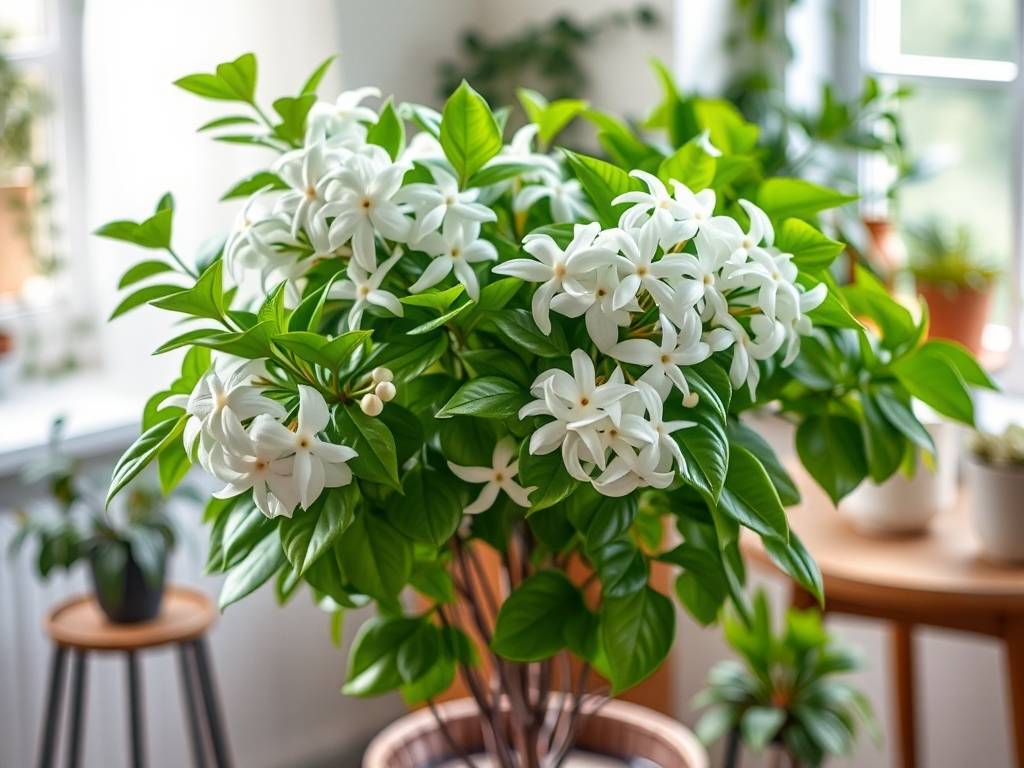
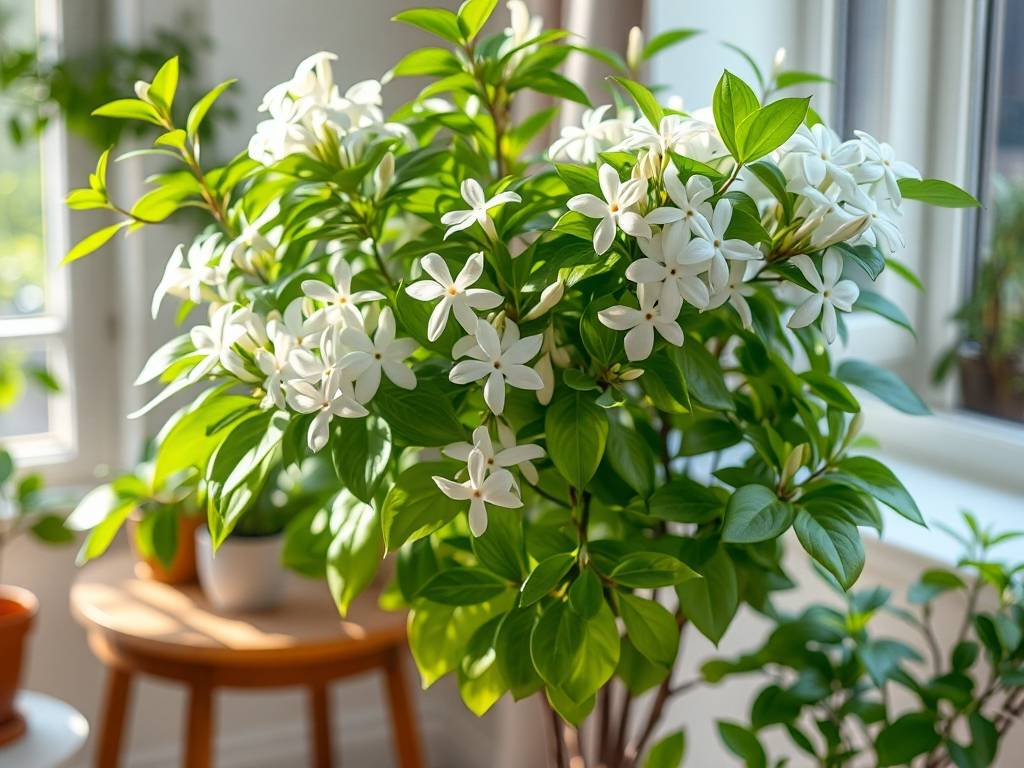
 # How to Grow Indoor Jasminum Well: White Flowers with Pure Fragrance, Abundant Blooms in Summer and Autumn Jasminum (common jasmine) is loved for its pure white, elegant flowers and fresh, rich fragrance. It reaches its blooming peak in summer and autumn, making it an excellent choice for adorning indoor spaces. However, to keep jasmine blooming continuously with intense fragrance, precise control of key care aspects—such as light, water, fertilizer, and temperature—is essential. Below is a detailed guide to indoor jasmine care: ### 1. Light: The Core "Power" for Abundant Blooms Jasmine is a typical **sun-loving plant**; sufficient light directly determines the number of flowers and the intensity of their fragrance. Especially during its summer-autumn blooming period, it needs "plenty of sunlight": - **Light Requirement**: Ensure 6–8 hours of direct sunlight daily. Prioritize placing it on a south-facing balcony, windowsill, or a bright corner of the living room with ample light. Insufficient light will lead to leggy growth (sparse, overly long stems), bud drop, and a sharp reduction in flowering. - **Summer Attention**: In midday when sunlight is extremely strong, provide mild shade (e.g., draw a thin sheer curtain) to prevent leaf scorching. However, avoid complete shade—this will hinder photosynthesis and weaken the flower fragrance. - **Winter Light Supplement**: As sunlight weakens in winter, move the jasmine to the sunniest spot indoors on clear days. If natural light is insufficient, use a full-spectrum grow light (illuminate for 4–6 hours daily) to prevent leaf yellowing and maintain healthy foliage. ### 2. Watering: Keep Soil Moist but Not Waterlogged Proper watering balances the needs of jasmine’s growth and blooming—too little water causes wilting, while overwatering leads to root rot (a major threat to indoor jasmine): - **Watering Principle**: Check the top 1–2 inches (2.5–5 cm) of soil. Water thoroughly when the soil feels slightly dry to the touch, and ensure excess water drains completely through the pot’s drainage holes (never let the pot sit in standing water in the saucer). - **Seasonal Adjustments**: - **Summer & Autumn (Blooming Period)**: Water 1–2 times a week (or more frequently if the soil dries out quickly due to high temperatures). You can also mist the leaves with room-temperature water 1–2 times a week to increase local humidity and cool the plant. - **Winter (Dormant Period)**: Reduce watering to once every 1–2 weeks. Keep the soil slightly dry to avoid root rot caused by low temperatures and slow water evaporation. - **Water Quality**: Use room-temperature tap water (let it sit overnight to evaporate chlorine) or rainwater. Avoid cold water, as sudden temperature shocks can damage the root system. ### 3. Fertilizer: Fuel for Continuous Blooming Jasmine is a "heavy feeder" during its growing and blooming seasons; proper fertilization ensures lush foliage and continuous flower production, especially in summer and autumn: - **Fertilizer Type**: - **Blooming-Promoting Fertilizer**: Use a water-soluble fertilizer high in phosphorus and potassium (e.g., N-P-K ratio 5-10-10 or 3-12-12) during the blooming period (May–October). Phosphorus and potassium stimulate bud formation and enhance fragrance. - **Growth-Promoting Fertilizer**: In early spring (March–April, before blooming), use a balanced fertilizer (e.g., 10-10-10) to support new leaf and branch growth. - **Fertilizing Frequency**: - During summer and autumn: Fertilize every 10–14 days, diluting the fertilizer to half the recommended strength (over-fertilization burns roots and causes leaf tip browning). - In spring and winter: Reduce to once every 4–6 weeks (or stop fertilizing entirely in winter if growth slows significantly). - **Key Tip**: After fertilizing, water lightly to help nutrients seep into the soil and reach the roots. ### 4. Temperature: Stable Conditions for Growth & Blooming Jasmine thrives in warm environments and is sensitive to temperature fluctuations, which directly affect its blooming cycle: - **Optimal Temperature Range**: - **Growth & Blooming Period (Spring–Autumn)**: 65–80°F (18–27°C). This temperature range promotes vigorous growth and steady bud development. - **Winter Dormancy**: 50–60°F (10–15°C). Keep it in a cool (but not cold) area; temperatures below 40°F (4°C) may cause frost damage to leaves and branches. - **Avoid Drafts**: Keep jasmine away from cold windows, air conditioners, heaters, or doorways with sudden hot/cold air blasts. Temperature shocks can lead to bud drop and leaf yellowing. ### 5. Soil: Well-Drained, Slightly Acidic to Neutral Jasmine prefers loose, well-drained soil with a slightly acidic to neutral pH (6.0–7.0). Poorly drained soil easily causes root rot: - **Soil Mix Recipe**: - 2 parts garden soil + 1 part peat moss (improves acidity and water retention) + 1 part perlite or coarse sand (enhances drainage). - Alternatively, use a commercial potting mix labeled for "flowering plants" or "tropical plants"—it usually meets the drainage and nutrient requirements of jasmine. - **Soil Renewal**: Replace the top 1–2 inches of old soil with fresh potting mix every spring to replenish nutrients and prevent soil compaction. ### 6. Pruning: Shape Plants & Stimulate New Blooms Pruning is critical for maintaining jasmine’s shape, removing weak growth, and encouraging new branches (which produce the next round of flowers): - **When to Prune**: - **After Blooming (Late Autumn)**: Focus on trimming overgrown branches, dead or yellowing leaves, and spent flower clusters. Cut back long stems to 4–6 inches (10–15 cm) to promote bushy growth. - **Early Spring (Before New Growth)**: Lightly prune leggy branches to shape the plant and prepare for spring growth. - **Pruning Tip**: Use clean, sharp pruning shears to make cuts just above leaf nodes (the point where leaves attach to stems)—this encourages new shoots to grow from those nodes. Avoid over-pruning (never remove more than 1/3 of the plant at once), as it stresses the jasmine. ### 7. Repotting: Refresh Soil & Expand Root Space Jasmine needs repotting every 1–2 years (when roots grow out of drainage holes or circle the pot’s bottom) to ensure healthy root development: - **Best Time**: Early spring (March–April), before new growth starts and before the blooming period. - **Pot Selection**: Choose a pot 1–2 inches (2.5–5 cm) larger in diameter than the current one, with **multiple drainage holes** (terracotta pots are ideal, as they are porous and help prevent waterlogging). - **Repotting Steps**: 1. Gently remove the jasmine from its old pot, tapping the pot’s sides to loosen the root ball. 2. Trim any brown, rotted roots with sterile scissors. 3. Add a layer of fresh potting mix to the new pot, place the root ball in the center, and fill the gaps with more mix. 4. Water thoroughly after repotting to settle the soil and help the roots adapt. ### 8. Pest & Disease Control Indoor jasmine is prone to a few common pests and diseases—early detection and treatment are key to preventing damage: - **Pests**: - **Aphids & Mealybugs**: These small insects suck sap from leaves and buds, causing leaf curling and sticky "honeydew" on foliage. Wipe them off with a cotton swab dipped in alcohol, or spray with insecticidal soap (follow the product label). - **Spider Mites**: Thrive in dry air, leaving fine webs on leaf undersides. Increase humidity and spray the plant (including leaf undersides) with neem oil or miticide. - **Diseases**: - **Root Rot**: Caused by overwatering or poor drainage. If leaves wilt and the root ball smells rotten, repot immediately—trim rotted roots and replace with fresh, well-drained soil. - **Leaf Spot**: Appears as brown/black spots on leaves, often due to high humidity and poor air circulation. Remove infected leaves and avoid misting leaves directly; treat with a fungicide if necessary. By following these care tips—especially ensuring ample sunlight, proper watering/fertilization, and stable temperatures—your indoor jasmine will reward you with clusters of white, fragrant flowers throughout summer and autumn, filling your space with a fresh, soothing scent!