bluename
 Spider Plant Care: From Potted Maintenance to Baby Spider Plant Transplanting
Part 1: Maintaining a Mature Potted Spider Plant
1. Light: Give Your Potted Spider Plant Bright, Indirect Light
Best Spots for Potted Spider Plants: Place your pot near an east-facing window (gentle morning sun + afternoon shade) or a north-facing window (soft, steady light all day). These spots mimic their native South African habitat, where they grow under tree canopies.
Avoid These Spots: South or west windows with unfiltered midday sun (scorches leaves) or dark corners (no light = slow growth and no pups). If you only have a south/west window, hang a sheer curtain to filter the light.
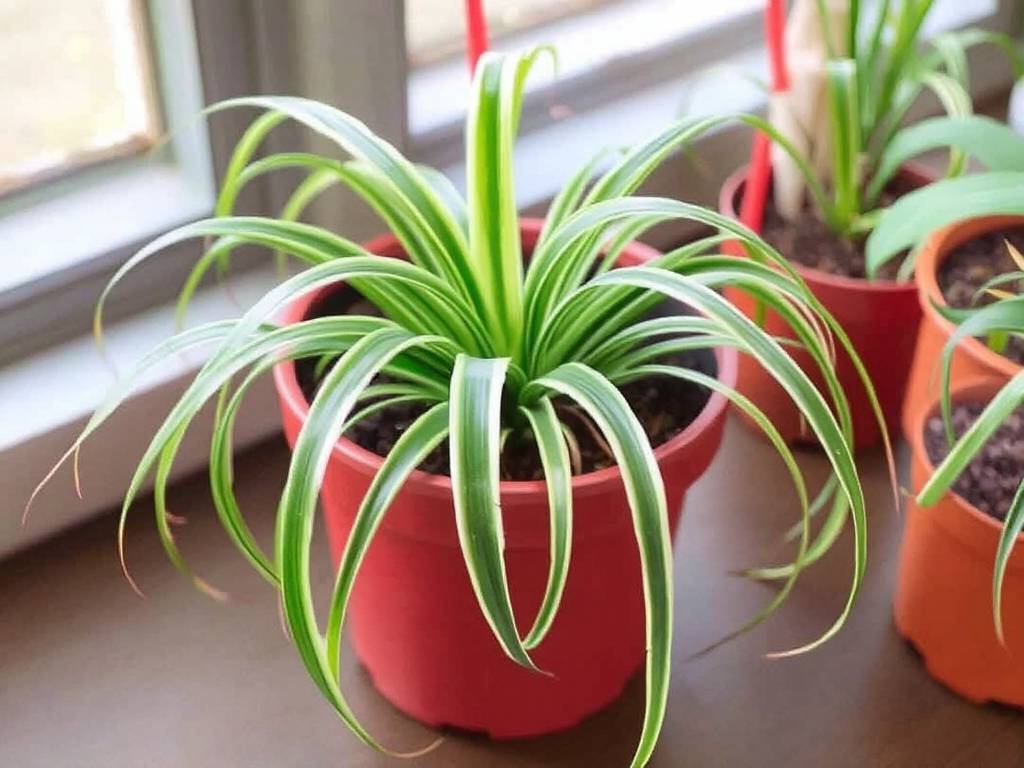
Rotate the Pot Weekly: Even in a good spot, light hits one side of the plant. Rotate the pot ¼ turn every week to ensure all leaves get equal light—this prevents lopsided growth and keeps the plant full.
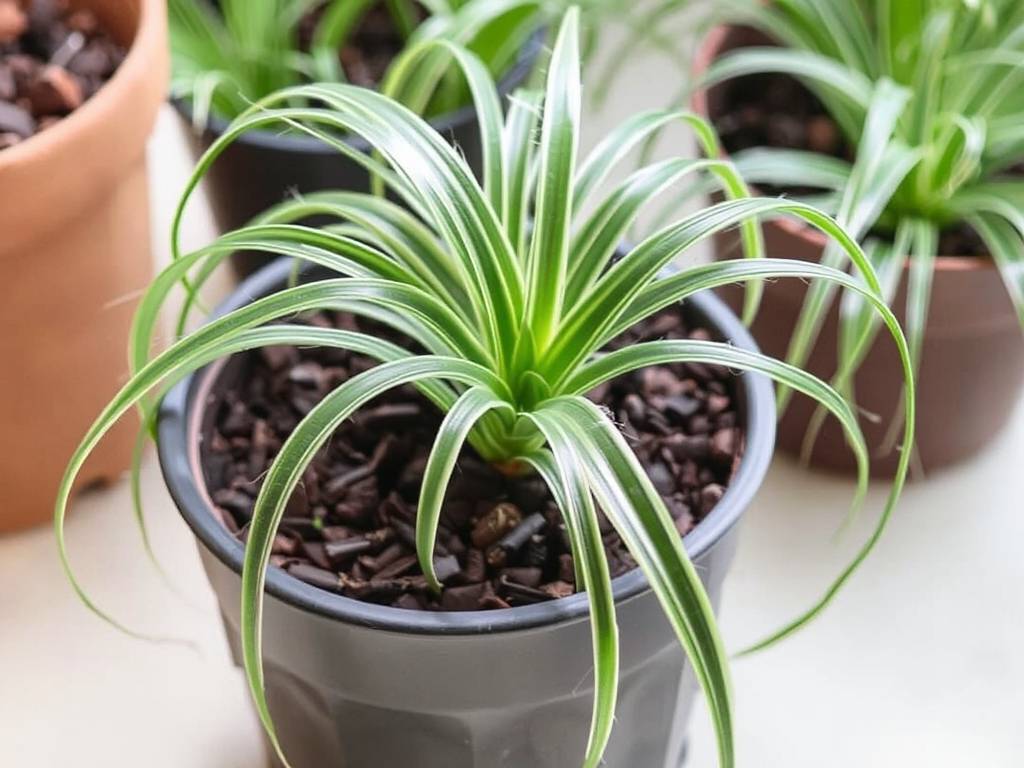
2. Watering: Don’t Overwater Your Potted Spider Plant
How Often to Water: Stick your finger 1–2 inches into the soil. Water only when the top layer is completely dry. In most homes, this means:
Summer: Every 7–10 days (warmer temps = faster soil drying).
Winter: Every 10–14 days (cooler temps = slower growth = less water needed).
How to Water: Pour room-temperature water slowly around the base of the plant (avoid getting water on the leaves—this causes fungal spots). Stop when water drains out the bottom of the pot, then empty the saucer (never let the pot sit in standing water).
Signs You’re Watering Wrong:
Overwatering: Yellow, mushy leaves + a rotten smell from the soil (root rot!). Fix: Let soil dry completely, repot if roots are rotted.
Underwatering: Dry, crispy leaf tips + wilted leaves. Fix: Water thoroughly—leaves will perk up in 24 hours.
3. Soil and Pot: Choose the Right Foundation for Potted Growth
Soil Mix: Use a well-draining mix to prevent root rot. A perfect recipe: 2 parts regular houseplant soil + 1 part perlite + 1 part peat moss (or coconut coir). This mix lets water flow through but retains just enough moisture for roots.
Pot Size: Spider plants love to be slightly root-bound—this actually encourages pup growth! Choose a pot that’s 1–2 inches larger in diameter than the root ball. If the pot is too big, the soil stays wet longer (overwatering risk).
Pot Features: Look for a pot with drainage holes (non-negotiable!) and opt for terra cotta if possible. Terra cotta is porous, so it soaks up excess moisture and helps soil dry faster—ideal for potted spider plants.
4. Fertilizing: Feed Lightly to Boost Pup Production
When to Fertilize: Only in spring and summer (growing season). Stop in fall and winter—growth slows, so fertilizer is unnecessary (and can burn roots).
What to Use: A balanced, water-soluble fertilizer (10-10-10) diluted to half strength. Or use a cactus/succulent fertilizer (low in nitrogen, which prevents leaf burn).
How Often: Every 2–3 weeks. Never fertilize a dry plant—water first, then apply fertilizer to protect roots.
5. Pruning: Keep Your Potted Spider Plant Tidy and Healthy
Trim Dead Leaves: Use clean, sterilized scissors to cut yellow, brown, or wilted leaves at the base (where they meet the soil). This stops disease from spreading.
Cut Back Overgrown Stems: If stems are too long or sparse, trim them by 1–2 inches. This encourages new, fuller growth and more pups.
Remove Spent Pups: If a pup on a stem is wilted or not growing, cut it off. The parent plant will focus energy on healthier pups instead.
Part 2: Transplanting Spider Plant Pups
1. When to Transplant Spider Plant Pups
Signs a Pup Is Ready:
It has 2–3 fully formed leaves (at least 2–3 inches long).
It has tiny white roots growing from the base (you may need to gently lift the pup to see them). If there are no roots yet, wait 1–2 weeks—they’ll grow as the pup matures.
Best Time of Year: Spring or early summer. This is when spider plants are in their growing season, so pups will recover faster and start growing quickly. Avoid transplanting in fall or winter (dormant season)—pups may not root.
2. Tools and Supplies You’ll Need
Small pots (4–6 inches in diameter) with drainage holes (terracotta is best).
Well-draining soil mix (same as the parent plant: 2 parts houseplant soil + 1 part perlite + 1 part peat moss).
Clean, sterilized scissors or pruning shears (wipe with rubbing alcohol to kill bacteria).
Room-temperature water.
Optional: Rooting hormone (to speed up root growth, but not necessary—spider plant pups root easily without it).
3. Step-by-Step Guide to Transplanting Spider Plant Pups
Step 1: Prepare the New Pots and Soil
Fill each small pot ⅓ full with the well-draining soil mix. Tap the pot gently on a surface to settle the soil (this prevents air pockets).
Water the soil lightly to moisten it—damp soil helps the pup’s roots establish faster. Don’t soak it (too much water = root rot).
Step 2: Remove the Pup from the Parent Plant
Look at the stem connecting the pup to the parent plant. Find the spot where the pup attaches—this is usually 1–2 inches below the pup’s base.
Use sterilized scissors to cut the stem cleanly. Make the cut at a 45-degree angle to reduce damage to both the pup and the parent plant.
If the pup has long roots, gently brush off any excess soil from the parent plant’s pot (be careful not to break the roots).
Step 3: Plant the Pup in Its New Pot
Hold the pup upright in the center of the new pot. The base of the pup (where the roots start) should be ½–1 inch below the rim of the pot.
Add soil around the pup, pressing gently with your fingers to secure it. Make sure the roots are fully covered (don’t leave them exposed) and the pup stands straight.
Tap the pot again to settle the soil—add more soil if needed to keep the pup upright.
Step 4: Water the Transplanted Pup
Water the pup slowly until water drains out the bottom of the pot. This helps the soil settle around the roots and removes air pockets.
Empty the saucer under the pot—never let the pup sit in standing water.
Step 5: Choose the Right Spot for the Transplanted Pup
Place the new pot in a bright, indirect light spot (same as the parent plant). Avoid direct sun (pups are more sensitive to sunburn than mature plants) and dark corners (slow growth).
Keep the temperature between 60–75°F (15–24°C)—cold temperatures (below 50°F/10°C) will stress the pup.
4. Post-Transplant Care for Spider Plant Pups
Watering: Keep the soil slightly moist (but not wet) for the first 2–3 weeks. Check the top ½ inch of soil—water when it feels dry. After 3 weeks, switch to the parent plant’s watering schedule (water when top 1–2 inches are dry).
Fertilizing: Wait 4–6 weeks before fertilizing. Pups need time to establish roots—fertilizing too early can burn new roots. When you start, use a diluted fertilizer (half strength) every 3–4 weeks in spring/summer.
Avoid Moving the Pup: Let the pup stay in its new spot for at least a month. Moving it around stresses the plant and slows root growth.
Watch for Signs of Stress: Yellow leaves or wilting mean the pup is unhappy. Check the soil (too wet or too dry?) and light (too much or too little?). Adjust as needed—pups usually recover quickly with the right care.
5. What If a Pup Doesn’t Have Roots?
Place the cut end of the pup in a glass of room-temperature water. Make sure only the bottom ½ inch of the pup is submerged (leaves should stay above water to prevent rot).
Put the glass in a bright, indirect light spot. Change the water every 2–3 days to keep it clean.
Roots will start to grow in 1–2 weeks. Once roots are 1–2 inches long, transplant the pup into soil using the steps above.
Troubleshooting Common Issues with Potted Spider Plants and Transplanted Pups
1. Potted Parent Plant Isn’t Producing Pups
Causes: Not enough light, overwatering, pot is too big, or plant is too young (needs to be 1–2 years old).
Fix: Move to a brighter spot, adjust watering (let soil dry out), repot into a slightly smaller pot, or wait if the plant is young.
2. Transplanted Pup Is Wilting
Causes: Too much water (root rot), too little water, or too much sun.
Fix: Check soil—if wet, let it dry out; if dry, water thoroughly. Move to a shadier spot if leaves have sunburn.
3. Pup’s Leaves Are Turning Yellow
Causes: Overwatering (most common), too little light, or fertilizer burn.
Fix: Let soil dry out, move to a brighter spot, or flush soil with water if fertilizer burn is the issue.