bluename
 How to Care for Large Pachira Aquatica - Staking to Prevent Trunk Tilting
You've nurtured your Pachira aquatica, often called the Money Tree, from a small desk plant into a magnificent, towering indoor tree. Its lush, glossy leaves and braided trunk bring a vibrant, tropical feel to your space. But lately, you've noticed a worrying development. The once-sturdy trunk is beginning to lean, tilt, or even bend under the weight of its own beautiful canopy. This isn't just an aesthetic issue; a tilting trunk is a sign of structural stress that can lead to breakage, instability, and the eventual decline of your beloved plant. The primary solution to this common problem for large Pachira aquatica specimens is proper, timely staking. This guide will walk you through everything you need to know about staking a large Money Tree to correct and prevent trunk tilting, ensuring your plant remains healthy, upright, and stunning for years to come.
Understanding Why Your Large Money Tree Trunk is Tilting
Before we fix the tilt, it's crucial to understand its cause. A leaning Pachira aquatica trunk rarely happens overnight. It's typically a gradual process stemming from one or more environmental factors.
The most common culprit is phototropism—the natural tendency of plants to grow toward a light source. If your Money Tree receives light predominantly from one direction, such as a nearby window, it will literally bend itself toward that light. Over months and years, this results in a significant, permanent lean.
Another key factor is uneven growth and weight distribution. A large, healthy Pachira aquatica develops a heavy canopy of leaves. If one side is denser or has longer branches, it creates an imbalance, pulling the trunk to one side. This is often linked to inconsistent rotation; failing to turn your plant regularly exacerbates uneven light exposure and growth.
Finally, physical trauma or weak root development can be at play. An accidental bump, a pet brushing against it, or even the initial planting with a poorly developed or constricted root system can create a weak point in the trunk, making it prone to leaning as it grows taller.
The Essential Guide to Staking a Large Pachira Aquatica
Staking is not a sign of failure in plant care; it's a proactive and supportive measure, especially for fast-growing tropical plants indoors. For a large Pachira aquatica plant, a sturdy stake acts as a spine, providing the external support the trunk needs to remain vertical while it strengthens.
Choosing the Right Stake and Materials
Selecting appropriate materials is the first critical step. The stake must be strong enough to bear the plant's weight without bending.
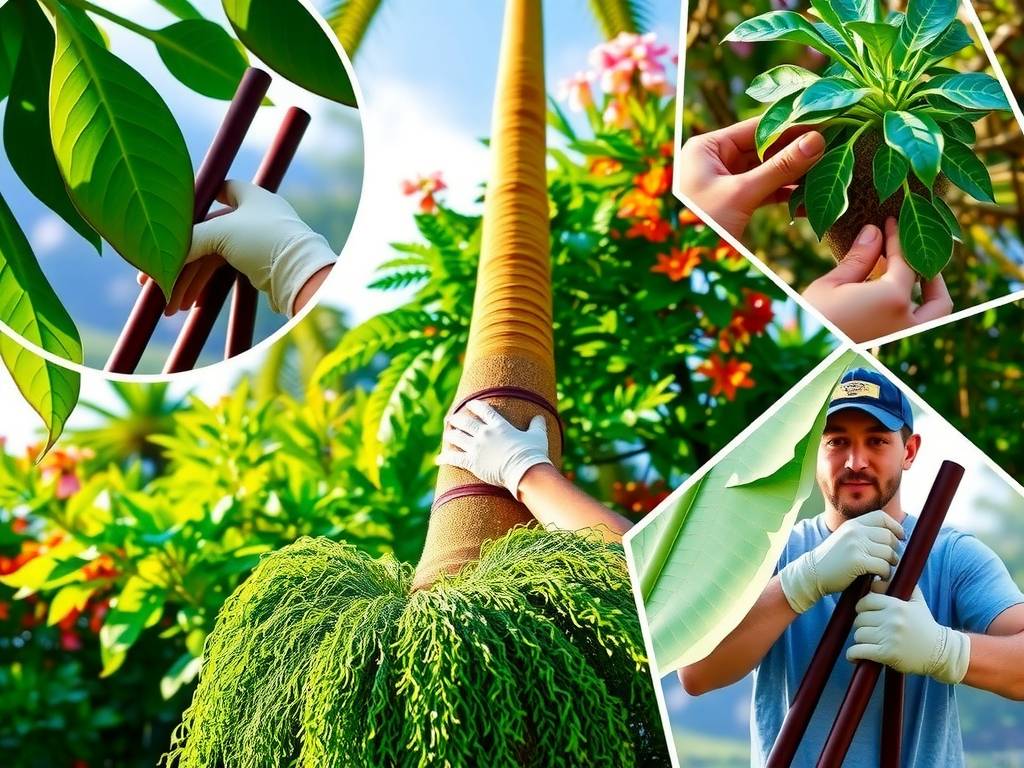
For most large Money Trees, a wooden stake (like bamboo or a sturdy garden stake) or a thick, green plastic-coated metal rod is ideal. The stake should be roughly two-thirds to three-quarters the height of your plant. You'll also need soft, flexible ties. Professional plant ties, velcro straps, or even strips of old nylon stockings are perfect. Avoid wire, string, or anything that can cut into the soft bark as the trunk expands. According to principles often endorsed by horticultural societies, the tie material should be broad and soft to distribute pressure and prevent girdling, which can severely damage the vascular system of the trunk.
Step-by-Step Process for Corrective Staking
Here is a clear, step-by-step method to safely stake your tilting Money Tree.
- Assess the Lean and Insert the Stake: Carefully examine the direction of the tilt. The stake should be inserted into the potting soil on the side opposite the lean. This positioning allows you to gently pull the trunk upright against the stake. Push the stake deep into the soil, aiming for the bottom of the pot, ensuring it's firmly anchored. Be cautious to avoid damaging the main root ball.
- Gently Straighten the Trunk: This must be done slowly and patiently. Do not force the trunk completely upright in one motion, especially if the lean is pronounced. Over several days, gently guide the trunk toward the stake, tightening your support in stages. Sudden, forceful straightening can crack or damage the trunk.
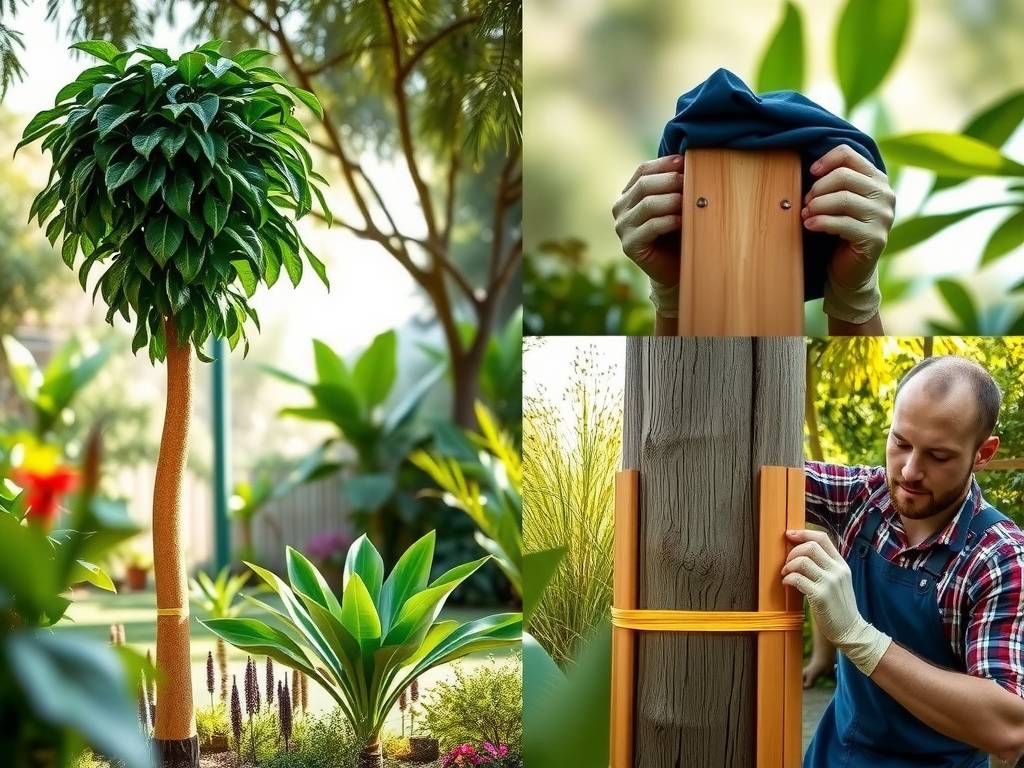
- Secure with Proper Ties: Attach the trunk to the stake using your soft ties. Create a figure-eight pattern with the tie between the stake and the trunk; this prevents the trunk from rubbing directly against the stake. Place ties at several points along the trunk's height for even support, but ensure they are loose enough to allow for some natural movement and, most importantly, for trunk growth. A good rule of thumb is to leave enough space to slip a finger between the tie and the trunk.
- Monitor and Adjust: Check the ties every month. As the trunk thickens, you will need to loosen the ties to prevent constriction. The goal of staking a large Money Tree for support is to train and assist it, not to strangle it.
Complementary Care to Strengthen Your Money Tree
Staking addresses the symptom, but optimal care addresses the root causes and helps your plant build its own strength.
- Optimize Light Exposure: Provide bright, indirect light. If possible, rotate your Pachira aquatica a quarter turn every time you water it. This ensures all sides receive equal light, promoting symmetrical, upright growth and preventing phototropic leaning.
- Water and Feed Properly: A consistent watering routine—allowing the top inch or two of soil to dry out between waterings—promotes steady, healthy growth. During the growing season (spring and summer), feed with a balanced, water-soluble fertilizer diluted to half strength. Proper nutrition supports stronger cell walls and overall plant vigor.
- Prune for Balance: If one side of the canopy is disproportionately heavy, don't hesitate to prune. Using clean, sharp shears, trim back longer branches to encourage a more balanced shape. Pruning also stimulates new, bushier growth.
When is the Best Time to Stake a Money Tree?
The ideal time to install a stake is during the active growing season, typically spring or early summer. The plant is producing new tissue and can adapt more readily to being guided and supported. However, if you notice a sudden or severe lean, corrective staking should be done immediately, regardless of the season, to prevent further damage or a potential fall.
Can I Use Multiple Stakes for a Very Large or Braided Money Tree?
Absolutely. For particularly tall, heavy, or multi-trunked (braided) specimens, a single stake may not provide sufficient support. Using two or three stakes arranged evenly around the pot can create a more stable support system. Secure the trunk(s) to each stake with separate ties, following the same gentle figure-eight method. This is often necessary for providing support for a tilting Pachira aquatica with a complex structure.
How Long Should the Stake Remain in Place?
This depends on the plant's growth and the reason for staking. For a corrective measure on a leaning trunk, the stake may need to stay for at least one full growing season, possibly longer. The aim is to give the trunk time to strengthen and "set" in its new, upright position. For a very large, top-heavy plant, permanent, discreet staking might be the safest option to ensure long-term stability. You can always replace a visible stake with a more decorative one as the plant matures.
A tilting trunk on your large Pachira aquatica is a fixable issue. By understanding the causes, implementing a careful staking technique with the right materials, and adjusting your ongoing care routine to promote balanced growth, you can restore your plant's posture and health. Remember, staking is an act of support, not a critique. With patience and consistent care, your Money Tree will continue to be a thriving, vertical centerpiece in your home, bringing its lush, green energy for many years to come.