bluename
 How to Care for Variegated Rubber Plant - Prune to Promote Branches
You've brought home a stunning variegated rubber plant, captivated by its beautiful marbled leaves of green, cream, and sometimes pink. But now, instead of the bushy, branching specimen you envisioned, you're staring at a single, lanky stem stretching towards the ceiling. It's a common frustration. Many plant enthusiasts find their Ficus elastica 'Variegata' growing tall and sparse, refusing to develop the full, lush form that makes this plant so desirable.
The secret to transforming your leggy plant into a dense, architectural showpiece lies in strategic pruning. Learning how to care for variegated rubber plant properly, especially through pruning to promote branches, is the key. This guide will walk you through the why, when, and exactly how to prune your plant for a fuller, healthier, and more visually stunning result.
Understanding Your Variegated Rubber Plant's Growth
Before you make the first cut, it's crucial to understand how this plant grows. The variegated rubber plant has a strong apical dominance. This means the main, central growing tip (the apical meristem) produces hormones that suppress the growth of buds lower down on the stem. Its primary goal is to grow upward towards light.
When you prune the top off, you remove the source of these suppressing hormones. This signals the plant to redirect its energy. The dormant buds (called lateral buds) located at the leaf nodes—the points where leaves attach to the stem—are then activated. These buds will swell and eventually grow into new branches, creating the fuller shape you want.
Why Pruning is Essential for a Variegated Rubber Plant
Pruning isn't just about aesthetics; it's a vital component of holistic plant care. Regular, thoughtful pruning promotes a stronger structure, improves light penetration to lower leaves, and can even rejuvenate an older plant.
According to principles often emphasized by horticultural authorities, proper pruning aligns with plant health. It removes dead or diseased material, encourages air circulation, and allows the plant to allocate resources more efficiently to new, vigorous growth. For a variegated plant, which has less chlorophyll due to its light-colored patterns, ensuring robust health through good practices is even more important.
The Right Tools for the Job
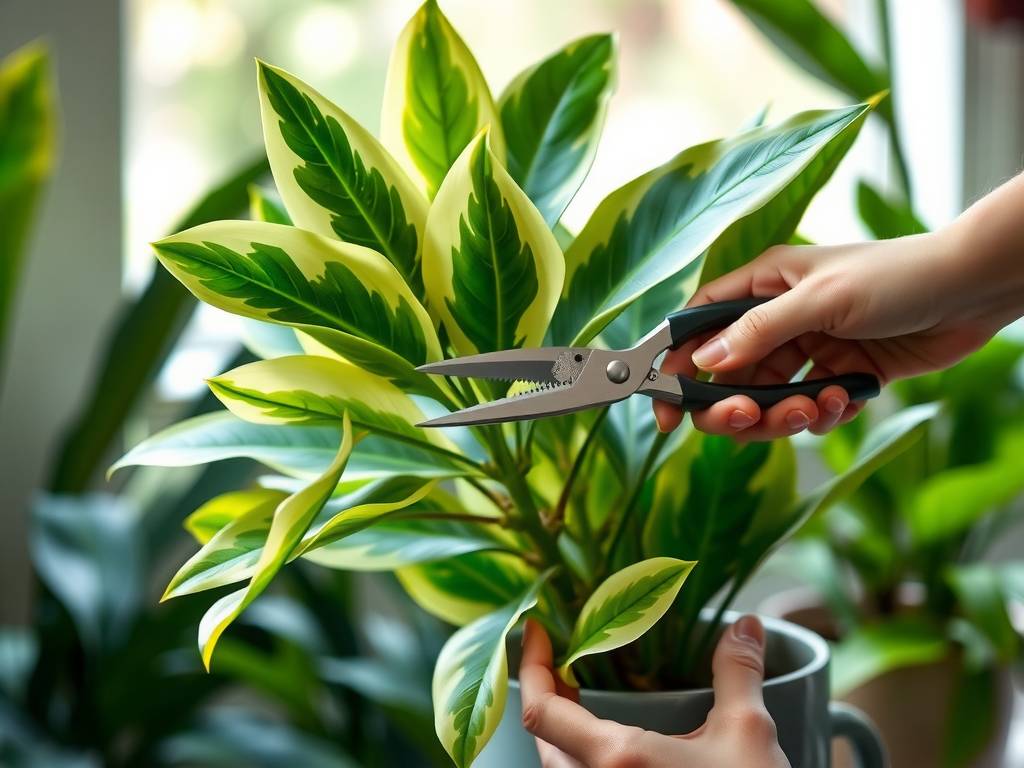
Always use clean, sharp tools. This makes a clean cut that heals quickly, minimizing the risk of disease or pest entry. Blunt tools can crush the stem, causing damage that takes longer to recover.
For most rubber plant stems, sharp pruning shears or secateurs are perfect. For very thick, woody stems, a small pruning saw might be necessary. Wipe your blades with rubbing alcohol or a disinfectant wipe before and after use, especially if moving between plants.
The Best Time to Prune for Branching
Timing your prune significantly impacts the results. The ideal time is during the active growing season, typically from late spring through early summer. During this period, the plant is in its peak growth mode, with ample light and warmth to fuel rapid recovery and new bud development.
Pruning in the dormant season (fall and winter) is not recommended. Growth is slow, and the plant may struggle to produce new branches, leaving it looking cut back without the rewarding flush of new growth.
A Step-by-Step Guide to Prune to Promote Branches
Now, let's get to the practical steps. This process will teach you exactly how to prune a variegated rubber plant for bushier growth.
Identify Your Goals and Cutting Points
First, step back and look at your plant's structure. Decide how tall you want it to be and where you'd like new branches to emerge. New branches will grow from the node just below your cut. Choose a spot above a leaf node that faces the direction you'd like a new branch to grow (often outward, to widen the plant).
Make the Cut
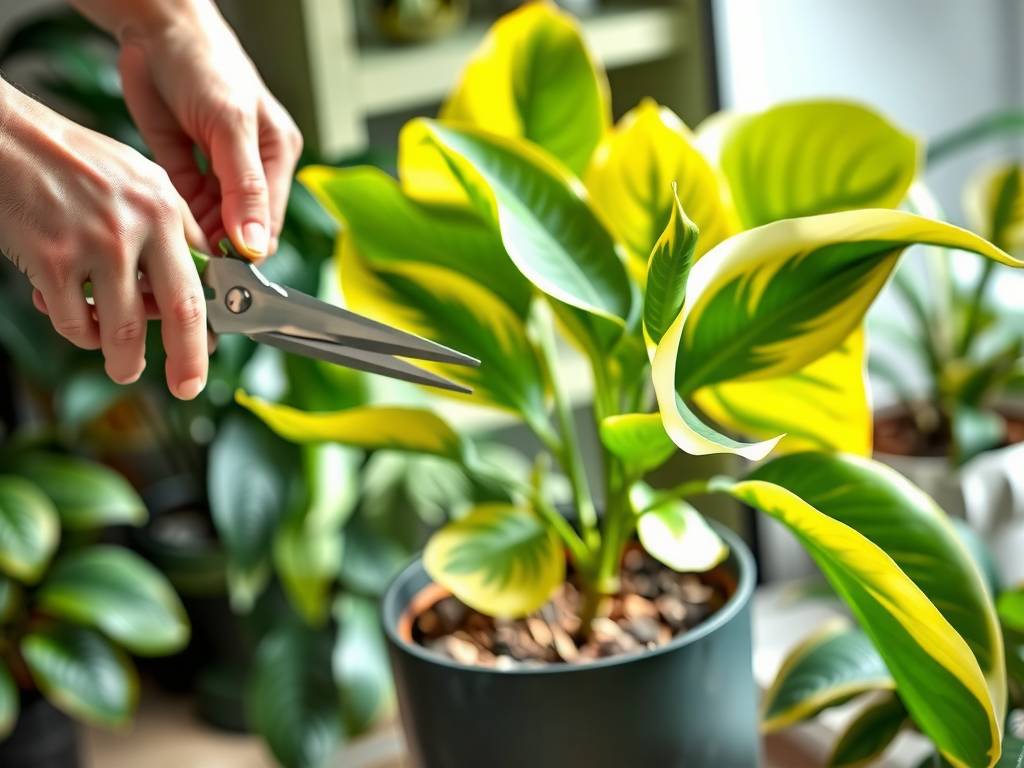
Locate your chosen node. Using your sharp, clean shears, make a clean, angled cut approximately 1/4 inch (about 0.5 cm) above that node. The slight angle helps prevent water from pooling on the cut surface. Don't leave a long stub above the node, as this can die back and look unsightly.
You can be bold. If your plant is very tall and leggy, you can cut the main stem down to 6-12 inches above the soil. This seems drastic, but it forces the plant to push multiple new branches from near the base, creating a very full, shrub-like appearance.
Handle the Sap
Be prepared for a milky white sap to ooze from the cut. This latex is a natural irritant for some people and can be messy. You can dab it gently with a paper towel until it stops. Allow the cut to callus over naturally; do not apply wax or sealants.
Aftercare: Encouraging New Growth
Place your pruned plant in a location with bright, indirect light. This provides the energy needed for new growth. Resume normal watering, allowing the top inch of soil to dry out between waterings. You can consider a light application of a balanced, liquid houseplant fertilizer at half-strength about 4-6 weeks after pruning to support the new growth spurt.
Be patient. It can take several weeks to see the tiny buds at the nodes begin to swell and eventually unfurl into new stems and leaves.
Advanced Techniques: Notching for Precise Branching
If you want more control over where a new branch forms without removing significant height, you can use a technique called "notching." This involves making a small, shallow cut above a dormant bud you wish to activate. The minor injury interrupts the hormonal flow just to that bud, encouraging it to grow while keeping the main stem intact. It's a more advanced but highly effective method for shaping.
Combining Pruning with Overall Care
Pruning is most effective when combined with excellent overall care. Your variegated rubber plant care routine must support its recovery and new growth.
Light and Water Needs
Variegated varieties need bright, indirect light to maintain their stunning color and support growth. Insufficient light can lead to slower recovery, less variegation, and legginess returning. Water thoroughly when the top 1-2 inches of soil are dry, and ensure your pot has excellent drainage. Consistent care reduces plant stress.
Common Pruning Mistakes to Avoid
Avoid pruning in low light seasons. Don't use dirty tools. Never remove more than one-third of the plant's foliage at once if you can help it, though a hard prune on a very leggy plant is an exception. Most importantly, don't expect immediate results; plant growth takes time.
Will pruning hurt my plant?
Not when done correctly. Pruning is a natural process that mimics herbivory in the wild. Your plant has evolved to respond to damage by growing back more vigorously. Strategic pruning is a helpful intervention, not a harmful one. Experts in horticulture affirm that judicious pruning is a cornerstone of maintaining plant health and form.
How many new branches will grow from one cut?
Typically, you will get 2-3 new branches emerging from the nodes just below your cut. Sometimes only one will take the lead, but often multiple buds activate. The notching technique is designed to prompt a single, specific branch.
Can I propagate the stem I cut off?
Absolutely! The stem tip you removed is perfect for propagation. Allow the cut end to callus over for a day or two, then place it in water or moist potting mix. Ensure at least one node is submerged or buried, as this is where roots will form. This way, you not only create a bushier parent plant but also gain a whole new plant.
Transforming a tall, single-stemmed variegated rubber plant into a lush, multi-branched masterpiece is deeply rewarding. It requires a moment of courage to make that first cut, but the process is straightforward and rooted in simple plant biology. By providing bright indirect light, appropriate water, and a timely prune during the growing season, you directly influence your plant's architecture. Remember, patience is key. In a few months, with consistent care, you'll be rewarded with a denser, more vibrant, and truly spectacular focal point in your home.