bluename
 How to Care for Large Fiddle Leaf Fig - Summer Shade to Prevent Sunburn
You've nurtured your large fiddle leaf fig into a stunning, towering centerpiece. Its broad, glossy leaves are a testament to your care. But as summer's intensity builds, you notice something alarming – unsightly brown, crispy patches marring those beautiful leaves. Your prized plant is suffering from sunburn. This is a common yet preventable crisis for indoor tree owners during the sunniest months. Understanding how to care for a large fiddle leaf fig with strategic summer shade is not just about aesthetics; it's crucial for preventing long-term damage and ensuring your plant thrives year-round.
This guide will walk you through everything you need to know about shielding your fiddle leaf fig from harsh sunlight. We'll cover how to identify sunburn, implement effective shading techniques, and adjust your overall care routine for the season. By the end, you'll be equipped with the knowledge to transform potential sunlight stress into sustained, vibrant growth.
Understanding Fiddle Leaf Fig Sunburn
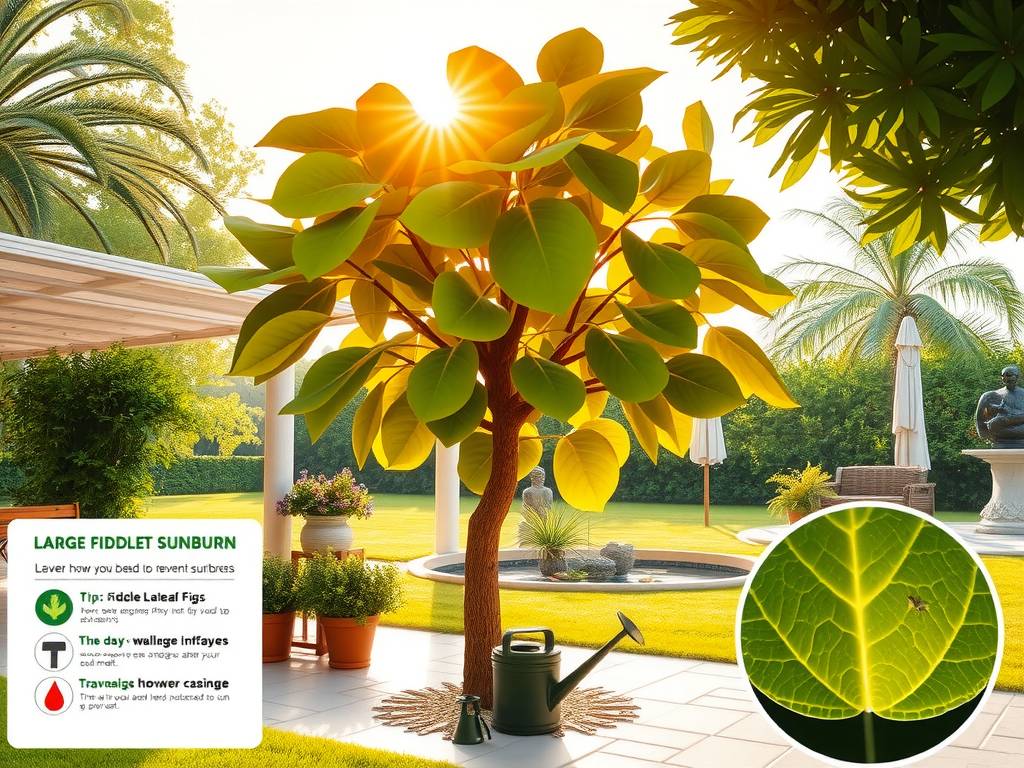
Sunburn on a fiddle leaf fig isn't like a human sunburn; it's a form of leaf scorch. The plant's cells, particularly in leaves acclimated to lower light, are damaged by excessive ultraviolet radiation and heat. This damage disrupts photosynthesis and can create permanent scars.
The signs are distinct. Initially, you might see pale, bleached areas on the leaves most exposed to light. This quickly progresses to crispy, brown spots or patches, often with a yellow halo. These spots are dry and brittle to the touch. In severe cases, entire leaves may turn brown, curl, and drop. It's important to distinguish this from other issues like fungal infections, which often appear as smaller, wet-looking brown spots, potentially with a yellow ring, that can spread. Sunburn damage is typically static and confined to the areas receiving the most direct light.
Why Large Ficus Lyrata Are Especially Vulnerable
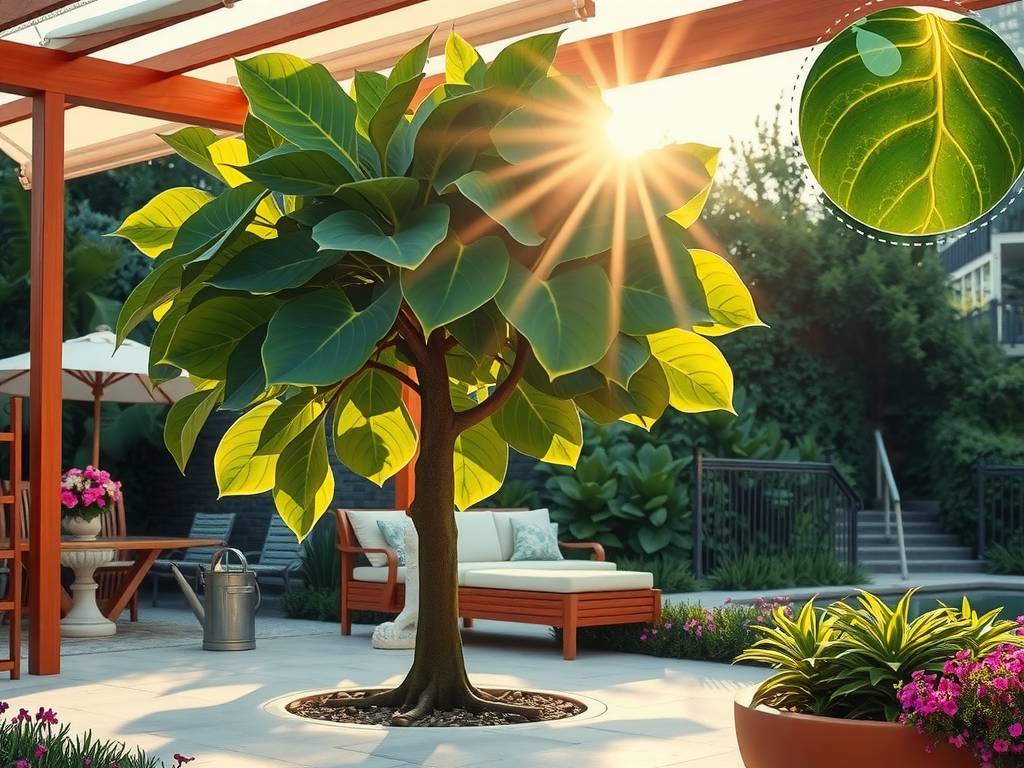
A large, mature fiddle leaf fig presents unique challenges. Its size often means it's placed near a large window or sliding door to accommodate its height and light needs. This fixed position makes it harder to move when the sun's angle changes with the seasons. Furthermore, a big fiddle leaf fig tree has invested significant energy into growing each large leaf. Losing several to sunburn is a major setback for the plant's energy reserves and your interior landscape.
Expert arborists from the American Horticultural Society (AHS) note that "indoor trees experience light very differently than their outdoor counterparts. Glass can magnify heat and light intensity, turning a bright window into a scorching hotspot, especially for broad-leaved plants like the fiddle leaf fig." This "greenhouse effect" behind glass is a primary culprit for indoor sunburn.
Crafting the Perfect Summer Shade Strategy
Providing shade doesn't mean plunging your light-loving plant into darkness. It's about filtering and diffusing the intense, direct rays of the summer sun. The goal is to provide bright, indirect light, which is the fiddle leaf fig's sweet spot.
Relocation is the First Defense The simplest solution is to move your plant back from the window. During summer, a distance of 3 to 6 feet from a south or west-facing window can make all the difference. This allows the plant to enjoy the ambient brightness without being in the direct line of fire. If moving a large plant in a heavy pot is difficult, consider using a plant dolly. This allows for easier seasonal adjustments and rotation for even growth.
Employ Light-Diffusing Window Treatments If moving isn't feasible, modify the light at its source.
- Sheer Curtains: A classic and effective solution. A lightweight, white sheer curtain will soften and scatter direct sunlight, transforming it into the perfect diffuse glow.
- Privacy Films: Static-cling window films are a modern alternative. Options that provide a "frosted" or lightly tinted effect can cut UV rays and glare significantly without darkening the room excessively. The Royal Horticultural Society (RHS) advises that "for sensitive plants, diffusing direct sun through a blind or scrim can prevent leaf scorch while maintaining adequate light levels for growth."
- Adjustable Blinds: Venetian or vertical blinds offer superb control. You can angle the slats to block the direct midday sun while still allowing reflected light to reach the plant.
Utilize Natural Shade from Other Plants In a well-lit room, you can create a layered canopy. Positioning other tall, leafy plants between your fiddle leaf fig and the window can create a dappled light effect, similar to its natural understory habitat.
The Gradual Acclimation Principle Sometimes, a little toughening up is beneficial. If you want your fiddle leaf fig to tolerate more light long-term, practice gradual acclimation. Over 4-6 weeks, slowly increase its exposure to direct morning sun (which is gentler than afternoon sun) by an hour or so each week. Watch the leaves closely for any signs of stress. This process helps the leaves develop more protective pigments.
Complementary Summer Care Adjustments
Shading is the star of the summer show, but your overall care routine must support this strategy.
Watering with Precision With more heat and light (even if filtered), your plant may use water faster. However, with less direct sun, evaporation from the soil might slow. This makes the "finger test" more important than ever. Insert your finger 2-3 inches into the soil. Water thoroughly only when the top few inches feel dry. Overwatering in reduced light conditions is a fast track to root rot. Ensure your pot has excellent drainage.
Humidity Management Summer air can be dry due to air conditioning. Fiddle leaf figs appreciate humidity around 40-60%. Combat dry air by grouping plants together, using a pebble tray filled with water placed beneath the pot (ensure the pot sits on the pebbles, not in the water), or running a humidifier nearby. Adequate humidity helps leaves stay supple and resilient.
Hold Off on Major Fertilizing While it's growing season, if your plant is recovering from sun stress or living in significantly reduced light due to shading, pause on heavy fertilizing. A diluted, balanced liquid fertilizer applied once a month is sufficient. The focus should be on recovery and steady growth, not forced, lush growth that the light conditions can't support.
Monitoring and Maintenance Regularly wipe the dust off the large leaves with a damp cloth. Clean leaves can absorb more of the available diffused light efficiently. Continue to rotate your plant a quarter turn every time you water to promote balanced growth, as the light source direction will still be the brightest part of the room.
What to Do If Sunburn Strikes
Despite your best efforts, you might still find a scorched leaf. Don't panic.
- Assess the Damage: If the leaf has a few small brown spots but is otherwise healthy and green, leave it. The plant can still use the undamaged portions for photosynthesis.
- Prune Strategically: If a leaf is more than 50% damaged, crispy, or looks unsightly, it's time to remove it. Use clean, sharp pruning shears. Cut the leaf stem back to just above the main trunk or a branch, making a clean cut. Do not tear it off.
- Adjust Immediately: The appearance of sunburn is a clear signal. Re-evaluate your shading strategy and move the plant further from the light source or add another layer of diffusion.
Can a sunburned fiddle leaf fig leaf recover? No, the damaged tissue on a sunburned leaf will not turn green again. The brown, crispy spots are permanent scars. However, the leaf can continue to function if the damage is minimal. The plant will eventually focus its energy on producing new, healthy leaves. Your role is to prevent further damage and provide optimal conditions for new growth.
My fiddle leaf fig is in a south-facing window. Is it doomed in summer? Not at all. A south-facing window provides excellent light for a fiddle leaf fig. The key is managing the intensity during peak summer months. Using a sheer curtain or moving the plant 4-5 feet back from the window during late spring and summer will provide the perfect balance of bright, indirect light. You can remove the filter or move it closer again in the fall and winter when the sun is less intense.
Are there any products that can protect my plant from sunburn? While there are anti-transpirant sprays sold for outdoor use, they are not generally recommended for indoor fiddle leaf figs. These products can clog the leaf's pores (stomata) and interfere with natural processes. The most effective and safest "products" are physical barriers: sheer curtains, blinds, or window films. Your best investment is in tools that allow you to control the light environment.
Providing the right summer shade for your large fiddle leaf fig is an act of preventative care that pays dividends in year-round health and beauty. By understanding the signs of sun stress, implementing smart shading techniques like strategic placement and light-diffusing window treatments, and adjusting your watering and feeding routine, you create a stable environment where your plant can flourish. Remember, the goal is to mimic the dappled light of its natural habitat. With observation and these simple adjustments, you can enjoy your majestic, large-leaved companion without the worry of summer sunburn, ensuring it remains a vibrant focal point in your home for years to come.