bluename
 How to Care for Variegated Succulents: Environment Control to Maintain Variegation
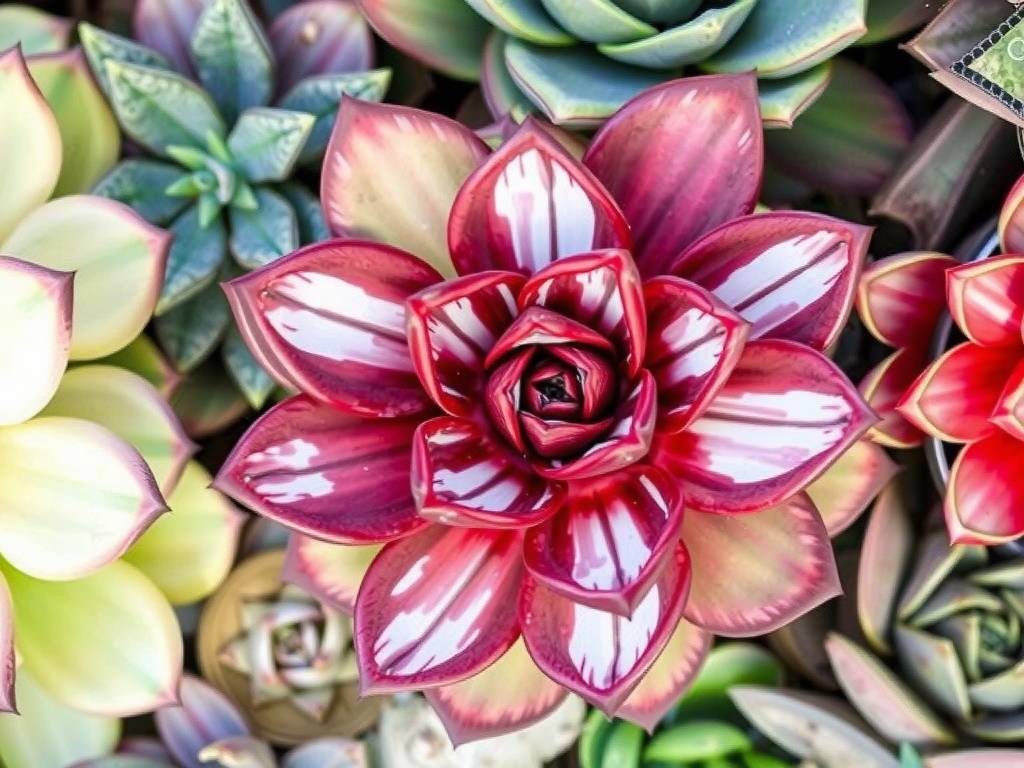
You've finally found that stunning variegated succulent you've been dreaming of. Its leaves are a beautiful mosaic of creamy whites, soft yellows, and vibrant greens. But after a few weeks on your windowsill, you notice something alarming. The brilliant variegation is fading, and those unique pale sections are slowly turning a uniform green. Your prized plant is losing what made it so special. This is the most common heartbreak for collectors of variegated succulents. The secret isn't just in how you water it; it's in mastering its environment. Proper environment control for variegated succulents is the key to preserving those stunning patterns long-term.
Understanding variegation is the first step to maintaining it. Unlike typical green plants that are packed with chlorophyll, variegated plants have sections where this green pigment is missing, revealing white, yellow, or even pink tones. This lack of chlorophyll makes the variegated parts more delicate and less efficient at photosynthesis. Therefore, your care strategy must adapt. You're not just keeping a plant alive; you're carefully balancing its light, temperature, and humidity to support both its green and non-green parts. Let's break down the precise environmental controls you need to implement.
The Critical Role of Light Exposure
Light is the most significant factor in preserving or losing variegation. It's a double-edged sword. Too little light, and the plant will try to produce more chlorophyll to survive, causing the variegated areas to "revert" to green. Too much direct, harsh light, and the pale, chlorophyll-deficient sections can scorch, bleach, or die back.
The goal is to provide abundant, but indirect, bright light. An east-facing window is often ideal, offering several hours of gentle morning sun. A south or west-facing window may work if you use a sheer curtain to diffuse the intense afternoon rays. According to a study by the University of Florida's Environmental Horticulture Department, variegated foliage plants often require 30-50% less direct light intensity than their fully green counterparts to avoid stress while maintaining color patterns.
Observe your plant's response. If the colorful variegation is shrinking and green is taking over, it needs more light. If the pale areas are turning brown, crispy, or looking bleached, it's getting too much direct sun. Rotate your pot regularly to ensure all sides receive even light, promoting symmetrical variegation.
Optimizing Temperature and Seasonal Adjustments
Variegated succulents thrive in stable, moderate temperatures, typically between 65°F and 80°F (18°C - 27°C). Dramatic fluctuations can shock the plant, leading to stress that often manifests as loss of variegation or poor growth.
During the active growing season (spring and summer), maintain this consistent warmth. Avoid placing your plant near drafty windows, air conditioning vents, or heating radiators. The real challenge comes with seasonal changes. As noted by succulent expert Dr. Laura Greene in The Succulent Journal, "Variegated specimens are often the first to show stress from temperature extremes. Their reduced chlorophyll means less metabolic resilience."
In winter, most succulents enter a dormancy period. Cooler temperatures (around 50-55°F / 10-13°C) can actually help intensify some colorations, but this must be paired with significantly reduced watering. However, avoid letting temperatures drop below 40°F (4°C), as the sensitive variegated tissue is highly susceptible to frost damage and rot.
Mastering the Watering Balance
Watering practices are intrinsically linked to your light and temperature setup. The pale parts of variegated succulents are more prone to rot and edema (water-soaked spots) because their cell structure is different. Overwatering is a fast track to losing your plant entirely.
The golden rule is "soak and dry." Only water when the soil is completely dry, and then water thoroughly until it runs out the drainage hole. In bright, warm conditions, this may be every 7-10 days. In low light or cool conditions, it could be every 3-4 weeks. Always err on the side of underwatering. A slightly thirsty variegated succulent will hold its pattern better than one sitting in soggy soil, where roots rot and stress triggers reversion.
Soil and Potting for Optimal Health
The right soil mix is your insurance policy against overwatering. A standard potting soil is a death sentence for most succulents, especially variegated ones. You need a fast-draining, gritty mix. A good starting formula is 50% potting soil and 50% perlite or pumice. For extra safety, many collectors use a specialized cactus and succulent mix with added coarse sand.
The pot matters too. Always use a container with a drainage hole. Terracotta pots are excellent because they are porous, allowing the soil to dry from the sides as well as the top. This creates a healthier root environment, which supports stable and vibrant variegation above the soil.
Addressing Humidity and Airflow
While succulents prefer low humidity, extremely dry air (common in heated homes) can sometimes cause the tips of variegated leaves to dry out. Average household humidity is usually fine. More critical is airflow. Stagnant, humid air around the leaves encourages fungal diseases. Ensure your plant has good ventilation—a gentle breeze from a fan in another room can help. This simple step in your environment control for variegated succulents prevents many common issues.
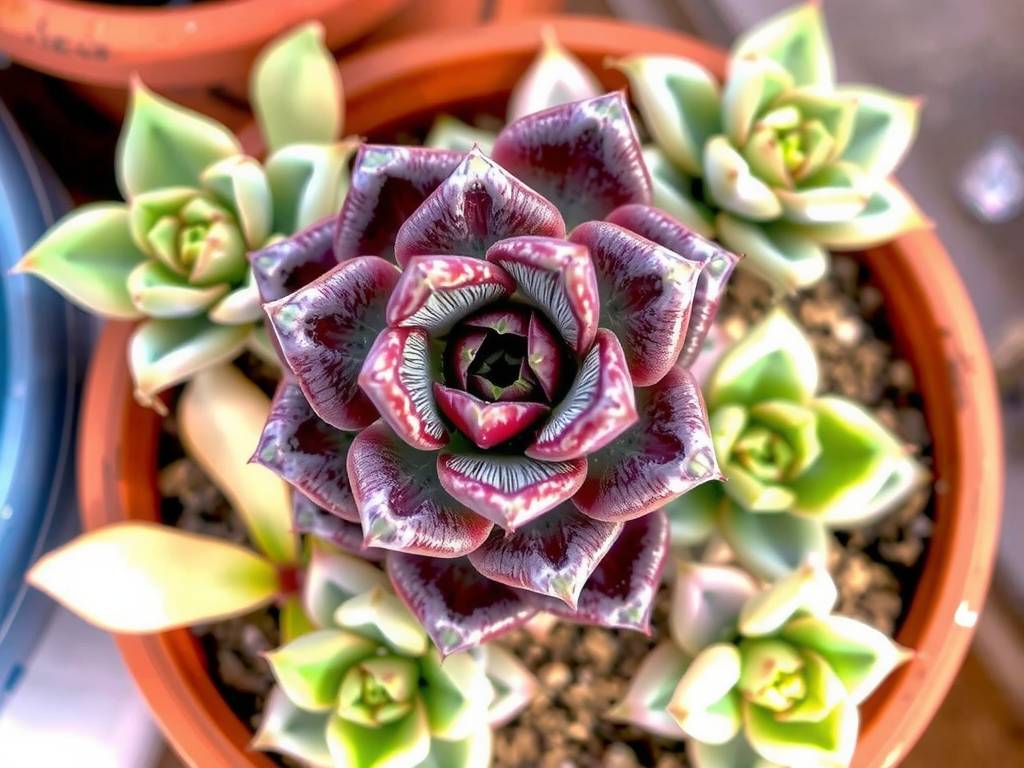
Why is my variegated succulent turning all green? This is almost always due to insufficient light. The plant is compensating for the lack of chlorophyll in its variegated parts by producing more green pigment to capture more energy. Gradually move it to a brighter location with indirect light. In some cases, you may need to prune away a fully reverted green stem to encourage the variegated growth.
Can a reverted succulent become variegated again? Once a stem or leaf has fully reverted to solid green, that specific growth will not become variegated again. However, you can prune that stem back to a point where the growth was still variegated. The new shoots that emerge have a chance of carrying the variegated pattern, especially if you correct the lighting conditions immediately.
Are variegated succulents slower growing? Yes, typically they are. With less chlorophyll across the entire leaf surface, the plant photosynthesizes less efficiently. This results in slower growth compared to a fully green version of the same species. Patience is key. Focus on maintaining stable conditions for healthy growth rather than trying to force it with extra fertilizer, which can harm the plant.
Preserving the stunning artwork of a variegated succulent is a rewarding practice in attentive plant care. It requires moving beyond basic succulent knowledge to a nuanced understanding of environmental balance. By providing bright, indirect light, stable temperatures, meticulous watering, and a gritty soil mix, you create a sanctuary where those beautiful pale patterns can thrive. Remember, you are not just preventing reversion; you are actively cultivating and showcasing a living masterpiece. Observe your plant closely, adjust your care with the seasons, and enjoy the unique beauty that proper environment control can sustain.