bluename
 How to Care for Hydroponic Succulents: Mastering Regular Water Change & Nutrient Addition
You’ve made the exciting leap into hydroponic gardening with your succulents, drawn by the promise of faster growth and a sleek, soil-free setup. But now you might be noticing signs that weren’t in the brochure: algae creeping up the sides of your vase, roots looking a bit slimy, or growth that seems to have stalled. The initial simplicity can quickly give way to confusion. The most common pitfall for new growers lies in mismanaging the very lifeblood of the system—the nutrient solution. Proper care for hydroponic succulents hinges on two non-negotiable routines: a disciplined water change schedule and precise nutrient addition. Neglecting these is the fastest way to see your resilient desert plants struggle in their new aquatic home.
This guide will walk you through the exact steps to master these routines, transforming uncertainty into confidence and ensuring your hydroponic succulents not only survive but truly thrive.
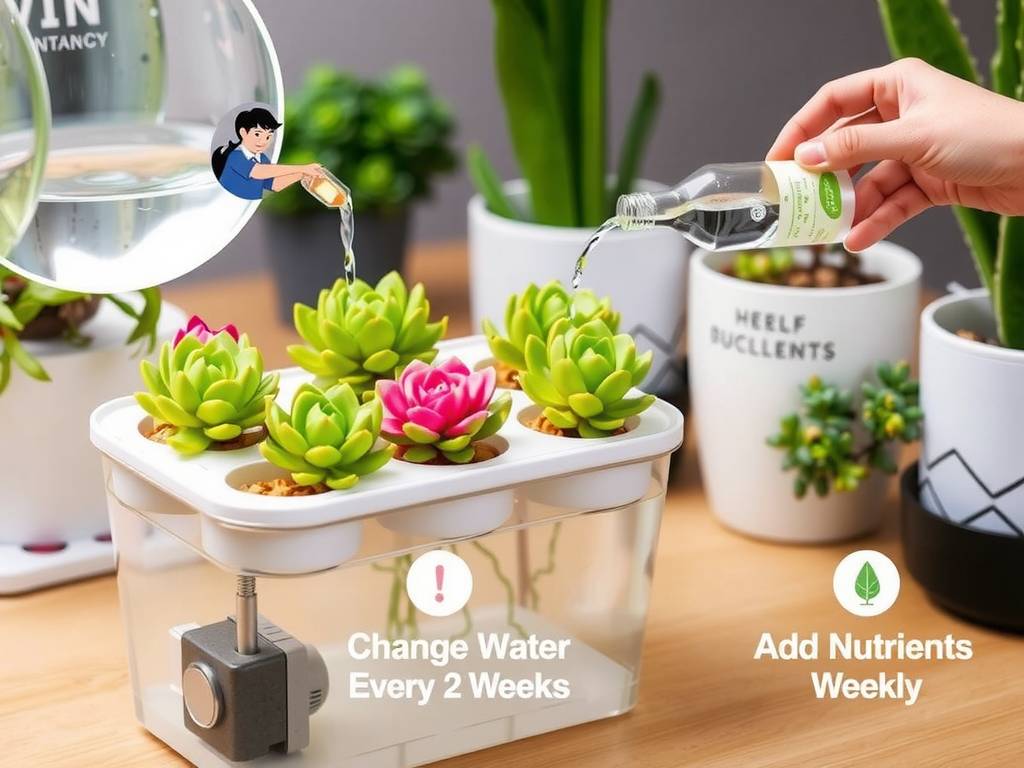
Why Water Changes and Nutrients Are Non-Negotiable
In a traditional pot, soil acts as a buffer, slowly releasing nutrients and allowing for gas exchange to the roots. In hydroponics, the water is everything. Stagnant water becomes a breeding ground for pathogens and algae, which compete with your plant for oxygen and nutrients. Furthermore, as plants absorb what they need, the nutrient balance in the solution shifts, potentially leading to toxic buildups of some elements and deficiencies in others.
A 2021 study in the Journal of Hydroponics and Advanced Greenhouse Technology emphasized that regular solution replacement is the single most effective practice for preventing root disease in recirculating hydroponic systems. Think of it not as a chore, but as providing a fresh, clean, and perfectly balanced meal for your plants on a regular schedule.
Your Step-by-Step Guide to the Perfect Water Change
A systematic approach to changing the water prevents shock to your plants and ensures you don’t miss a crucial step.
Gather Your Supplies You will need: fresh, room-temperature water (filtered or distilled is ideal to avoid chlorine and hard minerals), your chosen hydroponic nutrient formula, a pH testing kit or digital meter, pH adjustment solutions (up & down), a clean container, and soft cloths or paper towels.
Remove the Plant and Inspect the Roots Gently lift your succulent from its hydroponic vessel. This is your prime opportunity for a root health check. Healthy hydroponic succulent roots should be firm, white or light tan, and possibly fuzzy with new root hairs. Rinse them gently with lukewarm water to remove any old nutrient residue or slight algal film. Use sterilized scissors to trim away any roots that are brown, mushy, or slimy—these are signs of rot and must be removed to protect the healthy tissue.
Clean the Vessel Thoroughly Algae and mineral deposits love to cling to glass or plastic. Empty the old solution, then scrub the vessel with a bottle brush using a 10% bleach solution or hydrogen peroxide. Rinse it exhaustively until no cleaning smell remains. This step is critical to break the cycle of contamination.
Prepare the New Nutrient Solution Never add nutrients directly to the vessel with the plant inside. Always mix in a separate container. Fill it with your fresh water. Follow the nutrient bottle’s instructions for hydroponic succulents or “light feed” regimens meticulously—succulents are light feeders. Most formulas will recommend 1/4 to 1/2 strength of the standard dose. This is the cornerstone of adding nutrients for hydroponic succulents correctly. Over-fertilization is a far greater risk than underfeeding.
Test and Adjust the pH This is the step most beginners overlook, yet it’s paramount. Succulents in hydroponics optimally absorb nutrients when the solution pH is slightly acidic, between 5.5 and 6.5. Use your testing kit to check the pH of your freshly mixed solution. If it’s too high (alkaline), add a drop of pH Down solution, mix, and retest. If too low, use pH Up. Adjust gradually.
Reassemble and Position Place your succulent back into the impeccably clean vessel. Pour in the fresh, pH-balanced nutrient solution. Ensure only the roots are submerged; the stem and leaves must remain completely dry to prevent rot. Finally, place your system in a location with bright, indirect light, as direct sun can heat the water and promote algal growth.
Crafting the Ideal Nutrient Schedule for Hydroponic Succulents
Feeding your hydroponic succulents isn’t a “set it and forget it” task. It requires observation and seasonal adjustment.
Choosing the Right Fertilizer Select a high-quality, balanced hydroponic nutrient. Look for formulas labeled as “complete,” containing both macronutrients (Nitrogen, Phosphorus, Potassium) and essential micronutrients (like Calcium, Magnesium, Iron). Many expert growers, such as those at the Hydroponic Succulent Society, recommend formulas with a slightly higher Potassium (K) ratio to support strong cell walls and overall stress resistance in succulents.
The Golden Rule: Less is More Succulents are adapted to nutrient-poor environments. A full-strength nutrient solution, designed for heavy-feeding plants like lettuce or tomatoes, will burn their roots and cause rapid damage. Always start at half-strength or less, and observe your plant’s response over 2-3 weeks. Signs of overfeeding include brown leaf tips, unusually soft or rapid growth, or salt crusts on the vessel.
Frequency of Nutrient Addition Between Changes For a passive system (like a vase or jar), you typically provide all nutrients during the full water change. However, if you notice the water level dropping significantly between changes due to evaporation or uptake, top it off with plain, pH-adjusted water only. Adding more nutrients during top-offs leads to a dangerous concentration buildup. For active systems (like a deep water culture with an air pump), you may refresh nutrients every 2-3 weeks with a partial change, following the same dilute mixing principles.
How Often Should You Perform a Complete Water Change? This is the most common question. There’s no one-size-fits-all answer, but a reliable baseline is to perform a full water change every 2-4 weeks. Factors that demand more frequent changes include: smaller water volume, high temperatures, visible algae growth, or if the plant is in a rapid growth phase. Your nose is also a tool—if the water develops any off odor, change it immediately.
Troubleshooting Common Issues
- Algae Bloom: This indicates light is reaching the nutrient solution. Use opaque vessels or wrap clear ones in foil. Ensure your water changes are frequent enough.
- Root Rot: Caused by poor oxygenation, contaminated water, or damaged roots. Increase air circulation (an air stone can help), ensure your water change hygiene is flawless, and trim all affected tissue.
- Stunted Growth/Yellowing Leaves: Often a sign of nutrient imbalance or incorrect pH, locking out essential elements. Perform a water change with a freshly mixed, properly pH-adjusted dilute solution.
Can I use regular plant fertilizer for my hydroponic succulents? No. Regular soil fertilizers lack certain micronutrients crucial for hydroponics and are formulated for a different nutrient delivery system. They can also be unstable in water and quickly alter pH. Always use a fertilizer designed for hydroponic use.
What type of water is best for my hydroponic succulent setup? Filtered, reverse osmosis (RO), or distilled water is ideal because it starts neutral, free of chlorine, chloramines, and hard minerals. This gives you complete control over the nutrients and pH. If using tap water, let it sit out for 24 hours to allow chlorine to evaporate and test its pH and hardness first.
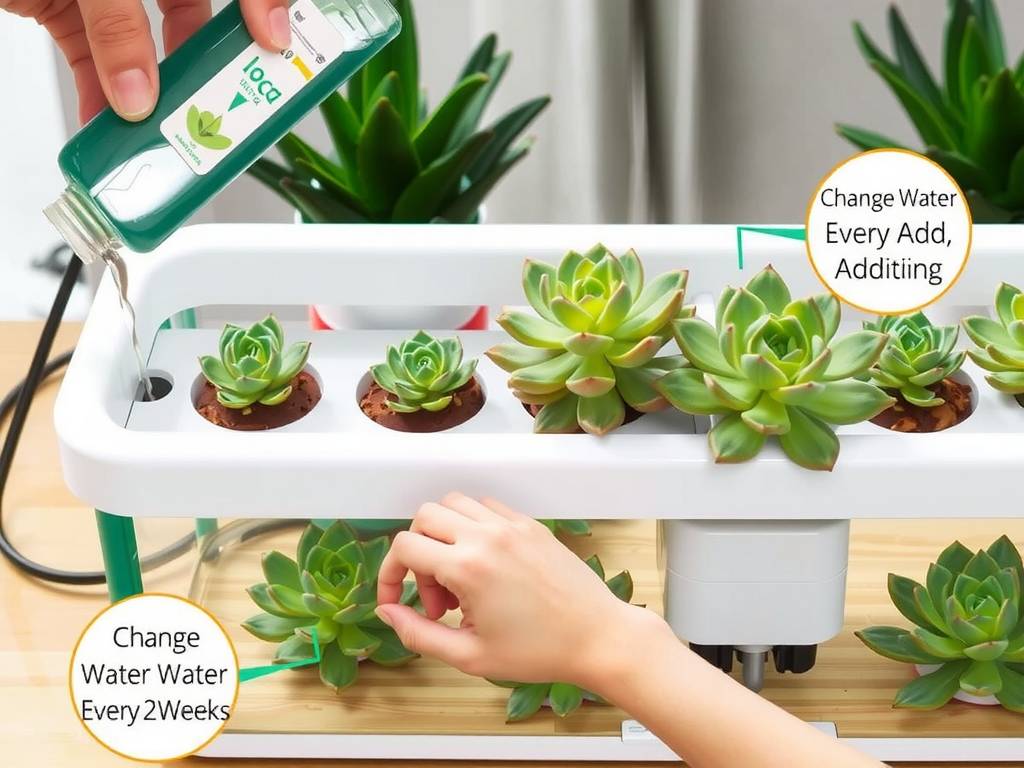
My succulent’s roots don’t reach the water yet. What should I do? For newly propagated cuttings, the base should hover just above the water line (about 1/4 inch). Roots will grow downward toward the moisture. Ensure the vessel’s mouth is narrow enough to support the plant. Once roots have grown into the water, you can begin adding a very dilute nutrient solution.
Mastering the rhythm of refreshing the water and carefully adding nutrients to your succulent hydroponic system is what separates struggling plants from spectacular ones. It transforms hydroponics from a novelty into a reliable, rewarding method of cultivation. By adhering to a consistent schedule, prioritizing cleanliness, and embracing the “less is more” feeding philosophy, you create a pristine, controlled environment where your succulents can showcase their unique beauty and resilience for years to come. Start your next water change with confidence, knowing each step is a direct investment in your plant’s vibrant health.