bluename
 How to Care for Air Plants - Hanging Care for More Ornamental Value
You’ve brought home a stunning air plant, captivated by its sculptural form and the promise of easy care. Yet, weeks later, you find it looking dull, with dry, curling leaves or—worse—a mushy, brown base. The unique charm of your tillandsia seems to be fading. This common frustration often stems from one key oversight: understanding that air plants need more than just air. Their care, especially when displayed as hanging decor, requires a specific approach to unlock their full, breathtaking potential.
This guide will transform your approach. We’ll move beyond basic survival to cultivate thriving, visually spectacular displays. By mastering the art of hanging care, you’ll not only keep your plants healthy but also turn them into living art that elevates your space.
Understanding Your Air Plant’s Core Needs
Air plants, or Tillandsia, are epiphytes. In their natural habitat, they cling to trees and rocks in forests and mountains, absorbing moisture and nutrients through tiny structures on their leaves called trichomes. They don’t grow in soil. This unique biology is the foundation of their care. They demand three things: bright, indirect light; consistent moisture via watering and humidity; and excellent air circulation. Hanging displays, when done correctly, excel at providing the latter two, making them not just aesthetic but highly functional.
Choosing the Perfect Hanging Location
Light is non-negotiable. Place your hanging air plant within 3-5 feet of a bright window with filtered light. An east or west-facing window is often ideal. Direct afternoon sun, especially through glass, can scorch the leaves, causing them to brown and dry out prematurely. If you only have a south-facing window, use a sheer curtain to diffuse the intense rays.
Consider the microclimate. Avoid hanging your plant directly above heat vents, radiators, or air conditioning units. These create extreme dry zones that will dehydrate your tillandsia rapidly. Similarly, a spot above a kitchen sink can provide beneficial humidity, but ensure it’s not in the path of direct cooking fumes or grease.
The Art of Watering Hanging Air Plants
This is where most people stumble. Hanging air plant care diverges slightly from caring for one sitting on a shelf. The increased air flow around a suspended plant can lead to faster drying, which is good for preventing rot but means you must be diligent with hydration.
The preferred method for hanging plants is the thorough soaking technique. Once a week, gently remove your air plant from its hanger or mount. Submerge it fully in a bowl of room-temperature water for 20 to 30 minutes. Rainwater or filtered water is best to avoid clogging the trichomes with minerals found in tap water. After its bath, shake the plant vigorously upside-down to dislodge water from the central cup (where the leaves meet at the base). This step is critical to prevent rot. Then, place it on a towel in a bright, airy spot for about 4 hours until it is completely dry to the touch. Only then should you return it to its hanging display. This “soak, shake, and dry” ritual is the golden rule.
In between weekly soaks, if your home is particularly dry, you can supplement with a heavy misting 2-3 times a week, ensuring the plant dries within a few hours.
Creative and Functional Hanging Display Ideas
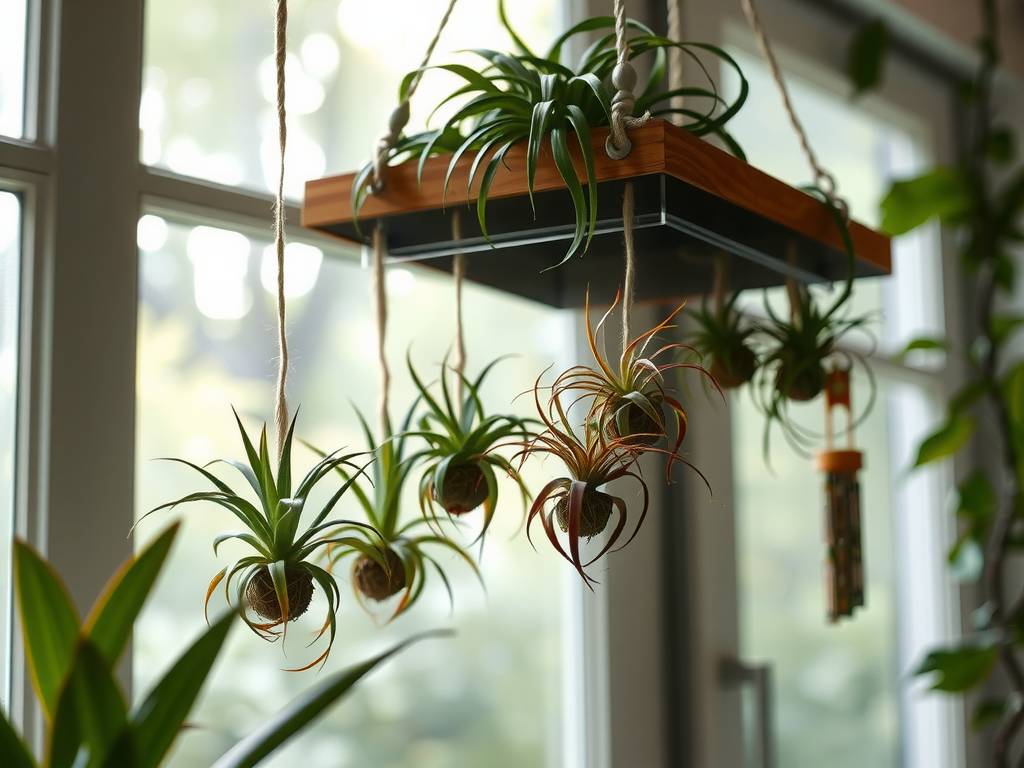
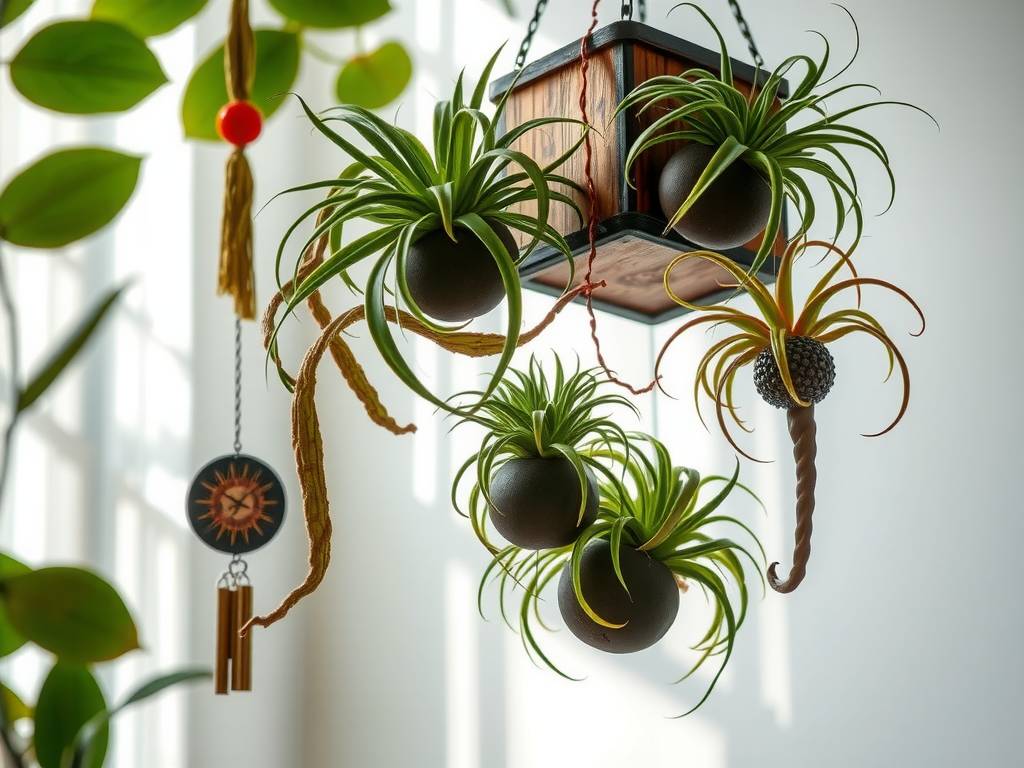
The right display maximizes air circulation and complements your decor. Here are some hanging tillandsia displays that blend form and function:
- Macramé Hangers: A classic choice. They cradle the plant securely while allowing maximum airflow from all sides. Choose a design that holds the plant upright to facilitate proper drying after watering.
- Wire or Geometric Holders: These minimalist frames, often made of coated copper or brass, let the plant’s form take center stage. Ensure the plant isn’t squeezed too tightly.
- Suspended Terrariums (with caution): Open-air glass globes or orbs with large openings can be stunning. They must be hung in a well-ventilated area and the plant must be removed for its weekly soak. Never use closed terrariums, as they trap moisture and guarantee rot.
- Mounted on Driftwood or Cork Bark: This mimics their natural growth. Use a non-toxic, water-resistant glue (like E6000) or clear fishing line to secure the plant. You can then hang the entire piece on the wall. This method offers excellent air circulation and a naturalistic look.
Fertilizing for Vibrant Growth and Blooms
While air plants get nutrients from the air, a light feeding encourages growth, vibrant color, and flowering. Use a bromeliad or air plant-specific fertilizer, diluted to 1/4 strength, and add it to your soaking water once a month during the spring and summer. Avoid standard houseplant fertilizers, as they can contain urea-based nitrogen, which air plants cannot use. As noted by the Bromeliad Society International, a weak, regular feeding regimen is far more beneficial than occasional strong doses.
Troubleshooting Common Hanging Display Issues
- Brown, Crispy Leaf Tips: This signals underwatering or low humidity. Increase the frequency of your soaks or add a weekly misting.
- Mushy, Black Base: The telltale sign of rot from staying wet too long. You likely didn’t shake out enough water or returned the plant to its hanger while damp. Unfortunately, rot is often fatal. You can try to carefully remove the affected leaves and hope the center survives.
- The Plant Feels Loose: Some natural leaf shedding at the base is normal as the plant grows. However, if the entire plant is falling apart, it may be a sign of advanced rot.
- Lack of Color or Bloom: Insufficient light is the most common culprit. Move your hanging air plant to a brighter location (without direct sun) and ensure you are fertilizing lightly in the growing season.
How often should I really water my hanging air plant? The universal weekly soak is a great starting point, but your schedule should adapt to your environment. In a hot, dry, or well-ventilated room, you may need to soak twice a week. In a cool, humid bathroom, once every 10 days might suffice. Always use the “touch test”—if the leaves feel very stiff and the tips are browning, it’s thirsty. If the base feels soft, you’re overdoing it.
Can I just spray my hanging air plant instead of soaking it? Misting alone is rarely sufficient for long-term health. It’s an excellent supplemental hydration method, especially for mounted plants that are hard to unmount weekly. However, for deep hydration that reaches all the trichomes, a full immersion soak is irreplaceable. Think of misting as a sip of water and soaking as a full meal.
My air plant has a tiny “pup” growing from the base. What do I do? Congratulations! This is how your plant reproduces. Let the pup grow until it is at least one-third to one-half the size of the mother plant. At that point, you can gently twist it off. You now have a new, separate plant to start a new hanging tillandsia display. The mother plant will eventually decline after blooming and pupping, but her legacy continues.
Caring for air plants by embracing their need for air and light through hanging displays is a rewarding practice. It turns routine maintenance into an opportunity for creative expression. By providing the right balance of light, a consistent soak-and-dry watering routine, and a display that prioritizes airflow, you’ll be rewarded with resilient, growing plants. Their unique forms, occasional blooms, and the elegant greenery they add to your vertical spaces are well worth the mindful effort. Start by assessing your light, setting a watering reminder, and choosing a hanger that lets your tillandsia breathe. Your journey to a stunning, healthy display begins now.