bluename
 How to Care for Air Plants: Mastering Light Adjustment for Different Varieties
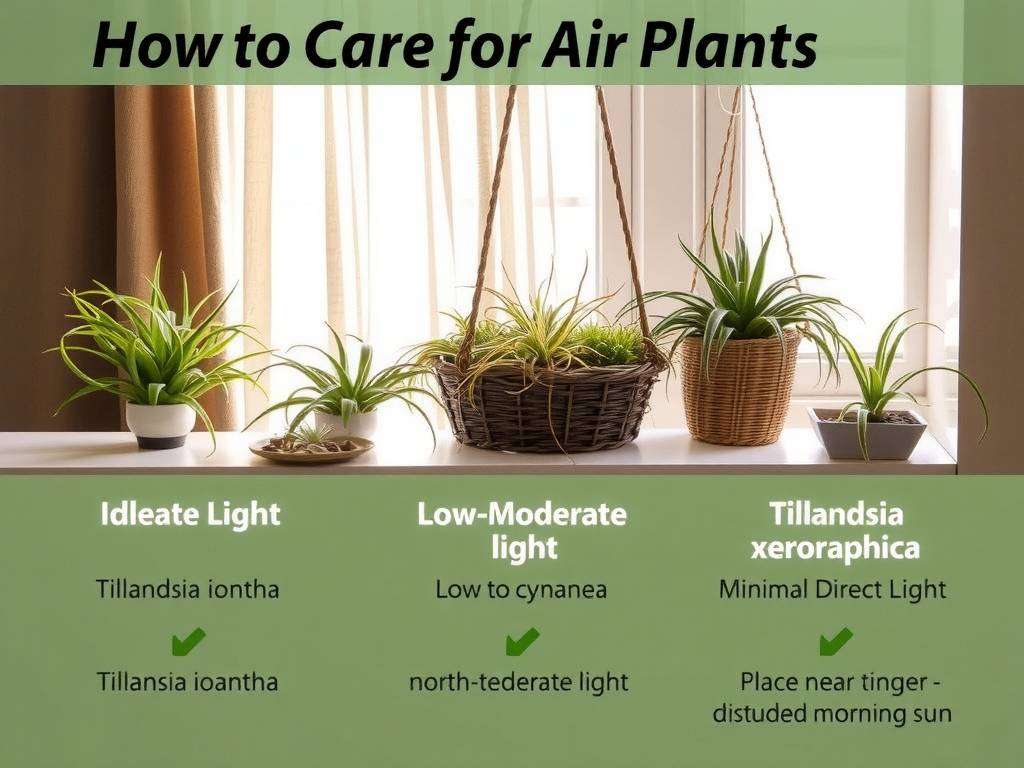
You’ve brought home a beautiful, soil-less air plant, charmed by its unique form and promise of easy care. Yet, weeks later, you find its leaves turning brown, becoming limp, or worse—it simply fails to thrive. The culprit is often one of the most fundamental yet misunderstood aspects of air plant care: light. Providing the correct light is not a one-size-fits-all task; it varies dramatically between different air plant varieties. This guide will demystify the process, ensuring your Tillandsias receive the perfect illumination to flourish.
Understanding Air Plant Light Needs: More Than Just "Bright, Indirect Light"
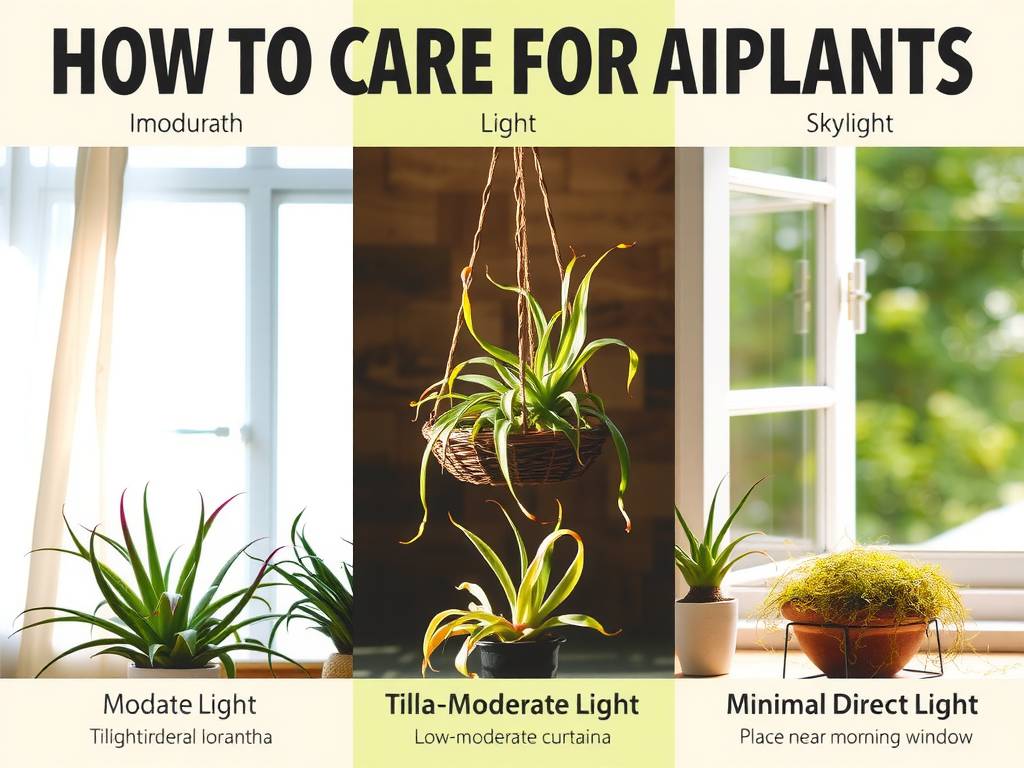
While the common advice of "bright, indirect light" is a good starting point, it’s an oversimplification. Air plants, belonging to the genus Tillandsia, are native to diverse habitats ranging from shady, humid rainforests to arid, sun-drenched deserts. Their light requirements are directly tied to their leaf structure. As noted by the University of Florida IFAS Extension, the silvery, fuzzy coating (trichomes) on many air plants is an adaptation to reflect intense light and absorb moisture. Plants with dense trichomes often tolerate brighter, more direct light.
Categorizing Air Plants by Light Preference
To simplify care, we can group common air plant varieties into three primary light categories: low to medium indirect light, bright indirect to filtered light, and direct morning sun or bright, filtered light.
Group 1: Low to Medium Indirect Light Varieties
These varieties hail from the understory of forests. Their leaves are typically greener, softer, and have fewer trichomes, making them sensitive to intense light.
- Tillandsia cyanea (Pink Quill): While its stunning pink quill and purple flowers are showstoppers, this plant prefers shadier conditions. An east-facing window or a spot a few feet back from a bright window is ideal.
- Tillandsia bulbosa: With its twisting, tentacle-like green leaves, it thrives in humid, shaded environments. Direct sun will quickly scorch its foliage.
- Tillandsia butzii: Its speckled, slender leaves are adapted to dappled light. Think of the light under a tree canopy—this is what it prefers.
Care Tip: These varieties are perfect for bathrooms with frosted windows or north-facing rooms. If leaves become unusually dark green and elongated (etiolation), it’s a sign they need a bit more light.
Group 2: Bright Indirect to Filtered Light Varieties
This is the largest group and includes many popular household varieties. They enjoy plenty of light but need protection from the harsh afternoon sun.
- Tillandsia ionantha: This classic air plant has a compact form that blushes red when about to bloom. It does wonderfully in an east-facing window where it gets gentle morning sun or in a bright room with sheer curtains.
- Tillandsia brachycaulos: Known for turning a brilliant red, it requires strong, filtered light to achieve its best color. A south or west window with a sheer curtain is perfect.
- Tillandsia aeranthos: A resilient and common variety, it adapts well to bright artificial light but truly thrives near a sunny, filtered window.
Care Tip: Rotate these plants weekly to ensure all sides receive even light exposure, promoting symmetrical growth.
Group 3: Direct Morning Sun or Bright, Filtered Light Tolerators
These are the sun-lovers. They possess abundant silvery trichomes that act as a natural sunscreen, allowing them to handle more direct exposure.
- Tillandsia xerographica: The king of air plants, with its spectacular, curly silver leaves. It is native to semi-arid regions and can tolerate several hours of direct morning sun. Afternoon sun, however, can be too intense in hot climates.
- Tillandsia caput-medusae: Resembling the head of Medusa, its thick, bulbous base and silver leaves are built for brighter conditions. It thrives with some direct morning sun.
- Tillandsia stricta (Silver Form): The silvery-leaved varieties of T. stricta handle significantly more light than their greener counterparts.
Care Tip: Even these hardy varieties can get sunburned during a summer heatwave. Watch for bleached, crispy patches on the leaves—a sure sign of too much direct exposure. Acclimate them to stronger light gradually.
Practical Guide to Light Adjustment in Your Home
Finding the right spot is a practical exercise. Observe the light in your space throughout the day.
- South-Facing Windows: These offer the most intense light. Use them for Group 3 plants, but consider a sheer curtain for Group 2 plants. Keep Group 1 plants well away.
- East-Facing Windows: Ideal for most air plants (Groups 2 and some of Group 3). They provide gentle morning sun, which is less likely to cause burning.
- West-Facing Windows: Similar to south windows in intensity, especially in the afternoon. Use with caution and filtration for Groups 2 and 3.
- North-Facing Windows: Generally provide low light, suitable only for Group 1 varieties.
- Artificial Light: Full-spectrum fluorescent or LED grow lights are excellent alternatives. Place plants 6-12 inches from the light source for 10-12 hours a day. This method offers precise control over light exposure for your air plants.
Signs Your Air Plant's Light Needs Adjustment
Your plant will communicate its distress. Learn to read the signals.
- Too Much Light (Sunburn): Leaves develop dry, brown, crispy patches, often starting at the tips or most exposed areas. The plant may look bleached or pale.
- Too Little Light: The plant loses its vibrant color, becoming unusually dark green. New growth is weak, elongated, and stretched out. The plant may also fail to bloom.
The Interplay of Light, Water, and Airflow
Light adjustment doesn’t exist in a vacuum. It directly impacts your watering routine. A xerographica in a hot, sunny window will need more frequent soaking than one in lower light. Similarly, bright light and good airflow go hand-in-hand to prevent rot. Always ensure your plant dries completely within 4 hours of watering, especially in its core (cup).
Can I revive a sunburned air plant? While sunburned leaves will not heal or turn green again, the plant itself can often recover if the damage isn't severe. Move it immediately to a shadier location. Do not remove the damaged leaves, as they still contribute to the plant's health. Focus on proper care going forward, and new, healthy growth will eventually emerge.
How long should artificial lights be on for air plants? A consistent photoperiod of 10-12 hours per day is recommended when using grow lights. Using a simple timer can automate this process, ensuring your plants receive consistent "daylight" without you having to remember to switch the lights on and off.
My air plant hasn’t bloomed. Is it a light issue? Likely, yes. While maturity and overall health are factors, sufficient light is the primary trigger for blooming in most Tillandsia varieties. If your plant is mature (usually 2-3 years old) and otherwise healthy but hasn’t bloomed, try gradually increasing its light exposure. A shift to a brighter location or longer hours under a grow light can encourage it to produce its spectacular flower spike.
Mastering light adjustment is the cornerstone of successful air plant care. By understanding that a silvery xerographica craves more sun than a green bulbosa, you move from generic care to tailored cultivation. Observe your plant’s color and form, experiment with placement, and heed the signals it gives you. With the right light, complemented by appropriate watering and airflow, your air plants will not just survive—they will showcase robust growth, vibrant colors, and eventually, the breathtaking blooms that make these unique plants so rewarding to grow.