bluename
 The Ultimate Guide to Growing Healthy Indoor Lucky Bamboo (Dracaena Sanderiana): Tips for Lush Growth
1. Understanding Your Indoor Lucky Bamboo: Key Traits and Growth Habits
2. Light: Give Your Lucky Bamboo Bright, Indirect Light (No Direct Sun!)
Where to Place Your Indoor Lucky Bamboo
Near an east-facing window: This provides gentle morning sunlight, which is bright but not harsh enough to damage leaves.
A few feet away from a south or west-facing window: These windows let in intense afternoon sun, so placing the plant a few feet back (or using a sheer curtain to filter the light) will protect it while still giving it enough brightness.
A well-lit room with reflected light: If you don’t have a window nearby, a room with light bouncing off walls or mirrors can work—just avoid dark corners or closets, where the plant will struggle to photosynthesize.
What If You Have Low Light?
3. Watering: How to Keep Your Lucky Bamboo Hydrated (Whether in Water or Soil)
Growing Lucky Bamboo in Water: The Most Popular Method
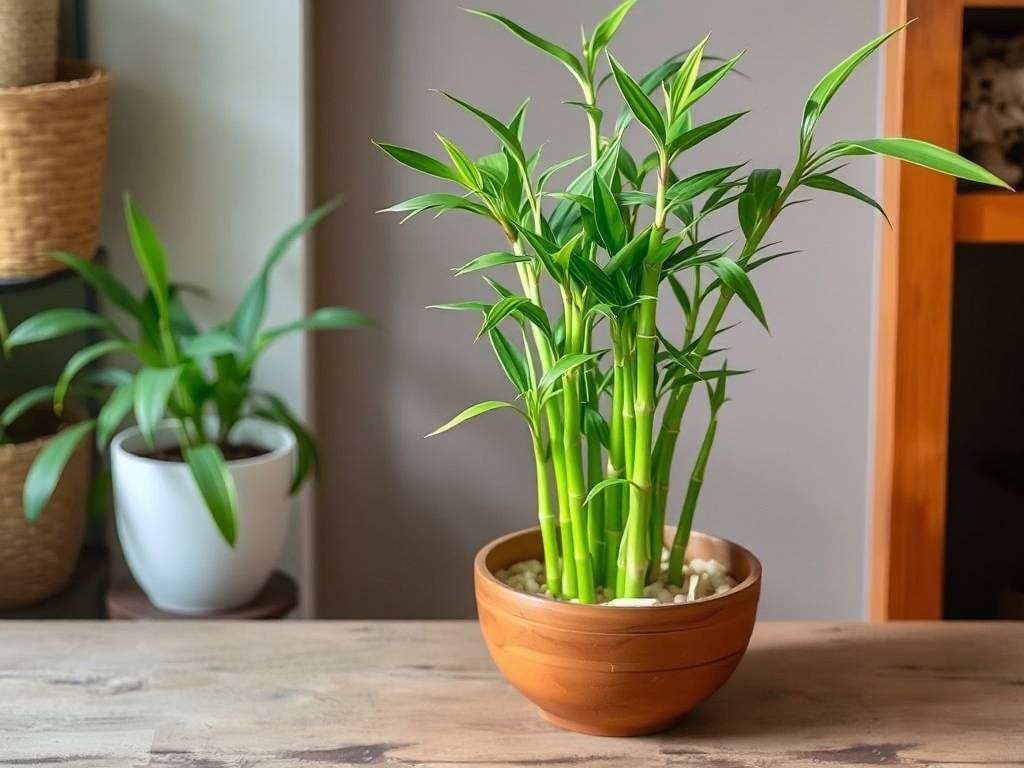
Choose the right container: Use a clear or opaque glass vase, jar, or plastic container. Clear containers let you check the root health and water clarity, but they can also encourage algae growth (more on that later). Opaque containers prevent algae but make it harder to monitor roots.
Add the right water: Use filtered water or tap water that’s been left out overnight. Tap water contains chlorine and fluoride, which can be harmful to lucky bamboo over time. Letting it sit overnight allows these chemicals to evaporate.
Water level: Fill the container so that the roots are fully submerged, but the bottom 1–2 inches of the stems are above water. If the stems are submerged for too long, they’ll rot—this is a common cause of yellowing leaves.
Change the water regularly: Replace the water every 7–10 days, or sooner if it starts to look cloudy. When changing water, gently rinse the roots with room-temperature water to remove any debris. This prevents bacteria growth and keeps the roots healthy.
Algae control: If you’re using a clear container and notice green algae growing on the sides or roots, don’t panic—algae is harmless in small amounts. To control it, scrub the container with a soft brush when changing water, and move the plant to a spot with slightly less light (algae thrives in bright light).
Growing Lucky Bamboo in Soil: A More Stable Option
Choose the right soil: Use a well-draining potting mix—avoid heavy garden soil, which retains too much water and causes root rot. A mix designed for tropical plants or succulents works well, or you can make your own by combining 2 parts peat moss, 1 part perlite, and 1 part vermiculite.
The right pot: Select a pot with drainage holes in the bottom—this is non-negotiable. Without drainage, excess water will sit in the soil, leading to root rot. Terra cotta pots are a great choice because they’re porous and help the soil dry out faster.
How often to water: Water the soil thoroughly when the top 1 inch of soil feels dry. Stick your finger into the soil—if it’s dry at that depth, it’s time to water. Pour water slowly over the soil until it drains out the bottom of the pot. Empty the saucer under the pot after 15–20 minutes to prevent the roots from sitting in water.
Avoid overwatering: Overwatering is the #1 mistake with soil-grown lucky bamboo. If the soil stays wet for too long, the roots will rot, and the leaves will turn yellow. If you’re unsure, it’s better to underwater than overwater—lucky bamboo can tolerate slight dryness better than soggy soil.
4. Temperature and Humidity: Keep Your Lucky Bamboo Warm and Comfortable
Temperature
Avoid placing it near cold windows in winter (even closed windows can let in cold drafts).
Keep it away from doors that open to the outside, especially in winter.
Don’t put it near air conditioners or fans that blow cold air.
Humidity
Use a pebble tray: Fill a saucer with small pebbles, then add water until it reaches just below the top of the pebbles. Place the pot (or water container) on top of the pebbles—make sure it doesn’t sit directly in the water. As the water evaporates, it adds moisture to the air around the plant.
Mist the leaves: Lightly mist the leaves with room-temperature water once or twice a week. Avoid misting too often, as this can lead to fungal growth on the leaves.
Group plants together: Plants release moisture through their leaves (transpiration). Grouping your lucky bamboo with other houseplants (like pothos, ferns, or peace lilies) creates a more humid microclimate.
Use a humidifier: If you have multiple tropical plants or live in a very dry area, a humidifier is the easiest way to maintain consistent humidity. Set it to 40–60% and place it near the plant.
5. Fertilizing: Feed Sparingly (Lucky Bamboo Doesn’t Need Much!)
What Fertilizer to Use
How to Fertilize
For water-grown lucky bamboo: Add 1–2 drops of diluted fertilizer to the water when changing it. Make sure the fertilizer is well-diluted (follow the package instructions, then dilute it further by half)—even a small amount can be too strong. Fertilize once every 4–6 weeks in spring and summer, and stop fertilizing in fall and winter.
For soil-grown lucky bamboo: Water the plant with diluted fertilizer once every 4–6 weeks in spring and summer. Again, dilute the fertilizer to half the recommended strength to avoid root burn. In fall and winter, when growth slows down, stop fertilizing.
6. Pruning: Keep Your Lucky Bamboo Shapely and Healthy
When to Prune
How to Prune
Trim yellow or dead leaves: Use clean, sharp scissors or pruning shears to cut yellow or dead leaves at the base of the stem (where the leaf meets the stalk). This keeps the plant looking tidy and prevents the spread of disease.
Shorten leggy stems: If a stem is getting too long or leaning, cut it back to the desired height. Make the cut just above a leaf node (the small bump where a leaf grows from the stem). New growth will sprout from this node, so the plant will become bushier.
Remove offshoots (pups): Lucky bamboo sometimes grows small offshoots (called pups) at the base of the main stems. If you want to keep the plant compact, you can cut these off at the base. Alternatively, you can propagate the pups to grow new plants (see Section 7).
Shaping Lucky Bamboo (Braiding, Twisting, etc.)
Braiding: Choose 3–5 young, flexible stems. Gently braid them together, being careful not to pull too tightly (this can damage the stems). Secure the top with a soft string or rubber band, and as the stems grow, adjust the braid and re-secure it.
Spirals: To create a spiral shape, place a young stem in a dark box with a small hole on one side. The stem will grow toward the light, creating a spiral. Rotate the box slightly every few days to continue the spiral shape.
7. Propagating Your Lucky Bamboo: Grow New Plants for Free
How to Propagate from Stem Cuttings
Choose a healthy cutting: Select a stem that’s 4–6 inches long, with at least 2–3 leaf nodes (the spots where leaves grow). Make sure the stem is green and firm—avoid yellow or soft stems.
Make the cut: Use clean, sharp scissors to cut the stem just below a leaf node. Remove the bottom 1–2 leaves from the cutting (this exposes the nodes, where roots will grow).
Root the cutting: You can root cuttings in water or soil—both methods work!
Water propagation: Place the cutting in a small jar of filtered or left-out tap water. Make sure the bottom 1–2 nodes are submerged (leaves should stay above water). Put the jar in a bright, indirect light spot. Change the water every 3–5 days to keep it fresh. Roots should start to grow in 2–4 weeks. Once roots are 1–2 inches long, you can keep the cutting in water or transplant it to soil.
Soil propagation: Fill a small pot with well-draining potting mix. Make a hole in the soil with your finger, then insert the cutting (bury 1–2 nodes). Gently press the soil around the cutting to hold it upright. Water lightly to moisten the soil, then cover the pot with a plastic bag (poke a few holes for air) to create a humid environment. Place in bright, indirect light. Remove the bag once new growth appears (2–3 weeks)—this means roots have formed.
Care for the new plant: Once rooted, treat the new lucky bamboo like a mature plant—water when needed, keep in bright, indirect light, and fertilize sparingly.
Propagating from Pups
Gently remove the pup: Carefully pull the pup away from the main stem—if it resists, use a clean knife to cut it free, making sure it has a few roots attached.
Root the pup: Place the pup in water or soil (following the same steps as stem cuttings). Pups usually root faster than stem cuttings because they already have some root growth.
8. Troubleshooting Common Lucky Bamboo Problems
Problem 1: Yellow Leaves
If overwatered (soil-grown): Let the soil dry out completely, then water only when the top 1 inch is dry. Ensure the pot has drainage holes.
If underwatered (soil-grown): Water thoroughly until water drains out the bottom.
If in water: Change the water to filtered or left-out tap water. Check that stems aren’t submerged (only roots should be in water).
If too much sun: Move the plant to a spot with bright, indirect light.
If over-fertilized: Flush soil with water (soil-grown) or change water (water
If chlorine/fluoride is the issue: Switch to filtered water or let tap water sit overnight before using it.
Problem 2: Brown Leaf Tips
Boost humidity: Use a pebble tray, mist the leaves lightly, or place a humidifier nearby.
Check soil moisture: If the soil is dry (for soil-grown plants), water thoroughly. For water-grown plants, ensure roots are fully submerged (but stems aren’t).
Use better water: Switch to filtered water or let tap water sit overnight to remove chemicals.
Adjust light: If the plant is in direct sun, move it to a spot with bright, indirect light.
Problem 3: Drooping or Soft Stems
Check for root rot: For soil-grown plants, gently remove the plant from the pot and inspect the roots. Healthy roots are white or light brown; rotted roots are dark brown, mushy, and smell bad. For water-grown plants, look at the roots through the container.
If root rot is present: Trim off all rotted roots with clean scissors. For soil-grown plants, repot in fresh, well-draining soil. For water-grown plants, clean the container thoroughly and refill with fresh water (only submerge healthy roots, not stems).
Adjust temperature: If the plant was exposed to cold, move it to a warmer spot (65–80°F/18–27°C) and avoid cold drafts.
Problem 4: Pests
Mealybugs: Small, white, cotton-like clusters on the undersides of leaves or where stems meet.
Spider Mites: Tiny red or brown dots on leaves, plus fine webbing between stems.
Scale: Hard, brown or black bumps on stems or leaf veins (they look like small lumps of bark).
For mild infestations: Wipe pests off with a cotton swab dipped in rubbing alcohol. For spider mites, rinse the leaves gently with lukewarm water (avoid soaking soil for soil-grown plants) to remove mites and webbing.
For severe infestations: Use an insecticidal soap or neem oil (diluted to half strength to avoid leaf burn). Spray the entire plant—including undersides of leaves and stems—every 7–10 days until pests are gone. Ensure the plant is in a well-ventilated area during treatment.
Prevent future infestations: Dust leaves regularly (dusty leaves attract pests) and keep the plant in optimal conditions (proper light, humidity, and watering) to reduce stress.
Problem 5: Stunted Growth
Increase light: Move the plant to a brighter spot with indirect light, or add a grow light if natural light is limited.
Check nutrients: If it’s spring or summer and the plant hasn’t been fertilized in 6+ weeks, feed it with a diluted liquid fertilizer (following the “Fertilizing” section guidelines).
Adjust temperature: Ensure the plant is in a warm spot (65–80°F/18–27°C) and protected from cold drafts.
9. Final Tips for Long-Term Indoor Lucky Bamboo Care
Keep Leaves Clean
Avoid Moving Too Often
Be Patient with Growth
Embrace Its Symbolism (If You Want!)
Place a 3-stalk plant in the living room to attract happiness.
Put a 5-stalk plant in the home office to boost wealth and success.
Use an 8-stalk plant near the front door to invite good fortune into the home.