bluename
 How to Care for Spider Plant (Hydroponic)? A Complete Guide to Filtered Light and Clear Water
Are you tired of dealing with messy soil, inconsistent watering, and pests that come with traditional potted plants? Do you love the lush, arching leaves of the spider plant but worry about keeping it alive? You're not alone. Many plant enthusiasts hesitate to bring this classic beauty home due to fears of overwatering or root rot. Fortunately, there's a remarkably simple and clean solution: hydroponics. Growing spider plants in water eliminates soil-borne guesswork, but it introduces new questions. How much light do they really need in water? Why does the water get cloudy, and is it harmful? This guide is designed to demystify the process, showing you that with filtered light and by avoiding turbid water, hydroponic spider plant care can be incredibly easy and rewarding.
Why Choose Hydroponics for Your Spider Plant?
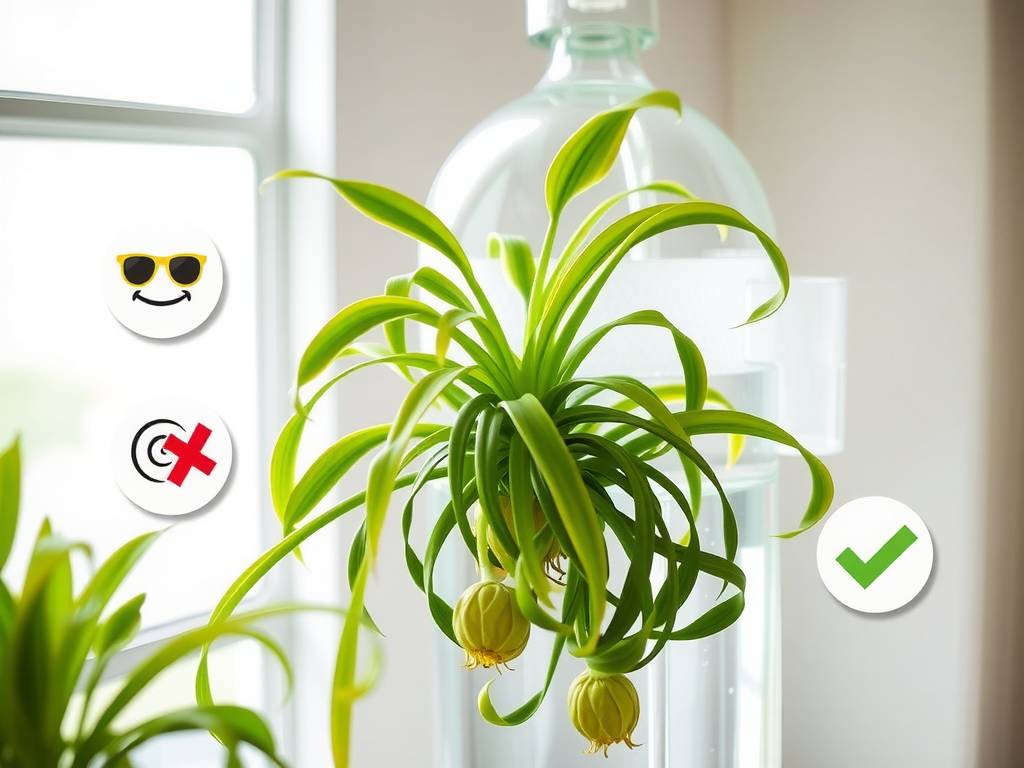
Spider plants (Chlorophytum comosum) are among the most adaptable houseplants. Their tuberous roots store water, making them surprisingly tolerant of various conditions, which is precisely why they thrive in hydroponic systems. Moving your spider plant to water allows you to admire its intricate root system, reduces the risk of soil pests like fungus gnats, and simplifies your care routine to monitoring light and water quality. Studies on plant hydroculture, such as those cited by the University of Florida's IFAS Extension, highlight that water-grown plants can exhibit vigorous growth when their basic needs for oxygen, nutrients, and light are met. For the spider plant, those needs are refreshingly straightforward.
The Golden Rule: Providing Perfect Filtered Light
Light is the engine of plant growth, even in water. For hydroponic spider plants, the quality of light is more critical than sheer intensity.
What is Filtered Light? Filtered light, often called bright indirect light, is sunlight that has been diffused. It's the light that fills a room but doesn't cast a harsh, sharp shadow. Imagine the light coming through a sheer curtain or the dappled shade under a tree. This is ideal for your spider plant. Direct afternoon sun can be too intense, potentially scorching the leaves and accelerating algae growth in your water vessel. A north or east-facing window is typically perfect. If you only have south or west exposure, simply place the plant a few feet back from the window or use a sheer curtain as a buffer.
Signs Your Light Isn't Right Your plant will tell you if its light needs aren't met. Leggy growth, with long stretches between leaves, and a loss of the vibrant variegation in varieties like 'Vittatum' or 'Variegatum' are cries for more light. Conversely, brown, crispy tips or bleached, pale leaves often signal too much direct sun. Finding that sweet spot of bright, filtered light will keep your plant compact, colorful, and actively producing its famous "spiderettes" or plantlets.
The Critical Step: Avoiding Turbid Water for Healthy Roots
This is the cornerstone of easy hydroponic care. Clear water is to hydroponics what well-aerated soil is to potting: a fundamental requirement for root health.
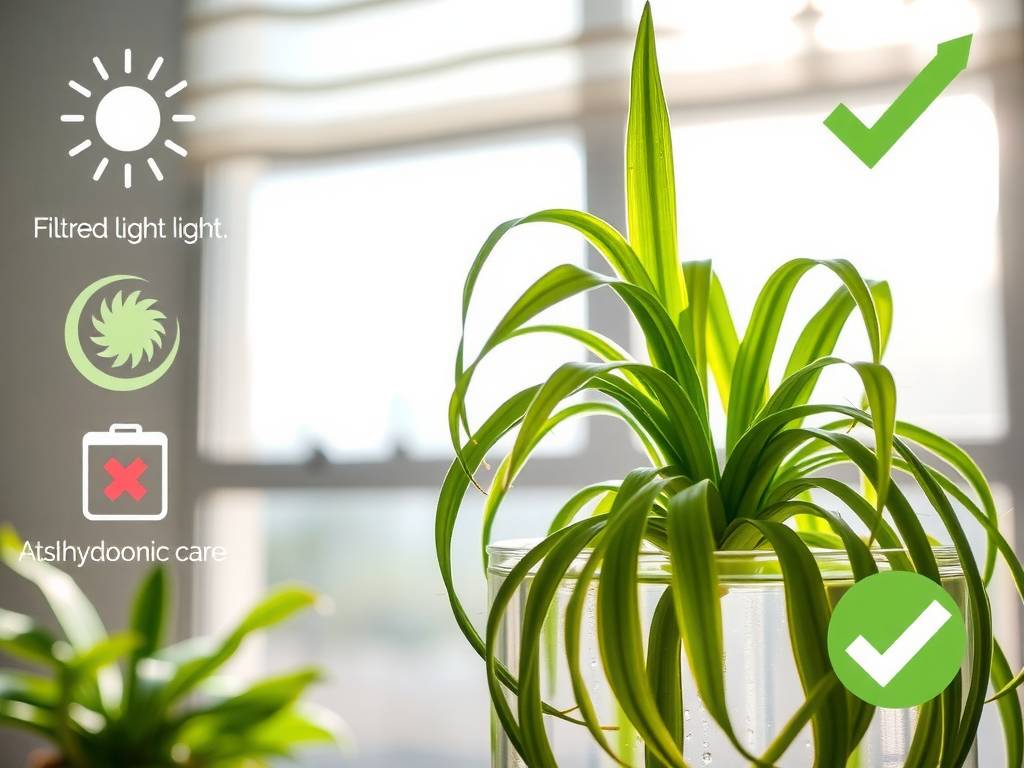
Why Does Water Become Turbid? Cloudy or turbid water is usually a sign of bacterial growth, algae bloom, or decomposing organic matter (like a piece of leaf that fell into the water). While a small amount of algae might not immediately harm the plant, it competes for oxygen and nutrients, creating an unhealthy environment. Murky water can quickly lead to root rot—a condition where roots suffocate and decay, turning brown and mushy. Clear water ensures maximum oxygen availability to the roots.
How to Maintain Crystal-Clear Water
- Start Clean: Use room-temperature filtered, distilled, or rainwater if your tap water is very hard. Tap water is often fine but let it sit out for 24 hours to allow chlorine to evaporate.
- Clean the Vessel: Every time you change the water (which should be every 2-4 weeks), gently rinse the roots and thoroughly wash the container with mild soap to remove any biofilm or algae spores.
- Block Light from the Roots: Use an opaque container or one made of dark glass. Light penetrating the water encourages algae growth. This simple trick is a game-changer for preventing turbidity.
- Top Off, Then Refresh: Between full changes, if the water level drops, top it off with fresh water. But don't just keep adding water indefinitely. A complete refresh is essential to prevent mineral buildup and maintain clarity.
Your Simple Hydroponic Spider Plant Care Routine
Putting it all together, a sustainable care schedule makes success effortless.
Initial Setup and Planting Begin with a healthy "spiderette" or a division from a mature plant. Gently remove all soil from the roots under lukewarm running water. Place the plant in your chosen container—a vase, jar, or dedicated hydroponic vessel—ensuring only the roots are submerged. The base of the plant (the crown) should stay above the waterline to prevent rot.
Nutrient Feeding Schedule Plain water lacks the nutrients found in soil. For long-term health, add a hydroponic nutrient solution to the water. Use a balanced, water-soluble fertilizer diluted to one-quarter of the strength recommended on the label. Do this every 4-6 weeks during the growing season (spring and summer). In fall and winter, feeding once every 8-12 weeks is sufficient. Over-fertilizing is a common mistake that can lead to salt buildup and root burn.
Pruning and Propagation Trim away any brown or mushy roots during water changes with clean scissors. You can also trim brown leaf tips for aesthetics. The plantlets your spider produces can be left on the stem for a beautiful display, or you can snip them off and start new hydroponic plants—the easiest propagation method there is. Simply place the base of the spiderette in its own small water vessel, and roots will develop in weeks.
Troubleshooting Common Hydroponic Issues
Even with easy care, occasional issues arise. Here’s how to solve them.
Brown Leaf Tips This is the most common spider plant quirk. In hydroponics, it's often caused by mineral buildup (fluoride or chlorine) in the water or, ironically, underwatering (if the roots aren't sufficiently submerged). Switch to filtered water and ensure the water level consistently covers the roots.
Slow Growth or No Plantlets Insufficient light or nutrients are the likely culprits. Move your plant to a brighter location with filtered light and ensure you are following a gentle feeding schedule. Patience is also key; plants have natural growth cycles.
Persistent Cloudy Water or Slimy Roots This indicates bacterial growth. Immediately remove the plant, wash the roots thoroughly, trim away any slimy parts, and sterilize the container. Start fresh with new water and a drop of hydrogen peroxide (3%, mixed at a rate of 1 teaspoon per gallon of water) can help oxygenate and cleanse the system.
Can I transition a soil-grown spider plant to hydroponics? Absolutely. The best time is during active growth in spring or summer. Carefully remove all soil from the roots, gently rinsing them clean. You may lose some older roots as the plant adapts to water, but new, white, water-adapted roots will soon grow. Be patient during this transition period.
How often should I really change the water in my hydroponic spider plant? A full water change is recommended every 2 to 4 weeks. This prevents stagnation, replenishes oxygen, and removes any accumulated minerals or potential pathogens. In a dark, opaque container, you may stretch this to 4 weeks. Always change it if it looks even slightly cloudy.
Do hydroponic spider plants still produce babies (spiderettes)? Yes, they do! Producing plantlets is a sign of a happy, mature plant. Receiving adequate filtered light and occasional nutrients in its water will encourage your spider plant to send out its characteristic long runners adorned with tiny new plants, ready for you to propagate and share.
Embracing hydroponics for your spider plant transforms it from a simple potted green into a living piece of art and a lesson in plant biology. By mastering the two key principles—providing consistent filtered light and vigilantly avoiding turbid water—you unlock a virtually foolproof method of cultivation. This easy hydroponic care approach minimizes problems and maximizes enjoyment, allowing you to focus on the beauty of its cascading leaves and fascinating roots. Give it a try; you might find that water is where your spider plant was always meant to be.