bluename
 The vibrant heart-shaped blooms of anthuriums, often called flamingo flowers, can bring a touch of the tropics to any indoor space. Their glossy, wax-like spathes in shades of red, pink, and white seem to last forever. But to keep them thriving and flowering year after year, understanding their specific needs is key. By 2025, the houseplant care industry is increasingly focusing on sustainable, tailored approaches, moving away from one-size-fits-all advice. This guide will walk you through everything you need to know about anthurium plant maintenance, from light requirements to advanced troubleshooting.
Let's start with the foundation of all plant health: light. Anthuriums are native to the understory of tropical rainforests, where they receive dappled sunlight filtering through the canopy. This translates perfectly to bright, indirect light in your home. A spot near an east-facing window is often ideal, providing the gentle morning sun. A south or west window can work too, but it's crucial to shield the plant from harsh direct rays that can scorch its beautiful leaves. You can achieve this by using a sheer curtain as a filter.
If you notice the leaves turning yellow or developing brown, crispy patches, it's likely getting too much direct sun. Conversely, if your anthurium stops producing its characteristic flame-like flowers and the leaves become dark green and leggy, it's a clear sign it's craving more light. In lower light conditions, consider using a grow light to supplement. Proper anthurium light conditions are non-negotiable for a spectacular bloom display.
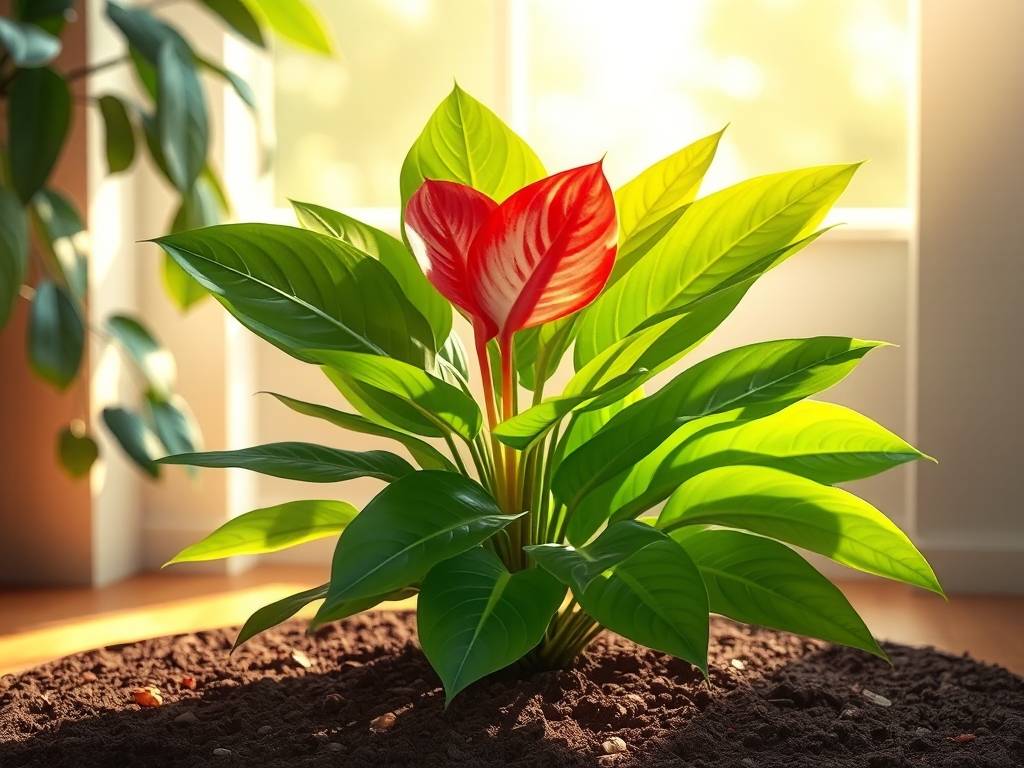
Watering is perhaps the most common point of confusion for anthurium owners. The goal is consistently moist soil, but never waterlogged. Think of the moist forest floor, not a swamp. The best anthurium watering technique is the "finger test." Before you water, stick your finger about an inch or two into the potting mix. If it feels dry, it's time to water thoroughly. If it still feels moist, wait another day or two.
When you do water, do so deeply until water runs freely out of the drainage holes. This ensures the entire root ball is hydrated. However, never let your plant sit in a saucer of standing water. Empty the saucer after 15-20 minutes to prevent root rot, which is a primary cause of anthurium demise. Using filtered water, rainwater, or even left-out tap water is preferable, as anthuriums can be sensitive to the chemicals and minerals found in some tap water. This simple step is a cornerstone of preventing anthurium root rot.
The potting mix you choose is your secret weapon for achieving that "moist but no waterlogging" balance. A standard potting soil is often too dense and retains too much moisture. For healthy anthurium roots, a chunky, airy, and well-draining mix is essential. A fantastic anthurium soil mix recipe you can make at home is one part orchid bark, one part peat-free coco coir, and one part perlite. The orchid bark provides structure and aeration, the coco coir retains moisture without becoming soggy, and the perlite ensures excellent drainage. This mix mimics the plant's natural epiphytic growing conditions, where it would cling to trees and roots would be exposed to air.
Humidity is another vital piece of the puzzle. These tropical natives thrive in humidity levels of 60% or higher—a level that can be challenging in many modern homes, especially with air conditioning or heating. To increase humidity for your flamingo flower, you have several effective options. Grouping plants together creates a beneficial microclimate. Placing your anthurium on a pebble tray filled with water (ensuring the pot is not sitting in the water) is a classic method. For the most effective solution, especially in dry climates, a small humidifier placed nearby will work wonders. Misting can offer a temporary boost, but it's not a long-term solution and can sometimes promote fungal issues if overdone.
Feeding your plant ensures it has the energy to produce those stunning, long-lasting blooms. During the active growing season (spring and summer), feed your anthurium with a balanced, water-soluble fertilizer diluted to half-strength every 4-6 weeks. A fertilizer with a higher phosphorus content (the middle number in the N-P-K ratio) can encourage more prolific flowering. In the fall and winter, when growth naturally slows, you can reduce feeding to once every two months or stop altogether. Over-fertilizing can damage the sensitive roots and cause leaf tip burn, so when in doubt, less is more.
Even with perfect care, you might encounter a few issues. Here’s how to troubleshoot common anthurium problems:
- Brown Leaf Tips: This is typically a sign of low humidity or a buildup of salts and minerals from tap water. Switch to filtered water and increase the ambient humidity.
- Yellowing Leaves: Overwatering is the most common culprit. Check your watering habits and ensure the potting mix is well-draining. It can also indicate too much direct sun.
- No Flowers: Insufficient light is the prime reason anthuriums refuse to bloom. Move it to a brighter location with indirect light. Other factors can be a lack of fertilizer or a pot that is too large, as anthuriums often bloom better when slightly root-bound.
- Pests: Keep an eye out for common houseplant pests like aphids, mealybugs, and spider mites. Wipe the leaves regularly with a damp cloth to deter them. For an infestation, treat with insecticidal soap or neem oil, which are safe and effective organic options.
As we look to 2025, the trend in indoor gardening is toward smarter, more integrated care. Consider using a soil moisture meter for a more precise reading than the finger test, eliminating the guesswork. Apps that track your watering and fertilizing schedule are also becoming more sophisticated. Furthermore, a 2024 report from the Global Gardening Institute highlighted a shift toward using sustainable, peat-free growing mediums, making a coco coir-based mix not just effective but also an environmentally conscious choice for your anthurium care routine.
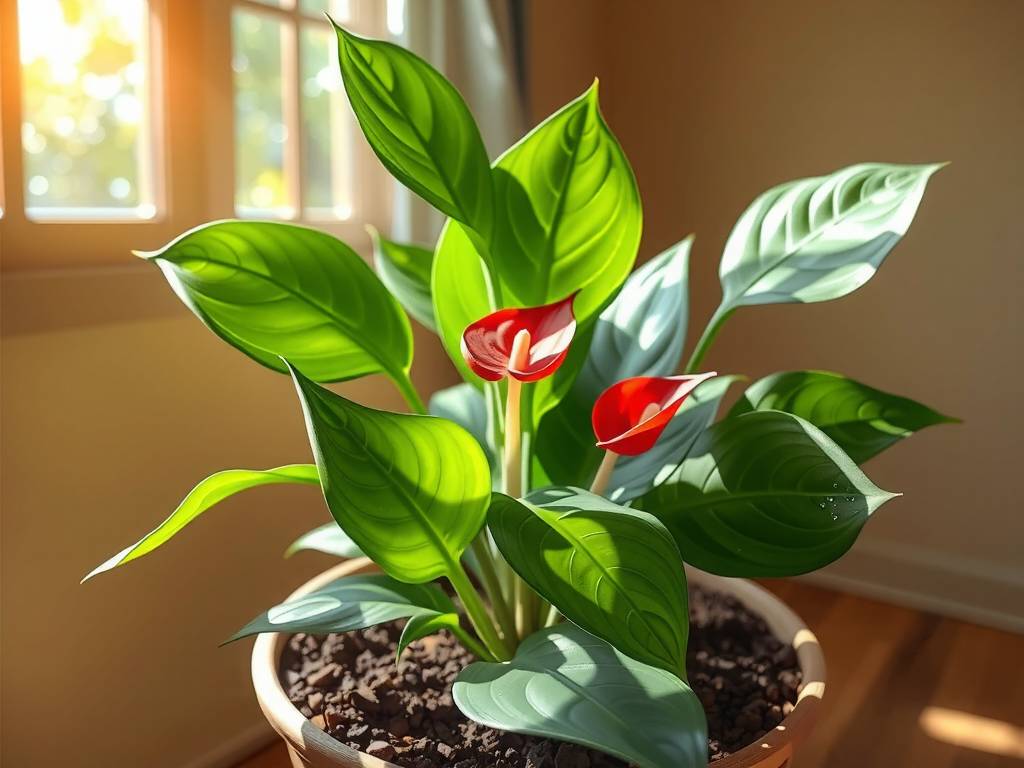
Finally, don't be afraid to repot when needed. You'll know it's time when you see roots circling the bottom of the pot or growing out of the drainage holes. Typically, this is every 2-3 years. Choose a new pot that is only 1-2 inches larger in diameter than the old one. Gently loosen the root ball and place it in the new container with your fresh, chunky potting mix. This refresh gives your plant a new lease on life and room to continue growing.
Caring for an anthurium is a rewarding journey. By providing warm filtered light, maintaining consistent moisture without waterlogging, and offering ample humidity, you are replicating its natural habitat. This attentive care will be repaid tenfold with a stunning, almost constant display of its unique, flame-like flowers, turning your home into a personal tropical retreat.