bluename
 How to Care for Rubber Plant - Prune to Promote Branches & Full Shape
Does your rubber plant resemble a single, lanky pole more than the lush, bushy indoor tree you envisioned? You're not alone. Many plant enthusiasts struggle with a rubber plant that grows tall and sparse, refusing to branch out and achieve that desirable, full shape. The secret to transforming your leggy Ficus elastica into a dense, ornamental masterpiece lies not just in watering and light, but in mastering a simple yet crucial technique: strategic pruning. This comprehensive guide will walk you through exactly how to care for your rubber plant, with a focused approach on pruning to promote branches and cultivate a robust, full shape that becomes the centerpiece of any room.
Understanding the Rubber Plant's Growth Habit
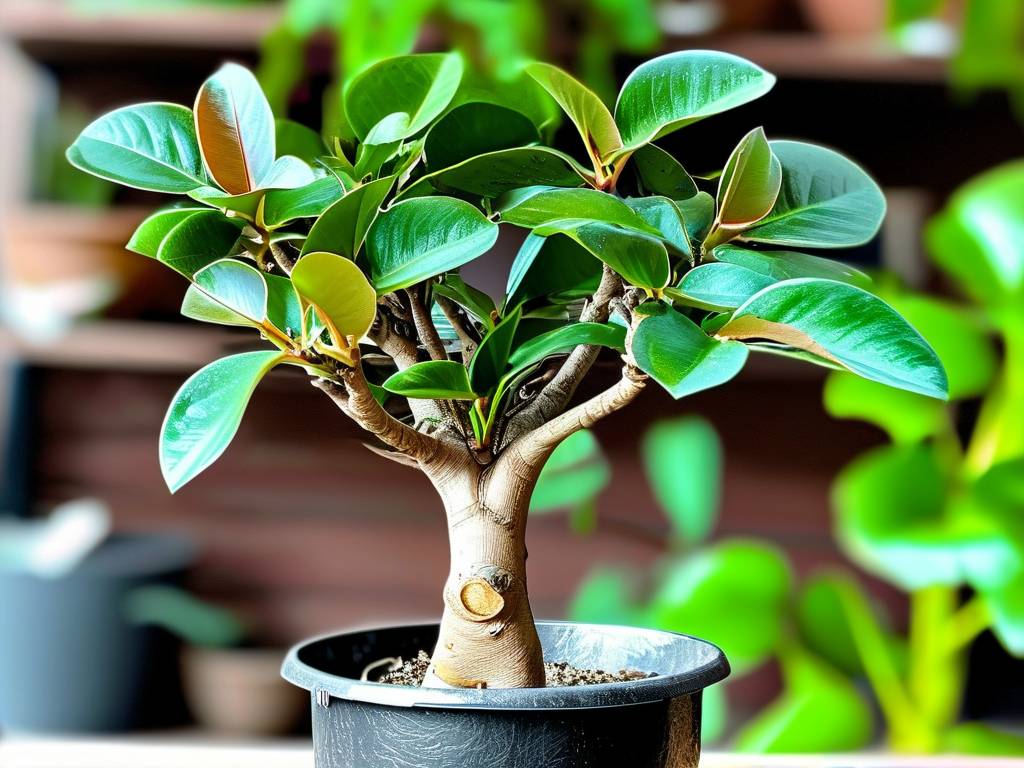
Before you make the first cut, it's essential to understand what motivates your plant. In its natural habitat, Ficus elastica grows upward toward the canopy light, prioritizing vertical growth (apical dominance) over lateral branching. Indoors, without competition, this tendency is amplified. It will happily shoot up a single stem, losing lower leaves as it goes, unless we intervene. Pruning is the signal that redirects the plant's energy, encouraging it to grow bushier rather than taller.
The Essential Toolkit for Pruning
Gather the right tools to ensure clean, healthy cuts that promote quick recovery. You will need:
- Sharp, Clean Pruning Shears or Scissors: Blunt tools crush stems, inviting disease. Sterilize blades with rubbing alcohol before and after use to prevent transmitting pathogens.
- Gloves: Rubber plants secrete a sticky, milky latex sap that can irritate skin and is difficult to wash off.
- Soft Cloth & Mild Soap: For wiping away any sap that drips on leaves or surfaces.
- Optional: Cinnamon Powder. Many growers use this natural fungicide to dust small cuts as a protective barrier.
The Step-by-Step Guide to Pruning for Branching
This is the core of achieving a fuller shape. Follow these steps carefully.
Identify Your Pruning Points (Nodes)
Look closely at the stem. You'll see lines where leaves have fallen or are currently attached. Just above these leaf scars or attachments is a slight bump or ring—this is the node. Nodes contain meristematic tissue, the "growth centers" capable of producing new branches or leaves. Your cut must be made just above a node.
Decide on the Desired Height and Shape
Visualize how you want your plant to look. To encourage branching lower down and control height, find a node at your desired height. For a taller plant that's bare at the base, you might make a bold cut, removing the top third to half of the plant. Don't be afraid; rubber plants are resilient.
Make the Clean, Angled Cut
Position your shears about 1/4 inch above your chosen node. Make a confident, diagonal cut. The angle helps shed water away from the fresh wound, reducing rot risk. Be prepared for the immediate flow of white latex sap; this is normal.
Post-Prune Care: Encouraging New Growth
After pruning, place your plant in its ideal bright, indirect light spot. Ensure consistent watering (allowing the top inch of soil to dry out) and consider a light application of a balanced, half-strength liquid fertilizer during the growing season to support new growth. The nodes below your cut will now receive the plant's full growth energy, typically sprouting two or more new branches from the area, directly contributing to a fuller rubber plant shape.
Advanced Techniques: Notching for Precise Branching
What if you want a branch in a specific spot without cutting the main stem top off? Enter "notching." Using a sterile blade, make a shallow horizontal cut just through the bark (about 1/3 into the stem) directly above a node you wish to stimulate. This minor injury interrupts the downward flow of auxins (growth hormones), often tricking that specific node into breaking dormancy and producing a side branch. It's a more precise, if less guaranteed, method than full pruning.
Optimal Ongoing Care to Support a Full Shape
Pruning sets the stage, but consistent care builds the bushiness. According to best practices from horticultural authorities like the Royal Horticultural Society (RHS), a holistic approach is key.
Light: The Energy Source
Your pruned plant needs bright, indirect light for at least 6-8 hours daily to fuel the development of multiple new branches. An east or west-facing window is ideal. Insufficient light will result in slow, weak, or sparse growth, undoing your pruning efforts.
Watering and Humidity
Water deeply only when the top 1-2 inches of soil are dry. Overwatering is a primary killer, leading to root rot. Rubber plants appreciate moderate humidity. Misting, a pebble tray, or a nearby humidifier can prevent leaf curl and support lush new foliage as the plant fills out.
Feeding for Foliage
During the active growing seasons of spring and summer, feed monthly with a balanced, water-soluble fertilizer (e.g., 10-10-10) diluted to half strength. This provides the nutrients needed to sustain multiple new branches and larger leaves. The American Horticultural Society (AHS) advises against fertilizing in fall and winter when growth naturally slows.
Rotation and Cleaning
Rotate your plant a quarter turn weekly so all sides receive equal light, promoting even growth and preventing a lopsided shape. Regularly wipe the large leaves with a damp cloth. As noted by the RHS, this removes dust, maximizes photosynthesis, and helps you monitor for pests.
Troubleshooting Common Post-Prune Issues
- Sap Flow: The latex will stop seeping within hours. Let it dry naturally or gently dab it away. Do not seal the wound with wax or paint; it needs to callous naturally.
- Slow to Branch: Patience is crucial. New growth can take 4-8 weeks to appear. Re-evaluate light levels if progress is extremely slow.
- Leaf Drop: Some lower leaf loss after a major prune is possible as the plant redirects energy. This should stabilize with proper care.
- Single New Branch: Sometimes, only one new shoot emerges. You can prune this new growth tip once it has 3-4 leaves to force it to branch again.
My rubber plant just had one long stem. I cut the top off, but now it's just a bare stick. Did I kill it? No, you likely didn't kill it. As long as the stem is still firm and green, it is alive. The plant is now redirecting its energy to the remaining nodes. Ensure it has excellent light and consistent care. New buds can take several weeks to swell and break. Patience is key.
How often should I prune my rubber plant to keep it full? There's no set calendar schedule. Prune based on shape and growth. You can do light tip-pruning (pinching off the very end of a new branch) once or twice during the growing season to encourage that branch to bifurcate. A more significant structural prune to reduce height or legginess is typically only needed every 1-2 years.
Can I propagate the piece I pruned off? Absolutely. Rubber plants are very easy to propagate from stem cuttings. Allow the cut end of the tip cutting to callous over for a few hours, then place it in water or moist potting mix. With warmth and light, it will develop roots, giving you a whole new plant to shape from the start.
Mastering how to care for your rubber plant, particularly through strategic pruning, is the most effective way to shift its growth from vertical to volumetric. By understanding its nodes, making confident cuts above them, and providing unwavering post-prune care with optimal light, water, and nutrients, you directly command its shape. The journey from a leggy specimen to a dense, branching indoor tree is immensely rewarding. With these techniques, you're not just maintaining a plant; you're sculpting a living piece of decor that showcases your plant care expertise.