bluename
 How to Care for Rosemary - Prune to Shape for Compact & Bushy Form
You love the aromatic scent and culinary potential of your rosemary plant, but instead of a dense, lush bush, you're staring at a leggy, woody, and sparse specimen. This is a common frustration for many gardeners. The secret to transforming your spindly rosemary into a robust, compact, and bushy form lies not just in watering or sunlight, but in mastering the art of strategic pruning. Learning how to care for rosemary and prune it correctly is the single most effective way to encourage vigorous, desirable growth. This guide will walk you through the precise techniques to shape your plant, promote bushiness, and ensure a healthy, productive rosemary for years to come.
Understanding Rosemary's Growth Habit

Rosemary (Rosmarinus officinalis) is a woody-stemmed perennial herb native to the Mediterranean. Its natural growth pattern, if left unchecked, is to become tall, woody at the base, and less leafy over time. The plant's energy gets directed upward, creating long, bare stems with foliage only at the very tips. This is the opposite of the compact, harvestable bush most gardeners desire. Pruning intervenes in this process, signaling the plant to branch out from lower nodes and produce fresh, tender growth throughout its structure.
Why Pruning is Non-Negotiable for a Bushy Plant
Pruning is far more than just cutting back an overgrown plant. For rosemary, it's a vital horticultural practice with multiple benefits that directly address the goal of a compact form.
- Stimulates Branching: Each time you make a proper cut just above a set of leaves, you remove the dominant growing tip (apical bud). This encourages the buds lower down on the stem to awaken and grow, creating two or more new branches where there was once one. This is the fundamental mechanism for creating bushiness.
- Prevents Woodiness: Regular, light pruning prevents stems from becoming excessively thick and woody too quickly. While some woodiness is inevitable in a perennial, keeping the plant actively producing new green stems maintains its vitality and flexibility.
- Improves Air Circulation and Light Penetration: A dense, well-shaped bush allows air to flow through its center and lets sunlight reach inner leaves. This reduces the risk of fungal diseases like powdery mildew, which thrives in damp, stagnant conditions.
- Enhances Culinary Yield: A bushier plant has exponentially more growing tips, which are the prime parts for harvesting. You get more of the flavorful, aromatic young leaves for your cooking.
- Maintains Manageable Size and Aesthetic Shape: Whether in a container or garden bed, pruning allows you to control the plant's size and guide it into an attractive, rounded, or tailored form.
The Essential Tools for the Job
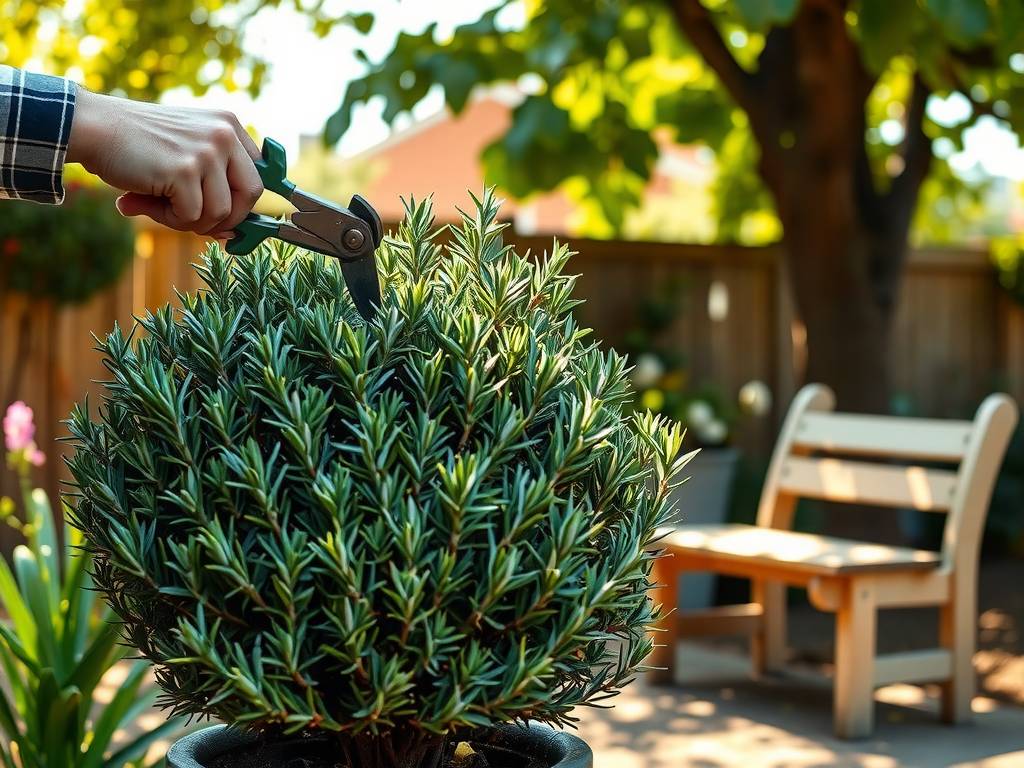
Using the right tools makes the process cleaner and healthier for your plant.
- Sharp, Clean Bypass Pruners or Herb Snips: Blunt tools crush stems, creating ragged wounds that are slow to heal and susceptible to disease. Disinfect blades with rubbing alcohol before moving between plants to prevent spreading pathogens.
- Gloves: Rosemary stems can be tough and slightly abrasive. As the Royal Horticultural Society (RHS) advises, "Always use sharp secateurs or scissors to make clean cuts, which heal more quickly and reduce the risk of disease entering the plant." This underscores the importance of tool care in overall plant health.
The Core Pruning Strategy: When and How
The Golden Rule: Never Cut Into Old, Bare Wood. Rosemary has a limited ability to sprout new growth from old, leafless wood. Your cuts should always be made into the green, leafy part of the stem.
Timing is Everything: The best times for major shaping pruning are in late spring or early summer, after the first major flush of growth but before the high heat of midsummer. This gives the plant ample time to produce new growth before cooler weather. Light, frequent harvesting-pruning can be done throughout the growing season.
Step-by-Step Guide to Pruning for a Compact Form:
- Assess Your Plant: Stand back and look at its overall structure. Identify the longest, leggiest stems and areas that look sparse.
- Target Leggy Stems: Find a stem you want to shorten. Look down the stem from the tip until you see a healthy set of leaves (a node) facing the direction you want new growth to go—typically outward to open up the plant's center.
- Make the Cut: Using your sharp pruners, cut the stem approximately ¼ to ½ inch above the chosen leaf node. Make the cut at a slight angle, parallel to the angle of the leaves. The new branches will emerge from this node.
- Work Methodically: Move around the plant, shortening the tallest and outermost stems by about one-third to one-half of their current length. Avoid shearing the plant like a hedge, as this damages leaves and creates an unnatural shape. Make individual cuts.
- Open the Center: Remove any small, dead, or twiggy growth in the center of the plant to improve air flow.
- Shape Gradually: If the plant is very overgrown, don't try to fix it in one session. Drastically cutting back into old wood can kill it. Instead, prune moderately now, allow for new growth, and prune again in the next suitable season.
The "Harvest-as-You-Prune" Method: The American Horticultural Society (AHS) promotes integrated gardening practices. You can maintain shape by regularly harvesting sprigs for the kitchen. When you need rosemary, don't just pluck leaves from the top. Use snips to cut a 3-4 inch tip from a stem, making your cut just above a lower set of leaves. This simultaneously harvests your herb and performs a perfect pruning cut to encourage bushiness.
Advanced Shaping and Renovation
Creating a Topiary or Standard Form: For a more formal look, you can train rosemary into a small tree shape (standard). Select the strongest, central stem to become the "trunk." Carefully remove all side shoots and leaves from the lower two-thirds of this stem. As the top grows, pinch and prune it to form a dense, ball-shaped canopy. This requires consistent attention over several seasons.
Reviving an Old, Woody Plant: If your rosemary is already a thick, woody base with minimal green growth, revival is challenging but sometimes possible. In spring, examine the woody parts closely for any tiny, green buds (eyes). If you see them, you can carefully cut back some stems to just above these buds. If there are no buds visible on the main trunks, you cannot force it to regrow. Your best option then is to take cuttings from any remaining green growth to propagate new, young plants.
Supporting Practices for Optimal Health
Pruning works best when combined with proper overall care.
- Sunlight: Rosemary demands full sun—at least 6-8 hours daily. Less sun leads to weak, stretched growth that defeats your pruning efforts.
- Soil and Drainage: Plant in very well-draining soil. Rosemary roots hate sitting in moisture. For containers, use a cactus/succulent mix or add plenty of perlite to standard potting soil.
- Watering: Water deeply but infrequently, allowing the soil to dry out considerably between waterings. Consistent overwatering is a primary killer.
- Feeding: Rosemary is not a heavy feeder. A light application of a balanced, organic fertilizer in early spring is sufficient. Too much fertilizer promotes soft, rapid growth that is less flavorful and less hardy.
My rosemary is very woody at the base. Can I cut it back hard to rejuvenate it? Proceed with extreme caution. Rosemary often will not sprout new growth from completely bare, brown wood. Before making any major cuts, inspect the woody stems very closely for tiny, green nodules or buds. If you see them, you can prune back to just above those points in late spring. If you see no buds, hard pruning likely will kill the plant. It's safer to take cuttings from any remaining green growth to start new plants.
How often should I prune my rosemary to keep it bushy? Adopt a "little and often" approach during the active growing season (spring through early fall). Each time you harvest for cooking, make strategic cuts. Then, perform one more deliberate shaping prune after the main spring bloom or in early summer. Avoid heavy pruning in late fall or winter, as new growth will be tender and vulnerable to cold damage.
I pruned my rosemary, but it's not getting bushier. What am I doing wrong? The most common error is not pruning enough or not pruning correctly. If you are only pinching the very tiniest tips, you're not removing enough of the stem to stimulate lower buds. Ensure your cuts are removing several inches of growth, down to a point where you can see robust leaf nodes below. Also, verify that your plant is getting enough sunlight; in shade, it will always grow leggy regardless of pruning.