bluename
 How to Care for Nephrolepis Cordifolia - Division Propagation for Fast Pot Expansion
Are you looking at your lush, overflowing Nephrolepis cordifolia, also known as the sword fern or lemon button fern, and wondering how to manage its vigorous growth? Perhaps you desire more of these beautiful, arching fronds to grace other rooms in your home or share with fellow plant enthusiasts, but find the process daunting. The solution lies in mastering a simple, highly effective technique: division propagation. This method is not only the fastest route to expanding your fern collection but also a crucial aspect of long-term Nephrolepis cordifolia care. By learning division propagation for fast pot expansion, you rejuvenate an overgrown plant and multiply your greenery with a near-perfect success rate. This guide will walk you through every step, transforming a potentially messy task into a rewarding and straightforward process.
Understanding Your Nephrolepis Cordifolia: The Foundation of Care
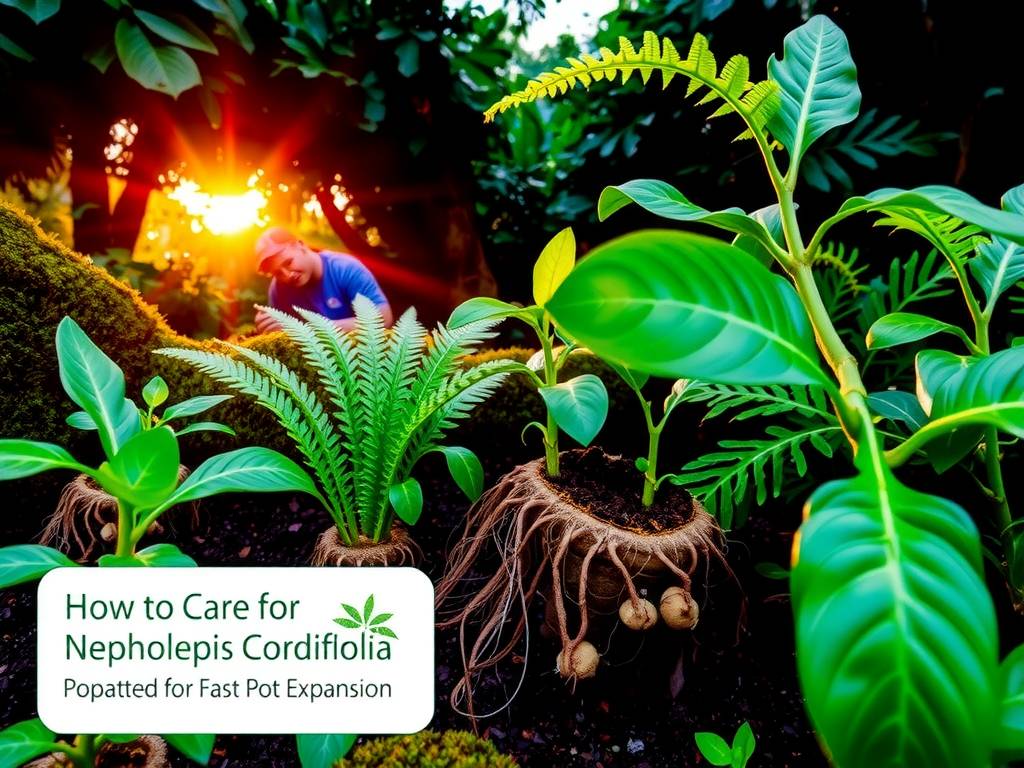
Before diving into division, it's essential to understand what makes your fern thrive. Nephrolepis cordifolia is notably hardy, featuring upright, slightly arching fronds and distinctive underground tubers that store water and nutrients. These tubers are key identifiers and play a vital role in its resilience and propagation. According to the Royal Horticultural Society (RHS), this fern prefers bright, indirect light and consistently moist, well-draining soil. It tolerates lower humidity better than many other ferns but truly prospers with moderate to high atmospheric moisture. A happy fern is a fast-growing fern, and a fast-growing fern is the perfect candidate for division.
Why Division is the Best Propagation Method for Fast Expansion
While Nephrolepis cordifolia can be propagated from spores or runners, division stands out for speed, simplicity, and reliability. Spore propagation is a slow, complex process more suited to specialist growers. Division, however, leverages the plant's natural clumping growth habit. You are essentially helping the plant do what it does naturally—create new, independent clusters from its existing root mass. The American Horticultural Society (AHA) notes that division is the recommended method for most perennial clump-forming plants, including ferns, as it quickly produces sizeable, mature plants. This method directly addresses the goal of fast pot expansion, giving you multiple established plants in a single session, rather than waiting months for tiny new growth.
Pre-Division Care: Preparing Your Fern for Success
A successful division starts with a healthy parent plant. About a week before you plan to divide, ensure your fern is well-hydrated. Water it thoroughly, allowing excess water to drain. This reduces transplant shock and makes the root ball more pliable and easier to work with. Gather all your materials beforehand: a clean, sharp knife or garden spade, fresh potting mix suitable for ferns (peat-based or coir-based with perlite), new pots with drainage holes, and a workspace you don't mind getting a little dirty. Sterilizing your cutting tool with rubbing alcohol is a simple step that prevents the spread of disease.
The Step-by-Step Guide to Division Propagation
This hands-on process is where your fast pot expansion becomes reality. Follow these clear steps for the best results.
Removing and Inspecting the Root Ball
Gently remove the fern from its current pot. You may need to tap the sides or run a knife around the interior edge to loosen it. Once out, place the plant on your workspace. Carefully tease away excess soil from the root mass to reveal the structure. You'll see a dense network of roots and likely several distinct, bulbous tubers. This is the heart of your plant. Inspect for any signs of rot or damage—healthy roots are firm and light brown, while rotten ones are mushy and dark. Trim away any problematic sections with your sterilized tool.
Identifying Natural Division Points
Your fern will often show you where to divide. Look for natural separations or "clumps" within the root mass. Each viable division should have its own central growing point (a crown where fronds emerge), a healthy portion of the root system, and at least one or two tubers. These tubers are reservoirs of energy and will give your new divisions a tremendous head start. Avoid creating divisions that are too small; a robust section with several fronds will establish itself much faster than a single, weak frond with minimal roots.
Executing the Division
Using your hands, gently pull the root mass apart at the natural fissures you identified. For very tight, mature clumps, you may need to use your clean knife to cut through the central mass. Always make clean cuts rather than tearing. The goal is to minimize root damage. Aim for divisions that are at least one-quarter to one-third the size of the original plant. Each new section should feel substantial.
Potting Up Your New Fern Divisions
Prepare your new pots by partially filling them with fresh, moist potting mix. Place a division in the center, ensuring the crown (where the stems meet the roots) sits at the same soil level as it did previously—not buried too deep. Fill in around the roots with more mix, gently firming it to eliminate large air pockets. Water each newly potted division thoroughly until water runs freely from the drainage holes. This settles the soil around the roots.
Post-Division Care: The Critical First Weeks
The care you provide immediately after division determines how quickly your new plants bounce back and begin growing.
The Ideal Recovery Environment
Place your new divisions in a warm location with bright, indirect light. Avoid direct sunlight, which can scorch the tender fronds and stress the plant while it's recovering. High humidity is particularly beneficial now. You can create a mini-greenhouse by placing a clear plastic bag loosely over the pot (supported by sticks to avoid leaf contact) or by using a humidity tray. The AHA emphasizes that maintaining high humidity reduces transpiration (water loss from leaves), allowing the plant to focus its energy on root regeneration.
Watering and Feeding After Division
Keep the soil consistently moist but never soggy. The original tubers provide a water reserve, but the disturbed root system is less efficient at uptake. Check the top inch of soil frequently. Hold off on fertilizing for at least 4-6 weeks. The fresh potting mix contains nutrients, and fertilizer can burn new, sensitive roots. After this period, you can resume a regular feeding schedule with a balanced, diluted liquid fertilizer during the growing season.
Troubleshooting Common Post-Division Issues
Some frond wilting or yellowing is normal as the plant redirects energy. Remove any severely yellowed fronds to keep the plant tidy. If wilting is persistent, double-check your lighting and humidity. Ensure the soil is moist but not waterlogged, as overwatering in a stressed plant can quickly lead to root rot. Patience is key; new growth is the ultimate sign of success and may appear in a few weeks.
Integrating Division into Your Long-Term Care Routine
Division is not a one-time event but part of a cyclical care routine. A mature Nephrolepis cordifolia typically benefits from being divided every 2-3 years. This prevents it from becoming hopelessly root-bound, which can lead to stunted growth, difficulty in watering, and nutrient deficiency. Regular fern division for healthier growth revitalizes the plant, giving roots fresh space and soil to explore. It’s the cornerstone of sustainable, long-term pot expansion for Nephrolepis cordifolia, ensuring your collection remains vibrant and manageable.
What is the best time of year to divide my Nephrolepis cordifolia? The ideal time is in early spring, just as the plant enters its most active growth period. This gives the divisions the entire growing season to establish strong roots and new fronds before the slower growth of winter. However, if done with care, division can be successful indoors at any time of year due to stable home temperatures.
My divided fern looks droopy and sad. Did I kill it? Some drooping or leaf loss is very common after division, as the plant's root system has been disturbed. This is transplant shock. Maintain high humidity, provide consistent indirect light, and keep the soil evenly moist (not wet). Avoid the temptation to overwater or fertilize. As long as the crown and tubers are healthy, it will likely push out new growth in a few weeks. Patience is crucial.
Can I plant multiple divisions back into one large pot for a fuller look? Absolutely. This is an excellent technique. Planting 3-4 healthy divisions into a larger container will create an instantly lush, full pot. Ensure the pot is only 1-2 inches larger in diameter than the combined root mass to prevent soil from staying too wet. This method is a fantastic application of fast pot expansion for immediate decorative impact.
Mastering the care of Nephrolepis cordifolia through division propagation is a rewarding skill that multiplies your greenery and deepens your connection to your plants. By understanding the fern's structure, following a careful separation process, and providing attentive aftercare, you turn one crowded plant into several thriving specimens. This practice not only solves the problem of overgrowth but also ensures the continued health and vigor of your ferns for years to come. Embrace division as a natural part of the plant parenting journey—a simple, effective path to a more abundant indoor jungle.