bluename
 How to Care for Nephrolepis Exaltata - Humidity Control to Prevent Yellow Leaves
You’ve brought home a lush, vibrant Boston Fern (Nephrolepis exaltata), its graceful fronds cascading beautifully. But within weeks, you notice it: those dreaded yellow leaves. Fronds turn pale, then brown and crispy, starting at the tips. Before you blame your watering can, consider this: the culprit is often not water, but air. The secret to keeping your fern a deep, glorious green lies in mastering one crucial element: humidity.
This comprehensive guide will walk you through exactly how to care for Nephrolepis exaltata, with a laser focus on humidity control to prevent yellow leaves. We’ll demystify why ferns demand moist air, provide actionable solutions for any home, and transform you from a worried plant parent into a confident fern expert.
Why Your Boston Fern Turns Yellow: It’s All About Humidity
Boston Ferns are native to humid, swampy forests in Florida and tropical regions worldwide. In their natural habitat, they thrive in air saturated with moisture. Our modern homes, especially those with air conditioning or heating, create an arid environment that is the complete opposite of what a fern needs.
When the air is too dry, the fern loses moisture through its fronds faster than its roots can absorb it. This process, called transpiration, goes into overdrive. The plant’s cells lose turgor pressure, and the delicate leaf tissue begins to desiccate and die. The result? Yellowing leaves, starting at the tips and margins, followed by browning and leaf drop. According to horticulturists from the Royal Horticultural Society (RHS), low atmospheric humidity is a primary cause of stress for tropical foliage plants, leading directly to foliar discoloration and poor health.
Simply put, if you’re seeing yellow leaves on your Nephrolepis exaltata, inadequate humidity is the first factor to investigate. Proper humidity control for Boston Ferns isn’t a luxury; it’s a non-negotiable requirement for preventing yellow fronds and maintaining its lush appearance.
The Ideal Humidity Range for a Thriving Boston Fern
So, what is the magic number? For optimal health and to prevent yellowing, Boston Ferns require a relative humidity level of 50% or higher. They will survive in levels around 40%, but you may see some stress signs. Below 40%, the plant is in a hostile environment, and yellow leaves are almost guaranteed.
Investing in a simple digital hygrometer, available at most hardware stores, is the best way to remove the guesswork. Place it near your plant to monitor the conditions accurately. You might be surprised to find that your living room humidity sits at a mere 30-35%, especially during winter months when heating systems are running.
Practical Strategies to Boost Humidity and Prevent Yellow Leaves
You don’t need to turn your home into a steam room. Several effective, user-friendly methods can create the perfect microclimate for your fern.
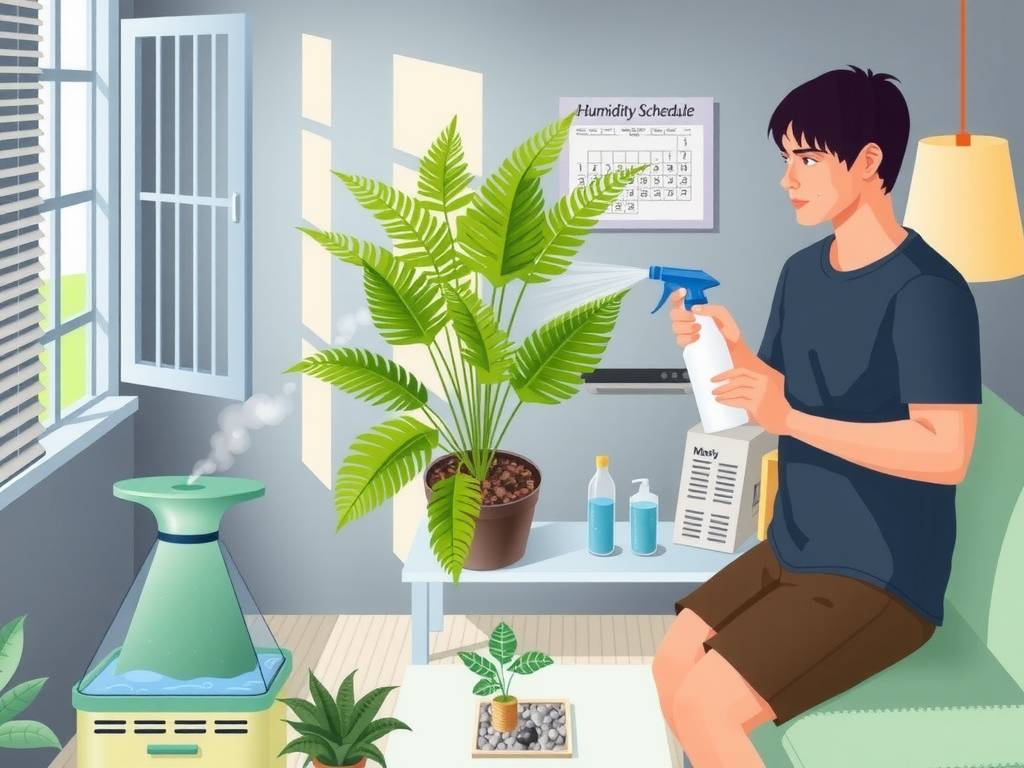
The Pebble Tray Method: A Simple, Proven Solution This is the most classic and reliable technique for increasing humidity for houseplants. Fill a shallow tray or saucer with pebbles or small stones. Add water until it sits just below the top of the pebbles. Place your fern’s pot on top of the pebbles, ensuring the pot’s base is not sitting directly in the water (to prevent root rot). As the water evaporates, it surrounds the plant with a gentle, localized cloud of moisture. Remember to refill the tray as the water evaporates. This method, recommended by the American Horticultural Society (AHS), provides a consistent humidity boost directly where your plant needs it.
Strategic Grouping: Create a Plant Community Plants naturally release moisture through transpiration. By grouping your Boston Fern with other humidity-loving plants like Peace Lilies, Pothos, or Calatheas, you create a communal zone of higher humidity. The collective transpiration of the group raises the moisture level in the immediate air around them, benefiting all the plants involved. It’s a beautiful and functional way to display your collection while solving the humidity puzzle.
The Power of Misting: A Temporary Relief Misting your fern’s fronds with room-temperature water provides immediate but short-term relief. It can help cool the plant and hydrate the surface of the leaves. However, its effects last only minutes. For it to be a meaningful part of your humidity control regimen, you would need to mist several times a day, which is impractical for most. Use misting as a supplemental tactic, not a primary solution. Always mist in the morning so leaves dry before evening, reducing the risk of fungal diseases.
Employing a Humidifier: The Ultimate Weapon For the most effective and consistent humidity control to prevent yellow leaves, a humidifier is unmatched. It allows you to set and maintain a specific humidity level in the room, ensuring your fern—and your own respiratory health—benefits from ideal air moisture. Place a cool-mist humidifier near your plant grouping for the best results. This is especially crucial in dry climates or during extended periods of indoor heating.
Choosing the Right Location: Bathroom or Kitchen Oasis Often, the simplest solution is to place your fern in a room that is naturally more humid. Bathrooms with windows or well-lit kitchens frequently have higher humidity levels from showers and cooking. If you have adequate indirect light in one of these spaces, your Boston Fern may find its perfect home there with minimal extra effort on your part.
Beyond Humidity: Complementary Care to Keep Fronds Green
While humidity is paramount, it works in concert with other care elements. Ignoring these can also lead to yellow leaves, even in perfect humidity.
Watering Wisely: The Root of the Matter Boston Ferns prefer consistently moist but never soggy soil. The goal is an even level of moisture. Water thoroughly when the top inch of soil feels dry to the touch. Use lukewarm water and allow excess to drain away completely. Yellow leaves can also be a sign of overwatering (soggy soil, wilting yellow fronds) or underwatering (dry, crispy yellow fronds). Pair your humidity strategy with mindful watering.
The Right Light: Bright but Indirect Nephrolepis exaltata thrives in bright, indirect light. Direct, harsh sunlight will scorch its fronds, causing yellow or bleached patches. Too little light will weaken the plant, leading to sparse growth and pale, yellowing leaves. A north or east-facing window is often ideal. If you only have south or west exposure, use a sheer curtain to filter the light.
Feeding for Lush Growth During the growing season (spring and summer), feed your fern with a balanced, water-soluble fertilizer diluted to half-strength every 4-6 weeks. Over-fertilizing can cause salt buildup in the soil, leading to root burn and—you guessed it—yellow leaves. In fall and winter, reduce feeding significantly as growth slows.
Maintenance: Grooming for Health As part of your regular care, gently remove any yellow or brown fronds at the base of the stem. This not only keeps the plant looking tidy but also directs its energy toward producing new, healthy growth. Don’t be afraid to give your fern a light trim if it becomes too large or leggy.
Can I use a terrarium for my Boston Fern to maintain humidity? Absolutely. A large, open terrarium or a glass cloche can create a stunning, self-contained humid environment perfect for a Boston Fern. It dramatically reduces the plant’s water loss. Ensure the container is large enough to accommodate the fern’s growth and has some air circulation to prevent mold. This is a highly effective, low-maintenance method for humidity control.
My fern’s leaves are still yellowing even with a pebble tray. What else could it be? If you’ve confirmed adequate humidity, check your watering habits and light exposure. Feel the soil. Is it bone dry or constantly wet? Assess the light: is it too strong or too dim? Also, consider drafts. Boston Ferns are sensitive to sudden temperature changes from heating vents, air conditioners, or drafty windows, which can cause stress and yellowing.
How often should I run a humidifier for my ferns? This depends on your home’s baseline humidity. Use a hygrometer to guide you. In many cases, running a humidifier for a few hours in the morning and evening is sufficient to maintain levels above 50%. In very dry conditions, you may need to run it longer or continuously on a low setting. The goal is consistency, not extreme fluctuation.
Mastering the care of your Nephrolepis exaltata ultimately comes down to recreating a slice of its native, humid habitat. By prioritizing humidity control, you address the most common cause of yellow leaves head-on. Implement the strategies that fit your lifestyle—be it a simple pebble tray, a plant community, or the steady support of a humidifier. Combine this with balanced watering, appropriate light, and gentle feeding, and you’ll be rewarded with a Boston Fern that remains a breathtaking cascade of resilient, deep green fronds for years to come. The journey from yellow leaves to vibrant health is a clear path, paved with the moisture it naturally craves.