bluename
 How to Care for Agave - Sufficient Light for More Erect Leaves
You've brought home a stunning agave, envisioning its bold, architectural form as a centerpiece. Yet, instead of the proud, upright leaves you expected, you notice a troubling sight. The leaves are stretching, becoming thin and floppy, leaning desperately towards the nearest window. The plant's once compact, sculptural rosette is now loose and misshapen. This common frustration stems from one primary issue: insufficient light. Achieving those desirable, more erect leaves in your agave is not about luck; it's about mastering its fundamental need for bright, direct sunlight.
This guide will provide the essential knowledge to correct and prevent this issue, transforming your agave into the upright, statuesque specimen it's meant to be. We will focus on the critical role of light, how to assess your environment, and practical steps to ensure your plant thrives with strong, vertical growth.
Understanding Agave's Native Habitat and Light Needs
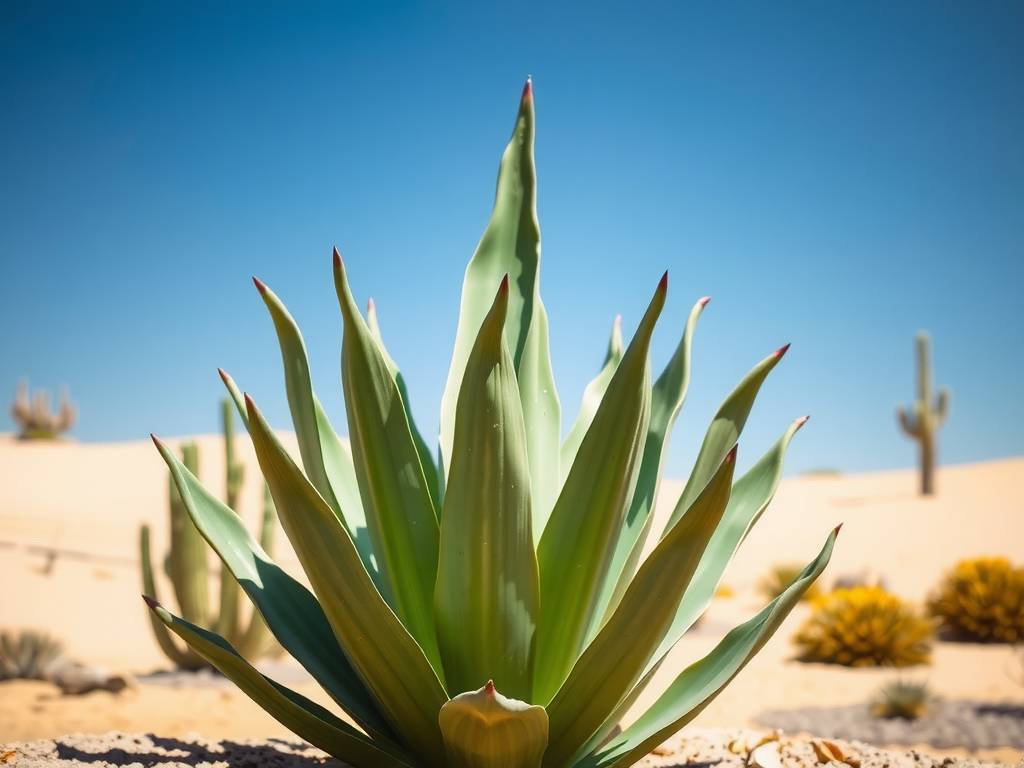
Agaves are sun-worshipping succulents native to the arid and semi-arid regions of the Americas, from the scorching deserts of Mexico to the rocky hillsides of the southwestern United States. In these habitats, they bask in intense, unfiltered sunlight for most of the day. This evolutionary history is written in their physical form. Their thick, fleshy leaves are designed not just to store water, but to efficiently capture and utilize vast amounts of solar energy.
The Royal Horticultural Society (RHS) categorizes most agave species as requiring "full sun," which they define as a minimum of six hours of direct sunlight per day. For optimal growth and form, many agaves prefer even more. When deprived of this crucial resource, the plant initiates a survival mechanism called etiolation. It literally stretches its growth to seek out a brighter light source, resulting in the weak, elongated, and drooping leaves that concern so many indoor gardeners. Providing sufficient light is the single most important factor in preventing this and promoting the compact, erect leaf structure that defines a healthy agave.
Signs Your Agave Isn't Getting Enough Light
Recognizing the early symptoms of light deprivation allows for quick intervention. The most obvious sign is etiolation, as mentioned. Look for new growth that is noticeably paler (chlorotic), thinner, and more spaced out than the older, lower leaves. The entire rosette may lose its tight, symmetrical form, with leaves splaying outward or downward instead of growing upright.
The plant's color can also fade. Variegated varieties may lose their distinctive markings and revert to solid green, while blue or gray-hued agaves like Agave parryi may become washed out. Furthermore, a lack of sufficient light often correlates with weakened defenses. A stressed, etiolated agave is more susceptible to pests like mealybugs and scale, and its compromised structure makes it vulnerable to physical damage. If your agave is leaning heavily to one side or its leaves feel soft and limp rather than firm and rigid, it is unequivocally pleading for more sun.
How to Provide Sufficient Light for Indoor Agaves
For most indoor gardeners, providing the requisite "full sun" is the central challenge. Success hinges on window orientation and seasonal awareness.
Choosing the Best Window Location A south-facing window is the undisputed champion for agave care indoors, offering the longest duration of the most intense direct light in the Northern Hemisphere. An unobstructed west-facing window can be a good secondary option, providing strong afternoon sun. East-facing windows offer gentle morning light, which is often insufficient for most agave species to maintain fully erect growth. North-facing windows should generally be avoided, as they provide only low, indirect light.
Place your agave as close to the window glass as possible without the leaves touching it (to prevent cold or heat damage). Even a few feet back can significantly reduce light intensity. As noted by experts at the Arizona-Sonora Desert Museum, the light intensity drops exponentially with distance from the light source. A plant placed three feet from a window receives less than half the light of one placed directly on the sill.
Supplementing with Grow Lights When ideal natural light isn't available, full-spectrum LED grow lights are an excellent and energy-efficient solution. They are essential for maintaining erect leaves during dark winter months or in perpetually low-light homes. Look for lights with a high output (PPFD) and a color temperature in the range of 5000-6500 Kelvin, which mimics daylight.
Position the light 6 to 12 inches above the agave and aim for a photoperiod of 12-14 hours per day, using a timer for consistency. A combination of natural daylight from a south-facing window supplemented with a few hours of grow light in the evening can create a perfect environment for robust, upright growth.
Seasonal Adjustments and Acclimation Light conditions change with the seasons. The weak, low-angle winter sun may necessitate moving your agave to the brightest possible spot or increasing reliance on grow lights. Conversely, the intense, high-angle summer sun through a south or west window can sometimes be too harsh, potentially scorching leaves that aren't acclimated.
If moving your plant outdoors for summer or into a significantly brighter spot, always acclimate it gradually. Start with just an hour or two of direct morning sun, increasing exposure over 1-2 weeks. This process, often emphasized by succulent societies, allows the plant to build protective pigments and avoid sunburn, which manifests as permanent brown or white scorch marks on the leaves.
Optimizing Light for Outdoor Agaves
In suitable climates (USDA zones 8-11, depending on species), outdoor planting allows agaves to reach their full, magnificent potential. Site selection is paramount.
Selecting the Perfect Planting Site Choose a location that receives a minimum of 6-8 hours of direct, unfiltered sunlight daily. Morning sun is excellent, but agaves truly thrive with hot afternoon exposure. Ensure the site has impeccable drainage; agaves despise "wet feet." Planting on a slope, mound, or in raised beds can enhance drainage and prevent root rot. Consider the plant's mature size to ensure it won't eventually be shaded by structures or trees.
Understanding Sun Exposure Patterns Observe your garden throughout the day and across seasons. A spot that is sunny in spring might become shaded by deciduous trees in summer, or by a building's shadow in winter. The American Horticultural Society's (AHA) principles of right plant, right place underscore the need for year-round assessment. An agave planted in a temporarily sunny spot that later becomes shaded will inevitably become etiolated and struggle.
The Direct Link Between Light and Leaf Structure
The phrase "more erect leaves" is not just an aesthetic goal; it's a direct indicator of physiological health. Sufficient light drives photosynthesis at an optimal rate, producing the energy and structural carbohydrates the plant needs. This energy allows for strong cellular development in the leaves and core, enabling them to grow thick and hold themselves upright against gravity.
Inadequate light results in weaker cell walls and elongated, soft tissue that cannot support its own weight, leading to drooping. Furthermore, proper light exposure encourages a compact growth habit. The plant doesn't need to waste resources stretching for light, so it produces leaves closer together, creating that prized, tight rosette form. The correlation is direct and undeniable: more sufficient light equals stronger, more erect agave leaves.
Common Questions About Agave and Light
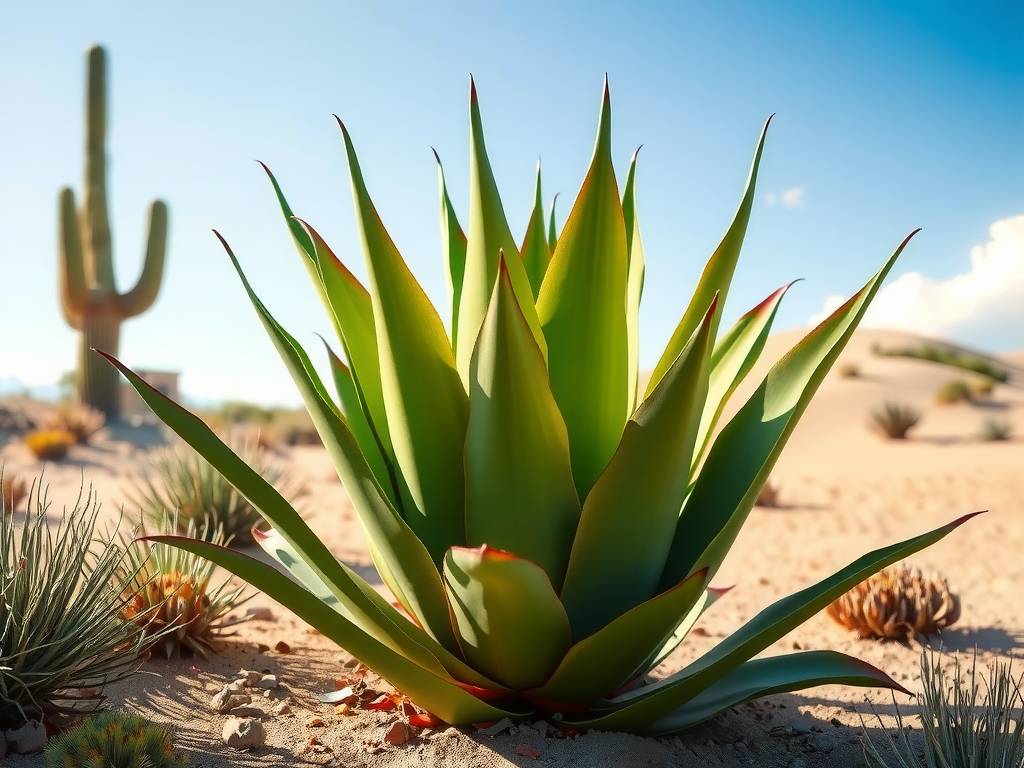
Can an agave recover from etiolation (stretching)? The elongated, stretched growth itself cannot revert or shrink. However, the plant can recover its form with time and corrected care. Once placed in sufficient light, new growth from the center of the rosette will be compact and upright. As the healthy new growth continues, you can carefully remove the older, etiolated lower leaves. Over a year or more, the plant will eventually regain a more normal, upright appearance, though it may always bear signs of its past stress.
My agave is getting direct sun but the leaf tips are turning brown. Is this sunburn? Not necessarily. While sudden, intense sun can cause scorching, the most common cause of brown leaf tips on agave is underwatering or physical damage. Agaves store water in their leaves. When water is severely lacking, the oldest tissue at the leaf tips often dries out and dies first. Ensure you are watering deeply (allowing water to run out the drainage hole) only when the soil is completely dry. Also, agave leaf tips are fragile and can be damaged by brushing against them, which leads to a similar brown scar.
How do I know if my indoor light is truly "sufficient"? Beyond observing your plant's growth, you can use technology for a more precise assessment. A simple, inexpensive light meter (lux meter) can give you a reading. As a general rule, "full sun" plants like agaves typically need at least 20,000 to 50,000 lux for several hours a day. Alternatively, smartphone apps that use the camera sensor can provide rough estimates. The most reliable method, however, remains the plant's own response: firm, upright, compact new growth is the ultimate sign that your light is sufficient.
Providing your agave with sufficient light is the cornerstone of its care, directly responsible for developing those strong, architectural, and more erect leaves. By understanding its native needs, correctly interpreting its signals, and proactively managing its exposure—whether through strategic window placement, supplemental lighting, or ideal outdoor siting—you empower your plant to express its full, striking beauty. A well-lit agave is a resilient, low-maintenance, and breathtaking focal point, rewarding your care with years of dramatic and upright growth.