bluename
 How to Care for Euphorbia Milii - Water Control to Boost Year-Round Blooms
You’ve brought home a vibrant Euphorbia milii, commonly known as the Crown of Thorns, lured by its promise of nearly constant, cheerful blooms. Yet, despite your care, the brilliant bracts are sparse, or worse, the plant seems to be languishing. The most common culprit, the single biggest challenge for both new and experienced growers, is improper watering. Mastering how to care for Euphorbia milii isn't about complex fertilizers or special lights; it fundamentally hinges on perfecting your water control strategy. This guide will demystify the watering needs of this resilient succulent, transforming your approach to unlock a spectacular display of year-round flowers.
Understanding Your Euphorbia Milii’s Nature
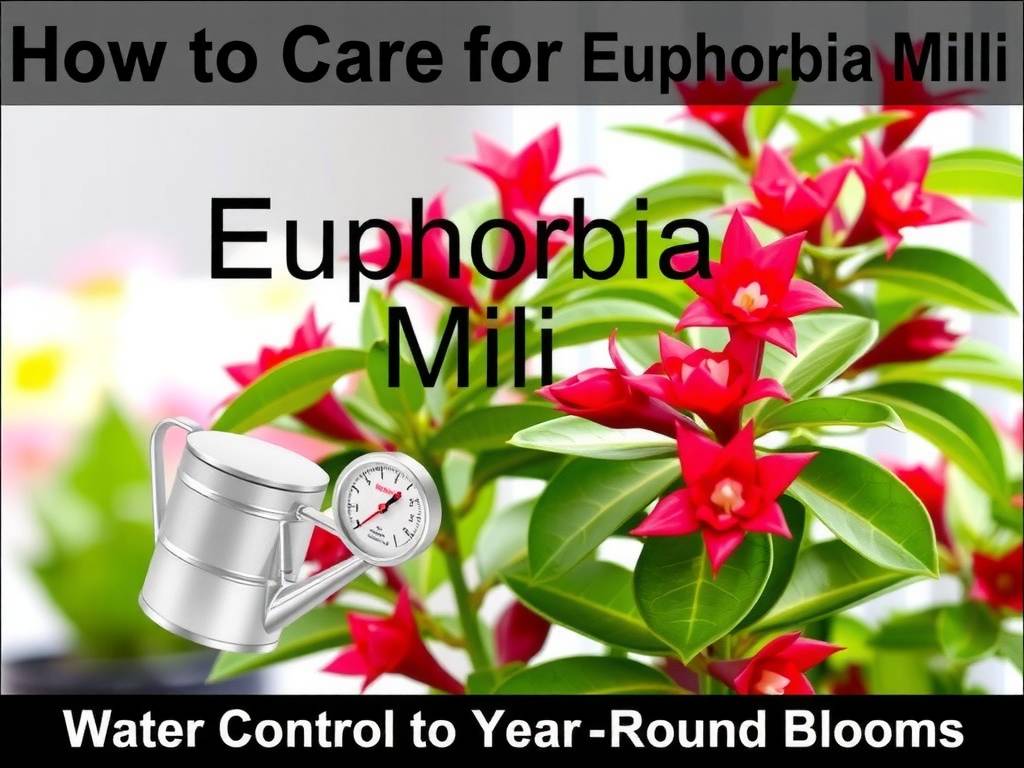
Before we dive into the "how," it's crucial to understand the "why." Euphorbia milii is a succulent native to Madagascar. It has evolved to thrive in arid, well-draining environments with periods of drought followed by rain. Its thick, fleshy stems store water, allowing it to survive dry spells. This inherent biology means it is far more tolerant of underwatering than overwatering. In fact, overwatering is the fastest way to induce root rot, leaf drop, and a complete halt in blooming. The goal is to replicate the natural cycle of a thorough drink followed by a period of dryness.
The Golden Rule: The "Soak and Dry" Method
Forget calendar-based watering. The only reliable technique is the "soak and dry" method. This is the cornerstone of effective Euphorbia milii water control.
Here’s how to execute it perfectly:
- Check the Soil: Insert your finger into the potting mix up to the second knuckle. For smaller pots, you can use a wooden skewer or a moisture meter.
- The Dry Signal: Water only when the soil is completely dry throughout the pot. The top inch or two should be dry, and the moisture should not be felt at the deeper root level. When in doubt, wait another 2-3 days.
- The Thorough Soak: When it’s time, water the plant deeply. Pour water evenly over the soil until you see it freely draining out of the bottom drainage hole. This ensures the entire root ball gets hydrated.
- Complete Drainage: Never let your plant sit in a saucer of water. Empty the cachepot or saucer after 15-20 minutes. Soggy, waterlogged soil is a death sentence for the roots.
Seasonal Watering Adjustments for Continuous Blooms
A static watering schedule will fail. Your plant’s thirst changes with the seasons and its growth cycle, which is directly tied to its blooming potential.
Spring and Summer (Active Growth & Peak Bloom Season): This is when your Euphorbia milii is pushing out new growth and flowers. It will use water more frequently. You may find yourself watering every 7-10 days, depending on temperature, light, and pot size. Consistent moisture (not wetness) during this period supports vigorous blooming. The American Horticultural Society’s (AHA) guide to succulent care emphasizes that consistent, appropriate hydration during active growth phases is key to sustaining metabolic processes like flowering.
Fall and Winter (Dormant or Slow-Growth Period): As daylight decreases and temperatures cool, your plant’s growth slows significantly. Its water requirements plummet. During this time, you might only need to water every 3-4 weeks, or even longer. The soil should stay dry for extended periods. Overwatering in winter is the most common cause of plant loss. The Royal Horticultural Society (RHS) advises that most succulents, including Euphorbia, require "very little water in winter," just enough to prevent the stems from shriveling excessively.
The Critical Partnership: Watering and Soil Drainage
You cannot master water control without the right soil. A standard, moisture-retentive potting mix will hold water for too long, undermining all your careful watering efforts.
The Ideal Soil Mix: A fast-draining, gritty mix is non-negotiable. A perfect blend for Euphorbia milii care is:
- 50% quality succulent & cactus potting mix
- 30% perlite or pumice
- 20% coarse sand or fine gravel This combination ensures water flows through quickly, providing hydration while allowing air to reach the roots, preventing rot. As noted by horticultural experts, the right soil medium is the first line of defense against overwatering, creating an environment where roots can breathe.
Pot Selection Matters: Always use a pot with a drainage hole. Terracotta pots are excellent for Euphorbia milii as they are porous, allowing the soil to dry out more evenly from the sides as well as the top.
Signs You’re Getting Watering Right (or Wrong)
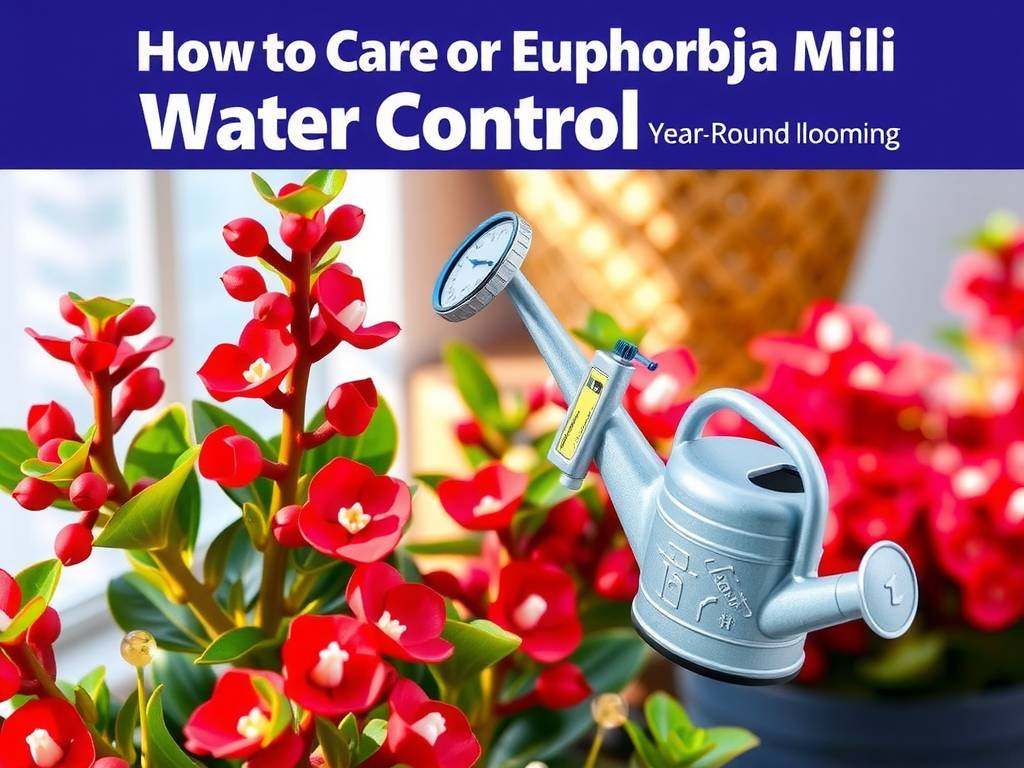
Your plant will communicate its needs. Learning this language is essential for boosting year-round blooms.
Signs of Perfect Watering:
- Firm, plump stems and leaves.
- Consistent production of new leaves and flower buds.
- Soil dries out completely between waterings.
Signs of Overwatering (The Danger Zone):
- Yellowing leaves, particularly lower leaves.
- Soft, mushy stems—a sign of advanced rot.
- Leaves dropping en masse.
- A complete absence of new blooms.
- A persistently wet or soggy soil smell.
Signs of Underwatering:
- Wrinkled, limp, or thinner stems.
- Dry, crispy leaves that may fall off.
- Slow growth and lack of flowering. While underwatering is less immediately fatal, chronic stress from it will prevent your plant from having the energy to produce its beautiful bracts.
Advanced Tips to Complement Your Watering Routine
While water is the key, these supporting practices maximize your results.
Light for Blooms: Euphorbia milii needs bright, direct light for at least 4-6 hours daily to bloom profusely. A south- or west-facing window is ideal. More light increases water usage slightly, so monitor soil dryness.
Feeding for Flowers: During the active growing season (spring/summer), feed monthly with a balanced, water-soluble fertilizer diluted to half-strength. A fertilizer with a slightly higher phosphorus content (e.g., 5-10-5) can encourage blooming. Do not fertilize in fall and winter.
Temperature & Humidity: It prefers average room temperatures (65-80°F) and low humidity. Avoid cold drafts and temperatures below 50°F.
Safety First: Always wear gloves when handling or repotting Euphorbia milii. The milky white sap is toxic and can cause skin and eye irritation.
Why has my Crown of Thorns stopped blooming entirely? The most likely reasons are insufficient light and incorrect watering. Move it to a brighter location and strictly adhere to the "soak and dry" method. Over-fertilizing, particularly with high-nitrogen formulas, can also promote leaf growth at the expense of flowers.
The stems of my plant are soft and brown at the base. Can I save it? This is classic root rot from overwatering. Act immediately. Remove the plant from its pot, cut away all soft, mushy, or blackened roots and stems with a sterile knife until you see only healthy, firm tissue. Let the cuttings callous over for a few days, then replant in fresh, dry succulent mix. Do not water for at least a week.
How often should I repot my Euphorbia milii for optimal health? Repot every 2-3 years in spring, or when the plant becomes root-bound. Use this opportunity to refresh the gritty, well-draining soil mix. A slightly pot-bound plant often blooms more readily, so don't rush to move it to a much larger pot.
Mastering the care of Euphorbia milii is an exercise in restraint and observation. By prioritizing impeccable water control—embracing the "soak and dry" rhythm, partnering it with a gritty soil mix, and adjusting for seasons—you work with the plant's natural design. This creates the low-stress environment it needs to direct its energy not into survival, but into a breathtaking, nearly continuous celebration of color. Your reward will be a resilient, thriving specimen that showers you with blooms throughout the year, proving that sometimes, the most profound care is knowing when to step back and let the soil dry.