bluename
 How to Care for Bougainvillea - Post-Bloom Pruning to Shape for Next Year's Blooms
You've just enjoyed a spectacular cascade of vibrant color from your bougainvillea. Now, the brilliant bracts have faded, leaving behind a tangle of green growth. This is the critical moment many gardeners face: uncertainty about what to do next. Improper care after flowering can lead to a leggy, unshaped plant that struggles to bloom with the same intensity next season. The secret to a breathtaking repeat performance lies in strategic post-bloom pruning. Mastering how to care for bougainvillea through proper pruning not only shapes the plant for a more attractive form but directly stimulates the vigorous growth that will carry next year's prolific blooms.
Understanding the unique growth and flowering habit of bougainvillea is the first step to successful pruning. Unlike many plants, bougainvillea's showy "flowers" are actually modified leaves called bracts. The true flowers are the small, white centers nestled within these colorful bracts. Bougainvillea blooms on new growth that emerges from the nodes of the current season's wood. Therefore, pruning encourages the development of this new, bloom-ready wood. As noted by the American Horticultural Society (AHS), timely pruning of flowering vines like bougainvillea is essential to maintain plant health, control size, and promote the highest quality floral display by redirecting the plant's energy.
The Golden Window: When to Prune Your Bougainvillea
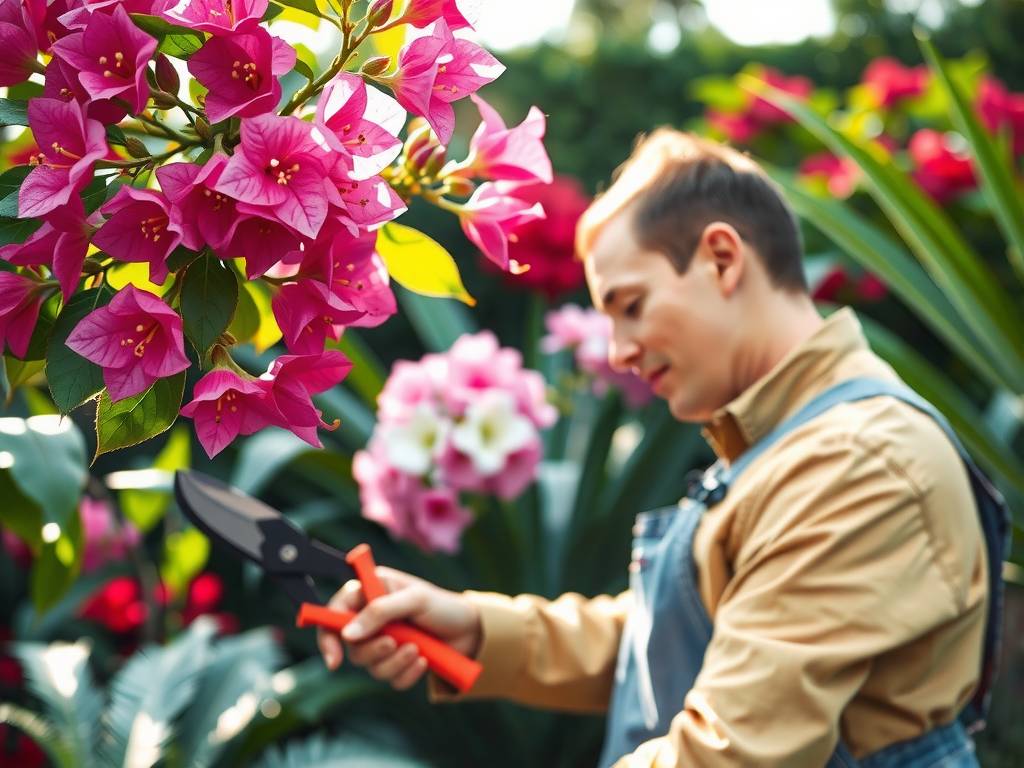
Timing is everything. The ideal period for major shaping and pruning is immediately after a flush of blooms has finished. For most climates, this aligns with late winter or early spring, just before the new growth surge begins. This timing allows the plant to recover and put all its energy into producing the new stems that will bear the next round of bracts.
Avoid heavy pruning in late fall or early winter in cooler zones, as this can encourage tender new growth that may be damaged by frost. Light, corrective pruning can be done throughout the growing season to tidy up wayward shoots. The Royal Horticultural Society (RHS) advises that for plants grown in conservatories or warm climates, pruning can be done after each flowering cycle to encourage a succession of blooms.
Essential Tools for the Job
Before you make your first cut, gather the right tools. Clean, sharp tools make precise cuts that heal quickly, reducing the risk of disease.
- Bypass Pruners: For most stems up to 1/2 inch in diameter.
- Loppers: For thicker, older branches up to 1.5 inches.
- Pruning Saw: For the largest, woodiest canes.
- Sturdy Gloves: Bougainvillea thorns are formidable. Arm protection is also recommended.
- Disinfectant: Wipe blades with rubbing alcohol or a bleach solution between plants to prevent spreading pathogens.
Your Step-by-Step Guide to Post-Bloom Pruning
Follow this clear, step-by-step process to shape your bougainvillea and set the stage for a magnificent bloom.
Step 1: The Assessment and Clean-Up Begin by stepping back and observing your plant's overall structure. Identify the main woody canes that form the plant's framework. Remove any dead, diseased, or damaged wood entirely, cutting back to healthy tissue. Next, clear out weak, spindly growth and any stems that are crossing through the center of the plant or rubbing against each other. This improves air circulation and light penetration.
Step 2: Strategic Shaping for Form and Size Now, focus on shaping. Decide if you are training your bougainvillea as a standalone shrub, a climbing vine, a standard tree, or an espalier. Your goal is to encourage a balanced, open structure.
- For general shaping, look for long, leggy stems that have just flowered. Trace these stems back to a point about one-third to one-half of their length, and make your cut just above a leaf node or a budding eye. This encourages branching from that point.
- To control size, you can be more aggressive. Cut back entire branches to a lateral shoot or a bud facing the direction you want new growth to travel. Remember the "one-third rule": avoid removing more than one-third of the plant's total living growth in a single season to prevent excessive stress.
Step 3: Encouraging Maximum Bloom Potential This is where you directly influence next year's flower show. Bougainvillea blooms most profusely on sun-drenched, lateral branches. After shaping, go over the plant again and tip-prune the remaining smaller branches. Pinch or cut off the last few inches of these shoots. This simple action, called tipping, disrupts apical dominance and signals the plant to produce multiple side shoots from just below the cut. Each of these side shoots is a potential flowering site. The more lateral growth you stimulate, the more bracts you will see.
Step 4: Training for Support Structures If your bougainvillea is growing on a trellis, arch, or fence, weave the newly shortened lateral branches through the support. Secure them loosely with soft plant ties. Directing growth horizontally along a support often encourages even more flowering nodes along the length of the stem compared to vertical growth.
Aftercare: Nurturing the New Growth
Pruning is only half the equation. Proper aftercare ensures your plant recovers vigorously.
Watering and Fertilization Water the plant deeply after pruning, but then allow the soil to dry out somewhat between waterings. Bougainvillea thrives on a cycle of slight stress. Overwatering is a common cause of leafy growth with few blooms. About 4-6 weeks after pruning, begin feeding with a balanced, slow-release fertilizer or a formula higher in potassium (the "K" in N-P-K). Potassium supports strong bud development and overall bloom vitality. Avoid high-nitrogen fertilizers, which promote excessive leaves at the expense of flowers.
Sunlight and Placement Ensure your bougainvillea receives a minimum of 6-8 hours of direct, unfiltered sunlight daily. This is the non-negotiable fuel for flower production. If your plant is in a container, you may rotate it occasionally for even growth, but never compromise on sun exposure.
Pest and Disease Vigilance Fresh new growth can attract aphids or caterpillars. Inspect your plant regularly. A strong blast of water or an application of insecticidal soap is usually sufficient for control. Good air circulation, aided by your pruning, helps prevent fungal issues like leaf spot.
Troubleshooting Common Pruning Concerns
- "I pruned, but my plant is just growing long, thorny vines with no flowers." This is often a sign of too much nitrogen, too much water, or insufficient sunlight. Re-evaluate your feeding schedule, ensure the soil drains perfectly, and confirm the plant's sun exposure.
- "My bougainvillea looks sparse and woody after pruning." You may have been too conservative. Bougainvillea is remarkably resilient. Next season, don't be afraid to cut back harder into older wood to force new growth from the base. It can handle it.
- "When is the absolute worst time to prune?" Avoid major pruning just before or during your local winter, or when a cold snap is forecasted. Also, avoid pruning a bougainvillea that is under severe drought stress; water it first.
Frequently Asked Questions
How hard can I really cut back an overgrown, neglected bougainvillea? Bougainvillea is exceptionally tolerant of hard pruning. If a plant has become a massive, tangled thicket, you can rejuvenate it by cutting the entire plant back to 12-18 inches from the ground. The best time for this drastic renovation is in late winter or early spring. It may not flower significantly in the first season after such a hard prune, as it will focus energy on regenerating its structure, but it will come back stronger and more manageable.
Can I use the cuttings from pruning to propagate new plants? Absolutely. This is an excellent way to multiply your bougainvillea. Take semi-hardwood cuttings about 6-8 inches long from the pruned material. Remove the lower leaves, dip the cut end in rooting hormone, and plant in a well-draining potting mix. Keep the medium slightly moist and provide bottom heat if possible. With patience, many cuttings will root and grow into new plants.
My bougainvillea is in a pot. Does the pruning process differ? The principles are identical, but size control is often more critical for container-grown plants. You may need to prune more frequently to keep the plant in proportion with its pot. Also, pay close attention to root health. If the plant is root-bound, post-pruning is a good time to consider potting it up one size or doing some root pruning before refreshing the soil.
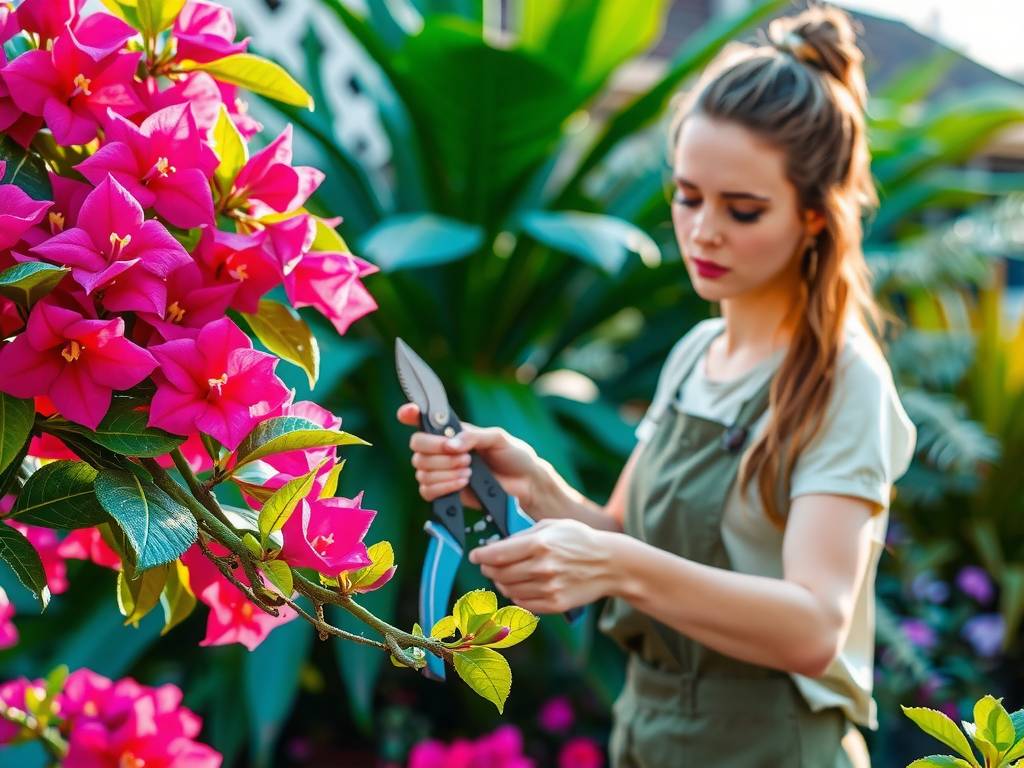
Post-bloom pruning is not an act of mere maintenance; it is a conversation with your plant, guiding its energy toward beauty and abundance. By understanding the simple logic of cutting for new growth, providing the essential elements of sun and balanced nutrition, and addressing common pitfalls, you transform the post-flowering lull into a period of great potential. The effort you invest now in shaping and caring for your bougainvillea is the direct investment that yields the high-interest return of a breathtaking, colorful canopy in the seasons to come. Embrace the process, and watch your garden's most vibrant performer take center stage, year after year.