bluename
 How to Care for Cymbidium Sinense - Watering Tips: Water When Soil Is Dry
You've brought home a stunning Cymbidium sinense, its elegant arching sprays of blooms promising years of beauty. Yet, that promise often wilts under the most common challenge: watering. The fear of overwatering, leading to root rot, battles with the worry of underwatering, causing shriveled pseudobulbs and dropped buds. It's a delicate balance that leaves many growers anxious. The golden rule, "water when the soil is dry," seems simple, but what does "dry" truly mean for this specific orchid? Mastering this single principle is the key to unlocking vibrant growth and spectacular seasonal flowers. This guide will demystify that process, transforming uncertainty into confidence.
Understanding Your Cymbidium Sinense's Thirst
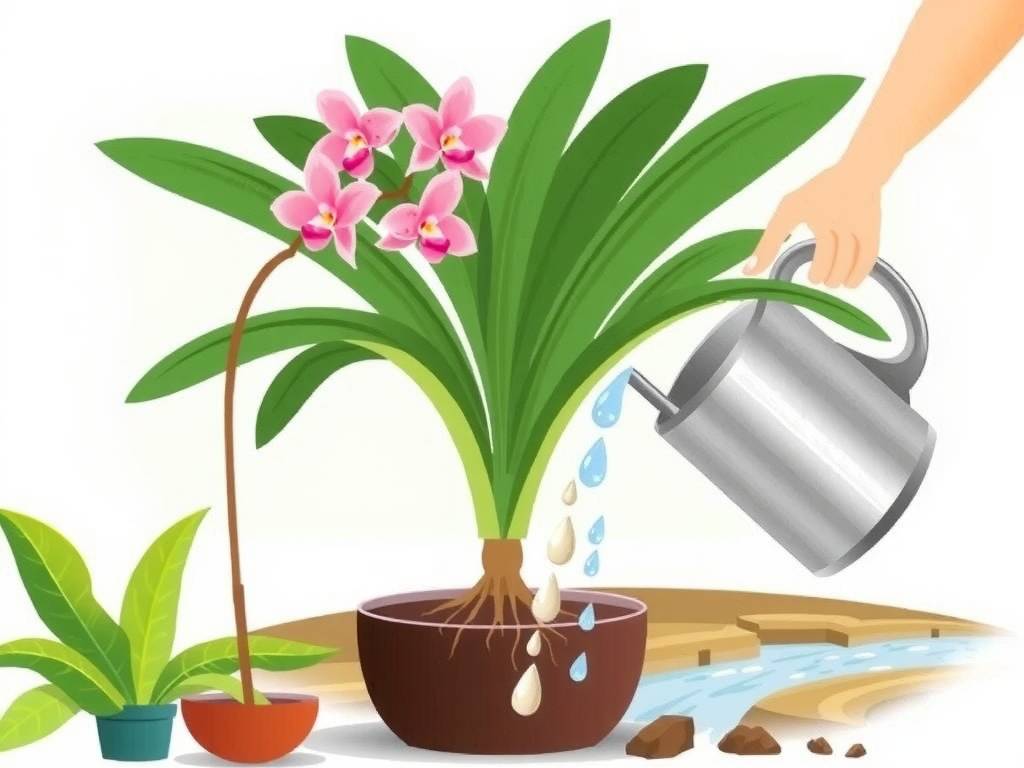
Cymbidium sinense, the revered Chinese cymbidium, is a terrestrial or semi-terrestrial orchid. Unlike some epiphytic orchids that crave constant moisture around their roots, Cymbidium sinense has a different relationship with water. Its growth cycle includes distinct periods where its water needs change. During active growth in warmer months, it's thirstier. In cooler, dormant periods, its water consumption drops significantly. The "water when dry" method respects this natural rhythm, preventing the soggy conditions that suffocate roots.
The "Dry" Test: More Than a Surface Glance
The most critical mistake is watering based on the surface appearance alone. The top layer of potting media can look dry while the core around the roots remains soggy.
The Finger Test remains the most reliable tool for home growers. Insert your finger about 2 inches into the potting mix. If you feel moisture or coolness at your fingertip, delay watering. If it feels completely dry, it's time. For larger pots, a wooden skewer or chopstick is ideal. Insert it deep into the medium, leave it for a minute, then pull it out. If the stick comes out damp with particles sticking to it, the medium is still moist. If it comes out clean and dry, watering is needed.
Consider pot weight. Lift the pot before and after watering. A pot that feels light for its size indicates dryness, while a heavy pot suggests ample moisture remains. With practice, this becomes an intuitive check.
Seasonal Watering Rhythms
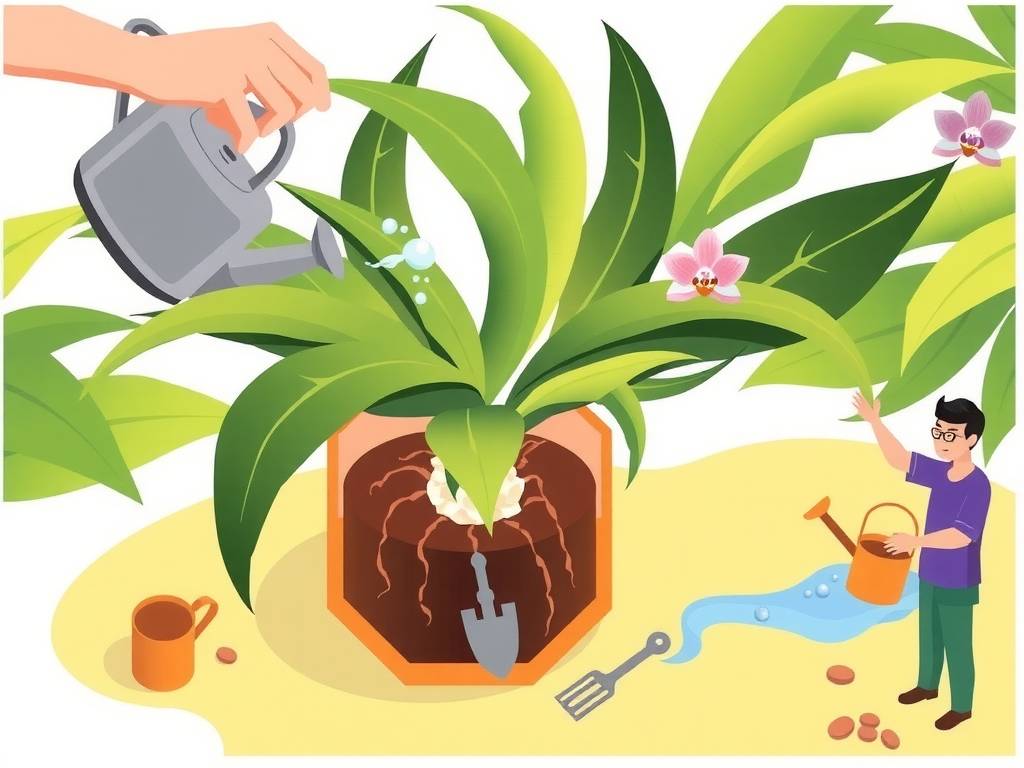
Your watering schedule should never be fixed on a calendar. It must sync with the seasons and the plant's growth stage.
Spring to Summer (Active Growth): This is the peak growing season for new shoots and leaves. The plant uses water rapidly. The potting medium will dry out faster. "Water when dry" may mean watering every 5-7 days, depending on your climate and pot type. Ensure thorough watering until it runs freely from the drainage holes.
Autumn (Maturation & Spike Initiation): As temperatures cool, growth slows. This is when flower spikes often initiate. Reduce watering frequency, allowing the medium to become drier between sessions. This slight stress can encourage spike formation. The interval might extend to 10-14 days.
Winter (Dormancy & Flowering): Growth is minimal. Overwatering is extremely dangerous in cool conditions. Water very sparingly, only when the medium is completely dry throughout. The goal is to prevent pseudobulbs from shriveling severely, not to promote growth. Watering might be as infrequent as once every 3-4 weeks.
The Right Water and Technique
Water Quality matters. These orchids are sensitive to dissolved salts. Use rainwater, distilled water, or reverse osmosis water when possible. If using tap water, let it sit overnight to allow chlorine to dissipate.
The technique is crucial. Always water thoroughly. Apply water slowly to the potting medium, not the leaves or crown, until it flows abundantly from the bottom. This ensures the entire root ball is hydrated and flushes out accumulated salts. Never let the pot sit in a saucer of standing water. Empty the cachepot or saucer after 30 minutes.
Potting Media: The Foundation of Drainage
Watering successfully is impossible without the right potting medium. It must be open, airy, and fast-draining. A typical mix for Cymbidium sinense includes medium-grade fir bark, perlite, and charcoal. Some growers add sphagnum moss for slight moisture retention, but use it sparingly. According to the American Orchid Society, a well-draining mix is non-negotiable for preventing root rot. Repot every 2-3 years, as bark breaks down and loses its drainage properties.
Signs You're Getting It Right (Or Wrong)
Correct Watering Results in:
- Firm, plump pseudobulbs.
- Healthy, silvery-green roots with green tips when active.
- Steady growth of new leaves and reliable seasonal flowering.
- A potting medium that cycles predictably between moist and dry.
Signs of Overwatering (Chronic Wet Feet):
- Yellowing, mushy leaves starting from the base.
- Black, brown, or soggy roots that may have a foul odor.
- Pseudobulbs turning soft, wrinkled, or rotten.
- No new growth or a complete lack of flowering.
Signs of Underwatering (Chronic Drought):
- Severely wrinkled or shriveled pseudobulbs.
- Leaves that are leathery, pleated, or drooping.
- Dry, brittle, and grey roots.
- Bud blast (flower buds drying and falling off before opening).
Expert Insight: The Physiology Behind "Dry"
Renowned horticulturist and author, Dr. Sarah J. Browning, emphasizes that the "dry period" is not just about avoiding rot. She notes, "For many orchids like Cymbidium, allowing the potting media to approach dryness between waterings is essential for root health. It encourages roots to seek moisture, promoting a stronger, more extensive root system. It also allows oxygen, which is critical for root respiration, to refill the air spaces in the medium." This aligns perfectly with the Royal Horticultural Society's guidance on orchid care, which stresses the importance of a wet-dry cycle for root aeration.
My Cymbidium sinense pseudobulbs are wrinkled. Does this always mean it needs water? Not always. Wrinkled pseudobulbs primarily indicate dehydration, but the cause could be either underwatering or overwatering. Rotten roots from overwatering cannot absorb water, leading to shriveling. Always check the potting medium and root condition first. If the medium is wet and the roots are bad, more water will worsen the problem. If the medium is bone dry and roots are brittle, then thorough watering is needed.
Can I use ice cubes to water my Cymbidium sinense as some guides suggest for other orchids? This is not recommended. Cymbidium sinense is a terrestrial orchid from temperate to warm regions. Applying ice-cold water directly to its roots can cause shock, damage root cells, and stress the plant. It also provides insufficient water volume to properly flush the pot. Using room-temperature or tepid water applied generously is the far superior method.
How does humidity affect my watering schedule? High ambient humidity (60-70% is ideal) slows the evaporation of moisture from leaves and the potting media surface. In a humid environment, you will need to water less frequently, as the medium stays moist longer. In very dry, indoor air, the medium dries out much faster, potentially requiring more frequent watering. Always let the "dryness test" be your final guide, not the humidity level alone.
Mastering the "water when dry" principle for your Cymbidium sinense is the cornerstone of its long-term health. It requires observation, patience, and a willingness to adapt to your plant's signals and seasonal changes. By focusing on the condition of the potting medium and the roots, rather than a fixed schedule, you create an environment where roots can breathe and thrive. This attentive approach directly supports robust growth, the development of strong flower spikes, and the ultimate reward: the breathtaking, fragrant bloom of a well-cared-for Chinese cymbidium. Your success lies not in frequent intervention, but in understanding and working with its natural cycle.