bluename
 How to Care for Variegated Spider Plant - Mastering Light Control to Maintain Variegation
You’ve brought home a stunning variegated spider plant, captivated by its elegant green and white striped leaves. But now, you notice a troubling change. Those crisp, creamy stripes are fading, turning a dull, solid green. The vibrant contrast that made your plant so special is disappearing. This loss of variegation is a common and frustrating issue for many plant enthusiasts. The culprit is often incorrect lighting. Understanding and controlling light is not just important—it’s the single most critical factor in preserving the beautiful patterns on your variegated spider plant. This guide will provide you with a complete, step-by-step framework for using light to keep your plant’s variegation bright and bold.
Why Light is the Key to Variegation
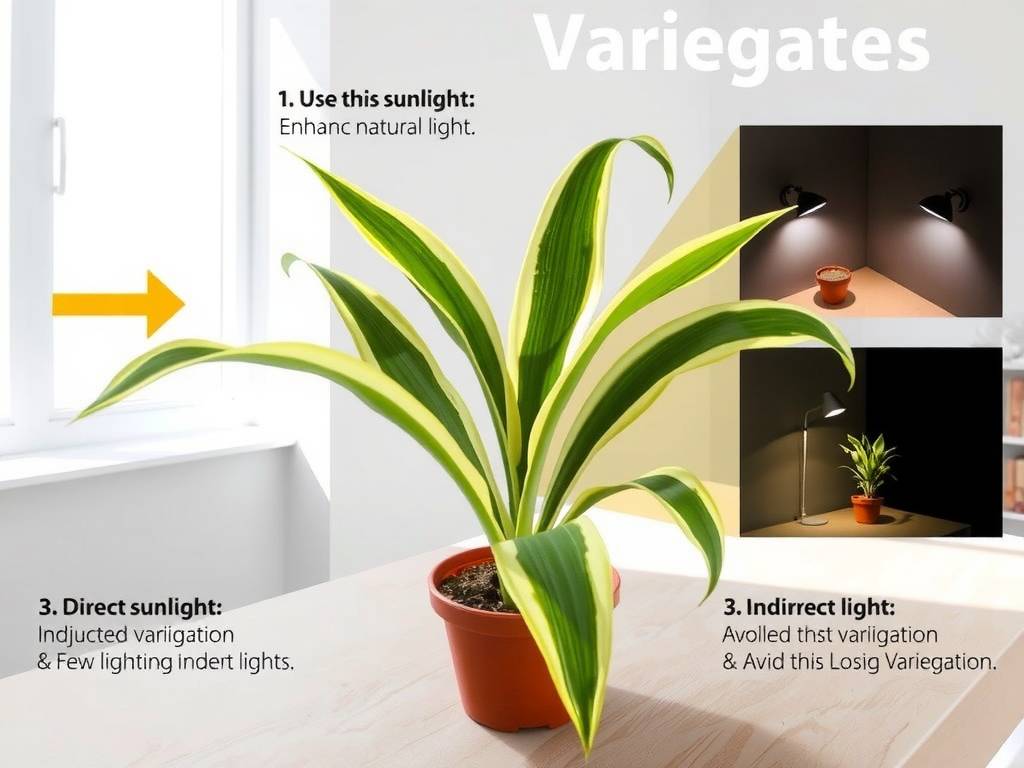
Variegation in plants like the spider plant is essentially a lack of chlorophyll in certain sections of the leaf. The white or cream stripes have less of this green pigment, which is vital for photosynthesis—the process of converting light into energy. This creates a natural tension within the plant. The green parts work hard to produce energy for the entire leaf, while the white parts contribute little.
When a variegated plant is placed in low light, it enters survival mode. To capture every possible photon of light and produce more energy, the plant may start producing more chlorophyll across the entire leaf surface. This causes the plant to “revert,” losing its variegation and turning solid green. Conversely, too much direct, harsh light can scorch the delicate, pigment-lacking white areas, causing brown, crispy tips and faded, washed-out color.
The goal, therefore, is to find and provide the perfect “Goldilocks Zone” of light—bright enough to satisfy the plant’s energy needs without triggering reversion, yet indirect enough to protect the sensitive variegated sections. According to the Royal Horticultural Society (RHS), variegated foliage plants often require brighter light than their all-green counterparts to maintain their color patterns, but must be shielded from the intense midday sun.
The Ideal Light Conditions for Your Variegated Spider Plant
Your variegated spider plant craves bright, indirect light. Think of the light in a room with a large, north or east-facing window, or a few feet back from a sunny south or west window where the sun’s rays never directly touch the foliage.
A south or west-facing window can be excellent, but it requires a buffer. Use a sheer curtain to diffuse the strong sunlight, or place the plant 3 to 5 feet back from the window pane. This provides the intensity of light it needs without the damaging heat. An east-facing window is often ideal, offering several hours of gentle morning sun. A north-facing window may provide sufficient light, but monitor your plant closely; if the variegation begins to fade or growth becomes leggy, it’s a sign to move it to a brighter location.
Duration matters just as much as intensity. Aim for a consistent 6 to 8 hours of this bright, indirect light daily. Consistency helps the plant establish a stable photosynthetic rhythm, reducing stress that can lead to reversion.
Signs Your Spider Plant is Getting the Wrong Light
Your plant communicates its distress through its leaves. Learning this visual language is crucial for proactive care.
Signs of Too Little Light:
- Fading Variegation: This is the primary warning. The white stripes become less distinct, taking on a yellowish or pale green hue before eventually turning solid green.
- Leggy Growth: The plant stretches out, with longer spaces between leaves (internodes) as it reaches for a light source. New leaves may be smaller and less vibrant.
- Slowed or Stunted Growth: The plant produces fewer offshoots (spiderettes) and new leaves emerge very slowly.
- Loss of Vibrancy: The entire plant looks dull and lacks its characteristic perky appearance.
Signs of Too Much Light:
- Brown, Crispy Leaf Tips: While this can also indicate low humidity or fluoride in water, sun scorch often causes pronounced browning, especially on the white portions.
- Bleached or Washed-Out Color: The variegation doesn’t turn green, but instead looks faded, scorched, or pale.
- Yellowing Leaves: Entire leaves may turn yellow, particularly those facing the light source, indicating stress.
- Curling or Wilting: Leaves may curl inward or wilt in an attempt to reduce surface area exposed to intense light.
A Practical Guide to Light Control Throughout the Year
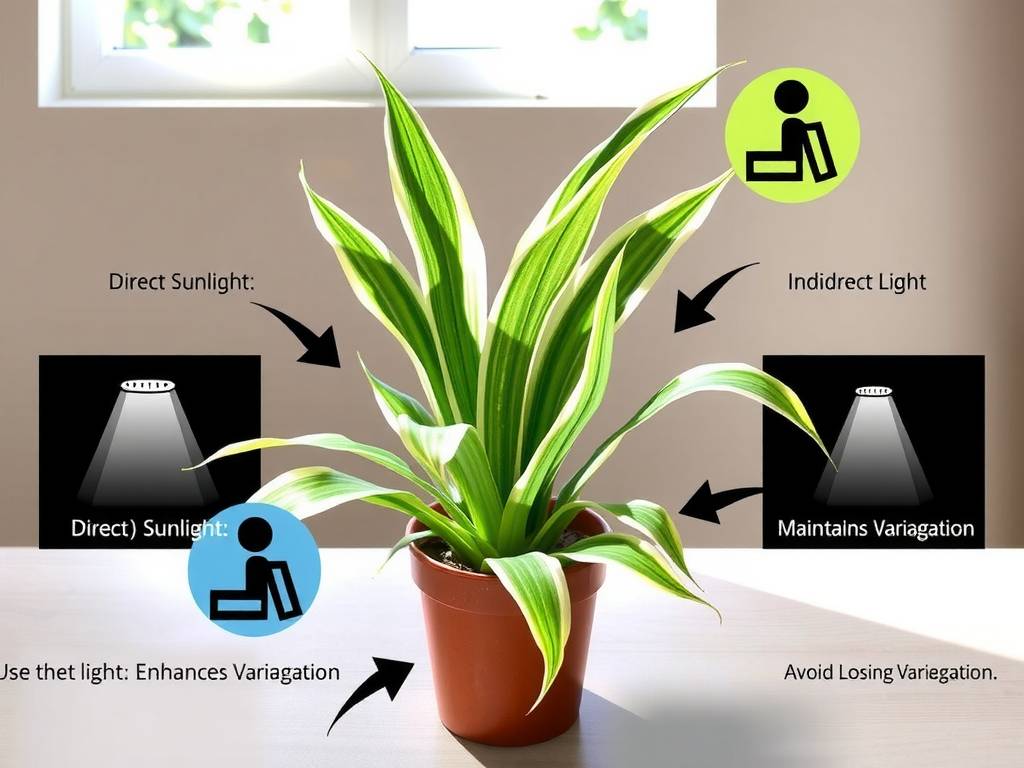
Light is not static; it changes with the seasons. A successful plant parent adapts their care routine accordingly.
Spring and Summer: This is the peak growing season and the time of strongest light. Your plant will be actively producing spiderettes. Maintain its position in bright, indirect light. Be extra vigilant about pulling it back from windows or closing sheers during the intense midday hours. Rotate the pot a quarter turn every week to ensure all sides receive even light and prevent lopsided growth.
Fall and Winter: Sunlight weakens and days shorten. You can often move your spider plant closer to the window to maximize the available light. A south-facing window becomes more suitable without the risk of scorch. However, keep it away from cold drafts that can come from window panes. This is also the time to reduce watering frequency, as growth slows and the plant uses less water under lower light conditions.
Supplementing with Grow Lights: For homes with poor natural light, grow lights are a game-changer. They are essential for maintaining variegation in dark apartments or during gloomy winters. LED full-spectrum grow lights are energy-efficient and effective. Position the light 12 to 24 inches above the plant and run it for 10-12 hours a day, using a timer for consistency. The American Horticultural Society (AHS) notes that modern LED grow lights can perfectly mimic the spectrum of natural light, providing the energy variegated plants need without the risk of burn.
Advanced Tips for Optimal Variegation Maintenance
Light control is the foundation, but these supporting practices ensure your plant thrives in its ideal environment.
Balancing Watering with Light: A plant in brighter light will use water more quickly than one in lower light. Always check the soil moisture before watering. The goal is to water thoroughly when the top inch or two of soil is dry, allowing excess to drain. In a bright spot, this may be weekly in summer; in a lower light winter spot, it could be every two weeks or more.
The Role of Fertilization: Feed your variegated spider plant sparingly during the growing season (spring and summer) with a balanced, water-soluble fertilizer diluted to half strength. Over-fertilizing, especially with high-nitrogen formulas, can encourage rapid green growth at the expense of variegation. In low-light periods (fall and winter), cease fertilization entirely.
Pruning for Color: If you notice a stem or a new offshoot (spiderette) that has reverted to solid green, prune it off cleanly at the base. This redirects the plant’s energy back to producing variegated growth. You can propagate the healthy, variegated spiderettes in water to create new, genetically identical plants.
Common Questions from Plant Parents
Can a reverted spider plant turn variegated again? Once a leaf has turned completely solid green, it will not regain its white stripes. However, you can encourage future growth to be variegated by immediately moving the plant to its ideal bright, indirect light conditions. New leaves that emerge under the correct light will likely display the proper variegation. Pruning off the reverted green leaves can help stimulate this new, correct growth.
Are variegated spider plants more difficult to care for than all-green ones? They require slightly more attention to light, but are not significantly more difficult. The all-green variety (Chlorophytum comosum) is more tolerant of lower light conditions because its leaves are full of chlorophyll. The variegated types simply have a narrower, more specific light requirement to maintain their unique appearance. Once you master their light needs, they are just as easy and rewarding.
Why are the tips of my variegated spider plant turning brown, even with perfect light? Brown tips are extremely common and are rarely due to light alone if the plant is in indirect light. The most frequent causes are minerals or fluoride in tap water, or low humidity. To prevent this, use distilled water, rainwater, or leave tap water out overnight to allow some chemicals to dissipate. Occasional tip-trimming with clean scissors is a normal part of grooming to keep your plant looking its best.
Providing the correct light is the cornerstone of keeping your variegated spider plant spectacular. It’s a dynamic process of observation and slight adjustment—watching how the leaves respond, adapting to the seasons, and creating a stable environment. By prioritizing bright, indirect light, you satisfy the plant’s energy needs while protecting its beautiful, pigment-less patterns. Combine this with balanced watering and prudent feeding, and you’ll be rewarded with a lush, actively growing plant that proudly displays its striking green and white stripes for years to come. The effort you put into understanding its language of light is what transforms basic survival into truly vibrant, variegated thriving.