bluename
 How to Care for Variegated Rubber Plant: Mastering Light Control to Maintain Variegation
You finally brought home that stunning variegated rubber plant you’ve been eyeing. Its creamy white, pink, or yellow splashes against deep green leaves make it a true living sculpture. But now, a few weeks in, you notice something worrying. Those beautiful, bright patches are fading. New leaves are coming in mostly solid green, and the plant seems to be losing the very characteristic that made it so special. This is the most common and heartbreaking challenge for owners of variegated rubber plants. The secret to preserving that stunning, marbled foliage isn’t just about watering or feeding—it’s almost entirely about mastering one crucial element: light.
Understanding why this happens is the first step to fixing it. Variegation is essentially a lack of chlorophyll in certain sections of the leaf. Chlorophyll is the green pigment that powers photosynthesis. The solid green parts of your plant are the workhorses, producing energy. The beautiful white or cream variegated sections, however, cannot contribute much. To survive, the plant must compensate. If light is insufficient, the plant’s survival instinct kicks in. It will start producing more chlorophyll across the entire leaf to capture every possible photon, leading to a gradual “reversion” where new growth emerges solid green. Therefore, providing optimal light isn’t just a suggestion; it’s a non-negotiable requirement for maintaining the variegation in your Ficus elastica ‘Variegata’.
The Science of Light and Leaf Coloration
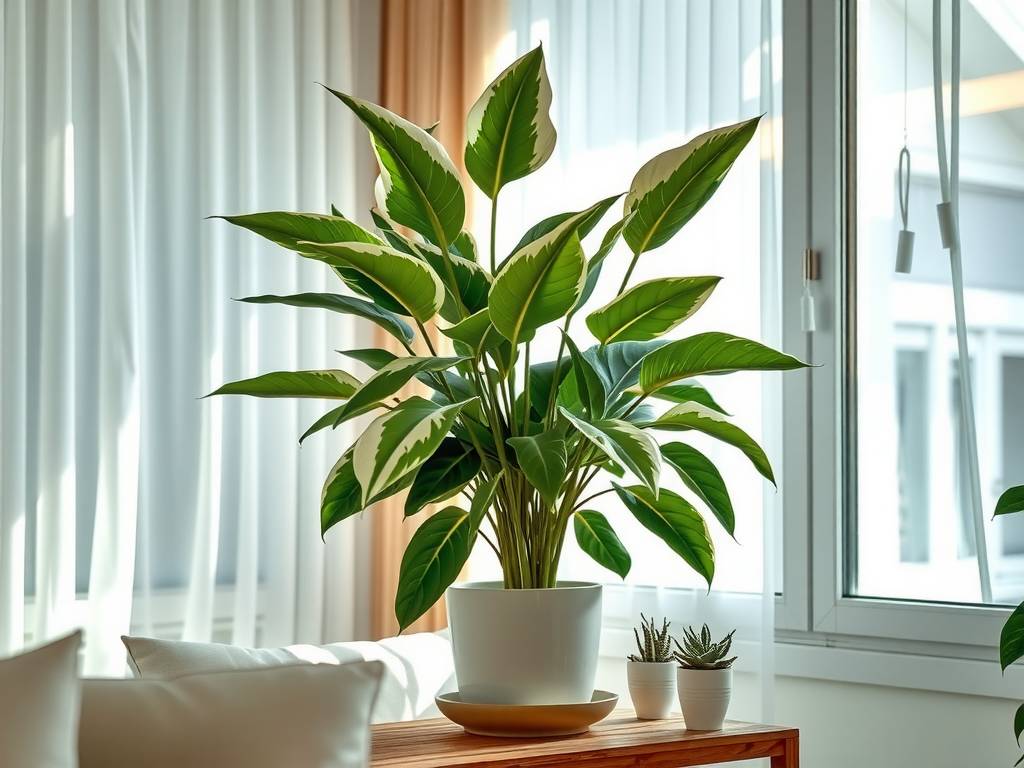
Light is the energy currency for plants, but for variegated varieties, it’s also the artist’s brush. Photosynthesis occurs in the chloroplasts within leaf cells. In variegated plants, the mutated cells in the light-colored sections have little to no functional chloroplasts. According to principles of plant physiology, when light levels are low, the plant undergoes a process called “shade adaptation.” It produces larger, thinner leaves with more chlorophyll to maximize light capture. For a variegated plant, this often means suppressing the variegated trait altogether.
Experts from the Royal Horticultural Society (RHS) emphasize that plants with unstable variegation, like many rubber plant cultivars, require “bright, indirect light to maintain their leaf markings.” Placing them in a dim corner is a direct ticket to losing their unique appeal. The American Horticultural Society (AHA) also notes that light is the primary driver of vibrant foliage color in ornamental plants, far outweighing fertilizer effects.
Your Step-by-Step Guide to Perfect Light Control
Getting the light right is a dynamic process, not a one-time setup. Follow this actionable guide to create the ideal environment.
Identifying the Right “Bright, Indirect Light”
This term is ubiquitous but often misunderstood. It does not mean a shady spot. For your variegated rubber plant, “bright, indirect light” means a location flooded with ambient sunlight for most of the day, but where the sun’s rays never directly hit the leaves. Direct sun, especially through a window, can scorch the delicate variegated portions, causing brown, crispy patches.
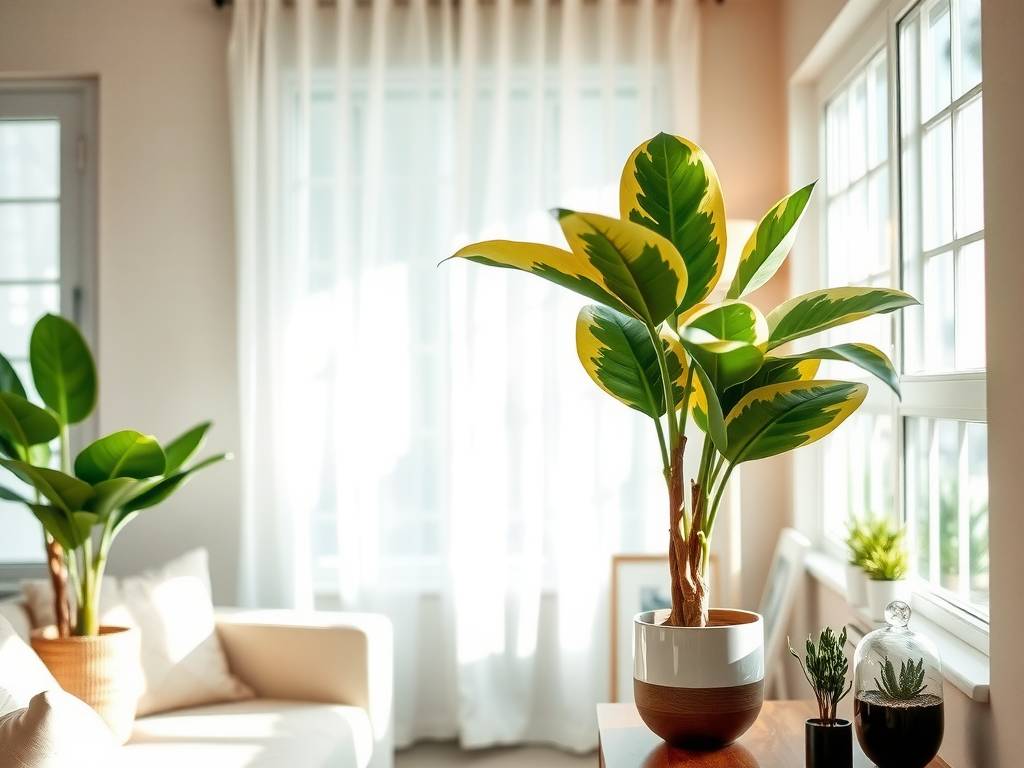
- The Ideal Spot: An east-facing window is often perfect, offering several hours of gentle morning sun. A south or west-facing window can work brilliantly if the plant is placed 3-5 feet back from the glass or shielded by a sheer curtain.
- The Hand Shadow Test: A reliable method is to hold your hand about a foot above the plant’s leaves around midday. If you see a clearly defined, sharp shadow, the light is likely too direct. A soft, fuzzy shadow indicates ideal bright, indirect light. A very faint or no shadow suggests the light is too low.
Monitoring and Adapting with the Seasons
Light conditions change dramatically throughout the year. Your plant’s location in summer may become too dark in winter.
- Spring and Summer: This is the growing season. Your plant can handle and will crave abundant light. You may need to pull it slightly further from windows as the sun’s intensity increases. Rotate the pot a quarter turn every week to ensure all sides receive equal light and prevent lopsided growth.
- Fall and Winter: The sun is lower and weaker. This is the most critical time to maintain variegation on rubber plants. You will likely need to move your plant closer to the window to maximize the available light. A north-facing window that was insufficient in summer might be adequate in winter. Watch new growth closely; if it starts reverting, it’s a clear signal for more light.
What to Do When Natural Light Isn’t Enough
Not every home has an abundance of natural light. If your space is dim, or you’re battling the gray days of winter, don’t despair. Grow lights are a fantastic, controlled solution.
- Choosing a Light: Full-spectrum LED grow lights are energy-efficient and effective. Avoid blurple (red/blue) lights for aesthetic reasons—you want to enjoy your plant’s true colors.
- Setup and Timing: Position the light 12-24 inches above the plant, depending on its strength. Use a timer to provide 12-14 hours of supplemental light per day, mimicking a long summer day. This consistent light for variegated ficus elastica can prevent reversion and even encourage more vibrant variegation.
Supporting Practices to Enhance Variegation
While light is the star, these supporting actors play crucial roles in the overall health and appearance of your plant.
Pruning: The Strategic Cut
If you notice a stem producing solid green leaves, act quickly. This reverted growth is more vigorous (because it has more chlorophyll) and can take over the plant. Use a clean, sharp pair of shears to cut that stem back to a point just above a variegated leaf. This encourages the plant to branch out from nodes below, potentially producing new variegated growth.
Fertilizing for Balance, Not Boosting
A common mistake is over-fertilizing in hopes of boosting color. This can backfire, leading to rapid but weak growth that may lack variegation. Fertilize sparingly during the active growing season (spring and summer) with a balanced, diluted liquid fertilizer (e.g., 10-10-10). Do not fertilize in fall and winter. Remember, fertilizer feeds the green, chlorophyll-rich parts; it cannot create variegation where the genetics and light aren’t supporting it.
The Holistic Care Connection
A stressed plant is more likely to revert. Ensure you are providing consistent care:
- Watering: Water only when the top 1-2 inches of soil are dry. Soggy soil leads to root rot, a major stressor.
- Humidity: Rubber plants tolerate average humidity, but they thrive with more. Brown leaf edges can be a sign of dry air. A pebble tray or occasional misting can help.
- Cleaning Leaves: Dust blocks light. Gently wipe the leaves with a damp cloth every few weeks to ensure maximum light absorption.
My variegated rubber plant is putting out solid green leaves. Is it too late to save it? No, it’s not too late. Immediately assess its light situation and move it to a significantly brighter location (avoiding direct sun). Prune off the reverted stems back to the last variegated leaf. With improved light, the new growth from the remaining nodes has a high chance of being variegated again.
Can I put my variegated rubber plant in direct sunlight to “force” more color? This is a risky strategy. While some morning sun might be tolerated, strong direct afternoon sun will likely scorch the leaves, especially the pale variegated parts which have no protection. Scorch marks are permanent and open the door to disease. It’s always safer to provide very bright, filtered light rather than harsh direct rays.
Are there different types of variegated rubber plants, and do they have different light needs? Yes. Cultivars like ‘Tineke’ (cream and green) and ‘Ruby’ (pink, cream, and green) are very popular. Generally, the more white or pink in the variegation, the more light the plant requires to sustain it. A ‘Ruby’ with lots of pink may need brighter light than a ‘Tineke’ to keep its hues from fading to green. Always observe your specific plant’s response as the ultimate guide.
Preserving the spectacular, painted look of your variegated rubber plant is a rewarding journey of observation and adjustment. It hinges on providing a steady, abundant source of bright, indirect light year-round, adapting your strategy with the seasons, and using strategic pruning when needed. By understanding that light is the primary language through which you communicate with your plant’s variegation genes, you can ensure it continues to produce those breathtaking, marbled leaves that make it a standout centerpiece in your home.