bluename
 How to Care for Large Dracaena Fragrans - Watering Tips to Avoid Crown Rot
You’ve invested in a stunning, large Dracaena fragrans, also known as the Corn Plant or Mass Cane. Its graceful, arching leaves and tree-like stature bring a touch of the tropics to your home or office. But now, you’re noticing something worrying. Perhaps the new growth at the center—the crown—feels soft, looks discolored, or has a foul smell. Or maybe you’re just anxious, having heard horror stories about overwatering. Your primary concern is clear: how do you water this substantial plant correctly to keep it thriving and, most importantly, to avoid the dreaded crown rot?
This guide is dedicated to solving that exact problem. We will focus on the precise watering techniques and environmental adjustments needed to care for your large Dracaena fragrans. By understanding its needs, you can prevent crown rot and ensure your plant remains a healthy, vibrant centerpiece for years to come.
Understanding Crown Rot and Its Causes
Crown rot in Dracaena fragrans is almost exclusively a watering-related disease. It is caused by various species of fungi and bacteria (like Fusarium and Pythium) that thrive in consistently wet, poorly oxygenated soil. These pathogens attack the plant’s crown—the central growing point where new leaves emerge—and the stem, leading to decay.
The primary culprit is overwatering, but it’s rarely just about the volume of water. It’s about frequency and soil conditions. A large Dracaena in a heavy, moisture-retentive mix, watered on a strict weekly schedule, is a prime candidate for trouble. The Royal Horticultural Society (RHS) consistently lists "overwatering" as a leading cause of houseplant decline, emphasizing that roots need air as much as they need water. When the crown area remains perpetually damp, it creates an ideal environment for pathogens to invade.
The Ultimate Guide to Watering Your Large Dracaena Fragrans
Mastering the watering routine for your large Corn Plant is the single most effective thing you can do to prevent crown rot. Forget the calendar; your plant will tell you when it’s thirsty.
The Golden Rule: Check the Soil First
Never water on a predetermined schedule. Instead, develop the habit of checking the soil moisture. For a large Dracaena fragrans in a standard potting mix, the top 50-75% of the soil should be allowed to dry out completely between waterings.
- The Finger Test: Insert your finger or a wooden chopstick 2-3 inches into the soil. If it comes out clean and dry, it’s time to water. If soil particles stick to it, wait a few more days.
- For Large/Deep Pots: For very large floor pots, consider using a soil moisture meter. Probe near the root ball, not just at the edge. A reading in the "dry" or lower end of "moist" range is your cue.
Perfecting Your Watering Technique
How you water is just as important as when.
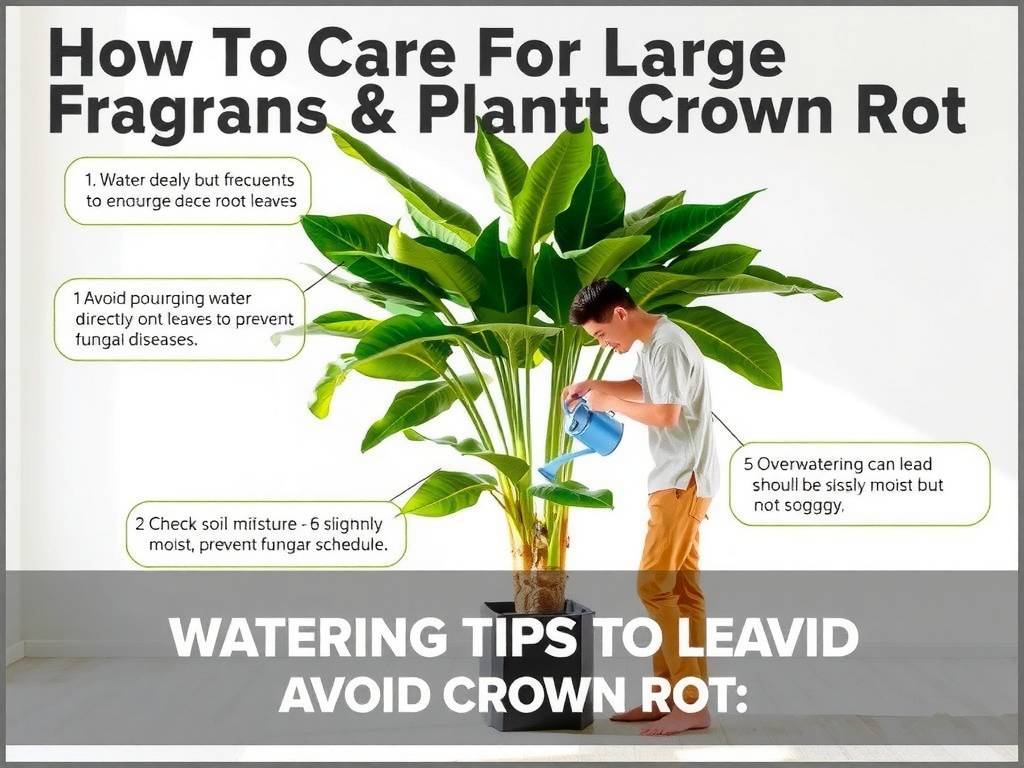
- Water Thoroughly and Evenly: When it’s time, water slowly and evenly over the entire soil surface until you see water begin to drain freely from the bottom of the pot. This ensures the entire root ball is hydrated.
- The Critical Step: Empty the Saucer/Drainage Tray: This is non-negotiable. Never let your Dracaena fragrans sit in standing water. After 15-20 minutes, empty any excess water that has collected in the saucer or decorative outer pot. This prevents the bottom soil from becoming waterlogged, which can lead to root and stem rot that travels upward to the crown.
- Avoid Watering the Crown Directly: When watering, aim for the soil, not the center of the plant. Pouring water directly into the crown can trap moisture between the tightly packed young leaves, creating a perfect micro-environment for rot to start. Keeping the crown dry is a fundamental watering tip to avoid crown rot.
Seasonal Watering Adjustments
Your plant’s water needs change with the seasons and light levels.
- Spring & Summer (Active Growth): Watering will be more frequent as the plant uses more water and soil dries faster due to warmer temperatures and increased light.
- Fall & Winter (Dormant Period): Growth slows dramatically. Water much less frequently, sometimes only once a month or less for a large plant in low light. Always let the soil dry out more deeply during this time.
Supporting Factors: Creating a Rot-Resistant Environment
Proper watering alone isn’t enough. You must support it with the right growing conditions.
Choosing the Right Soil and Pot
The potting mix must be well-draining. A standard houseplant soil is often too dense. The American Horticultural Society (AHS) recommends amending potting soil for better drainage. For Dracaena, consider a mix of:

- 2 parts quality all-purpose potting soil
- 1 part perlite or pumice
- 1 part orchid bark or coarse coconut coir This creates an airy, fast-draining mix that prevents water from pooling around the roots.
Always use a pot with ample drainage holes. For large Dracaena fragrans, a heavy, stable pot (like ceramic or clay) is ideal to prevent tipping, but ensure it has drainage. If using a decorative pot without holes, use it as a cache pot: keep your plant in its functional nursery pot and place it inside the decorative one, removing it to water and drain completely before replacing.
Optimizing Light and Humidity
- Light: Provide bright, indirect light. While Dracaena tolerates lower light, growth will be slower and soil will stay wet longer, increasing rot risk. More light promotes healthier growth and faster soil drying.
- Humidity & Airflow: Dracaena enjoys moderate humidity but despise stagnant air. Ensure good air circulation around the plant (avoid cramming it in a corner). A gentle breeze from a fan or an open window helps evaporate excess moisture from the soil surface and leaves, further discouraging fungal growth.
Recognizing and Responding to Early Signs
Early detection is key. Watch for:
- Yellowing leaves, especially starting at the bottom (a classic overwatering sign).
- Soft, mushy stems near the soil line or in the crown.
- Brown, water-soaked spots on new leaves.
- A musty or sour smell from the soil.
If you suspect early crown rot:
- Stop watering immediately.
- Gently remove the plant from its pot and inspect the roots and stem base. Healthy roots are firm and white/tan. Rotten roots are brown/black, mushy, and may slough off.
- Sterilize pruning shears with rubbing alcohol and cut away all soft, rotten stem and root tissue.
- Repot the plant into fresh, dry, well-draining soil and a clean pot.
- Do not water for at least a week to let the wounds callus over, then resume a very careful watering regimen.
My Dracaena’s leaf tips are turning brown. Is this crown rot? Not necessarily. Brown leaf tips on Dracaena fragrans are most commonly caused by low humidity, fluoride or salts in tap water, or sporadic underwatering. Crown rot affects the central growing point and stem, causing soft decay, not just dry tips. To prevent tip burn, use filtered, distilled, or rainwater, and maintain consistent soil moisture (not wet, not bone-dry for extended periods).
How often should I really water my 5-foot tall Dracaena? There is no universal answer. In a typical indoor setting with moderate light, a plant of that size might need water every 2-3 weeks in summer and every 4-6 weeks in winter. However, this varies drastically with pot size, soil, light, and temperature. Always use the soil dryness check as your guide, not the calendar.
Can I save a Dracaena if the crown is completely mushy? If the main crown is completely rotten, the top of that cane may not recover. However, Dracaena fragrans is resilient. You can cut the cane back to healthy, firm tissue (even if it means removing all leaves). Ensure the cut is clean and above a node. With proper care, it may produce new side shoots (called "pups") from below the cut. Alternatively, if there are other healthy canes in the pot, you can remove the rotten one entirely to protect the others.
Caring for a large Dracaena fragrans is a rewarding practice in mindful plant parenting. Success hinges on a simple but profound shift: from scheduled watering to responsive care. By allowing the soil to dry adequately, watering thoroughly but infrequently, ensuring impeccable drainage, and providing a supportive environment with good light and airflow, you build a strong defense against crown rot. Your plant’s longevity is a direct reflection of your understanding of its needs. Pay attention to its signals, respect its dormant periods, and you will be rewarded with a robust, elegant specimen that purifies your air and enhances your space for a long time.