 bluename
 How to Care for Large Tillandsia - Bright Indirect Light for Longer Bloom Time
You've finally brought home that stunning, architectural large Tillandsia, its silvery-green leaves sprawling like a living sculpture. It promises a spectacular, vibrant bloom. But weeks turn into months, and instead of a flower spike, you might notice the tips browning, the center feeling soft, or the plant just seeming… stagnant. The dream of a prolonged, brilliant bloom feels out of reach. The secret, often misunderstood, lies not just in watering but in mastering one critical element: providing the perfect quality and quantity of bright indirect light for longer bloom time. This is the cornerstone of health and the key to triggering and sustaining those magnificent Tillandsia flowers.
Unlike their soil-bound cousins, air plants like large Tillandsia xerographica, streptophylla, or fasciculata absorb moisture and nutrients through their leaves. Their light requirements are precise and non-negotiable for blooming. Let's transform your care routine from guesswork to a precise science, ensuring your large Tillandsia not only survives but thrives and blooms spectacularly.
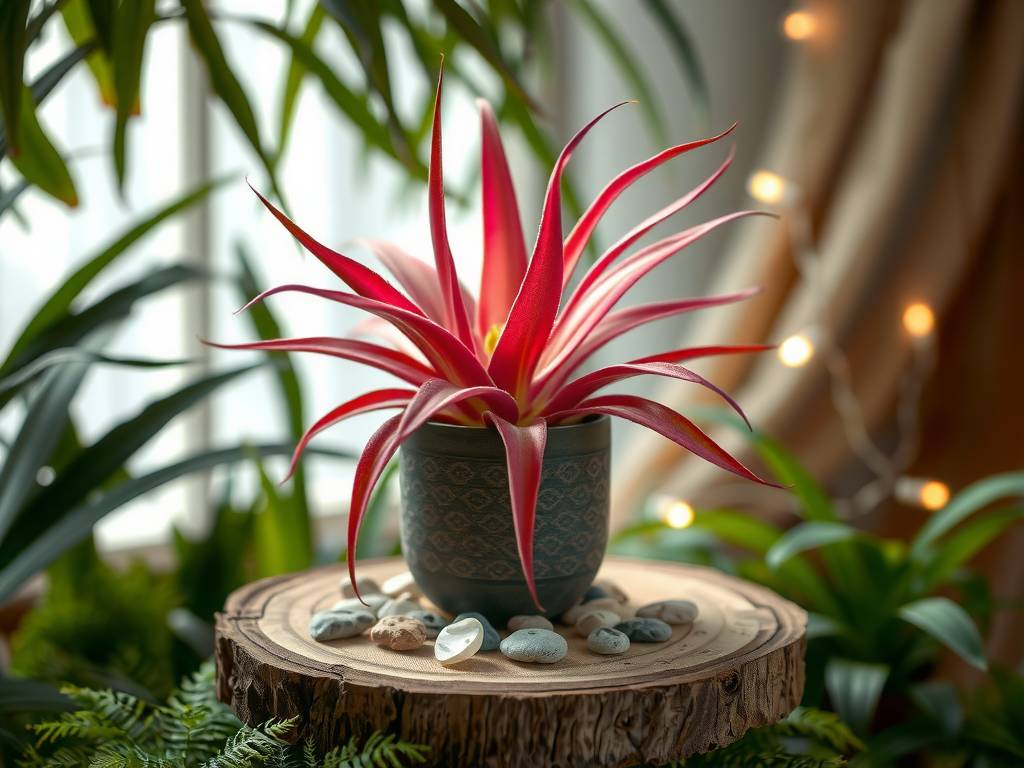
Understanding Your Large Tillandsia's Light Language
Light is the primary energy source for all plants, but for Tillandsias, it dictates their entire hydration cycle and reproductive cycle. These plants often hail from forest canopies or arid, high-light environments where they receive dappled, filtered sunlight.
When we discuss bright indirect light for Tillandsia, we refer to a location that is very well-lit but where no direct rays of the sun touch the plant's leaves. Direct sun, especially through a window, can act like a magnifying glass, swiftly scorching the leaves and causing irreversible damage seen as large, crispy brown patches. The goal is to replicate that bright, airy canopy light.
How can you tell if your light is right? Observe the plant's color and texture. A healthy large Tillandsia receiving sufficient indirect light will have a robust, slightly silvery hue (from its moisture-absorbing trichomes) and firm leaves. Insufficient light leads to a uniformly darker green color, elongated, stretched growth as it "reaches" for light, and a failure to produce a bloom spike. As noted by the American Horticultural Society (AHS), light intensity is the most common limiting factor in indoor plant blooming, directly impacting a plant's ability to produce the energy required for flowering.
The Direct Link Between Light and the Tillandsia Bloom Cycle
The bloom is the pinnacle of a Tillandsia's life cycle. For large species, this process is slow and energy-intensive. Adequate bright indirect light is the essential trigger.
Here’s the simplified science: Through photosynthesis fueled by light, the plant produces carbohydrates (energy). This stored energy is what the plant eventually uses to create the inflorescence—the flower spike. Without sufficient light accumulation over time, the plant lacks the resources to initiate blooming. Furthermore, the quality and duration of light directly influence how long the bloom lasts. A stressed, light-starved plant may produce a weak, short-lived flower, while a plant that has basked in optimal indirect light conditions will often sustain its vibrant bracts and flowers for weeks, if not months.
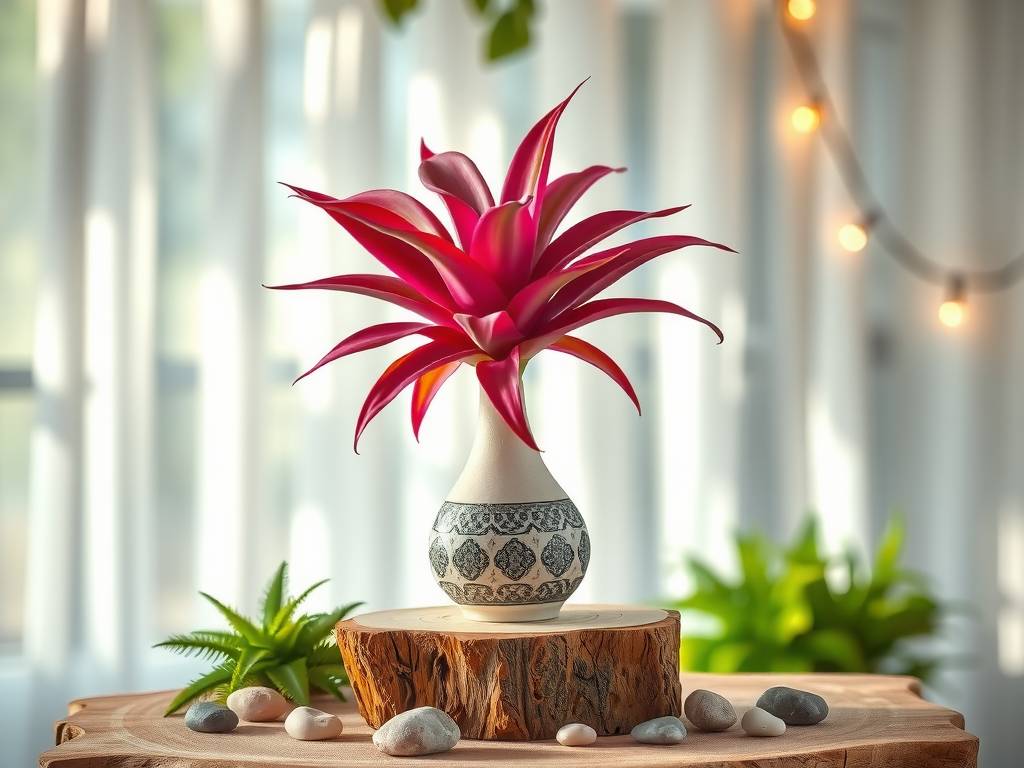
A study referenced in the Rainforest Horticulture Society (RHS) Bulletin on epiphytic plants found that controlled exposure to consistent, high-quality indirect light increased bloom duration by up to 40% compared to plants in variable or low-light conditions. The consistency of light is as crucial as its intensity.
Finding the Perfect Spot: A Practical Guide to Indirect Light
Theory is good, but practice is better. Where exactly does one find this elusive "bright indirect light"?
- Ideal Indoor Locations: The best spots are near east-facing windows (morning sun is gentle and often indirect), or within 1-3 feet of a south or west-facing window. A sheer curtain is an excellent tool for diffusing direct sun from these stronger exposures. North-facing windows may only provide "medium" light, which might be insufficient for large, bloom-hungry Tillandsias.
- The Hand Shadow Test: A reliable, low-tech method. On a sunny day, hold your hand about a foot above where the plant will sit. A crisp, well-defined shadow indicates direct light. A soft, fuzzy shadow signifies bright indirect light. A faint, barely-there shadow means the light is too low.
- Supplemental Lighting: If your home lacks natural bright spots, full-spectrum LED grow lights are a fantastic solution. Position them 12-18 inches above the plant and aim for 10-12 hours of light per day. This guarantees consistent light exposure for air plants, eliminating guesswork and perfectly supporting the bloom cycle of large Tillandsia.
Watering in Harmony with Light Exposure
Light and water are a dance, not independent steps. Your watering routine must adapt to your light conditions. A Tillandsia in bright indirect light for longer bloom time will photosynthesize more and use water faster than one in a dim corner.
- High Light = More Frequent Watering: In its ideal bright spot, your large Tillandsia will likely need a thorough soak for 30-60 minutes every 1-2 weeks. Always dry it upside-down in a breezy spot for 4 hours to prevent rot.
- Lower Light = Less Frequent Watering: In lower light, metabolism slows. Extend the time between soaks to 2-3 weeks to avoid suffocating the roots and causing center rot.
- The Critical Dry-Out: Regardless of schedule, the plant must dry completely between waterings. Constant dampness is a death sentence. The trichomes need to open and close properly, a function regulated by light and hydration cycles.
Advanced Care for Maximizing Bloom Health and Duration
Once your light is perfected, a few extra steps will ensure the bloom is the best it can be.
- Air Circulation is Non-Negotiable: Stagnant air fosters fungal and bacterial growth. A gentle breeze from a fan or an open window helps the plant dry efficiently and strengthens its tissues, mirroring its natural habitat. Good airflow works synergistically with proper indirect light conditions.
- Fertilizing for Flower Power: Use a bromeliad or air plant-specific fertilizer at 1/4 strength. Apply it during a monthly soak during the growing season (spring-summer). This provides the micronutrients needed to support the enormous energy output of blooming. Never fertilize a dry plant or use standard plant food, as the urea nitrogen can burn it.
- Post-Bloom Care: Welcoming Pups: After the spectacular bloom fades, the mother plant will focus its energy on producing "pups" or offsets. Continue providing excellent bright indirect light and care. These pups will eventually form a clump and, in time, bloom themselves, continuing the cycle.
Common Questions from Tillandsia Enthusiasts
My large Tillandsia has brown, crispy tips. Is it getting too much light? Not necessarily. Crispy leaf tips are most commonly a sign of underwatering or low humidity. While direct sun can cause large brown patches, tip burn usually indicates the plant is not absorbing enough water during soaks. Ensure you are soaking thoroughly (not just misting) and consider your local humidity. Increase soak frequency slightly if in very bright light.
Can I place my large Tillandsia in a bathroom for humidity? Bathrooms can be great if they have a window providing bright indirect light. The humidity from showers is beneficial. However, a dark bathroom will lead to etiolation (stretching) and rot. Light is always the priority; you can supplement humidity around the plant with a pebble tray if needed.
How long after I see a flower spike will it actually bloom? Patience is key with large Tillandsias. The emergence of the spike (inflorescence) is just the beginning. It can take several weeks to months for the spike to fully develop and for the individual flowers to open. This slow process is why the stored energy from consistent, high-quality light is so vital. Do not change its care or location during this critical period.
Mastering the care of a large Tillandsia is deeply rewarding. By prioritizing consistent, bright indirect light for longer bloom time, you align your care with the plant's fundamental biology. This, combined with mindful watering, ample airflow, and gentle fertilization, creates the ideal environment for health and spectacular flowering. Observe your plant, let its condition guide you, and enjoy the unique beauty of an air plant thriving under your attentive care. The wait for that breathtaking bloom is well worth it.





