bluename
 How to Care for Sedum Clavatum for Pink Leaves & Strong Fragrance
You've brought home a charming Sedum clavatum, lured by the promise of plump, pink-tinged leaves and that delightful, subtle fragrance. Yet, weeks later, your plant looks stretched, stubbornly green, and lacks the vigor you expected. This common frustration stems from one often-misunderstood cornerstone of succulent care: light. Achieving that iconic pink blush and robust health isn't about luck; it's about mastering the art of providing sufficient, high-quality light. This guide will walk you through exactly how to care for Sedum clavatum, transforming it into the fragrant, colorful specimen it's meant to be.
Understanding Sedum Clavatum's Light-Driven Nature
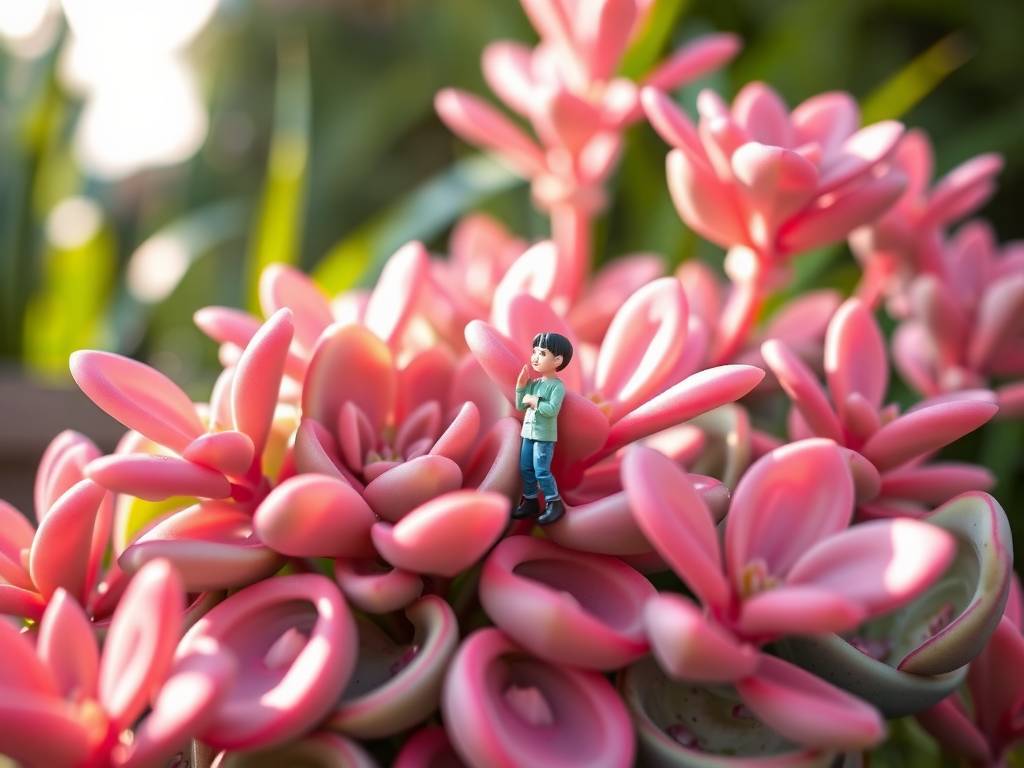
Sedum clavatum, a tender perennial succulent native to Mexico, is a sun worshipper by design. Its compact, rosette-forming growth and powdery farina coating are evolutionary adaptations to intense, high-altitude sunlight. The pink, red, or purple hues on the leaf tips—a phenomenon called "sun stressing" or "blushing"—are not signs of distress but rather the plant's production of protective pigments like anthocyanins. Similarly, its pleasant fragrance is most pronounced in healthy, metabolically active plants grown in optimal conditions. Without sufficient light, these traits fade. The plant etiolates, stretching awkwardly for the sun, its color reverts to plain green, and growth becomes weak.
What Constitutes "Sufficient Light" for Pink Sedum Clavatum?
The term "sufficient light" is crucial for Sedum clavatum care. It doesn't just mean a bright room; it refers to the intensity, duration, and quality of light required for photosynthesis and pigment production.
Ideal Light Intensity and Duration For vibrant pink leaves and compact growth, Sedum clavatum needs at least 4-6 hours of direct sunlight daily. Morning sun is often ideal, as it is intense but less likely to scorch the leaves than harsh afternoon rays. The remaining hours should be filled with very bright, indirect light. A south-facing or west-facing windowsill is typically the best indoor location. As noted by the Royal Horticultural Society (RHS), most succulents require "maximum light" to maintain form and color, and a sunny windowsill is the minimum for healthy growth.
Signs Your Plant is Getting the Right Light You'll know your light strategy is working when you observe:
- Tight, compact rosettes with no elongated stems.
- A gradual development of pink, red, or lavender tones on the leaf edges and tips.
- Firm, plump leaves that show steady, balanced growth.
- A noticeable, healthy fragrance when gently brushed or during warm parts of the day.
Signs of Insufficient Light (Etiolation)
- Stretching: The stem grows tall and leggy, with large gaps between leaves.
- Paling: Leaves remain uniformly green or yellow-green, lacking any blush.
- Weakening: New growth is smaller, softer, and the plant may become unstable.
- Reduced Fragrance: The plant's characteristic scent becomes faint or undetectable.
Optimizing Light Conditions Indoors and Outdoors
Successfully caring for Sedum clavatum means tailoring your approach to its environment.
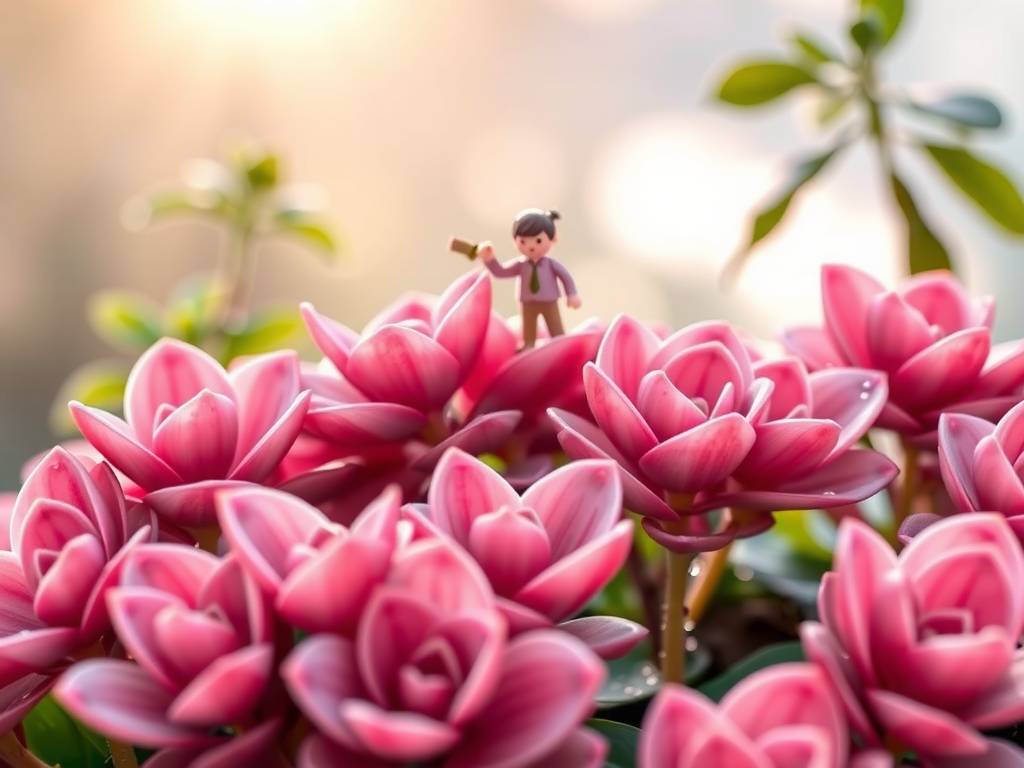
Indoor Care: Windowsill to Grow Lights For indoor plants, a unobstructed south-facing window is prime real estate. East or west windows can work but may require monitoring for enough intensity. Rotate the pot a quarter turn weekly to ensure even growth. If natural light is inadequate—common in winter or in north-facing homes—supplement with grow lights. Full-spectrum LED grow lights are energy-efficient and effective. Position them 6-12 inches above the plant for 12-14 hours a day to mimic a long summer day, encouraging both color and fragrance.
Outdoor Care: Acclimation is Key Sedum clavatum thrives outdoors in warm seasons (USDA zones 10-11, or as a seasonal container plant). The key is gradual acclimation. Start by placing it in dappled shade for a week, then move to morning-only sun for another week, before finally introducing it to a spot with full morning sun and partial afternoon shade. This prevents severe sunburn. According to the American Horticultural Society's heat zone guidelines, while Sedum clavatum enjoys light, protecting it from the most intense, scorching afternoon heat in very hot climates prevents stress and leaf scorch.
The Role of Light in Fragrance Production A plant's scent is often linked to its overall metabolic health and the production of essential oils. A Sedum clavatum basking in sufficient light photosynthesizes efficiently, producing more energy and secondary metabolites, which can enhance its natural fragrance. A stressed, light-starved plant prioritizes survival over these "extras."
Complementary Care for Light-Stressed Plants
Light is the primary driver, but other care factors must align to support a plant under strong light.
Watering in Harmony with Light The "soak and dry" method is non-negotiable. Water only when the soil is completely dry, and then water thoroughly until it drains from the bottom. Under strong light, soil dries faster, so watering may be more frequent in summer than in winter. Overwatering a plant in low light is a fast track to root rot.
Soil and Drainage: The Foundation Use a gritty, well-draining succulent or cactus mix. You can enhance a standard mix with 50% perlite or pumice. Excellent drainage ensures that roots get oxygen and never sit in moisture, which is critical when the plant is using water rapidly under bright light.
Temperature and Seasonal Adjustments Sedum clavatum enjoys warm temperatures (65-80°F / 18-27°C) during its active growth. Cooler temperatures coupled with strong light often intensify the pink and red coloration. In winter, reduce watering significantly, especially if light levels and temperatures drop. Protect from frost.
Troubleshooting Common Light-Related Issues
- Sunburn: Appears as crispy, brown, or white patches on the leaves. It is permanent. Prevent it through gradual acclimation and providing slight shade during peak afternoon heat in summer.
- Leggy Growth with Color: If the plant has color but is still stretching, it's getting enough light intensity but not enough duration. Increase daily light exposure.
- Leaning Dramatically: The plant is phototropically bending toward the light source. Rotate it regularly for even growth.
Can I fix an already stretched Sedum clavatum? You cannot shrink a stretched stem. The best solution is to "behead" the plant. Using sterile shears, cut the stem below the elongated portion, leaving a short stump and a top rosette. Allow both pieces to callous for a few days, then replant the top rosette. The stump will often produce new offshoots. This is a reliable method to restore a compact form.
Will a grow light alone provide enough light for pink leaves? Yes, a high-quality, full-spectrum LED grow light with sufficient PPFD (Photosynthetic Photon Flux Density) output can absolutely induce beautiful pink coloring. Ensure the light is close enough (usually 6-12 inches) and on for a long enough duration (12+ hours). The plant's response will confirm if the light is sufficient.
My Sedum clavatum gets full sun but is still green. Why? Several factors can inhibit color development. Excess nitrogen in fertilizer promotes green growth at the expense of color. Try using a low-nitrogen, phosphorus-heavy fertilizer. Consistently high temperatures, even with sun, can sometimes slow pigment production. Finally, some individual plants or clones may be genetically predisposed to show less intense color. Ensure all other care factors are optimal, and be patient; color change can be seasonal.
Providing sufficient light is the most transformative act in Sedum clavatum care. It dictates the plant's structure, ignites its beautiful pink and red hues, and supports the metabolic processes that enhance its unique fragrance. By observing your plant, understanding the signs of perfect and imperfect light, and adjusting its environment—whether on a sunny sill or under a dedicated grow light—you unlock its full potential. Pair this luminous foundation with mindful watering and gritty soil, and you'll be rewarded with a resilient, fragrant, and vividly colored succulent that truly thrives.