bluename
 How to Care for Graptopetalum 'Mirinae' - Water & Light Control for Fast Blooming
You've fallen in love with the delicate, star-shaped rosettes of Graptopetalum 'Mirinae'. Its promise of charming, fast-blooming flowers is why you brought it home. Yet, weeks or months later, you might be staring at a plant that's stretched out, losing its compact form, or showing no signs of the blooms you were promised. The leaves may feel mushy or look wrinkled. The problem isn't your desire to care for it; it's almost always a mismatch between its needs and your routine, specifically in the two most critical areas: water and light control for fast blooming.
Mastering these elements is the key to unlocking this succulent's full potential, transforming it from a survivor into a thriving, flowering spectacle.
Understanding Your Graptopetalum 'Mirinae'
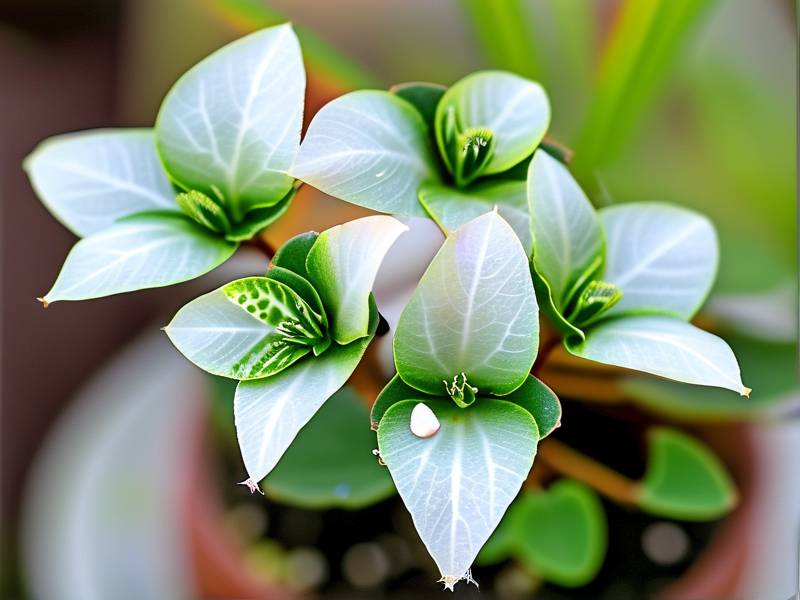
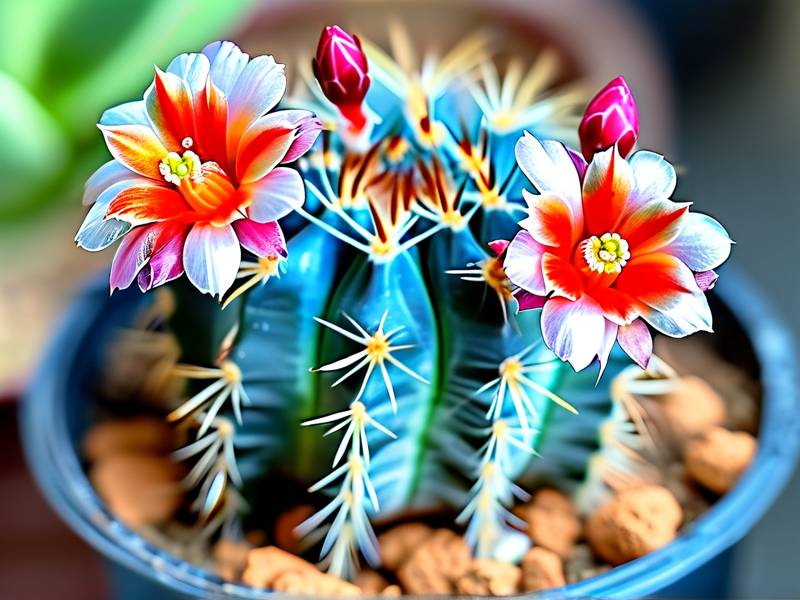
Before diving into care specifics, knowing your plant's background builds a foundation for success. Graptopetalum 'Mirinae' is a hybrid succulent, prized for its tight, geometric rosettes of plump, pale green to lavender-tinged leaves. When stressed correctly—a positive term in the succulent world—it can produce clusters of small, star-shaped flowers on arching stalks. As noted by the Royal Horticultural Society (RHS), succulents like Graptopetalum have evolved to store water in their leaves, making them exceptionally drought-tolerant but vulnerable to over-care, particularly overwatering.
The ultimate goal for many enthusiasts is to encourage blooming. This requires the plant to be not just healthy, but optimally stressed by its environment, mimicking the conditions of its native habitat.
The Golden Rule: Mastering Water Control
Watering is the most common point of failure. It's not about a fixed schedule but about responding to the plant's signals and environmental factors.
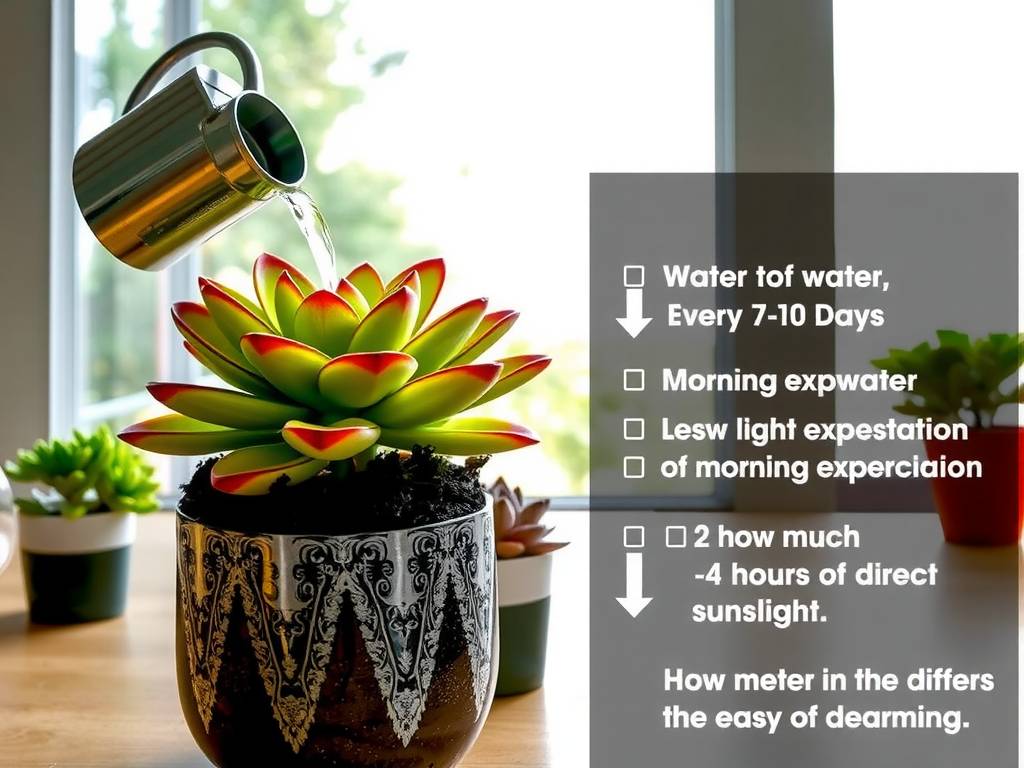
The "Soak and Dry" Method Explained This is the non-negotiable standard for succulent care. It involves watering the plant thoroughly until excess water drains freely from the pot's holes, then allowing the soil to become completely dry before even considering the next watering. The American Horticultural Society (AHA) emphasizes that this cycle promotes strong root growth as roots stretch to seek moisture, creating a more resilient plant.
How do you know it's time? Don't rely on the calendar. Use the "finger test": insert your finger into the soil up to the second knuckle. If the soil feels dry, wait a few more days. For 'Mirinae', you can also observe its lower leaves. A slight, gentle give when softly squeezed indicates it's starting to use its internal water reserves. Wrinkling is a more advanced sign of thirst.
Seasonal Watering Adjustments Your watering frequency must change with the seasons, which directly impacts the plant's growth cycle and blooming potential.
- Spring & Fall (Active Growth Seasons): This is when 'Mirinae' is most actively growing and likely preparing to bloom. Water more frequently, but still only when the soil is dry. This consistent moisture during growth phases supports flower stalk development.
- Summer: Heat can cause soil to dry faster, but many succulents, including 'Mirinae', may enter a semi-dormant state in extreme heat. Water deeply but ensure the plant has excellent airflow to prevent rot. Water in the early morning.
- Winter (Dormant Period): This is the most critical time for water control. The plant's growth nearly stops. Water very sparingly—perhaps once a month or less—just enough to prevent excessive leaf shriveling. Overwatering in cold, damp soil is a death sentence.
Signs You're Getting It Wrong
- Overwatering: Soft, translucent, yellowing or blackening leaves, especially at the base. The stem may feel mushy. This is an emergency requiring immediate repotting into dry soil.
- Underwatering: Leaves become excessively wrinkled, thin, and crispy. Growth is stunted. While easier to fix than overwatering, chronic stress hampers blooming.
Harnessing Light for Color, Form, and Flowers
Light is the energy source and the primary trigger for blooming. Getting it right ensures compact growth and signals the plant to reproduce.
The Ideal Light Conditions for Fast Blooming Graptopetalum 'Mirinae' thrives in bright, indirect light to direct sunlight. For robust growth and to encourage flowering, it needs several hours of direct sun daily. A south or east-facing window is often ideal. The right light intensity is crucial for promoting succulent blooms.
When the plant receives sufficient light, you'll notice its colors "blush," taking on more pronounced pink, lavender, or orange hues—a sign of healthy stress. More importantly, adequate light accumulation is the primary environmental cue that triggers the plant to invest energy in producing a flower stalk.
Avoiding Etiolation: The Stretch of Weak Light Insufficient light causes etiolation: the plant stretches unnaturally, with increased space between leaves, seeking a light source. The rosette becomes loose and pale. An etiolated plant is using all its energy to find light, leaving no resources for blooming. If this happens, gradually increase its light exposure. You can behead the stretched portion and replant it once the new growth is compact.
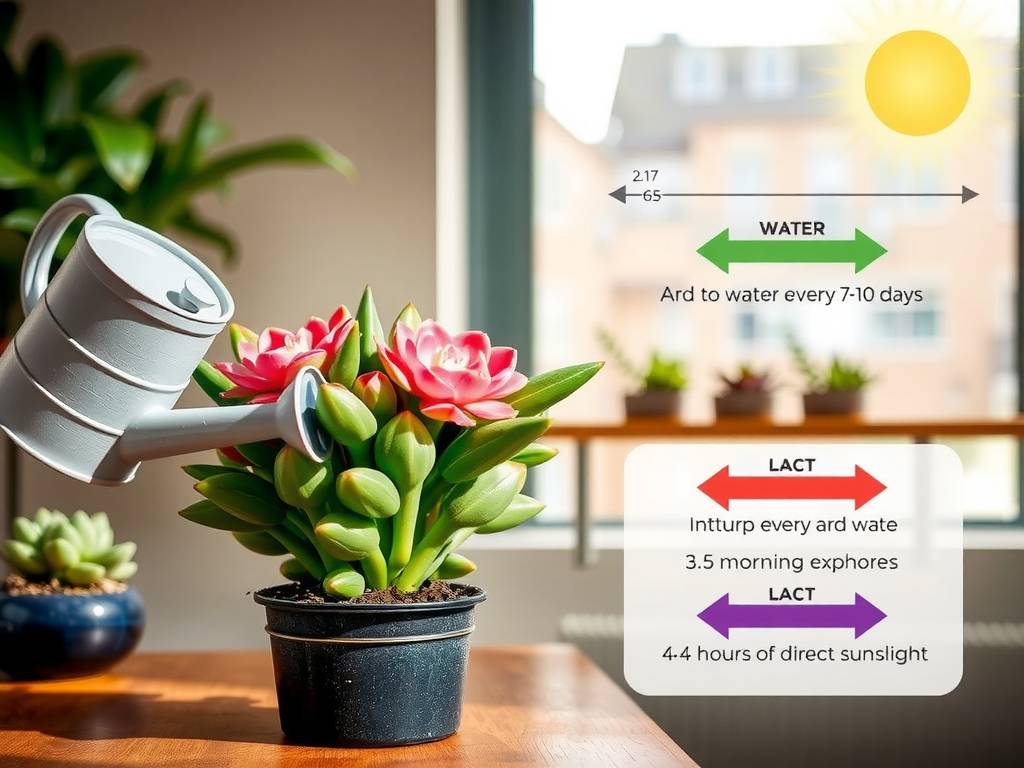
Using Grow Lights Successfully For indoor growers without adequate natural light, full-spectrum LED grow lights are a perfect solution. Position the light 6 to 12 inches above the plant and provide 12-14 hours of light per day. This controlled environment can be exceptionally effective for indoor succulent flowering, allowing you to provide consistent "sun" regardless of the weather outside.
Creating the Synergy: How Water and Light Work Together
Water and light are not independent factors; they are a dynamic duo. A plant receiving intense light will use water more quickly and can handle slightly more frequent watering. A plant in lower light needs much less water, as it evaporates slower and the plant metabolizes it less actively.
The synergy for blooming is clear: ample light provides the energy and signal to flower, while appropriate watering during the active growth phase provides the hydraulic resources to build that flower stalk without causing rot. This balanced succulent care for blooms is the hallmark of an experienced grower.
Practical Tips for the Fastest Blooming Results
- Pot and Soil are Foundational: Use a pot with a drainage hole. A terracotta pot is ideal as it "breathes," helping soil dry faster. Plant in a gritty, well-draining succulent/cactus mix. You can make your own with 50% potting soil and 50% perlite or pumice.
- Fertilize Sparingly: During the active growing seasons (spring and fall), a half-strength dose of a balanced, water-soluble fertilizer (like a 10-10-10) or one formulated for succulents can support blooming. Do not fertilize in winter or summer dormancy.
- Patience is Key: A young or recently propagated 'Mirinae' needs time to mature before it can bloom. Focus on perfecting its light and water for the first year to build a strong, mature plant capable of spectacular flowering.
Why hasn't my Graptopetalum 'Mirinae' ever bloomed? The most common reasons are insufficient light and the plant's age/maturity. Ensure it receives several hours of direct sun daily (or equivalent grow light) and that you are following the seasonal soak-and-dry watering method. A plant needs to be healthy and mature enough to have the stored energy to produce flowers.
Can I force my 'Mirinae' to bloom? You cannot "force" it, but you can strongly encourage it by optimizing its conditions. Providing a period of cooler, dry conditions in winter (around 50-55°F/10-13°C) while maintaining bright light can mimic its natural cycle and act as a powerful bloom trigger. This should be done carefully to avoid frost damage.
The leaves at the bottom of my plant are drying up and falling off. Is this normal? Yes, this is a normal part of growth for many succulents, including 'Mirinae'. As the plant grows and produces new leaves from the center, the oldest, outermost leaves will naturally dry out and be reabsorbed. This is different from widespread leaf loss or mushy leaves, which indicate overwatering.
Achieving a fast-blooming Graptopetalum 'Mirinae' is a rewarding journey of observation and adjustment. It hinges on the deliberate balance of neglect and care—providing abundant light to shape its form and trigger its flowering instinct, while exercising restraint with water to keep its roots healthy and strong. By listening to your plant's subtle cues and syncing your care with the rhythms of the seasons, you'll move beyond keeping it alive to guiding it toward its most vibrant and floriferous state. The sight of those delicate star-shaped flowers will be a direct testament to your mastered skill in water and light control.