bluename
 How to Care for Echeveria 'Luna' - Water & Light Control for Compact Form
You’ve fallen in love with the Echeveria ‘Luna’—its perfect rosette shape, the delicate pink blush on its powdery leaves, and that promise of a compact, sculpture-like form. But now, your prized succulent is starting to stretch, its leaves are losing their vibrant color, or worse, turning mushy at the base. The dream of a perfect, compact ‘Luna’ seems to be fading. The single biggest challenge in how to care for Echeveria 'Luna' lies in mastering the delicate balance between water and light. Get this wrong, and the plant’s iconic form unravels. This guide is dedicated to giving you the precise, actionable knowledge to control water and light, ensuring your ‘Luna’ not only survives but thrives in a stunningly compact state.
Understanding the Echeveria 'Luna': A Plant Built for Harsh Beauty
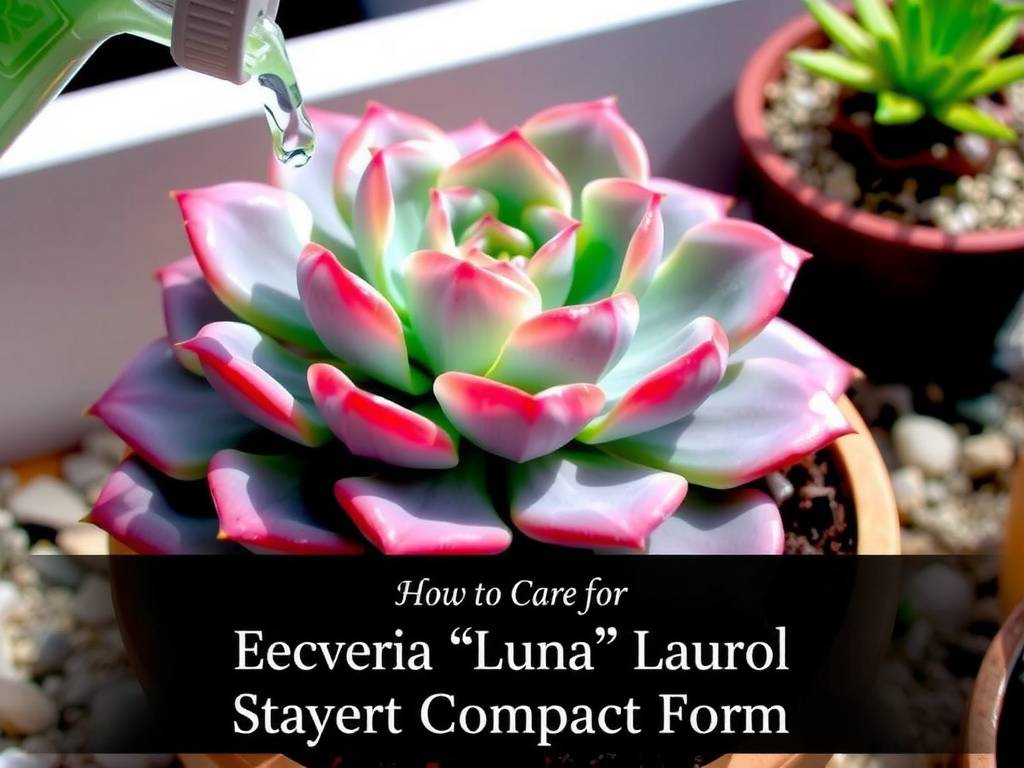
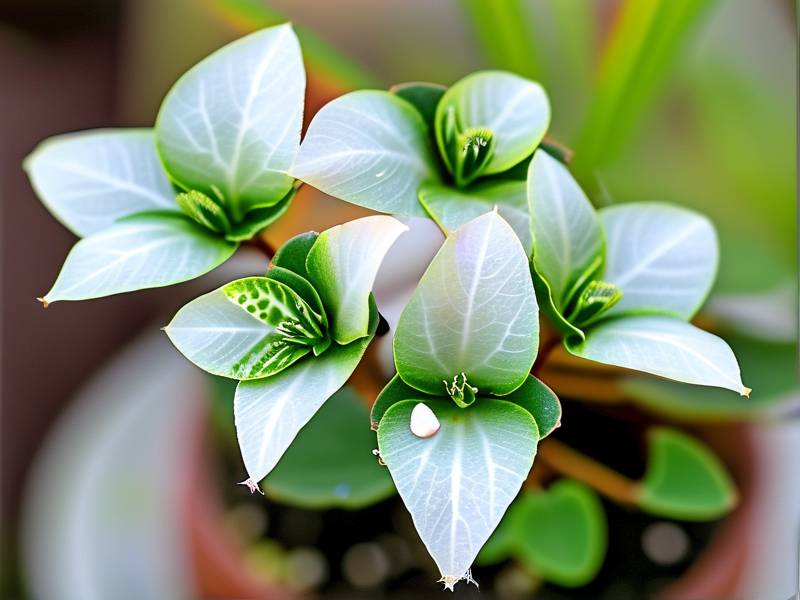
Before diving into care, it’s crucial to understand what makes the ‘Luna’ tick. Native to semi-desert regions, this succulent is an evolutionary masterpiece of water storage and sun tolerance. Its plump, farina-coated leaves are designed to hold moisture and reflect intense sunlight. The compact rosette form isn’t just for show; it’s a survival strategy to minimize surface area and reduce water loss. When we provide care that mimics its natural habitat—infrequent soaks and abundant light—we reward it with its most beautiful, tight growth. Experts from the Royal Horticultural Society (RHS) note that echeverias, like ‘Luna’, prioritize compact growth as a direct response to environmental stress, channeling energy into dense leaf production rather than stem elongation.
The Golden Rule: Light First, Water Second
Your care strategy must follow this hierarchy. Light dictates the plant’s metabolic rate and water needs. More light means the plant can use water more efficiently for growth. Less light dramatically reduces its water requirement. Attempting to correct a light issue with water is the most common path to failure.
Mastering Light for the Perfect Compact Form
Light is the primary architect of your Echeveria ‘Luna’s’ shape. Without it, all other care is ineffective.
Ideal Light Conditions and Intensity
Echeveria ‘Luna’ craves bright, direct light. Aim for a minimum of 6 hours of direct sunlight daily, with 8-10 hours being ideal for promoting intense coloration and preventing stretching, also known as etiolation. The best source is a south-facing window (in the Northern Hemisphere). East or west-facing windows can work but may require monitoring for slight stretching.
Signs of Insufficient Light (Etiolation)
Your plant will tell you clearly when it’s light-starved. Watch for a pale, washed-out leaf color, a noticeable gap between leaves as the stem elongates, and the rosette opening up or leaning heavily toward the light source. This stretched growth is weak, unattractive, and irreversible.
Signs of Too Much Light (Sunburn)
While rare indoors, a sudden move to intense, unfiltered summer sun can cause damage. Signs include crispy, brown, or white scorch marks on the leaves, particularly on the areas with the most farina (powdery coating). This coating is sunscreen for the plant, so avoid touching it.
Using Grow Lights for Optimal Light Control
For indoor gardeners without perfect windows, full-spectrum LED grow lights are a game-changer. They provide complete control over duration and intensity, ensuring perfect light control for compact form year-round. Position lights 6-12 inches above the plant and run them for 12-14 hours a day to simulate long summer days, which is key for maintaining tight growth.
The Art of Watering: Less is More
Watering is where most succulent enthusiasts stumble. The goal is to replicate the infrequent, heavy rains of an arid climate.
The "Soak and Dry" Method Explained
This is the only watering method you need. It involves thoroughly drenching the soil until water runs freely from the drainage holes, then allowing the soil to become completely dry before even considering watering again. This cycle encourages strong, deep root growth as the roots seek out moisture.
How to Check for Dry Soil Accurately
Forget the calendar. Use your finger or a wooden skewer. Insert it deep into the soil near the pot's edge. If it comes out clean and dry, and the pot feels light when lifted, it’s time to water. For an even more reliable method, especially in humid climates, consider a soil moisture meter.
Seasonal Watering Adjustments
Your ‘Luna’s’ thirst changes with the seasons. During its active growing season (spring and fall), you may water as often as every 10-14 days, depending on light and temperature. In the heat of summer, growth may slow, and in winter, it enters a near-dormant state. During dormancy, you might only water once a month or even less, just enough to prevent severe root withering. The American Horticultural Society (AHS) emphasizes that reducing water in sync with reduced light and temperature in winter is critical to prevent rot and maintain plant health.
Signs of Overwatering vs. Underwatering
- Overwatering: Translucent, mushy, yellowing or blackening leaves, often starting at the bottom. The stem may feel soft. This is a serious, fast-acting issue.
- Underwatering: Leaves become thin, wrinkled, and limp. The entire plant may look deflated. This is a much easier fix—a good soak will plump the leaves back up within a day or two.
The Synergy: How Water and Light Work Together for Compactness
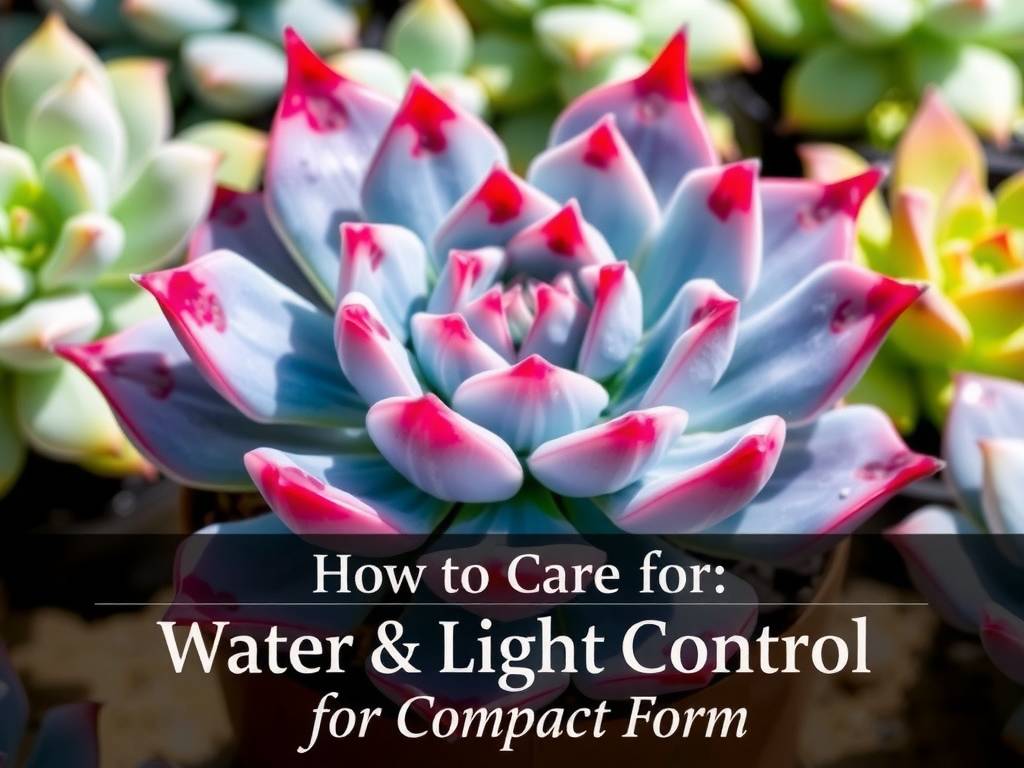
This is the heart of water and light control for compact form. Intense light signals the plant to produce compact, densely-packed leaves and to use water efficiently for this growth. When you then water deeply but infrequently, you satisfy the plant’s need without keeping the roots constantly wet, which would promote soft, weak growth. The stress of a dry period between waterings, combined with ample light, actually triggers the plant to prioritize a sturdy, compact structure as a survival tactic. It’s a beautiful, controlled stress that results in peak aesthetic form.
Supporting Factors for Overall Health
While water and light are the stars, these supporting actors are essential for the play to succeed.
The Right Soil Mix for Drainage
A standard potting soil will suffocate and drown your ‘Luna’. You must use a fast-draining succulent or cactus mix. For even better results, amend a commercial mix with 50% additional perlite or pumice. This creates an airy, gritty environment where water flows through instantly, preventing root rot.
Choosing the Perfect Pot
Always, always use a pot with a drainage hole. Terracotta pots are excellent for beginners as they are porous, allowing the soil to dry from the sides as well as the top. Size matters too; a pot only 1-2 inches wider than the plant’s rosette helps prevent excess soil from staying wet for too long.
Temperature and Humidity Preferences
Echeveria ‘Luna’ enjoys temperatures between 65°F and 80°F (18°C - 27°C). It can tolerate brief dips near freezing but must be kept completely dry if cold. Protect it from frost. Average household humidity is fine. High humidity slows soil drying, so adjust your watering frequency downward in such conditions.
Fertilizing for Vibrant Growth
Fertilizer is a supplement, not food. During the active growing seasons (spring and fall), you can feed once a month with a balanced, water-soluble fertilizer diluted to half-strength. Avoid fertilizing in winter and at the height of summer. A light feed supports the vibrant colors and robust growth encouraged by your perfect light and water regimen.
My ‘Luna’ is stretching. Can I fix it? Unfortunately, the stretched stem is permanent. The solution is "beheading." Using a sterile knife, cut the compact rosette off the elongated stem, leaving about an inch of stem. Let the cut end callous over for a few days, then plant it in fresh, dry soil. Refrain from watering for about a week to encourage new roots. The old stem may also produce new offshoots.
How often should I really water my ‘Luna’? There is no fixed schedule. The frequency depends entirely on your environment: light intensity, temperature, humidity, and pot type. This is why the "soak and dry" method and physically checking the soil are non-negotiable skills. In a bright, warm room, it might be every two weeks. In a cool, low-light spot, it could be every six weeks.
Can I keep my Echeveria ‘Luna’ outdoors? Absolutely, and it will often thrive with even more color outdoors. Acclimate it gradually over 1-2 weeks to prevent sunburn, starting in morning sun only. Ensure it’s in a pot with drainage and be vigilant about rain. You may need to protect it from prolonged heavy rainfall, as natural soil will dry much slower than your gritty mix. Bring it indoors before the first frost.
Caring for an Echeveria ‘Luna’ to achieve that picture-perfect, compact form is an exercise in disciplined mimicry. By providing the harsh, bright light of its native habitat and then meeting its deep but infrequent need for water, you work with its natural instincts. The result is a plant that is not merely maintained but sculpted by its environment—a resilient, beautiful testament to the power of understanding a plant’s core needs. Pay attention to its signals, master the soak-and-dry cycle, and prioritize light above all, and your ‘Luna’ will reward you with a stunning, geometric display of succulent perfection.