 bluename
 How to Care for Echeveria 'Frosty Dawn' - Sufficient Light for Thick Frosty Leaves
You've fallen in love with the Echeveria 'Frosty Dawn'. Its mesmerizing rosette, dusted with a thick, powdery coating that looks like morning frost, is truly captivating. Yet, that stunning farina—the very feature that gives it its name—often becomes the first casualty of improper care. You might find your plant stretching awkwardly towards the nearest window, its compact form lost. Its leaves may turn pale, lose their frosty blush, or feel soft and thin. The core issue behind these common frustrations almost always boils down to one critical factor: insufficient light. Achieving that iconic, thick, frosted appearance is directly tied to mastering the art and science of providing your 'Frosty Dawn' with the perfect amount of light.
This guide will walk you through exactly how to provide sufficient light for thick, frosty leaves on your Echeveria 'Frosty Dawn'. We'll move beyond vague advice and delve into the specific light requirements, signs of distress, and practical solutions for any setting.
Why Light is Non-Negotiable for Your 'Frosty Dawn'
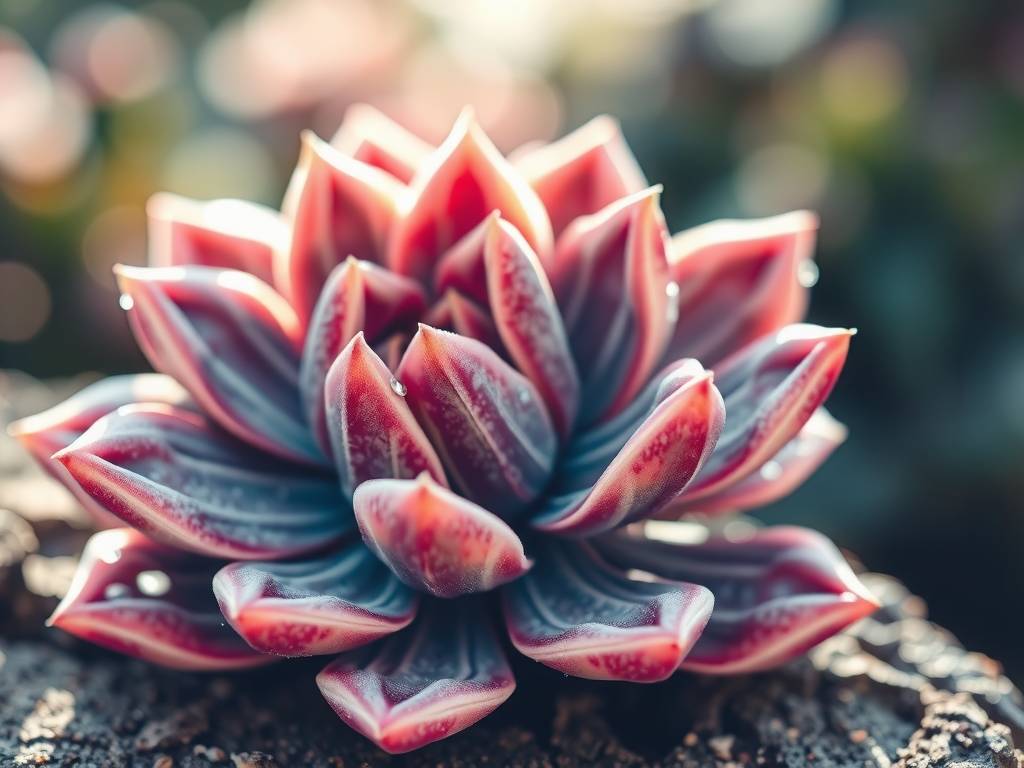
Light is the engine of your succulent's life. For Echeveria 'Frosty Dawn', it's not just about survival; it's about thriving and expressing its full, intended beauty. The thick, frosted coating, scientifically known as farina or epicuticular wax, is the plant's own sophisticated sunscreen and moisture-retention system. This wax develops robustly in response to strong, direct light. It protects the delicate leaf tissues from sunburn and reduces water loss.
When light is insufficient, the plant undergoes a process called etiolation. It literally stretches its stem and spaces out its leaves to seek more photons. This results in a leggy, weak, and unattractive form. Concurrently, the plant slows its production of farina, causing leaves to appear greener, thinner, and more vulnerable. According to horticultural research cited by the Royal Horticultural Society (RHS), succulents like Echeveria require high light intensity to maintain compact growth and secondary metabolite production, which includes these protective waxes. Simply put, without enough light, your 'Frosty Dawn' loses its 'frost' and its dawn-like elegance.
Decoding "Sufficient Light": Intensity, Duration, and Quality
What does "sufficient light" actually mean for this particular succulent? It's a combination of three elements.
Light Intensity: Bright and Direct Echeveria 'Frosty Dawn' needs bright, direct sunlight for a significant portion of the day. Ideally, this means a minimum of 4-6 hours of direct sun exposure. A south-facing window (in the Northern Hemisphere) is typically the prime location. East or west-facing windows can work but may require monitoring to ensure intensity is high enough, especially during winter months. The goal is to provide the high light intensity that promotes compact growth.
Light Duration: Consistency is Key Alongside intensity, duration matters. Aim for 6-8 hours of total light exposure daily. Consistency helps the plant establish a stable growth rhythm. Dramatic seasonal changes in light availability are a primary trigger for etiolation and color loss.
Light Quality: The Full Spectrum Natural sunlight provides a full spectrum of wavelengths. Blue light is crucial for compact leaf development, while red light influences flowering and certain pigmentation. When using grow lights, selecting a full-spectrum LED designed for succulents ensures your plant receives this balanced diet of light, which is essential for maintaining overall plant health and that desirable frosted texture.
Signs Your Plant is Craving More Light
Your 'Frosty Dawn' communicates its needs clearly. Watch for these tell-tale signs of light deprivation:
- Etiolation (Stretching): The most obvious sign. The stem elongates, and the space between leaves (internodal spacing) increases, causing the once-tight rosette to become loose and leggy.
- Leaf Color Fading: The beautiful frosty blue, lavender, or pink tones fade to a plain, dull green. The farina itself may appear thinner or patchy.
- Downward Curving Leaves (Aping): Leaves may curve downward excessively, a behavior sometimes called "aping," as they try to increase their surface area to catch more light.
- Soft, Floppy Texture: Leaves lose their characteristic firm, plump feel and become softer or thinner due to reduced photosynthesis and water storage.
- Slowed or No Growth: The plant enters a stagnant state, producing few or no new leaves, especially during its active growing seasons.
If you notice any of these symptoms, it's a clear indicator to reassess your plant's lighting situation immediately.
Practical Guide to Providing Optimal Light Indoors
For most plant parents, growing Echeveria 'Frosty Dawn' is an indoor endeavor. Here’s how to succeed.
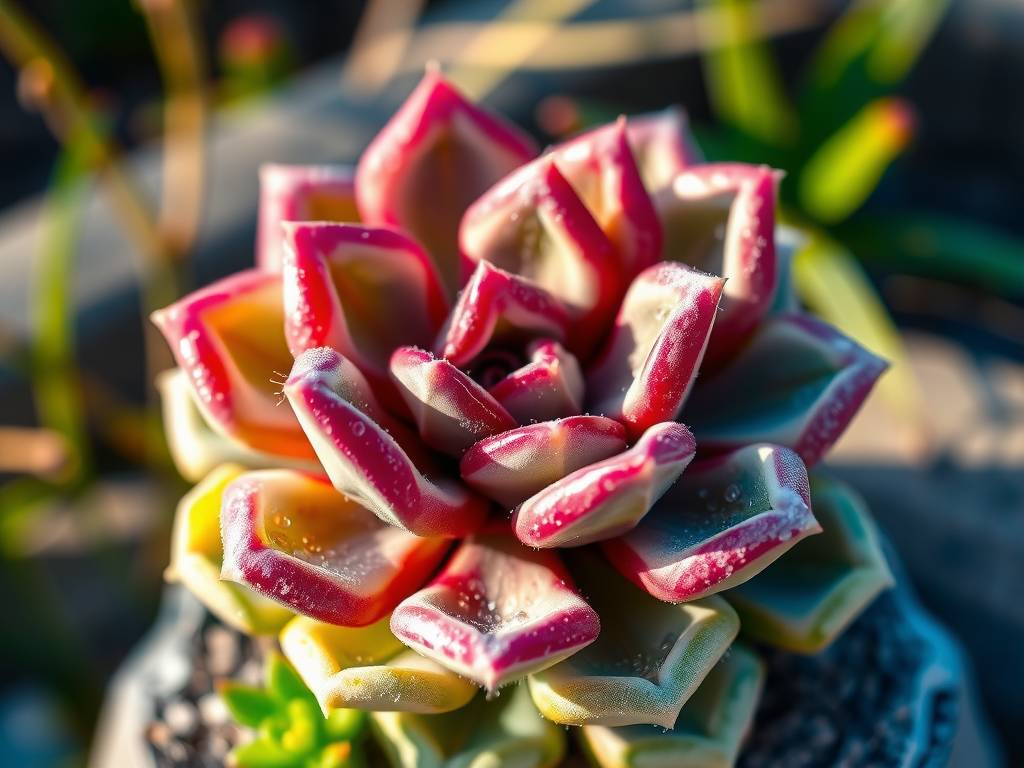
Finding the Perfect Spot The undisputed champion for indoor succulent light is a south-facing windowill. It receives the most direct sunlight throughout the day. Clean your windows regularly—dust and grime can filter out a surprising amount of precious light. If a south window isn't available, a west-facing window is the next best option, offering intense afternoon sun. East-facing windows provide gentle morning light, which may be sufficient but requires careful observation of the plant's form. North-facing windows are generally inadequate.
The Essential Role of Grow Lights Don't have a sunny window? Grow lights are a game-changer. They are not just a supplement; they can be a complete light source. For healthy Echeveria 'Frosty Dawn' growth, invest in a full-spectrum LED panel or bulb. Place the light 6 to 12 inches above the plant, and use a timer to provide 12-14 hours of consistent light per day. This mimics long summer days, encouraging tight growth and intense coloration. The American Horticultural Society (AHS) notes that modern LED grow lights can effectively provide the specific light spectra needed for succulent health and coloration, making them a viable alternative to natural sunlight.
The Acclimation Process: Avoiding Sunburn A sudden move from low light to intense direct sun will shock your plant, causing severe brown or white scorch marks on the leaves. This damage is permanent. Always acclimate gradually. Start with 1-2 hours of morning direct sun, increasing exposure by about 30-60 minutes every few days over a couple of weeks. This slow process allows the plant to build up its protective farina.
Seasonal Light Adjustments for Year-Round Health
Your plant's light needs change with the seasons, and adjusting your care is crucial for maintaining thick leaves.
Summer Care Light is abundant. Ensure your plant gets its direct sun, but be vigilant for signs of excessive heat stress, such as sunburn on the uppermost leaves or leaves feeling excessively hot to the touch. During extreme heatwaves, a sheer curtain during the peak afternoon hours can provide slight diffusion.
Winter Care This is the most challenging season. Daylight hours shorten, and the sun's angle lowers, reducing intensity. This is when etiolation most commonly occurs. Maximize light by placing your plant in the brightest possible window. Rotate the pot a quarter turn weekly to ensure even growth. This is also the prime time to employ a grow light to supplement the weak natural light. Reducing watering frequency is also critical, as the plant's growth slows and it uses less water under lower light conditions.
Common Lighting Mistakes to Avoid
- Assuming a "Bright Room" is Enough: Ambient room light is almost never sufficient. These plants need direct sunbeams falling on their leaves.
- Neglecting to Rotate the Plant: This leads to lopsided growth as one side stretches toward the light source.
- Placing the Plant Too Far from the Window: Light intensity drops dramatically with distance. Even a few feet back from a window can mean the difference between direct and indirect light.
- Forgetting to Acclimate: Always remember the golden rule: introduce more light gradually.
Synergistic Care: Watering and Soil in a High-Light Environment
Providing sufficient light alters other care requirements. A plant in optimal light will use water more efficiently and grow more vigorously.
The Watering Connection The mantra "soak and dry" becomes even more effective. Under bright light, the soil dries out faster, and the plant metabolizes water actively. Water thoroughly only when the soil is completely dry, and always ensure excess water can drain freely. Overwatering in low light is a death sentence, but in proper light, the plant can handle the hydration cycle it's designed for.
Soil and Drainage A gritty, well-draining soil mix is non-negotiable. Combine a standard succulent potting mix with additional perlite, pumice, or coarse sand (aim for a 50:50 mix). This ensures that even after a deep watering, oxygen quickly returns to the roots, preventing rot. A terracotta pot, which is porous and wicks away moisture, is an excellent choice to complement a high-light regimen.
How can I tell if my 'Frosty Dawn' is getting too much light? True sunburn appears as crispy, brown, or white scorched spots on the areas most exposed to the sun, often on the top-facing leaves. The leaves may also feel excessively hot. If you see this, provide immediate shade (like a sheer curtain) and acclimate the plant more slowly to intense light. Remember, a slight red or pink tinge on the leaf edges is usually a sign of good "stress" or sun exposure, not burn.
Can a stretched 'Frosty Dawn' ever go back to its compact shape? Once the stem has elongated, it will not shrink back. However, you can restore beauty through "beheading." Using a sterile knife, cut the compact rosette off the elongated stem, leaving about an inch of stem. Let the cut end callous for a few days, then plant it in fresh soil to grow new roots. The original stem may also produce new offshoots. This is a common propagation method to reset your plant's form.
Are grow lights really as good as sunlight for developing the frosty coating? High-quality, full-spectrum LED grow lights can be extremely effective. They provide the consistent, intense light the plant needs to produce ample farina. The key is using a light with sufficient intensity (measured in PPFD) and keeping it on for a long enough duration (12-14 hours). Many expert growers use lights exclusively to achieve stunning, stress-colored succulents with perfect powder coatings.
Mastering the light needs of your Echeveria 'Frosty Dawn' is the most significant step in unlocking its full potential. It transforms care from a guessing game into a predictable science. By providing bright, direct light—whether from a perfect window or a dedicated grow light—you empower your plant to build a robust, frosty defense and maintain the compact, sculptural form that makes this variety so cherished. Observe its leaves, adjust with the seasons, and pair your lighting strategy with appropriate watering and soil. The reward is a resilient, breathtaking succulent that truly lives up to its name, showcasing thick, frosted leaves that glisten like a winter dawn.





