bluename
 How to Care for Senecio Rowleyanus Variegata - Light Control to Maintain Variegation
You've finally found that stunning variegated string of pearls plant, Senecio rowleyanus 'Variegata'. Its creamy white and green beads cascade beautifully, a true living sculpture. But now, a creeping anxiety sets in. What if those gorgeous, unique patterns start to fade? What if the new growth comes in solid, boring green? You're not alone in this fear. The single most critical factor determining the fate of those beautiful variegated leaves is light. Mastering light control for your variegated string of pearls isn't just about keeping it alive; it's the dedicated art of preserving its spectacular, marbled beauty.
Understanding Variegation: It's All in the Leaves
To care for this plant properly, you must first understand what makes it special. Variegation in plants like the Senecio rowleyanus 'Variegata' is a lack of green chlorophyll in some sections of the leaf tissue. Those creamy white or yellow stripes and patches have little to no chlorophyll. Chlorophyll is the pigment that captures sunlight to drive photosynthesis, the process that feeds the plant.
This creates a fascinating biological compromise. The green parts work overtime to produce energy for the entire plant, while the white parts, though beautiful, are essentially non-productive. The plant, in its innate drive for efficiency and growth, will often try to revert to producing more energy-efficient, all-green leaves if conditions aren't ideal. Your mission is to provide conditions that satisfy the plant's energy needs while discouraging this reversion, and it all starts with luminous management.
The Golden Rule: Bright, Indirect Light is Non-Negotiable
This is the cornerstone of care for your variegated string of pearls. The term "bright, indirect light" is often used, but for this plant, its meaning is absolute.
What does this look like in practice? Place your plant near a window that receives plenty of ambient daylight but where the sun's rays never directly strike the foliage. An east-facing window is often perfect, offering gentle morning sun. A south or west-facing window can work brilliantly if filtered by a sheer curtain or if the plant is set back a few feet from the pane. The goal is to bathe the plant in abundant light without the intense, focused heat of direct beams.
Why is direct sun a problem? The variegated portions of the pearls lack the protective pigments that guard against UV radiation. Direct sunlight, especially the harsh afternoon sun, can easily scorch and burn these sensitive white areas, leaving ugly brown scars. It's a quick way to mar your plant's appearance. Conversely, insufficient light is the primary culprit for fading variegation and reversion. In low light, the plant panics. It needs more chlorophyll to capture what little light exists, so it starts producing solid green pearls to survive, sacrificing its unique patterning.
Seasonal Light Adjustments: A Year-Round Strategy
Your light management strategy must change with the seasons. This dynamic approach is key to long-term success.
During the spring and summer growing season, light intensity is at its peak. Monitor your windows closely. You may need to pull the plant slightly further from a south-facing window or ensure your sheer curtains are consistently used. This is the time when growth is most active, and providing consistent, optimal light will encourage new pearls to emerge with strong, stable variegation.
Winter presents the opposite challenge. The days are shorter, and the sun is weaker. In many regions, providing enough light becomes the main struggle. Don't be afraid to move your variegated string of pearls closer to the brightest window you have during these months. A few hours of gentle, direct winter sun from an east or south window is usually tolerable and often beneficial to compensate for the weak ambient light. This helps prevent the plant from becoming etiolated (stretched and leggy) and maintains the variegation in new growth.
Signs Your Light Conditions Are Wrong
Your Senecio rowleyanus 'Variegata' will communicate its distress. Learn its language.
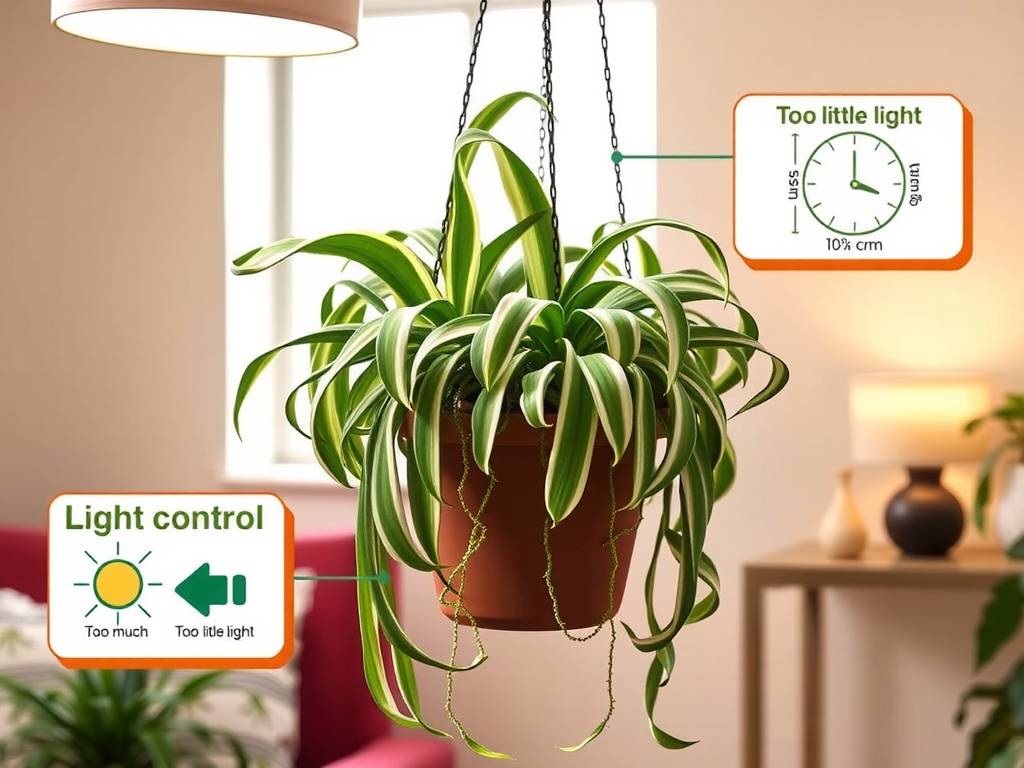
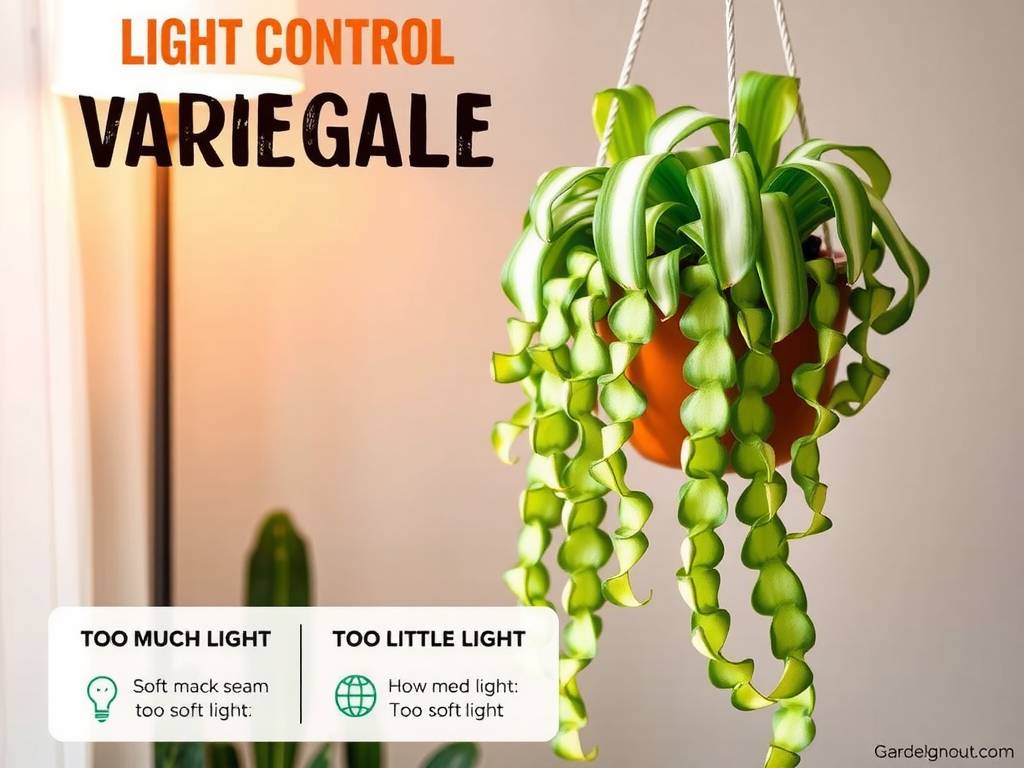
- Too Much Light: Look for scorch marks—crispy, brown, sunken patches on the pearls, especially on the lighter variegated sections. The pearls may also take on a reddish or purplish stress tint, and the soil will dry out alarmingly fast.
- Too Little Light: This is the more common issue for variegation loss. The plant will produce long, spaced-out stems with small, predominantly green pearls. The overall growth will be slow and weak. The existing variegation may appear to "fade" or become less distinct as the plant produces more green chlorophyll in the existing tissue to compensate.
Expert Insights on Light and Plant Health
The Royal Horticultural Society (RHS) emphasizes that variegated plants often have slower growth rates than their all-green counterparts due to their reduced chlorophyll content. They explicitly note that these plants "require more light to manufacture the same amount of energy" and should be placed in brighter positions to thrive and maintain their leaf coloration.
Complementing this, the American Horticultural Society (AHS) advises that while variegated plants need good light, protection from the hottest midday sun is crucial to prevent leaf scorch. This balanced, authoritative guidance perfectly outlines the tightrope walk of caring for Senecio rowleyanus 'Variegata': maximum safe exposure.
Practical Tips for Perfect Light Placement
Finding the sweet spot can involve some experimentation. Don't be afraid to move your plant around for a week at a time to observe its response.
Rotate the pot a quarter turn every time you water. This ensures all sides of the trailing plant receive even light, promoting uniform growth and preventing one side from becoming greener than the other. If you simply don't have a naturally bright spot, consider using a grow light. A simple, full-spectrum LED bulb placed a foot or two above the plant for 10-12 hours a day can provide the consistent, high-quality light it craves without any risk of sunburn. This is an excellent, controlled solution for maintaining vibrant variegation year-round.
Beyond Light: Supporting Factors for Vibrant Variegation
While light is the commander-in-chief, other care elements serve as essential support troops.
Watering must be done with extreme care. These plants are drought-tolerant succulents. Always use the "soak and dry" method: water thoroughly until it runs from the drainage hole, then allow the soil to dry out completely before watering again. In bright light, this may be more frequent; in lower light, much less so. Overwatering in poor light is a fast track to root rot and plant death.
Feeding should be minimal. Use a balanced, diluted liquid fertilizer for succulents only during the active growing season (spring and summer), and no more than once a month. Over-fertilization can force rapid, weak growth that may lack stable variegation.
Finally, the right soil mix is crucial. Use a very well-draining cactus and succulent mix. You can further improve drainage by adding extra perlite or pumice. This ensures the roots get the oxygen they need and never sit in soggy soil, creating a healthy foundation that allows the plant to focus its energy on maintaining its beautiful foliage under your perfect light conditions.
Why is my variegated string of pearls turning green? This is almost exclusively a light issue. Your plant is not receiving enough bright, indirect light. In its effort to produce more energy, it is creating leaves with more chlorophyll, resulting in solid green pearls. Gradually move it to a brighter location and new growth should show improved variegation.
Can I put my variegated string of pearls in direct sun? It is not recommended, especially for hot, midday direct sun. The variegated (white) parts are highly susceptible to sunburn, which causes permanent brown scarring. Early morning direct sun for a short period may be tolerated, but bright, filtered light all day is the safest and most effective strategy for maintaining health and variegation.
How often should I water under ideal light conditions? There is no fixed schedule. Under perfect, bright indirect light, the soil will dry faster. The best method is to check the soil and the pearls themselves. Water only when the soil is completely dry and the pearls show a slight give when gently squeezed (indicating they are using their internal water stores). This could be every 7-10 days in summer and every 3-4 weeks in winter, but always rely on the plant's cues, not the calendar.
Caring for a Senecio rowleyanus 'Variegata' is a rewarding practice in precision. By prioritizing consistent, bright, indirect light above all else, you provide the energy it needs without the stress it fears. This, combined with mindful watering and well-draining soil, creates the stable environment where variegation isn't just a fleeting trait but a permanent, dazzling feature. Observe your plant closely, adjust with the seasons, and you'll be rewarded with a long-lived, spectacular cascade of pearly marbled beauty.