bluename
 How to Care for Sedum Hispanicum: Strong Light for Compact & Fast Clumping
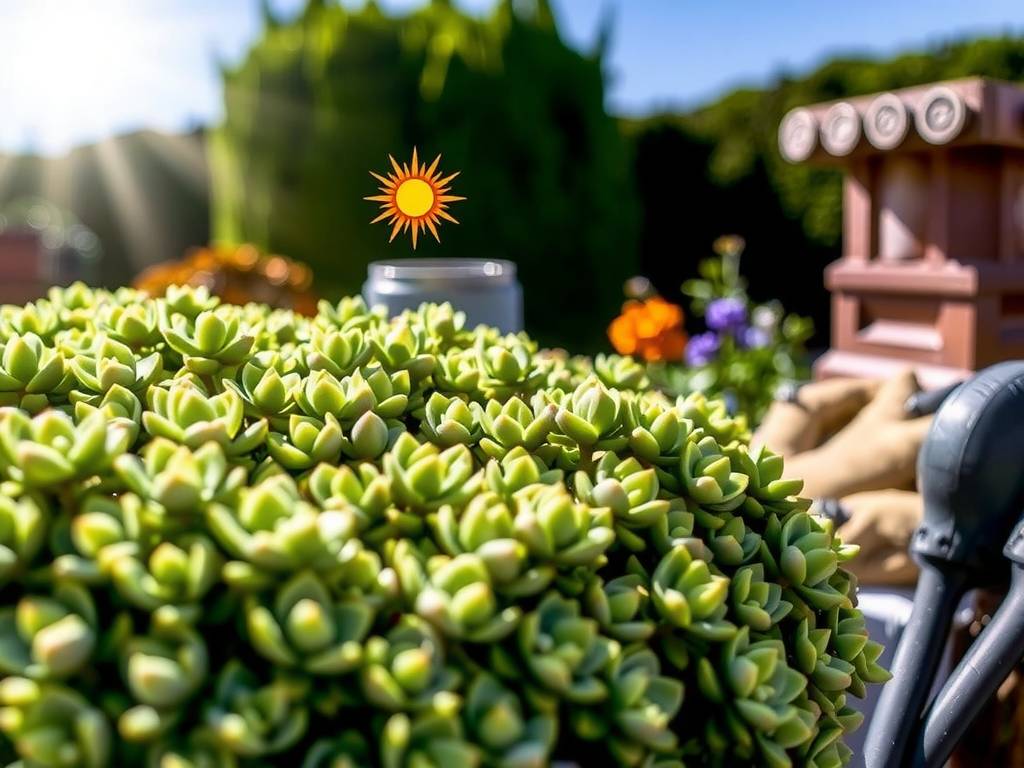
You've brought home a charming pot of Sedum hispanicum, drawn by its promise of a dense, fast-growing mat of delicate foliage. Yet, instead of the tight, lush carpet you envisioned, you're faced with leggy stems, sparse growth, and a plant that seems to be reaching desperately for something more. The vibrant blue-green hue may have faded to a dull green. This common frustration stems from one often-overlooked, critical factor in Sedum hispanicum care. Achieving that coveted compact and fast clumping form isn't just about watering or soil; it hinges decisively on providing strong light. Without it, even perfect watering habits won't produce the stunning ground cover or container specimen this succulent is capable of becoming.
This guide will demystify the exact light conditions your Spanish Stonecrop needs. We'll move beyond vague advice and provide actionable steps to ensure your plant not only survives but thrives with vigorous, beautiful density.
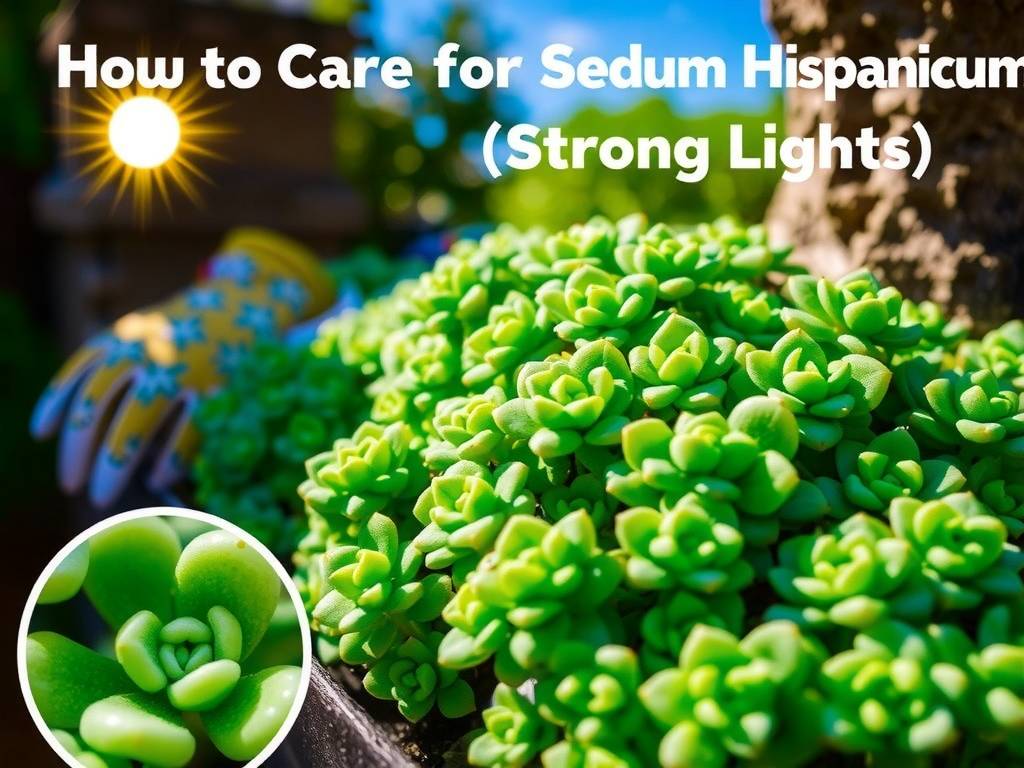
Understanding Sedum Hispanicum: A Plant Built for Light
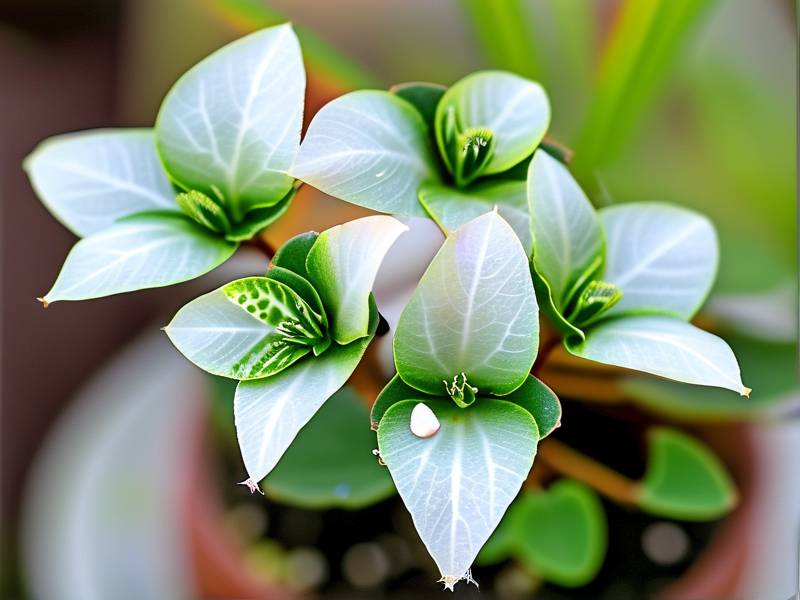
Sedum hispanicum, commonly known as Spanish Stonecrop or Tiny Buttons Sedum, is a low-growing, perennial succulent native to rocky, arid regions of Southern Europe and Western Asia. Its natural habitat offers a crucial clue to its needs: exposed, sunny slopes with excellent drainage and intense sunlight for most of the day. In these conditions, it evolves a compact growth habit as a survival mechanism. Ample light minimizes the space between leaf nodes (internodal elongation), creating the tight, mat-forming appearance we desire. The plant also produces more of its protective pigments, leading to more intense and sometimes pink-tinged foliage coloration.
According to horticultural principles outlined by the Royal Horticultural Society (RHS), most sedums, including S. hispanicum, are classified as plants that require "full sun." The RHS defines this as a minimum of six hours of direct, unfiltered sunlight during the growing season. For optimal growth and form, many experts, including those contributing to the American Horticultural Society's (AHA) resources, suggest that 8 or more hours is ideal for promoting maximum density and stress-induced coloration.
The Central Role of Strong Light in Compact Growth
Why is light so non-negotiable for a compact Sedum hispanicum? The answer lies in plant physiology. Light is the energy source for photosynthesis. When light is abundant, the plant can efficiently produce the sugars it needs for growth. It directs this energy into producing many new leaves and stems close together, rather than elongating to "search" for light.
In low light conditions, the plant undergoes etiolation. This is a survival strategy where stems grow rapidly and spindly, leaves become smaller and spaced farther apart, and the overall structure weakens. Your Sedum hispanicum becomes "leggy" because it's literally stretching toward any available light source. This results in a sparse, unattractive plant that is more susceptible to breakage and less capable of forming the dense clump you want. Strong light for compact growth is not a suggestion; it is the primary driver of this plant's structural integrity.
Providing the Ideal Light Conditions: A Practical Guide
Knowing your plant needs "strong light" is one thing. Providing it correctly is another. Here’s how to translate that into action for both indoor and outdoor settings.
Outdoor Cultivation: Embracing the Sun
For gardeners in USDA hardiness zones 5-9, Sedum hispanicum excels as a ground cover, rock garden addition, or container plant outdoors.
- Location is Key: Plant it in the sunniest spot you have. South-facing or west-facing exposures are typically best. Observe your garden throughout the day to identify areas that receive uninterrupted sunlight from mid-morning through late afternoon.
- Understanding "Full Sun": Aim for that golden standard of 8+ hours of direct sun. While it can tolerate very light dappled shade, especially in intensely hot climates, any more shade will begin to compromise its compactness.
- Seasonal Considerations: In peak summer heat (especially in zones 8-9), afternoon sun can be extremely intense. While the plant is drought-tolerant, watch for signs of scorching (bleached, crispy patches). This is rarely fatal and often just a cosmetic stress response. It usually does not necessitate moving the plant, but ensuring adequate water during drought periods can help.
Indoor Cultivation: Mimicking the Sun's Power
Growing Sedum hispanicum indoors is where light challenges are most common. A bright windowsill is the absolute minimum.
- The Best Window: A south-facing window is ideal in the Northern Hemisphere. East or west-facing windows can work but may only provide 4-6 hours of direct sun, which might be insufficient for the tightest growth.
- The Game-Changer: Grow Lights: If your natural light is inadequate (signaled by stretching), supplement with a grow light. LED full-spectrum panels are energy-efficient and effective. Position the light 6-12 inches above the plant and run it for 12-14 hours a day to simulate long summer days. This is the single most effective way to achieve fast clumping Sedum hispanicum indoors.
- Rotation: Rotate your pot a quarter turn every week to ensure all sides of the plant receive equal light and grow evenly.
Supporting Practices for Fast Clumping and Health
While light is the star, supporting actors are essential for a standout performance. These practices work in concert with strong light to accelerate clumping and maintain health.
Perfecting the Watering Technique
The "soak and dry" method is paramount. Water deeply only when the soil is completely dry throughout the pot. For in-ground plants, water only during extended droughts. Overwatering is a far greater danger than underwatering, especially in cool or low-light conditions. Well-hydrated yet never soggy roots support the vigorous growth fueled by your strong light.
Soil and Drainage: The Foundation
Fast-draining soil is non-negotiable. Use a commercial cactus/succulent mix, or make your own with 50% potting soil and 50% mineral grit like perlite, pumice, or coarse sand. Ensure all pots have large drainage holes. This prevents root rot, allowing the plant to focus energy on top growth rather than fighting disease.
Strategic Fertilization for Vigor
Sedum hispanicum is not a heavy feeder. A light feeding once at the very beginning of the growing season (early spring) with a balanced, diluted fertilizer (e.g., 10-10-10 at half strength) or a specialized succulent fertilizer can provide a boost for fast clumping. Over-fertilizing, especially with high-nitrogen formulas, can cause weak, overly soft growth that defeats the goal of compactness.
Propagation to Accelerate Coverage
Want to fill an area quickly? Propagate! The easiest method is division. In spring or early summer, simply lift a section of an established clump, gently tease apart the stems and roots, and replant. Stem cuttings also root with ease in dry succulent soil. This allows you to multiply your compact, light-hardened plants and create a dense mat in record time.
Troubleshooting Common Light-Related Issues
- Stretching and Leggy Growth: This is the clearest sign of insufficient light. The solution is to immediately increase light intensity or duration. You can also "behead" the leggy stems, propagate the cuttings in bright light, and restart with a more compact plant.
- Faded or Green Color: Sedum hispanicum often has a lovely blue-gray or purple-tinged color. If it reverts to a plain green, it needs more light. Stress from strong sun and cooler temperatures often enhances these colors.
- Leaf Drop: Some lower leaf drop is normal. However, excessive drop coupled with soft, mushy leaves usually indicates overwatering, which is more dangerous in low-light conditions. Ensure the soil is dry and increase light if possible.
My Sedum hispanicum is stretching near a window. What am I doing wrong? Even a bright window may not provide enough duration or intensity of direct rays, especially in winter or in regions with many cloudy days. The angle of the sun changes seasonally. Consider supplementing with a grow light to guarantee the consistent, strong light it craves for compact form.
Can I move my indoor Sedum hispanicum directly into full outdoor sun? No. This will cause severe sunburn. Acclimate it gradually over 7-10 days. Start with 1-2 hours of morning sun, slowly increasing its exposure each day until it can handle a full day. This process, called hardening off, is crucial.
How often should I water if my plant is in very strong, hot light? The principle remains: water only when the soil is completely dry. The difference is that in very hot, sunny conditions, the soil will dry out much faster. You may find yourself watering weekly, whereas in a cooler, indoor spot, it might be every 3-4 weeks. Always let the soil's dryness, not the calendar, be your guide.
Providing strong light is the most impactful decision you can make for your Sedum hispanicum. It transforms its growth pattern from sparse and struggling to dense and vigorously clumping. By pairing this essential element with mindful watering, gritty soil, and occasional feeding, you create the perfect environment for this resilient succulent to showcase its true beauty. Observe your plant, respond to its signals, and enjoy the process of cultivating a remarkably compact and thriving mat of Spanish Stonecrop.