bluename
 How to Care for Senecio Herreianus Variegata - Bright Indirect Light for Round & Plump Leaves
You've brought home a stunning Senecio herreianus 'Variegata', captivated by its unique string of pearls-like beads adorned with creamy pink and green stripes. Yet, weeks later, those plump, round leaves you fell in love with are starting to look deflated, elongated, or losing their vibrant variegation. This frustrating scenario is a common pain point for many succulent enthusiasts. The secret to reversing this and achieving a thriving, picture-perfect plant lies overwhelmingly in one critical factor: mastering its light requirements. Providing the correct bright indirect light for round & plump leaves is the cornerstone of Senecio herreianus Variegata care, influencing everything from leaf shape and color to overall plant health and growth rate.
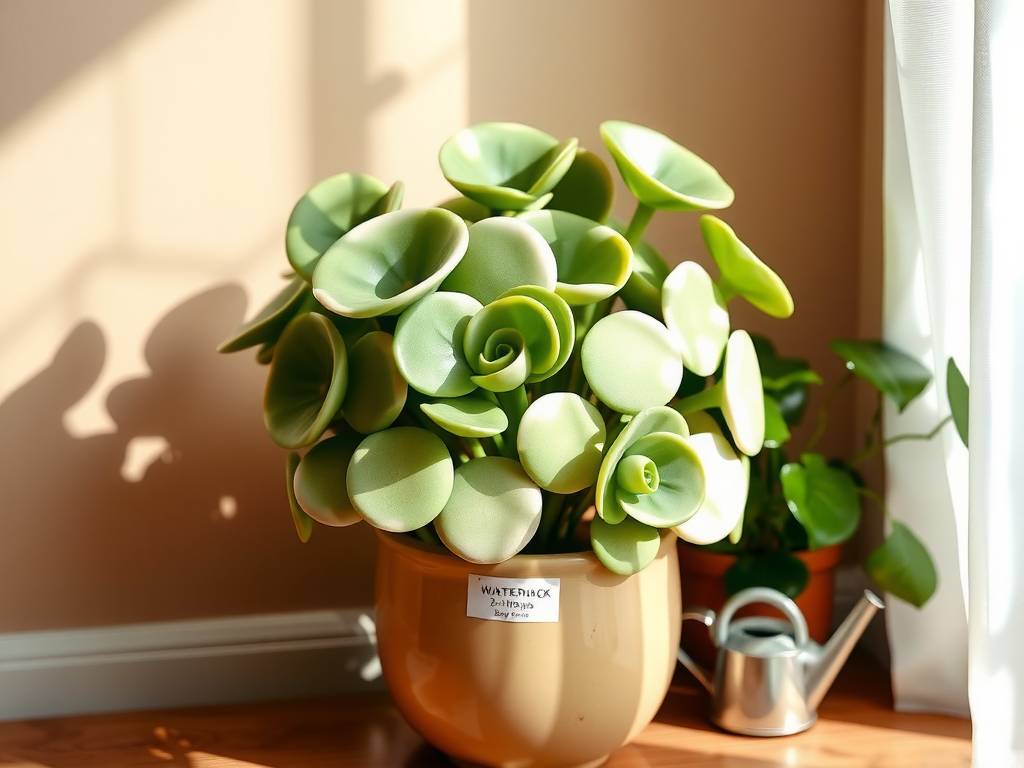
Understanding this plant's native habitat is key. It hails from arid regions of Southwest Africa, where it thrives under the dappled shade of rocks or other vegetation, protected from the harsh, direct midday sun but bathed in abundant ambient light. Replicating this condition indoors is your primary mission.
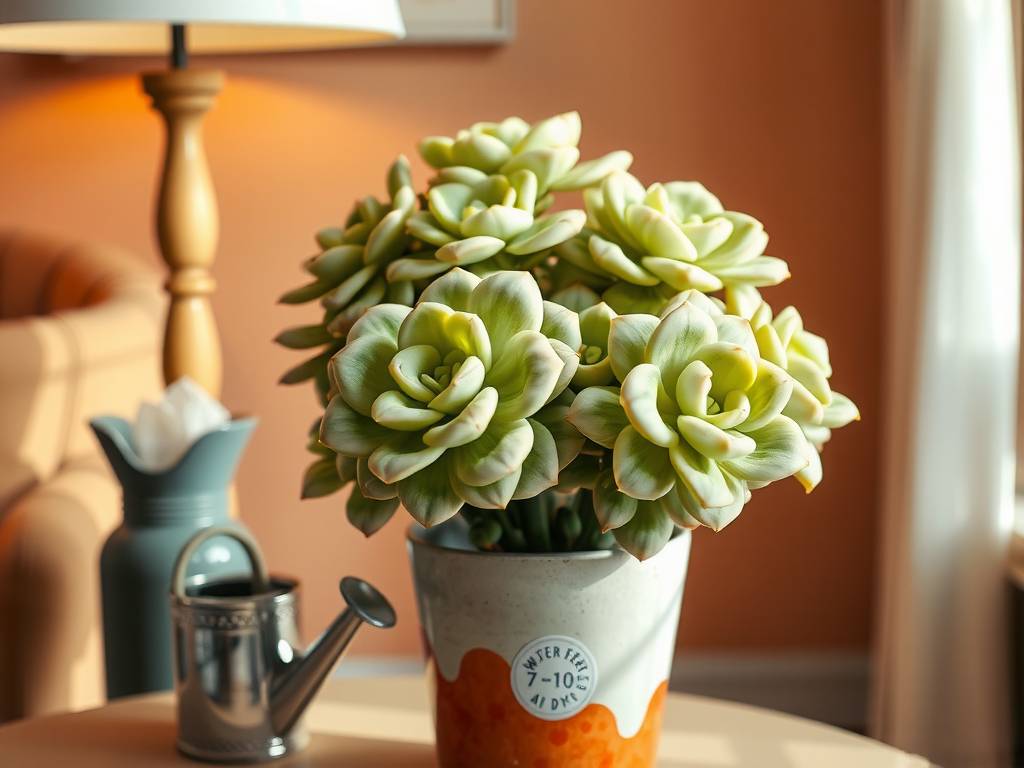
Why Light is the #1 Factor for Healthy Senecio Herreianus Variegata
Light is not just an energy source for this variegated succulent; it's the primary architect of its form. The plant's physiology is fine-tuned to specific light conditions. When light is insufficient, the plant undergoes a process called etiolation. It stretches its stems, increasing the space between leaves (internodes) in a desperate search for more photons. This results in a leggy, sparse appearance and, crucially, causes the once-round leaves to become elongated and oval-shaped as the plant prioritizes stem growth over maintaining plump water storage cells in the leaves.
Conversely, the beautiful variegation—those creamy pink and white streaks—is a result of a lack of chlorophyll in certain leaf tissues. Variegated plants already have less chlorophyll overall to conduct photosynthesis. In low light, the plant may respond by producing more green chlorophyll to capture what little light is available, causing the stunning variegation to fade and turn greener. Only with sufficient bright indirect light can you maintain that striking color contrast while ensuring compact, spherical growth.
Defining "Bright Indirect Light" for Your Plant
The term "bright indirect light" is often misunderstood. It doesn't mean a dark corner or a room with just a window. For Senecio herreianus Variegata, it means a location that is brightly lit all day without the sun's rays directly hitting the foliage.
- Ideal Placement: A spot within 1-3 feet of a south-facing or west-facing window, but shielded by a sheer curtain. An east-facing window that gets direct morning sun (which is gentler) for 2-3 hours can also be excellent. North-facing windows are typically too dim unless they are very large and unobstructed.
- The Shadow Test: A reliable method is the shadow test. On a sunny day, place your hand between the light source and the plant's intended spot. A sharp, well-defined shadow indicates direct light. A soft, fuzzy but clearly visible shadow signifies bright indirect light—this is your target. A faint, barely-there shadow means the light is too low.
- Duration: Aim for at least 6-8 hours of this quality light daily. As noted by horticulturists at the Royal Horticultural Society (RHS), most succulents and cacti require high light levels to maintain their structural integrity and prevent etiolation, a principle that directly applies to the care of Senecio species.
The Synergy of Light with Watering and Soil
Light dictates your watering schedule. Under perfect bright indirect light, the plant photosynthesizes actively and uses water efficiently. In such conditions, you should follow the "soak and dry" method thoroughly: water deeply until it runs out the drainage hole, then allow the potting mix to dry almost completely before watering again. The plumpness of the leaves is your best moisture gauge; firm, round leaves mean sufficient water reserves.
In lower light, the plant's metabolism slows, and water evaporation from the soil decreases dramatically. Watering on the same schedule as a plant in bright light will lead to soggy soil, root rot, and mushy leaves—the opposite of the desired plump and firm texture.
This is where soil composition becomes critical. Well-draining soil is non-negotiable. A commercial cactus & succulent mix is a good start, but for optimal results, many experts, including those from the American Horticultural Society (AHS), recommend amending it with additional perlite or pumice (up to a 50:50 ratio) to ensure rapid drainage and excellent aeration around the roots. This gritty mix prevents waterlogging, allowing you to water appropriately for the light conditions without fear of rot, directly supporting the goal of maintaining plump Senecio herreianus leaves.
Seasonal Light Adjustments and Acclimation
Light intensity and angle change with the seasons. The weaker winter sun in many regions may allow your plant to tolerate a spot closer to a south-facing window without a curtain. Conversely, the intense summer sun may require you to pull it back further or add more filtering.
If you need to move your plant to a brighter location, always acclimate it gradually. Sudden exposure to much stronger light can cause sunburn, manifesting as bleached, brown, or scorched patches on the leaves—permanent damage that mars its beauty. Transition it over 1-2 weeks, increasing exposure by an hour or so every few days.
Troubleshooting Light-Related Issues
- Leggy Growth with Pale Leaves: This is the classic sign of insufficient light. The solution is to gradually move it to a brighter location. You can also prune the leggy stems to encourage bushier growth from the base, but this is only a cosmetic fix unless the light is improved.
- Fading Variegation: If the pink and cream stripes are turning solid green, your plant is not getting enough light to sustain its variegated form. Increase light exposure.
- Sunburn (Brown/Scorched Patches): This indicates too much direct sun, especially during hot afternoons. Relocate to a spot with gentler, filtered light.
- Shriveled, Wrinkled Leaves: While often a sign of underwatering, check your light first. If the plant is in low light and you're withholding water, it may simply be dormant and not thirsty. However, if it's in bright light and shriveled, it needs a deep drink. The context of light is essential for accurate diagnosis.
Supporting Practices for Optimal Health
Beyond light, a few other care tips will help your String of Beads flourish. Feed it sparingly with a balanced, diluted liquid fertilizer formulated for succulents only during the active growing season (spring and summer), and never in winter. Repot every 2-3 years in spring to refresh the soil, sizing up only slightly as this plant enjoys being somewhat root-bound. Always use a pot with a drainage hole.
How often should I water my Senecio herreianus Variegata? There is no fixed schedule. Watering frequency depends entirely on the light, temperature, and soil mix. Always check the soil moisture and the leaf turgidity. In bright indirect light during summer, you might water every 7-10 days. In lower light or during winter, it could be every 3-4 weeks or longer.
Can I grow it under artificial grow lights? Absolutely. Grow lights are an excellent solution for homes with inadequate natural light. Use full-spectrum LED lights and position them 6-12 inches above the plant, providing 12-14 hours of light per day to mimic a long, bright day. This can be highly effective for promoting compact growth in variegated succulents.
Why are the beads on my String of Beads falling off? Leaf drop can be caused by a few stressors: sudden changes in environment (like a move), overwatering leading to root distress, or occasionally, extreme underwatering. Ensure stable conditions, a consistent watering routine based on light levels, and check that the plant isn't sitting in a cold draft.
Achieving a lush, vibrant Senecio herreianus 'Variegata' with perfectly round, plump leaves is a direct reflection of how well you manage its light environment. By prioritizing consistent, bright indirect light and harmonizing your watering and soil practices with this central need, you transform care from a guessing game into a predictable science. Observe your plant closely, let the condition of its leaves guide you, and you'll be rewarded with a resilient and stunning succulent display that highlights the unique beauty of this variegated bead-like plant.