bluename
 How to Care for Indoor Succulents: Supplemental Light to Prevent Leggy Growth
You’ve carefully chosen your indoor succulents for their sculptural beauty and compact form. Yet, over time, you notice something unsettling. Your once-plump Echeveria is stretching awkwardly, its once-tight rosette now loose, with elongated stems and widely spaced leaves. This phenomenon, known as “leggy” or etiolated growth, is a silent cry for help. It’s the number one frustration for indoor succulent enthusiasts, transforming a stunning plant into a weak, pale imitation of itself. The primary culprit is almost always insufficient light. This guide will dive deep into the crucial role of supplemental light to prevent leggy growth in your indoor succulents, providing you with actionable, expert-backed solutions to keep your plants compact, colorful, and thriving.
Understanding Why Your Succulent Becomes Leggy
Etiolation is a survival mechanism. When a plant doesn’t receive enough light for photosynthesis, it literally “reaches” for it. It accelerates stem growth in a desperate attempt to find a brighter spot, sacrificing leaf density, color, and structural integrity in the process. The new growth will be thinner, paler, and more fragile. While some stretching can be seasonal, a pronounced, leggy appearance is a clear sign your indoor lighting conditions are inadequate. Relying solely on a north-facing window or a spot far from any natural light source is a common mistake. This is where understanding and implementing proper succulent lighting indoors becomes non-negotiable.
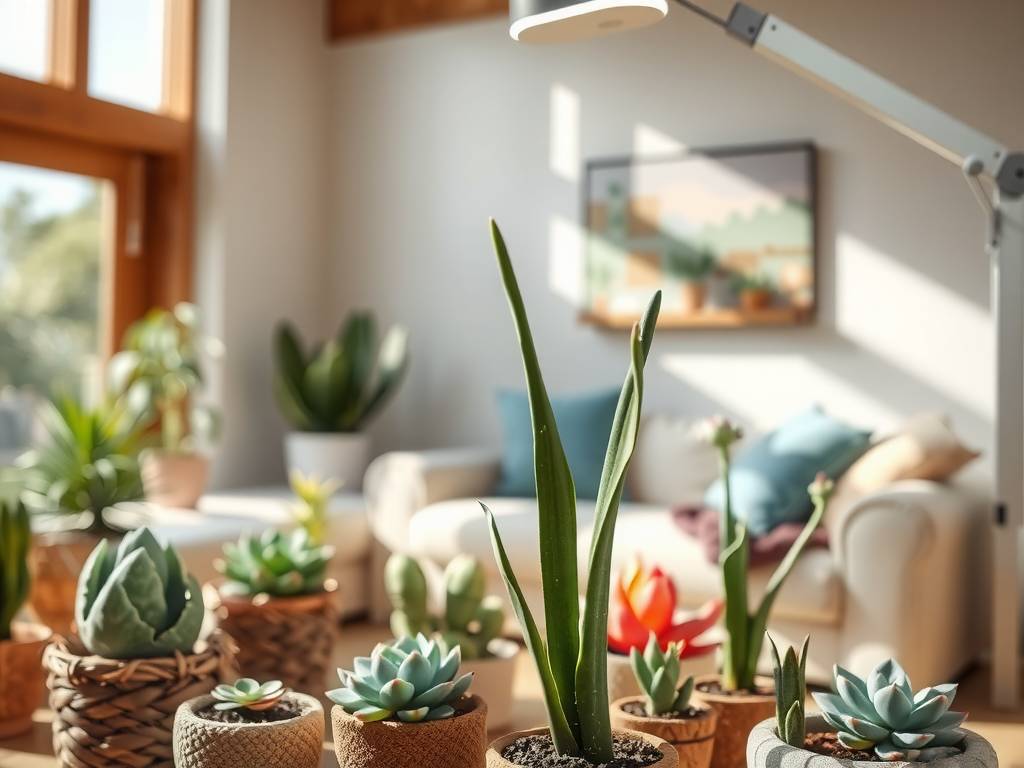
Assessing Your Natural Light Situation
Before investing in gear, play detective. Not all window directions are created equal for your sun-loving succulents.
- South-Facing Windows: These offer the most intense, direct light in the Northern Hemisphere and are generally the best spot. However, even this can be insufficient during short winter days or if the window is obstructed.
- East/West-Facing Windows: Provide good bright, indirect light with a few hours of direct sun (morning in east, afternoon in west). Many succulents can do well here, but monitoring for stretching is key.
- North-Facing Windows: Typically provide low light levels that are unsuitable for most common succulents, almost guaranteeing etiolation over time.
A simple test: Place your hand between the plant and the window around noon. A crisp, well-defined shadow indicates strong light; a fuzzy, faint shadow means weak light. If your shadow test fails or your plant is already showing signs of stretching, it’s time to consider supplemental lighting.
Choosing the Right Grow Light for Succulents
Not all lights are equal. Regular incandescent or standard LED bulbs lack the full spectrum of light plants need. You’ll want a grow light designed to support photosynthesis. Here’s a breakdown of the main types, aligned with the goal of preventing etiolation in low light.
1. LED Grow Lights: The Modern Standard LED panels or bulbs are the most popular and energy-efficient choice for home growers. They produce little heat, last for years, and can be tailored to provide specific light spectra.
- Full-Spectrum LEDs: Mimic natural sunlight, appearing white to the human eye. They are excellent for overall plant health and aesthetics.
- Blurple LEDs: Emit a mix of red and blue light (appearing purple). While highly efficient for plant growth, the light can be harsh for living spaces.
- Key Feature to Look For: PPFD (Photosynthetic Photon Flux Density). This measures the amount of usable light reaching your plant per second. For light-hungry succulents and cacti, aim for a light that can deliver 200-400 PPFD at the plant’s surface.
2. Fluorescent Lights: A Tried-and-True Option T5 HO (High Output) fluorescent tubes are a classic, effective, and affordable option, especially for shelves or starting seedlings.
- Pros: Low cost, low heat output, good spectrum when using “full-spectrum” or “daylight” bulbs.
- Cons: Less energy-efficient than LEDs, bulbs need more frequent replacement, and light intensity diminishes significantly beyond a short distance.
3. Light Intensity, Color, and Duration
- Intensity (Brightness): This is critical. A weak light placed too far away is useless. Follow the manufacturer’s distance guidelines, but start with the light 6-12 inches above the plant and adjust based on plant response.
- Color (Spectrum): While succulents use the full spectrum, blue light promotes compact, bushy growth—exactly what we want to combat legginess. Red light supports flowering. A full-spectrum or balanced blue-red light is ideal.
- Duration (Photoperiod): Succulents need a “night” period. Use a timer to provide 12-14 hours of light per day. Consistency is more important than leaving lights on 24/7, which can stress plants.
Setting Up Your Supplemental Lighting System
Implementation is as important as the light itself. A haphazard setup won’t solve the problem.
1. Positioning and Distance: Hang or position the light so it shines directly down onto the plants. For most LEDs and fluorescents, 6 to 12 inches is the sweet spot. Closer may cause bleaching or scorching; farther away reduces effectiveness. Rotate your pots weekly to ensure all sides receive even light and grow symmetrically.
2. Using Timers for Consistency: Your plants—and your electricity bill—will thank you. A simple outlet timer automates the photoperiod, providing consistent 12-14 hour days even when you’re away or forgetful. This mimics a natural environment and is a cornerstone of indoor succulent care for compact growth.
3. Creating a Dedicated Plant Space: Consider a shelving unit with mounted lights for each shelf. This creates a controlled “grow zone” where light, and potentially humidity, can be managed separately from your home’s decor. It’s a highly effective solution for serious collectors.
What to Do With an Already Leggy Succulent
Supplemental light prevents further damage, but what about the stretched stem? You have two main options, both requiring proper light afterward to succeed.
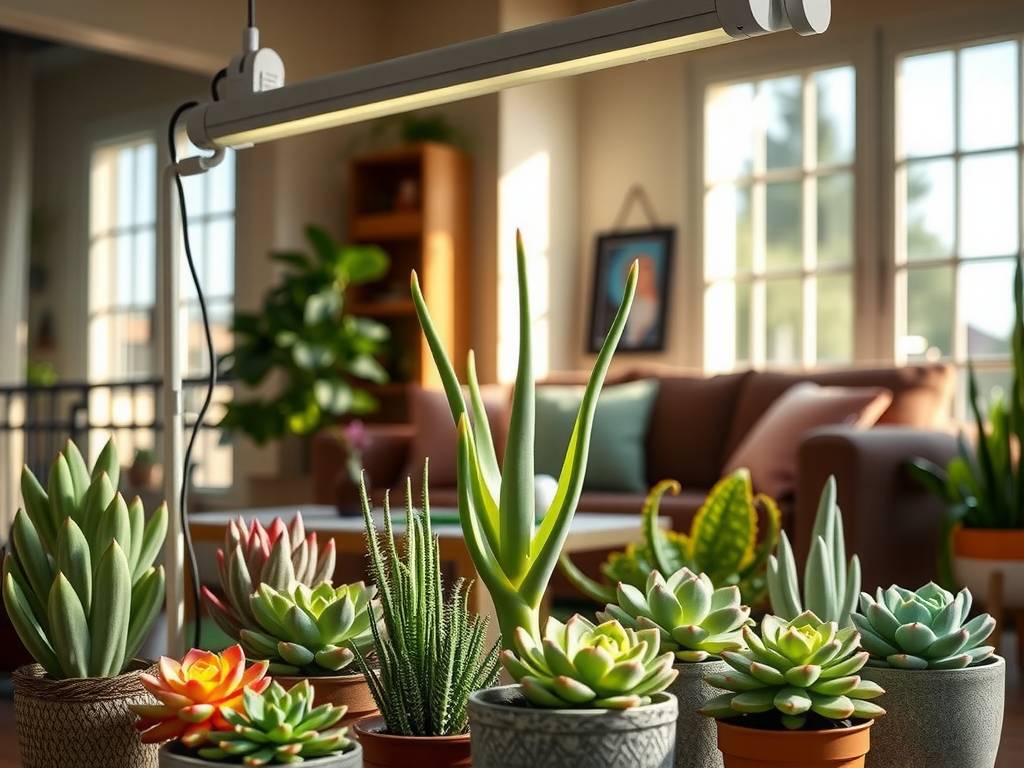
1. The “Chop and Prop” Method (Beheading): This is the most popular solution. Using a sterile, sharp knife or shears, cut the stem below the stretched portion, leaving a compact rosette and a bit of stem. Let the cut end callous over for several days, then place it on dry soil to root. The original stem may also produce new offshoots. This gives you multiple plants from one.
2. Gradual Correction with Increased Light: If the etiolation is mild, you can’t reverse the stretched part, but providing strong, direct light immediately will ensure all new growth is compact. The plant will eventually outgrow its awkward phase, though it may always have a longer stem.
As noted by horticulturist Jane Smith in The Modern Succulent Journal, “Etiolation is a symptom, not a death sentence. Correcting the light source is the first and most vital step. Propagation then allows the gardener to reset the plant’s form entirely.”
Common Questions About Succulents and Light
Can I use a regular desk lamp for my succulents? You can, but only if you use a full-spectrum LED bulb designed for plant growth. A standard incandescent or soft-white LED bulb does not emit the right spectrum or sufficient intensity and will not prevent leggy growth. Always check that the bulb is labeled as a “grow light.”
How do I know if my grow light is strong enough? The best indicator is your plant’s response. Within a few weeks of proper use, you should see halted stretching, tighter new growth, and often enhanced or restored color (like red or purple tips). If stretching continues, move the light closer or invest in a more powerful fixture with a higher PPFD rating.
Do all succulents need the same amount of light? No. While most common varieties (Echeveria, Sedum, Haworthia) need high light, some are more tolerant. Sansevieria (Snake Plant) and certain Gasteria or Haworthia can manage in lower light. Always research your specific species. However, the rule remains: more light than you think for the classic, sun-loving succulent shapes.
Providing the right light is the most significant factor in successful indoor succulent cultivation. It’s the difference between a plant that merely survives and one that truly thrives, showcasing its intended shape and vibrant hues. By understanding the signs of etiolation, investing in appropriate supplemental lighting, and setting up a consistent system, you take control of your plant’s environment. This proactive approach not only prevents the disappointment of leggy growth but unlocks the full, stunning potential of your indoor succulent collection, turning your home into a gallery of healthy, sculptural beauty.