bluename
 How to Care for Anthurium Andraeanum: Filtered Light and Moisturizing Maintenance Tips
You've brought home a stunning Anthurium andraeanum, with its glossy, heart-shaped leaves and vibrant, waxy spathes that look almost too perfect to be real. But now, the anxiety sets in. Why are the edges of those beautiful leaves turning brown? Is it getting too much sun, or not enough? How do you keep it thriving without turning your home into a tropical swamp? If you're worried about killing your flamingo flower, you're not alone. The secret to a flourishing Anthurium lies in mastering two fundamental elements: the quality of its light and the consistency of its moisture. This guide will walk you through exactly how to provide the filtered light and balanced moisturizing care your Anthurium craves.
Understanding Your Anthurium's Natural Habitat
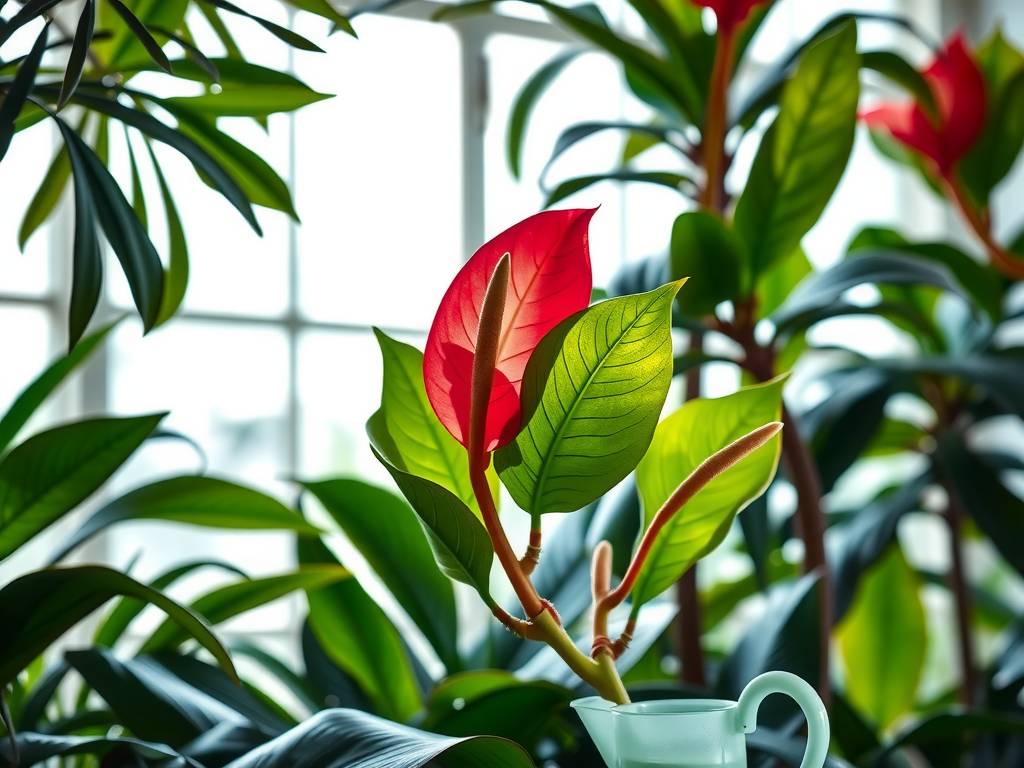
To care for any plant successfully, it helps to think like one. Anthurium andraeanum is native to the rainforests of Central and South America. There, it lives as an epiphyte or terrestrial plant under the dense canopy of taller trees. This environment is the key to its needs: dappled sunlight that filters through leaves above, and high humidity with consistent but not soggy moisture around its roots. Replicating this at home is simpler than you might think.
The Golden Rule: Perfect Filtered Light
Light is the engine of your plant's growth, but for Anthuriums, it must be the right kind. Direct, harsh sunlight is their biggest foe, quickly leading to scorched, yellow, or bleached leaves. Conversely, a dark corner will result in leggy growth, few to no flowers (those colorful spathes), and a generally unhappy plant.
So, what is filtered light? Imagine sunlight that has passed through a sheer curtain or the leaves of a tree. It's bright but diffuse, without the intense, hot beams that cause damage. An east-facing window is often ideal, providing gentle morning sun. A north-facing window can work well, too. For south or west-facing windows, you must filter the light. Place the plant a few feet back from the window or use a sheer curtain as a buffer.
A simple test is the shadow test. On a sunny day, hold your hand between the light source and your Anthurium's leaves. A soft, fuzzy shadow indicates perfect filtered light. A sharp, defined shadow means the light is too direct.
Mastering Moisturizing Maintenance: Water and Humidity
This is where most Anthurium owners stumble. The goal is consistently moist soil, not wet or dry extremes. Think of a well-wrung sponge.
Your watering routine should be dictated by the soil, not the calendar. Before watering, check the top inch of the potting mix. If it feels dry to the touch, it's time to water. If it still feels slightly damp, wait another day or two. When you do water, do so thoroughly until water runs freely out of the drainage holes. This ensures the entire root ball gets hydrated. Crucially, empty the saucer or cache pot after 15-20 minutes. Letting the plant sit in water is a direct invitation for root rot.
The type of water matters. Anthuriums can be sensitive to chemicals and minerals in tap water. If your tap water is hard, using filtered, distilled, or rainwater can prevent tip burn on the leaves.
While soil moisture is critical, air moisture is its partner. Remember the rainforest humidity? Your home's air, especially with heating or air conditioning, is often too dry. Boosting humidity is a non-negotiable part of moisturizing maintenance for a healthy Anthurium. You can group plants together, use a pebble tray filled with water (ensure the pot sits on the pebbles, not in the water), or invest in a small humidifier placed nearby. Misting can provide a temporary boost but is often not sufficient on its own.
Supporting Practices for a Thriving Plant
With light and moisture mastered, these additional tips will ensure your Anthurium excels.
First, use the right soil. A well-draining, airy mix is essential. A standard potting mix amended with 30-50% orchid bark, perlite, or coconut coir is perfect. This prevents compaction and allows roots to breathe, complementing your careful watering.
Fertilize sparingly. During the growing season (spring and summer), feed your Anthurium with a balanced, water-soluble fertilizer diluted to half-strength every 6-8 weeks. Over-fertilizing will harm the roots and cause salt buildup in the soil.
Repot only when necessary. Anthuriums like to be slightly root-bound. Repot every 2-3 years or when you see roots circling the bottom of the pot. Only go up one pot size (1-2 inches larger in diameter).
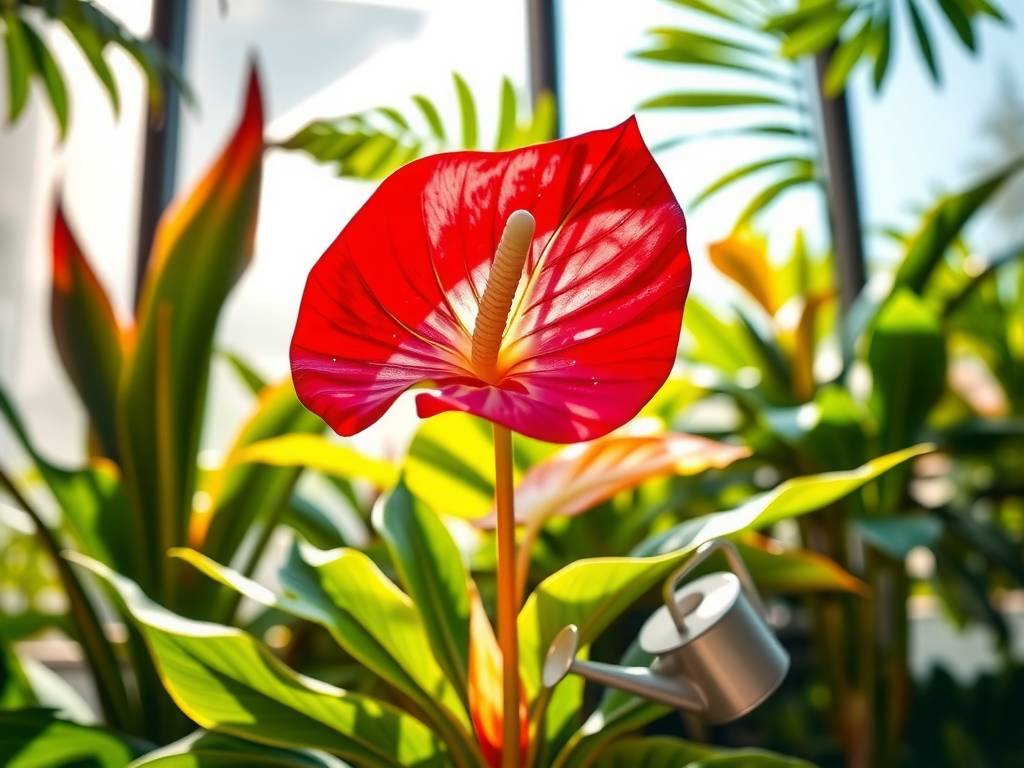
Keep those iconic leaves clean. Gently wipe the leaves with a damp cloth every few weeks. This removes dust, allows the plant to breathe and absorb more light efficiently, and helps you spot any potential pest issues early.
Why are the tips of my Anthurium leaves turning brown? Brown leaf tips are most commonly a sign of low humidity or inconsistent watering. They can also indicate a buildup of salts and minerals from tap water or fertilizer. Check your humidity levels and try switching to filtered water for irrigation. Ensure you're watering thoroughly when the top inch of soil is dry.
How often does an Anthurium need to be watered? There is no fixed schedule. The frequency depends on your home's light, temperature, and humidity. It could be once a week in a warm, bright room or every 10-14 days in a cooler, lower-light spot. Always use the finger test—checking the soil moisture—as your reliable guide.
Why is my Anthurium not producing new flowers? Insufficient light is the primary reason for a lack of blooms. Ensure it receives plenty of bright, filtered light. Also, consider your fertilization; a lack of nutrients can hinder flowering. Finally, remember that plants need a rest period. With proper care, it should resume blooming. Patience and consistent care with filtered light and balanced moisturizing maintenance are your best tools for encouraging those stunning, long-lasting spathes to appear.
By understanding and replicating the dappled light and moist, airy conditions of its native habitat, you transform Anthurium care from a guessing game into a simple routine. Pay attention to the signals your plant gives you—its leaf color, texture, and growth patterns. When you provide consistent filtered light and mindful moisturizing maintenance, your Anthurium andraeanum will reward you with spectacular, enduring beauty for years to come.