bluename
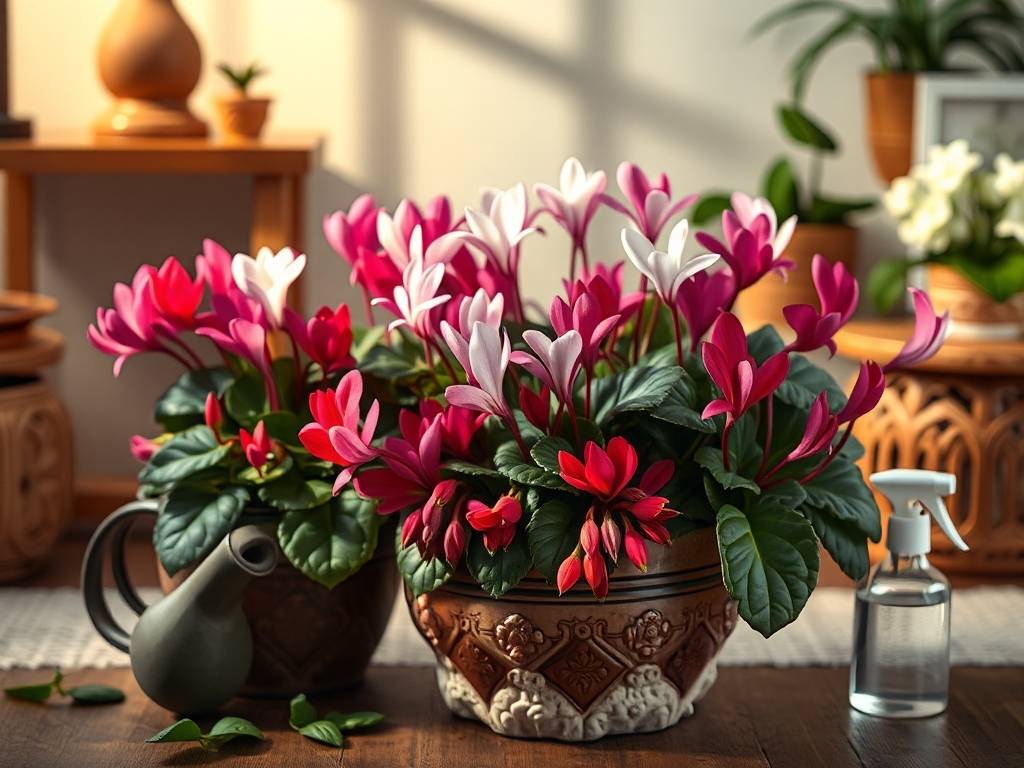
 # How to Care for Indoor Cyclamen: Rabbit-Ear Shaped Flowers with Rich, Vibrant Colors Cyclamen, with their unique rabbit-ear shaped blooms and vivid color palette, are among the most charming indoor plants, particularly popular during the cooler months. These delicate yet resilient plants offer a burst of color when many other flowers fade, making them a favorite for brightening homes during winter and early spring. This comprehensive guide will walk you through everything you need to know to successfully grow and maintain cyclamen, ensuring their distinctive beauty thrives in your indoor space. ## Understanding Cyclamen: A Plant Profile Cyclamen (Cyclamen persicum), often called Persian cyclamen, belongs to the Primulaceae family. Originating from the Mediterranean region, including parts of Greece, Turkey, and the Middle East, these plants have adapted to cool, shaded environments with well-draining soil—conditions that translate well to indoor cultivation with proper care. The most striking feature of cyclamen is undoubtedly their flowers. Emerging on slender stalks that rise above the foliage, the blooms have reflexed petals that curl backward, creating the distinctive "rabbit ear" shape that gives them their common nickname. The color range is impressive, spanning pure white, soft pink, deep magenta, rich red, and even bi-colored varieties, with some featuring delicate patterns or ruffled edges. Beneath the flowers, cyclamen produce heart-shaped leaves, often marbled with silver or gray patterns that add ornamental value even when the plant isn't in bloom. This combination of unique flowers and attractive foliage makes cyclamen a versatile decorative plant for various indoor settings. ## Light Requirements: Embracing Cool, Filtered Light Cyclamen's natural habitat in shaded woodlands and rocky slopes informs their light preferences—they thrive in bright but indirect light, avoiding the intense heat of direct sunlight. ### Ideal Lighting Conditions The perfect spot for cyclamen is a location that receives bright, filtered light for most of the day. East-facing windows are often ideal, as they provide gentle morning sunlight without the harsh afternoon rays. A north-facing window can also work if it's sufficiently bright, though flowering may be less prolific. If placing your cyclamen near a south or west-facing window, ensure it's filtered through a sheer curtain or positioned a few feet back from the glass to avoid direct sun exposure. This prevents leaf scorching and excessive drying of the plant. ### The Dangers of Incorrect Lighting Too much direct sunlight can cause cyclamen leaves to yellow, develop brown spots, or curl at the edges. The flowers may wilt prematurely, and the plant may become stressed, making it more susceptible to pests and disease. Conversely, insufficient light results in leggy growth, where flower stalks stretch toward the light source, becoming weak and prone to breaking. The plant may produce fewer flowers, and the foliage may lose its vibrant coloration, appearing pale or sparse. ### Supplementing with Artificial Light If natural light is limited, cyclamen can thrive under artificial lighting. Use cool-white fluorescent bulbs or LED grow lights positioned 12-18 inches above the plant. Provide 12-14 hours of light daily to maintain healthy growth and flowering. Avoid incandescent bulbs, as they produce excessive heat that can damage the plant. ## Temperature and Humidity: Creating Cool Comfort Cyclamen are unique plants that thrive in cooler conditions, making them well-suited for winter cultivation but requiring careful temperature management during warmer months. ### Optimal Temperature Range The ideal temperature for cyclamen is between 50-65°F (10-18°C). They can tolerate slightly cooler temperatures at night, down to around 45°F (7°C), which actually encourages more abundant flowering. Temperatures above 70°F (21°C) can cause problems, including premature dormancy, leaf yellowing, and flower drop. This is why cyclamen often struggle in centrally heated homes during winter—while we seek warmth, these plants prefer cooler conditions. ### Managing Temperature Fluctuations Avoid placing cyclamen near heat sources such as radiators, fireplaces, or heating vents, as the dry, warm air will quickly stress the plant. Similarly, keep them away from drafty windows or doors during cold weather, as sudden temperature drops below 40°F (4°C) can damage leaves and flowers. A good strategy is to find a cool room in your home that maintains consistent temperatures—perhaps a spare bedroom, dining room, or unheated sunroom. If your home is generally warm, placing the plant on a north-facing windowsill (where temperatures are cooler) can help maintain ideal conditions. ### Humidity Needs Cyclamen prefer moderate humidity levels, around 40-60%. Dry indoor air—common in winter due to heating systems—can cause leaf edges to brown and flowers to wilt. To increase humidity around your cyclamen: - Place the pot on a tray filled with pebbles and water (ensure the pot isn't sitting directly in water) - Group it with other plants to create a microclimate of higher humidity - Mist the air around the plant (avoid misting the leaves and flowers directly, as this can cause rot) - Use a room humidifier if dry air is a persistent problem ## Watering: Balancing Moisture and Drainage Proper watering is crucial for cyclamen health. These plants have specific needs that differ from many common houseplants, and incorrect watering is the primary cause of problems. ### The Right Way to Water Cyclamen have a unique root structure with a large corm (a bulb-like storage organ) at their base. Watering from above can lead to rot if water sits on the corm or in the crown of the plant. Instead, the preferred method is bottom watering: 1. Place the pot in a saucer or basin filled with room-temperature water 2. Allow the plant to absorb water through the drainage holes for 15-20 minutes 3. Remove the pot from the water and let excess water drain completely before returning it to its saucer This method ensures the roots receive adequate moisture without risking rot on the corm or foliage. ### Watering Frequency Check your cyclamen regularly, about once every 7-10 days, to assess moisture needs. The soil should be kept evenly moist but not soggy. Before watering, check the top inch of soil—if it feels dry to the touch, it's time to water. During active growth and flowering (typically fall to spring), the plant will need more frequent watering. As it enters dormancy in summer, reduce watering significantly. ### Avoiding Common Watering Mistakes Overwatering is the most dangerous mistake, leading to corm rot, yellowing leaves, and plant death. Signs of overwatering include: - Mushy, discolored corm - Foul odor from the soil - Yellow leaves that fall easily - Mold growth on soil surface Underwatering, while less common, will cause leaves to wilt and flowers to droop prematurely. The plant may enter dormancy early to conserve resources. Always use room-temperature water, as cold water can shock the roots. If using tap water, let it sit overnight to allow chlorine to dissipate, as some cyclamen are sensitive to chemicals in tap water. ## Soil and Potting: Creating the Perfect Growing Medium Cyclamen require well-draining soil that retains some moisture without becoming waterlogged—mimicking their natural habitat in rocky, humus-rich soils. ### Ideal Soil Composition A good cyclamen potting mix should be light, porous, and slightly acidic (pH 5.5-6.5). You can create an excellent mixture by combining: - 2 parts peat moss or coconut coir (for moisture retention) - 1 part perlite or vermiculite (for drainage) - 1 part sterile potting soil (for nutrients) - 1 part coarse sand (for additional drainage) Alternatively, look for commercial potting mixes labeled specifically for cyclamen or bulb plants, which are formulated to meet their needs. Avoid heavy garden soils or mixes designed for succulents, as they either retain too much moisture or drain too quickly. ### Pot Selection and Repotting Choose a pot with drainage holes that is only slightly larger than the corm—cyclamen prefer to be somewhat root-bound, which encourages flowering. A pot that's 4-6 inches (10-15 cm) in diameter is usually sufficient for a mature plant. Terra cotta pots are an excellent choice because they allow excess moisture to evaporate through their porous surface, reducing the risk of overwatering. Repot cyclamen only when necessary, typically every 1-2 years in late summer or early fall before new growth begins. When repotting: 1. Gently remove the plant from its current pot 2. Inspect the corm for signs of rot (healthy corms are firm and white/cream-colored) 3. Trim any dead roots 4. Place the corm in the new pot so that the top third is exposed (burying the entire corm causes rot) 5. Fill in with fresh potting mix, pressing lightly around the corm 6. Water lightly after repotting and place in a cool, shaded location until new growth appears ## Fertilizing: Feeding for Healthy Growth and Blooms Cyclamen have moderate nutrient needs during their active growth period, requiring regular feeding to support their flowering display. ### When to Fertilize Begin fertilizing when new growth appears in late summer or early fall, continuing through the flowering period (usually until spring). Stop fertilizing as the plant begins to enter dormancy in late spring or early summer. ### Choosing the Right Fertilizer Use a balanced, water-soluble fertilizer with an equal N-P-K ratio (such as 10-10-10) or one slightly higher in phosphorus to promote flowering (such as 5-10-5). Avoid high-nitrogen fertilizers, which encourage leaf growth at the expense of flowers. Look for fertilizers labeled for flowering houseplants or specifically for cyclamen. Organic options like fish emulsion or seaweed extract can also work well when diluted properly. ### Application Method Dilute the fertilizer to half the strength recommended on the package to avoid burning the plant's sensitive roots. Apply every 2-3 weeks during the active growing season, immediately after watering to ensure the fertilizer is evenly distributed and doesn't damage dry roots. Never apply fertilizer to a dormant cyclamen, as this can cause root burn and disrupt the natural growth cycle. ## Flowering and Dormancy: Understanding the Cyclamen Cycle Cyclamen have a natural growth cycle that includes a flowering period, followed by a dormant phase. Understanding and respecting this cycle is key to long-term plant health. ### Maximizing Flowering With proper care, cyclamen can flower for 8-12 weeks, typically from late fall through early spring. To extend the flowering period: - Remove spent flowers by twisting the stem gently at the base and pulling it out (this prevents seed formation, which diverts energy) - Maintain cool temperatures (below 65°F/18°C) - Provide consistent moisture without overwatering - Ensure adequate bright, indirect light ### Recognizing and Managing Dormancy As spring turns to summer, cyclamen naturally enter a dormant period. Signs include: - Yellowing leaves that die back - Cessation of new flower production - Overall decline in appearance This is a normal process, not a sign that your plant is dying. When dormancy begins: - Reduce watering gradually, allowing the soil to dry out slightly - Stop fertilizing completely - Move the plant to a cool, dry location with indirect light (around 50-60°F/10-15°C) - Let the foliage die back naturally—do not pull it off prematurely ### Post-Dormancy Care After 2-3 months of dormancy (usually in late summer), you'll notice new growth emerging from the corm. This signals the end of dormancy: - Repot if necessary (as described earlier) - Move the plant back to its bright, indirect light location - Resume regular watering (bottom watering method) - Begin fertilizing again as new growth develops With proper care, a healthy cyclamen can repeat this growth cycle for many years, providing beautiful blooms season after season. ## Grooming and Maintenance: Keeping Your Cyclamen Attractive Regular maintenance helps keep cyclamen looking their best and prevents potential problems. ### Deadheading Spent Flowers As mentioned, removing faded flowers prolongs the blooming period. Grasp the flower stem near its base, give it a gentle twist, and pull—it should come away cleanly from the corm. This prevents the plant from expending energy on seed production. ### Removing Yellow Leaves Yellow or dying leaves can be gently pulled away from the corm as they appear. This improves air circulation around the plant and reduces the risk of fungal diseases. Never cut healthy leaves, as they provide energy for the plant through photosynthesis. ### Cleaning Foliage Dust can accumulate on cyclamen leaves, dulling their appearance and reducing light absorption. Wipe leaves gently with a soft, damp cloth to remove dust, taking care not to damage the delicate foliage or dislodge flowers. ## Common Pests and Diseases: Prevention and Treatment Cyclamen are relatively pest-resistant but can be affected by several common houseplant pests and diseases, most of which are related to improper growing conditions. ### Pests to Watch For - **Aphids**: Small, soft-bodied insects that cluster on new growth and flower buds, sucking sap and causing distortion. Treat with insecticidal soap or a strong stream of water to dislodge them. - **Spider mites**: Tiny pests that cause stippling on leaves and produce fine webbing, particularly in dry conditions. Increase humidity and treat with insecticidal soap or neem oil. - **Thrips**: Slender insects that feed on flowers and leaves, causing silvery streaks and distorted growth. They can be difficult to control—use insecticidal soap and remove severely affected flowers. - **Mealybugs**: White, cottony insects that gather in leaf axils and on the corm. Treat with rubbing alcohol on a cotton swab or insecticidal soap. ### Common Diseases - **Botrytis blight**: A fungal disease causing gray mold on flowers and leaves, often in humid conditions. Improve air circulation, reduce humidity, and remove affected parts. - **Root/corm rot**: Caused by overwatering or poorly draining soil, resulting in mushy, discolored corms and roots. Prevent by using proper watering techniques and well-draining soil. If rot occurs, remove affected parts and repot in fresh soil. - **Leaf spot**: Fungal disease causing brown or black spots on leaves. Avoid overhead watering, improve air circulation, and treat with fungicide if necessary. The best defense against pests and diseases is maintaining proper growing conditions—healthy cyclamen are far more resistant to problems than stressed ones. ## Propagation: Growing New Cyclamen Plants Cyclamen can be propagated from seeds or by dividing corms, though both methods require patience and specific conditions. ### Seed Propagation 1. Collect seeds from mature cyclamen pods (allow pods to ripen on the plant until they split) 2. Soak seeds in warm water for 24 hours to improve germination 3. Sow seeds in a well-draining potting mix, covering lightly 4. Keep soil consistently moist and maintain temperatures around 60°F (15°C) 5. Cover with plastic to create humidity, removing periodically to allow air circulation 6. Germination can take 4-8 weeks 7. Once seedlings have 2-3 leaves, transplant to individual pots 8. Note that seed-grown cyclamen may take 18-24 months to flower ### Corm Division 1. Divide corms during dormancy, when the plant has no foliage 2. Gently remove the corm from the soil 3. Cut the corm into sections, ensuring each piece has at least one growing point (eye) 4. Dust cut surfaces with fungicide to prevent rot 5. Allow cut surfaces to dry for 24 hours 6. Plant each section in its own pot, with the top third of the corm exposed 7. Water lightly and place in a cool, shaded location until new growth appears Corm division is faster than seed propagation but can be tricky, as cut corms are prone to rot. This method works best with larger, mature corms. ## Troubleshooting Common Problems Even with proper care, you may encounter issues with your cyclamen. Here are solutions to some common problems: - **Flowers fading quickly**: Likely due to warm temperatures. Move to a cooler location (below 65°F/18°C) and ensure consistent moisture. - **Leaves turning yellow but plant not dormant**: Possible causes include overwatering, underwatering, or direct sunlight. Check soil moisture and light conditions. - **No flowers**: May be due to insufficient light, warm temperatures, or immature plant. Ensure proper light, cool conditions, and be patient—young plants may take time to mature. - **Wilting despite moist soil**: Probably root rot from overwatering. Check the corm for soft, mushy areas. If rot is present, remove affected parts and repot in fresh soil. - **Leaf edges browning**: Usually caused by dry air. Increase humidity around the plant. ## Decorative Uses: Showcasing Cyclamen in Your Home Cyclamen's unique beauty makes them versatile plants for various indoor settings: - **Table centerpieces**: Their compact size (typically 6-12 inches tall) makes them perfect for dining tables or coffee tables, especially when in bloom. - **Window displays**: Group several cyclamen in different colors on a windowsill for a vibrant display. - **Entryway accents**: Welcome guests with the cheerful blooms of cyclamen near your front door (ensure it's protected from cold drafts). - **Office plants**: Their preference for cool conditions makes them suitable for office environments, adding life to workspaces. - **Gift plants**: Cyclamen make excellent gifts for holidays, housewarmings, or special occasions, often available in decorative pots ready for immediate display. When displaying cyclamen, rotate the pot occasionally to ensure even growth, as the plant will tend to grow toward the light source. ## Conclusion: Enjoying the Unique Beauty of Cyclamen Cyclamen's distinctive rabbit-ear flowers and attractive marbled foliage offer a unique addition to indoor plant collections, particularly during the cooler months when their blooms bring much-needed color. While they have specific care requirements—cool temperatures, bright indirect light, careful watering—these needs are manageable with a little attention to detail. By understanding and respecting their natural growth cycle, including the dormant period, you can enjoy cyclamen for many years. The key is to remember their Mediterranean origins: they thrive in conditions that mimic those rocky, shaded hillsides—cool, well-lit, and with soil that drains quickly but retains some moisture. Whether you're a seasoned plant enthusiast or new to indoor gardening, cyclamen offers a rewarding experience. Their unusual flower shape, vibrant colors, and relatively long bloom period make them well worth the slight extra effort required to meet their specific needs. With the guidance provided in this comprehensive care guide, you'll be well-equipped to cultivate healthy, beautiful cyclamen that brighten your home year after year.