bluename
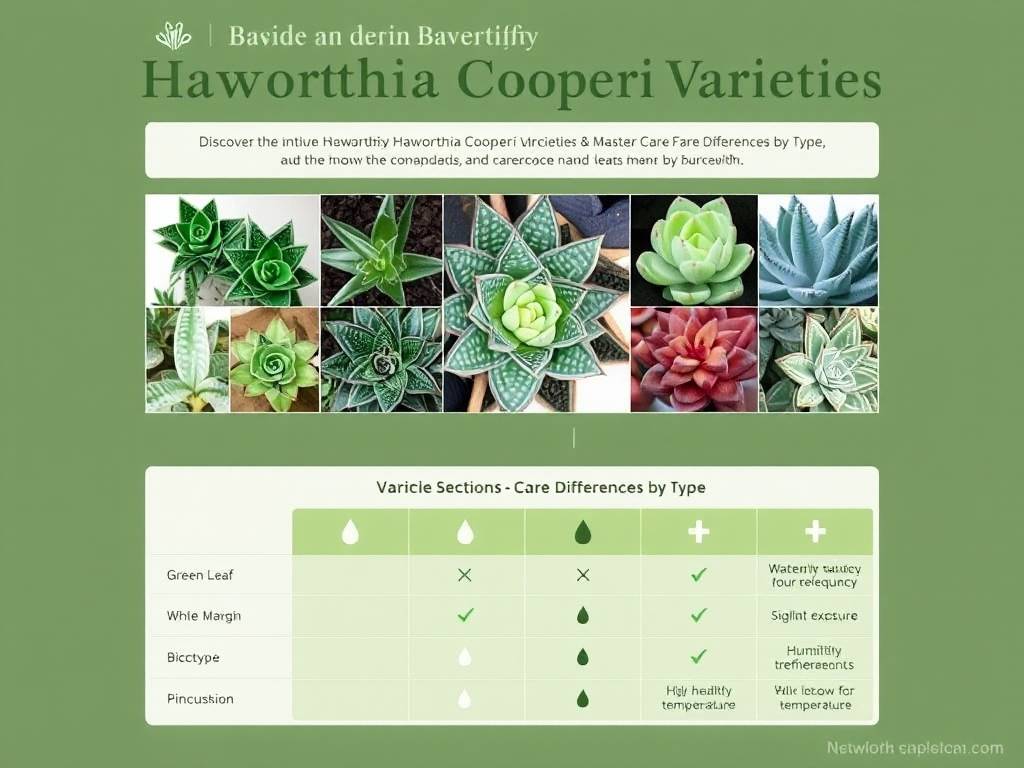
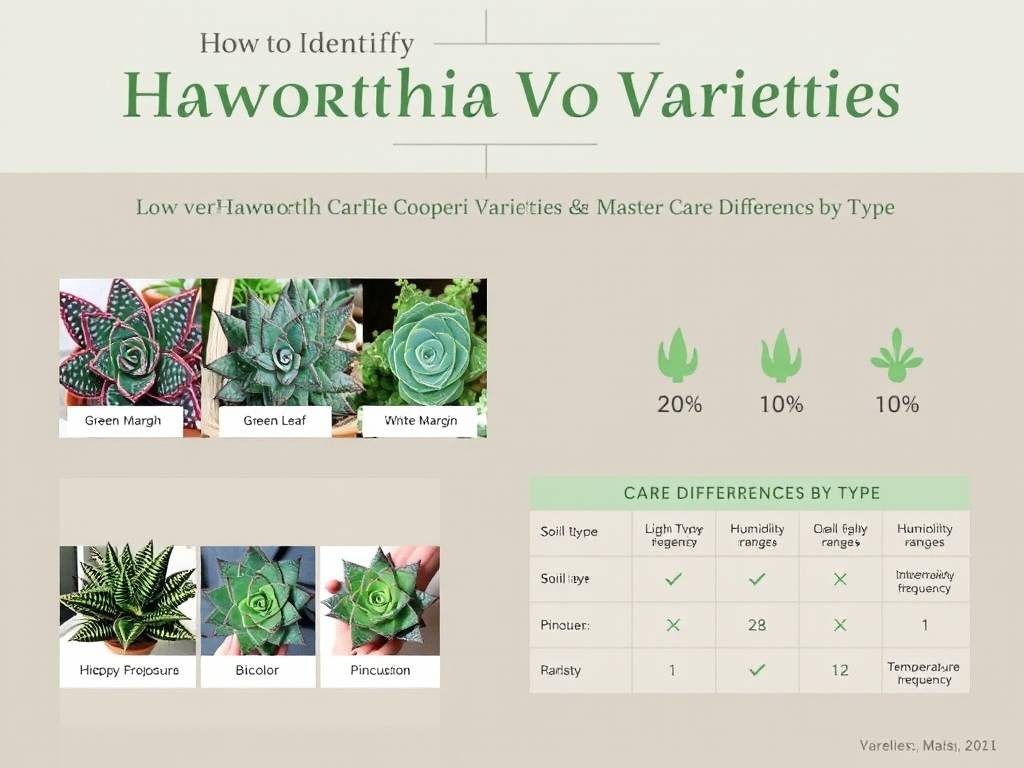
 # How to Identify Haworthia Cooperi Varieties & Master Care Differences by Type Haworthia cooperi, a beloved genus of succulents native to South Africa, has captivated plant enthusiasts worldwide with its delicate, translucent leaves and low-maintenance nature. Yet, with dozens of recognized varieties and countless hybrids, distinguishing between them can feel daunting—especially for new growers. Compounding the challenge is the fact that different types, such as those with large windows versus compact rosettes, have unique care needs that directly impact their health and appearance. In this guide, we’ll break down the process of identifying Haworthia cooperi varieties step by step, focusing on key visual cues that set them apart. We’ll also dive deep into care differences, ensuring you have all the information you need to nurture every type of Haworthia cooperi in your collection. Whether you’re a beginner wondering if your plant is H. cooperi var. pilifera or a seasoned grower seeking to optimize care for a windowed specimen, this article covers it all. ## Key Characteristics for Identifying Haworthia Cooperi Varieties To accurately identify Haworthia cooperi varieties, you’ll need to examine several core features of the plant. These characteristics—leaf structure, window size and shape, rosette form, texture, and color—are the most reliable indicators, as they vary consistently between distinct types. Let’s explore each in detail. ### Leaf Structure: Shape, Arrangement, and Size The leaves of Haworthia cooperi are the foundation of identification, with variations in shape, arrangement, and size that immediately narrow down possibilities. Most varieties form tight rosettes, but the individual leaf traits stand out: - **Leaf Shape**: Some varieties have thick, cylindrical leaves that taper to a point (e.g., H. cooperi var. truncata), while others feature more rounded, oval leaves (e.g., H. cooperi var. venusta). H. cooperi var. pilifera, for example, has slender, elongated leaves that curve slightly outward, giving the rosette a loose, airy appearance. - **Arrangement**: Leaves may grow in a compact, symmetrical rosette (common in H. cooperi var. cooperi) or spread slightly, creating a more open structure (seen in H. cooperi var. dielsiana). Pay attention to how tightly the leaves cluster—compactness is a key differentiator for certain varieties. - **Size**: Leaf length and width vary significantly. Miniature varieties like H. cooperi var. pygmaea have leaves under 2 cm long, while larger types such as H. cooperi var. obtusa can have leaves up to 5 cm in length. When observing leaf structure, compare your plant to reference images of known varieties. Note whether the leaves are stiff or fleshy, straight or curved, and how they attach to the rosette center—these subtle details often separate similar-looking types. ### Window Size, Shape, and Translucency One of the most distinctive features of Haworthia cooperi is the “window” – a translucent patch at the tip or upper surface of the leaf that allows light to penetrate for photosynthesis. Window characteristics are perhaps the most reliable identifier for many varieties: - **Large Window Varieties**: These types have prominent, wide windows that cover most of the leaf tip (e.g., H. cooperi var. truncata, often called the “horse’s teeth” Haworthia, due to its square-tipped leaves with large, flat windows). H. cooperi var. obtusa also boasts large, rounded windows that give the plant a glossy, jewel-like appearance. - **Small Window Varieties**: Varieties like H. cooperi var. pilifera have tiny, pinpoint windows at the leaf tips, barely visible to the naked eye. H. cooperi var. venusta features small, oval windows that contrast with the opaque lower portion of the leaf. - **Window Shape and Translucency**: Windows can be round, square, oval, or triangular. The translucency also varies—some are crystal clear (H. cooperi var. truncata), while others have a milky or frosted appearance (H. cooperi var. maughanii). To use windows for identification, hold your plant up to a light source. The size and shape of the translucent area will stand out, helping you distinguish between large-windowed varieties (like H. cooperi ‘Ice Lantern’) and small-windowed types (such as H. cooperi var. dielsiana). ### Rosette Form and Growth Habit The overall shape of the rosette and the plant’s growth habit (clumping or solitary) provide additional clues for identification: - **Compact Rosettes**: Varieties like H. cooperi var. cooperi form tight, symmetrical rosettes that stay low to the ground, rarely exceeding 8 cm in diameter. These plants grow slowly and tend to remain solitary unless propagated. - **Loose or Clumping Rosettes**: H. cooperi var. pilifera and H. cooperi var. reticulata often form loose rosettes that spread over time, producing offsets (pups) around the base. This clumping habit is a key trait for these varieties. - **Upright vs. Spreading**: Most Haworthia cooperi varieties grow horizontally, but some (like H. cooperi var. truncata) have a more upright growth habit, with leaves that stand slightly taller than the rosette center. When assessing rosette form, consider the plant’s age—young specimens may have looser rosettes that tighten as they mature. For clumping varieties, the presence of pups is a strong indicator, as solitary types rarely produce offsets without stress or maturity. ### Leaf Texture and Hairiness Texture is another underrated identifier for Haworthia cooperi varieties. While many succulents have smooth leaves, some Haworthia cooperi types feature unique textures: - **Smooth Leaves**: H. cooperi var. obtusa and H. cooperi var. truncata have smooth, waxy leaves that feel cool to the touch. The wax coating (bloom) may give the leaves a slightly frosted appearance, but the surface remains sleek. - **Hairy or Pilose Leaves**: H. cooperi var. pilifera is named for its fine, hair-like filaments (trichomes) that cover the leaf edges and tips. These hairs are soft to the touch and often white or translucent, adding a fuzzy texture. - **Reticulated or Veined Texture**: H. cooperi var. reticulata has leaves with a network of raised, dark veins that create a reticulated pattern. This texture is distinct and easy to feel when running your finger over the leaf surface. Texture is best observed with both sight and touch. Gently brush your finger over the leaves (taking care not to damage them) to feel for hairs, veins, or waxiness—these traits will help you rule out or confirm specific varieties. ### Color Variations While most Haworthia cooperi varieties are green, subtle color differences can aid in identification: - **Bright Green**: H. cooperi var. cooperi and H. cooperi var. venusta typically have vibrant, bright green leaves, especially when grown in moderate light. - **Pale or Silvery Green**: H. cooperi var. truncata often has paler, silvery-green leaves, with the windows appearing almost white when exposed to bright light. - **Red or Purple Tints**: Some varieties, like H. cooperi ‘Variegata’ (a variegated form), develop red or purple tints on the leaf edges when stressed by bright light or drought. H. cooperi var. pilifera may also show subtle red hues in intense light. Color can be variable based on growing conditions, so use it as a secondary clue rather than a primary identifier. A plant that’s grown in low light may be darker green than the same variety grown in bright, indirect light. ## Step-by-Step Guide to Identifying Haworthia Cooperi Varieties Now that you’re familiar with the key characteristics, let’s walk through a step-by-step process to identify your Haworthia cooperi. This methodical approach ensures you don’t miss any details and helps you narrow down possibilities efficiently. ### Step 1: Document Key Features Start by taking clear photos of your plant from multiple angles: top-down (to show the rosette shape and window pattern), side-on (to capture leaf structure and arrangement), and close-ups of individual leaves (to highlight texture and window details). If your plant has pups, include photos of the clumping habit. Next, jot down notes about each characteristic we covered: - Leaf shape (cylindrical, rounded, tapered) - Window size (large, small, pinpoint) and shape (round, square, oval) - Rosette form (compact, loose, clumping) - Leaf texture (smooth, hairy, veined) - Color (bright green, pale green, variegated) - Leaf size (approximate length and width) Having these notes and photos will make it easier to compare your plant to reference materials. ### Step 2: Compare to Known Varieties Use reliable resources—such as botanical databases (e.g., the World Checklist of Selected Plant Families), reputable succulent nurseries, or books on Haworthia—to compare your plant’s features to known varieties. Focus on the most distinctive traits first (e.g., large square windows = H. cooperi var. truncata; hairy leaves = H. cooperi var. pilifera). Here are some common Haworthia cooperi varieties and their key identifiers to reference: - **H. cooperi var. cooperi**: Compact rosette, rounded green leaves with small, round windows at the tips, smooth texture, solitary growth. - **H. cooperi var. truncata**: Thick, cylindrical leaves with square tips and large, flat windows, pale green color, upright rosette. - **H. cooperi var. obtusa**: Large, rounded leaves with wide, clear windows, bright green to pale green, compact rosette. - **H. cooperi var. pilifera**: Slender, curved leaves with tiny windows and soft white hairs on edges, loose clumping habit. - **H. cooperi var. reticulata**: Reticulated leaf texture (raised veins), small oval windows, pale green leaves, clumping growth. - **H. cooperi ‘Ice Lantern’**: Hybrid variety with extra-large, translucent windows that glow in light, compact rosette, smooth leaves. If your plant doesn’t match any of these exactly, it may be a hybrid or a less common variety. In that case, focus on the closest matches and note the differences—this will still help with care, as hybrids often share traits with their parent varieties. ### Step 3: Rule Out Similar Genera Haworthia cooperi is often confused with other succulent genera, such as Haworthia truncata (a different species, sometimes called “baby toes”) or Gasteria. To avoid misidentification: - **Haworthia truncata vs. H. cooperi var. truncata**: True H. truncata has leaves that grow in two rows (opposite each other), while H. cooperi var. truncata forms a rosette. - **Gasteria vs. Haworthia cooperi**: Gasteria leaves are usually thicker, more fleshy, and have a rough texture with visible spots, whereas Haworthia cooperi leaves are smoother (or hairy) with distinct windows. By ruling out these look-alikes, you’ll confirm that your plant is indeed a Haworthia cooperi variety. ### Step 4: Consult Expert Resources or Communities If you’re still unsure, reach out to succulent enthusiast communities (e.g., Reddit’s r/succulents, Facebook groups, or local plant clubs) or reputable nurseries. Share your photos and notes—experienced growers often recognize varieties at a glance and can provide guidance. Botanical gardens with succulent collections are also valuable resources. Many have labeled Haworthia cooperi varieties, allowing you to compare your plant in person. ## Care Differences for Haworthia Cooperi Varieties Once you’ve identified your Haworthia cooperi variety, it’s time to tailor your care routine to its specific needs. While all Haworthia cooperi share basic succulent care requirements (well-draining soil, infrequent watering), key differences emerge based on window size, leaf structure, and growth habit. Below, we’ll break down care by type, focusing on the most impactful factors: light, water, soil, potting, and temperature. ### Light Requirements: Adjusting for Window Size Light is the most critical care factor for Haworthia cooperi, and window size directly influences how much light each variety needs. The window’s purpose is to absorb light for photosynthesis, so varieties with larger windows require different light conditions than those with small or no windows. #### Large Window Varieties (e.g., H. cooperi var. truncata, H. cooperi ‘Ice Lantern’, H. cooperi var. obtusa) Large-windowed Haworthia cooperi varieties are adapted to filter light through their translucent leaves. They thrive in **bright, indirect light** but can scorch if exposed to direct sunlight for extended periods. - **Ideal Light**: Place them near a south or east-facing window with a sheer curtain to diffuse light. If growing outdoors, choose a shaded spot (e.g., under a tree or patio cover) to avoid midday sun. - **Signs of Too Much Light**: The windows may turn white or brown, and leaf edges may develop red or purple burns. - **Signs of Too Little Light**: The rosette will stretch (etiolate), leaves will become leggy, and the windows will lose their translucency (turning dull green). These varieties rely on their windows to capture light, so avoiding direct sun ensures the delicate window tissue doesn’t damage. Bright, filtered light will keep their colors vibrant and windows clear. #### Small Window Varieties (e.g., H. cooperi var. pilifera, H. cooperi var. reticulata, H. cooperi var. pygmaea) Small-windowed Haworthia cooperi varieties have less translucent surface area, so they need slightly more light to photosynthesize effectively. They tolerate **moderate to bright indirect light** and can handle short periods of morning or evening direct sun. - **Ideal Light**: A south-facing window without a curtain (for 2-3 hours of morning sun) or an east-facing window with direct morning light. Outdoors, they can tolerate partial sun (4-6 hours of filtered light daily). - **Signs of Too Much Light**: Leaf edges may dry out or turn brown, and hairy varieties (like H. pilifera) may lose their soft filaments. - **Signs of Too Little Light**: The plant will become leggy, leaves will grow sparse, and the rosette will lose its compact shape. Small-windowed varieties are more resilient to direct light than large-windowed types, but they still need protection from intense midday sun. Finding a balance between light and shade will promote healthy growth. ### Watering: Matching to Leaf Structure and Growth Habit Haworthia cooperi is a drought-tolerant succulent, but watering needs vary based on leaf thickness, rosette compactness, and growth habit. Overwatering is the biggest threat to all varieties, but some are more susceptible than others. #### Thick-Leaf Varieties (e.g., H. cooperi var. truncata, H. cooperi var. obtusa) Varieties with thick, fleshy leaves store more water in their tissues, so they require less frequent watering. These plants are prone to root rot if soil stays moist for too long. - **Watering Schedule**: Water thoroughly when the soil is 100% dry—usually every 2-3 weeks in spring and summer, and every 4-6 weeks in fall and winter (when growth slows). - **Watering Method**: Use the “soak and dry” method: water until it drains out the bottom of the pot, then empty the saucer to avoid standing water. - **Key Tip**: Thick leaves retain moisture for weeks, so err on the side of underwatering. If leaves start to wrinkle or feel soft, it’s a sign the plant needs water. #### Thin-Leaf or Hairy Varieties (e.g., H. cooperi var. pilifera, H. cooperi var. dielsiana) Varieties with thinner leaves or hairy filaments store less water, so they need slightly more frequent watering—though still far less than non-succulent plants. Hairy leaves can trap moisture, so care must be taken to avoid wetting the foliage. - **Watering Schedule**: Water when the top 2-3 cm of soil is dry—usually every 1-2 weeks in spring and summer, and every 3-4 weeks in fall and winter. - **Watering Method**: Water at the base of the plant (avoiding the leaves) to prevent rot or fungal growth on hairy surfaces. Use a narrow-spouted watering can for precision. - **Key Tip**: Hairy leaves are more sensitive to moisture, so ensure the plant has good air circulation to dry quickly after watering. #### Clumping Varieties (e.g., H. cooperi var. pilifera, H. cooperi var. reticulata) Clumping varieties produce offsets that grow close to the parent plant, creating a dense cluster. This growth habit can trap moisture between leaves, increasing the risk of rot. - **Watering Tip**: Water even more sparingly than solitary varieties, as the dense growth retains humidity. Ensure the soil is completely dry before watering, and avoid getting water between the leaves. - **Potting Consideration**: Choose a wide, shallow pot to allow air circulation around the clump, reducing moisture buildup. ### Soil and Potting: Ensuring Proper Drainage for All Types All Haworthia cooperi varieties require well-draining soil to prevent root rot, but the exact mix can be adjusted based on growth habit and leaf structure. #### Soil Mix for All Varieties A basic well-draining succulent mix works for most Haworthia cooperi, but adding extra ingredients improves drainage for sensitive varieties: - **Base Mix**: 50% potting soil (use a lightweight, organic mix) + 50% inorganic material (perlite, pumice, or coarse sand). - **For Thick-Leaf/Large-Window Varieties**: Increase inorganic material to 60-70% (e.g., 40% potting soil + 60% perlite/pumice) to enhance drainage, as these varieties are more prone to root rot. - **For Clumping/Thin-Leaf Varieties**: Stick to 50-50 mix, as they need slightly more moisture retention than thick-leaf types. Avoid using heavy, clay-based soils or mixes with added fertilizer—these can retain too much water and burn the plant’s roots. #### Potting Tips by Variety - - **Solitary Varieties (e.g., H. cooperi var. cooperi, H. cooperi var. truncata)**: Choose a deep pot (2-3 inches wider than the rosette) to accommodate their taproot system. Ensure the pot has multiple drainage holes—terracotta pots are ideal, as they absorb excess moisture and prevent soil from staying wet. - **Clumping Varieties (e.g., H. cooperi var. pilifera, H. cooperi f. variegata)**: Opt for shallow, wide pots to let offsets spread naturally. A 4-6 inch wide pot can house a mature clump for several years. Avoid overcrowding by repotting only when offsets cover the entire soil surface. ### Temperature and Humidity: Universal Needs with Minor Adjustments Haworthia cooperi varieties share similar temperature and humidity preferences, as they all originate from South Africa’s temperate grasslands. However, variegated or thin-leaf types are slightly more sensitive to extreme conditions. #### Temperature Tolerance for All Varieties The ideal temperature range for active growth is **65-75°F (18-24°C)** . Most varieties tolerate brief dips to 40°F (4°C), but prolonged cold below 50°F (10°C) slows growth. Key considerations: - **Winter Protection**: Keep all varieties above 50°F (10°C) in winter. Variegated types like H. cooperi f. variegata are less cold-hardy—avoid exposing them to temperatures below 55°F (13°C) . - **Summer Dormancy**: Unlike many succulents, Haworthia cooperi enters partial dormancy in extreme heat (above 85°F/29°C). During this period, move plants to cooler spots (e.g., away from south-facing windows) and reduce watering . #### Humidity Requirements All Haworthia cooperi thrive in **low to average humidity (40-60%)** . They struggle in high humidity (above 70%), which increases rot risk—especially for clumping or hairy varieties: - **Indoor Environments**: Avoid placing plants in bathrooms or kitchens with steamy air. Use a fan to improve air circulation if humidity is high. - **Hairy Varieties (e.g., H. cooperi var. pilifera)**: Ensure leaves stay dry to prevent fungal growth on trichomes. Avoid misting, as moisture trapped in hairs leads to leaf rot . ### Fertilizing: Minimal Feeding for Slow Growers Haworthia cooperi are slow-growing and require little fertilizer. Overfeeding causes leaf burn and weakens plants, so follow a “less is more” approach tailored to growth cycles. #### Feeding Schedule by Season - **Growth Season (Spring-Fall)**: Apply a diluted liquid succulent fertilizer (1/4 strength) once monthly. Choose a balanced formula (10-10-10) or one high in phosphorus to support root health . - **Dormancy (Winter-Summer Heat)**: Stop fertilizing entirely. Summer dormancy means plants can’t absorb nutrients, while winter cold slows metabolism . #### Varietal Adjustments - **Thick-Leaf Varieties**: Fertilize every 6 weeks instead of monthly—their stored moisture dilutes nutrients, reducing need for frequent feeding. - **Variegated/ Rare Varieties (e.g., H. cooperi f. variegata)**: Use a fertilizer with lower nitrogen (5-10-10) to prevent excessive green growth that masks variegation . ### Propagation: Easy Methods for All Types Propagating Haworthia cooperi is straightforward, with methods varying slightly by growth habit. Clumping varieties are easiest to propagate via offsets, while solitary types work well with leaf cuttings. #### Offsets (Pups): Best for Clumping Varieties This is the most reliable method for H. cooperi var. pilifera, H. cooperi f. variegata, and H. cooperi var. reticulata: 1. **Timing**: Propagate in spring when offsets are 1-2 inches tall and have their own roots . 2. **Separation**: Gently remove the parent plant from its pot. Pull offsets away from the base, or use a clean knife to cut them if attached by thick roots. 3. **Callusing**: Let offsets dry for 2-3 days until the cut end forms a callus (prevents rot) . 4. **Planting**: Place offsets in well-draining soil (same mix as the parent). Water lightly after 1 week, then follow normal watering schedules. #### Leaf Cuttings: For Solitary or Thick-Leaf Varieties Ideal for H. cooperi var. truncata, H. cooperi var. obtusa, and H. cooperi var. cooperi: 1. **Leaf Selection**: Choose healthy, mature leaves. Twist gently at the base to remove them—ensure the entire leaf (including the petiole) comes off . 2. **Callusing**: Lay leaves on a paper towel in a dry, shaded spot for 3-5 days until the cut end calluses. 3. **Rooting**: Place leaves on top of moist (not wet) succulent soil. Keep in bright indirect light and mist soil lightly if it dries out. 4. **Transplanting**: Once roots (1-2 inches long) and tiny rosettes form (4-6 weeks), transplant into individual pots. #### Seed Propagation: For Rare Varieties Use this method for hard-to-find types like H. cooperi var. doldii: 1. **Seed Collection**: Harvest seeds from spent flower stalks in late summer. 2. **Sowing**: Sprinkle seeds on well-draining soil. Cover lightly with sand and mist. 3. **Germination**: Keep soil moist and warm (65-75°F/18-24°C). Seeds germinate in 2-4 weeks. 4. **Care**: Thin seedlings once they have 2-3 leaves. Grow slowly in bright indirect light for 6-12 months before transplanting. ## Troubleshooting Common Issues Across Varieties Even with proper care, Haworthia cooperi may face problems. Most issues stem from watering or light mistakes, but solutions vary slightly by variety. ### Overwatering: The #1 Threat Signs include yellowing leaves, mushy stems, and root rot. Fixes depend on severity: - **Mild Cases**: Stop watering until soil is bone dry. Remove any yellow leaves and improve drainage by adding perlite to the soil. - **Severe Cases**: Repot the plant. Remove rotted roots (brown/black, mushy) with clean scissors. Dip roots in fungicide, then repot in fresh, dry succulent mix. - **Clumping Varieties**: Check between offsets for trapped moisture—use a cotton swab to absorb excess water and increase airflow . ### Underwatering: Easy to Correct Signs include wrinkled, soft leaves and stunted growth. Water thoroughly (soak and dry method) and adjust schedule: - **Thin-Leaf Varieties**: Water every 1-2 weeks in growth season instead of 2-3 weeks . - **Thick-Leaf Varieties**: Wrinkles may take 1-2 weeks to resolve—avoid overcompensating with frequent watering. ### Pests: Rare but Preventable Haworthia cooperi rarely gets pests, but mealybugs and spider mites can appear : - **Mealybugs**: White, fuzzy pests that cluster in leaf axils. Wipe them off with a cotton swab dipped in rubbing alcohol. For severe infestations, spray neem oil . - **Spider Mites**: Tiny red bugs that leave webbing. Rinse leaves with water and spray insecticidal soap. Hairy varieties need gentle treatment—avoid rubbing hairs off. ### Leaf Discoloration: Diagnosing the Cause - **Brown Spots on Windows**: Too much direct sun. Move large-window varieties (e.g., H. cooperi var. truncata) to a shadier spot . - **Red/Purple Leaf Edges**: Normal stress response to bright light (common in H. cooperi var. pilifera) or cold. No action needed unless leaves dry out . - **Dull, Dark Green Leaves**: Too little light. Gradually increase light exposure—etiolated plants (leggy growth) may need pruning to restore shape. ## Final Tips for Growing Healthy Haworthia Cooperi - **Observe Regularly**: Check leaves, soil, and roots monthly. Catching issues early (e.g., rot, pests) makes recovery easier. - **Avoid Handling Too Much**: Hairy or variegated varieties have delicate leaves—excess touching damages trichomes or fades variegation . - **Be Patient**: These are slow growers. A mature, healthy rosette may take 2-3 years to form—resist repotting too often. - **Embrace Natural Variation**: Even same-variety plants look different based on conditions. A H. cooperi var. obtusa grown in low light may have smaller windows than one in bright light—and that’s okay. By combining careful identification with tailored care, you’ll unlock the full potential of your Haworthia cooperi collection. Whether you’re admiring the large, glowing windows of ‘Ice Lantern’ or the fuzzy leaves of var. pilifera, these unique succulents reward attention to detail with years of beauty. This guide covers identification cues, variety-specific care, and troubleshooting to help you grow thriving Haworthia cooperi. If you’d like to dive deeper into a specific variety (like the rare var. doldii) or need help diagnosing a plant issue, feel free to share photos or details—I can refine advice to your collection’s needs.