bluename
 Understanding the World of Ivy
Ivy, with its lush foliage and elegant vines, has long been a favorite among gardeners and plant enthusiasts. Whether gracing the walls of an ancient European manor or adding a touch of greenery to a modern urban apartment, ivy brings a sense of natural beauty and tranquility. However, not all ivies are created equal. There are numerous varieties, each with its own unique characteristics, and understanding how to distinguish between them and cater to their specific care needs is essential for successful cultivation.
In the world of horticulture, ivy is highly regarded for its versatility and aesthetic appeal. It can be used in a variety of ways, from ground cover to vertical wall decoration, and even as a charming indoor potted plant. Its ability to adapt to different environments and grow in various conditions makes it a popular choice for both novice and experienced gardeners. But with so many types available, from the native Chinese Ivy to the widely - known English Ivy, it's easy to get confused. Differentiating between these varieties is not just a matter of botanical curiosity; it directly impacts how we care for them. For example, some ivies are more cold - tolerant, while others thrive in warmer, more humid climates. Some prefer partial shade, while others can tolerate more sunlight. By learning to tell the difference between ivy varieties, we can provide the optimal growing conditions, ensuring our plants stay healthy and vibrant.
Identifying Chinese Ivy
Appearance Features
Chinese Ivy (Hedera nepalensis var. sinensis), also known as the Chinese evergreen ivy, is a distinctive and beautiful plant with several unique appearance features. Its leaves are a key characteristic for identification. The leaves on non - flowering, or vegetative, branches are often triangular - ovate or triangular - oblong in shape, typically measuring 5 - 12 centimeters in length and 3 - 10 centimeters in width. They have a distinct, elegant look with a smooth, leathery texture (革质), known as being leathery or coriaceous. The edges can be either entirely smooth (全缘) or have up to three shallow lobes. The color of the upper surface of the leaf is a deep, rich green that glistens with a natural sheen, while the underside is a paler shade, usually light green or light yellow - green. The veins, both the lateral veins (侧脉) and the reticulate veins (网脉), are clearly visible on both sides of the leaf, adding to its ornamental value.
When it comes to the leaves on flowering branches, they take on a somewhat different form. These are usually elliptic - ovate to elliptic - lanceolate, slightly skewed and with a rhombus - like appearance. They are generally larger, ranging from 5 - 16 centimeters in length and 1.5 - 10.5 centimeters in width. The tip of these leaves is gradually pointed, and the base can vary from wedge - shaped to round.
The stems of Chinese Ivy are another important aspect of its appearance. They can grow to be quite long, typically reaching 3 - 20 meters. The stems are grey - brown or black - brown in color and are adorned with numerous aerial roots (气生根). These aerial roots play a crucial role in helping the plant attach to various surfaces as it climbs. Younger stems are covered in tiny, scale - like hairs, which give them a slightly fuzzy texture when touched.
Growth Habits
Chinese Ivy is known for its relatively fast growth rate under suitable conditions. In a single growing season, it can extend its vines significantly, often adding several feet to its length. This makes it an excellent choice for quickly covering a wall, fence, or trellis. It has a strong climbing ability, using its aerial roots to firmly grip onto surfaces such as tree trunks, rocks, and building walls. This adaptability allows it to thrive in a variety of natural and man - made landscapes.
In terms of its preferred growth environment, Chinese Ivy is highly adaptable. It has a strong tolerance for shade, making it an ideal plant for areas with limited sunlight, such as the north side of buildings or under the canopy of large trees. However, it can also tolerate some exposure to sunlight, especially in the morning or late afternoon. It thrives in a relatively wide temperature range. It can endure cold temperatures to a certain extent, being able to tolerate brief drops to around - 7 to - 8℃. This makes it suitable for growth in many temperate regions across China and other similar - climate areas.
Chinese Ivy also has a high tolerance for drought and dust, which contributes to its ability to survive in urban environments with varying levels of air quality. It is not overly picky about soil conditions, but it does best in well - drained, fertile soils that are rich in organic matter. Whether the soil is slightly acidic or neutral, Chinese Ivy can usually adapt and grow healthily. In the wild, it is commonly found climbing on trees in forest margins, along the sides of roads in wooded areas, on rocky outcrops, and even on the walls of old buildings, adding a touch of natural greenery to these diverse landscapes.
Recognizing English Ivy
Visual Traits
English Ivy (Hedera helix), also known as Common Ivy, is a popular and widely - recognized evergreen climbing plant. Its visual characteristics are quite distinct and can be used as key identifiers.
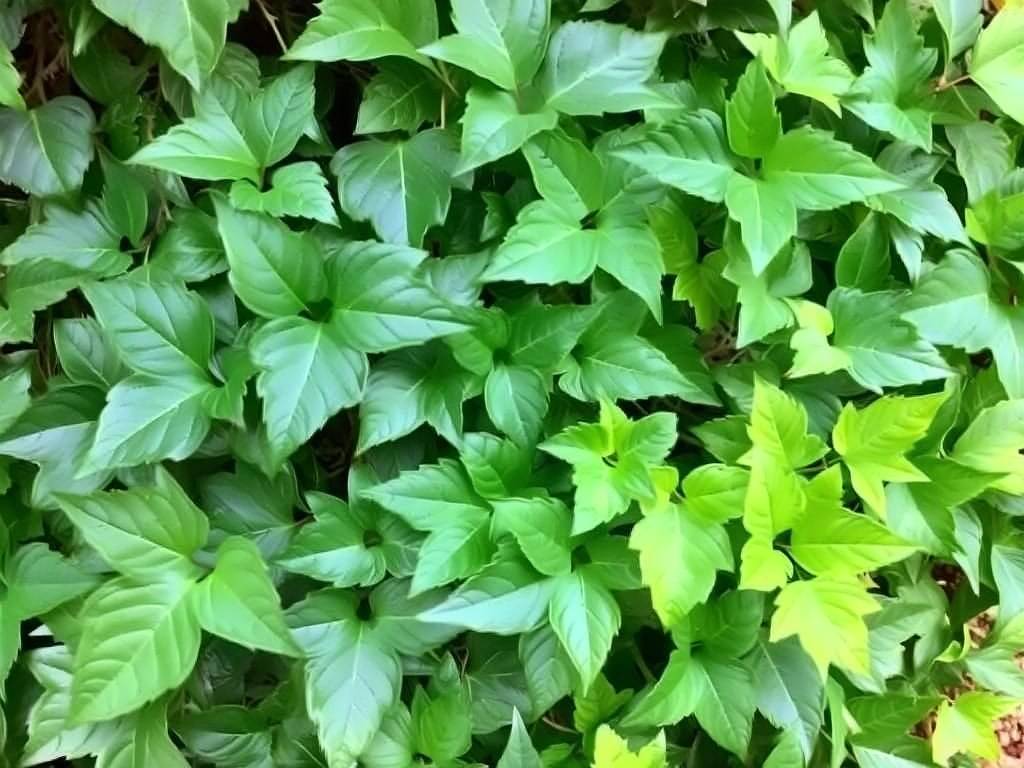
The leaves of English Ivy are one of its most notable features. They are typically thick and leathery in texture, which helps the plant retain moisture. On non - flowering, or vegetative, branches, the leaves are often palmately lobed, usually with 3 - 5 lobes. The lobes are generally broad at the base and taper to a point, creating a somewhat triangular - ovate shape. The leaf size can vary, but they usually measure around 5 - 10 centimeters in length. The upper surface of the leaf is a deep, glossy green, which gives it an attractive sheen, while the underside is a slightly lighter shade of green. One unique aspect of the leaves is the presence of prominent veins. The main veins radiate out from the base of the leaf towards the lobes, and the secondary veins form a reticulate pattern, adding to the leaf's intricate appearance.
In addition to the typical green - leaved form, there are also many variegated cultivars of English Ivy. These varieties have leaves with patterns of white, cream, or yellow. For example, in the 'Variegata' cultivar, the leaves have irregular white margins, which contrast beautifully with the green center. The 'Goldchild' variety has leaves that are predominantly yellow - green with a central patch of darker green, creating a stunning visual effect.
The stems of English Ivy are another characteristic feature. They can grow quite long, reaching up to 20 - 30 meters in the right conditions. The stems are thin but strong, with numerous aerial roots along their length. These aerial roots are small, hair - like structures that allow the plant to attach firmly to various surfaces such as walls, trees, and fences. The young stems are often a lighter green color and may have a slightly hairy or fuzzy texture due to the presence of small, fine hairs. As the stems mature, they become woodier and turn a brownish - green color.
Growth Patterns
English Ivy has specific growth patterns and environmental preferences. It is a vigorous grower and can quickly cover large areas if given the space and suitable conditions. In terms of sunlight requirements, it is a shade - tolerant plant. It can thrive in areas with limited direct sunlight, such as the north - facing sides of buildings or under the canopy of trees. However, it can also tolerate some exposure to sunlight, especially in the morning or late afternoon. In fact, a little bit of sunlight can enhance the color and overall health of the plant, but too much direct sunlight, especially during the hot summer months, can cause the leaves to scorch.
Regarding temperature, English Ivy is relatively cold - hardy. It can tolerate temperatures as low as 2 - 3℃ and is suitable for growth in temperate regions. It is native to Europe, North Africa, and western Asia, and has been widely introduced and naturalized in many other parts of the world, including North America. In these regions, it can be found growing in a variety of habitats, from forests to urban areas.
English Ivy is not overly picky about soil conditions. It can grow in a range of soil types, but it prefers well - drained, fertile soils that are rich in organic matter. It can tolerate slightly acidic to slightly alkaline soils, with a pH range of around 5.5 - 7.5. This adaptability to different soil conditions contributes to its wide distribution and popularity as a garden and ornamental plant. Whether used to cover a bare wall, as a ground cover in a shaded garden area, or as a potted plant indoors, English Ivy's growth patterns and environmental adaptability make it a versatile and attractive choice for adding greenery and beauty to various landscapes.
Key Differences for Identification
Leaf Contrasts
When it comes to differentiating between Chinese Ivy and English Ivy, the leaves offer some of the most obvious clues.
The leaf shape of Chinese Ivy on non - flowering branches is often triangular - ovate or triangular - oblong, with a relatively simple and smooth - edged profile, which may have up to three shallow lobes. In contrast, English Ivy on non - flowering branches typically has palmately lobed leaves, usually with 3 - 5 lobes that are broader at the base and taper to a point, giving it a more complex and distinctively lobed appearance compared to Chinese Ivy.
Color is another differentiator. Chinese Ivy has a deep, rich green upper leaf surface with a natural sheen, and a paler light green or light yellow - green underside. English Ivy also has a deep, glossy green upper surface, but the contrast between the upper and lower surfaces may not be as pronounced as in Chinese Ivy, and the underside is just a slightly lighter shade of green. Additionally, English Ivy has many variegated cultivars with leaves featuring patterns of white, cream, or yellow, which is a characteristic not found in the typical Chinese Ivy.
In terms of texture, both are leathery, but the leaves of English Ivy often feel slightly thicker, which helps it better retain moisture, an adaptation that suits its native habitats in Europe and other regions with different climate conditions compared to the areas where Chinese Ivy is native.
Size can also be a factor. While there can be some overlap, generally, the leaves of Chinese Ivy on non - flowering branches are 5 - 12 centimeters in length and 3 - 10 centimeters in width, and those on flowering branches are 5 - 16 centimeters in length and 1.5 - 10.5 centimeters in width. English Ivy leaves usually measure around 5 - 10 centimeters in length, which are slightly smaller on average compared to the larger - sized leaves of Chinese Ivy on flowering branches.
Growth Habit Disparities
The growth habits of Chinese Ivy and English Ivy also display significant differences.
Growth rate is one aspect. Chinese Ivy is known for its relatively fast growth rate. Under suitable conditions, it can extend its vines substantially in a single growing season, often adding several feet to its length. English Ivy is also a vigorous grower, but the growth rate may be slightly different. In some cases, English Ivy may take a bit longer to reach the same length as Chinese Ivy in a given time period, although both can quickly cover large areas if provided with the right space and environmental conditions.
Their climbing methods are quite similar as they both use aerial roots to attach to surfaces. However, in different environments, they may show some variations in how they utilize this climbing ability. Chinese Ivy is highly adaptable and can be found climbing on a wide range of surfaces such as tree trunks, rocks, and building walls in various landscapes, from forest margins to urban areas. English Ivy, native to Europe, North Africa, and western Asia, has also adapted to different habitats. In its native regions, it can be seen climbing on old buildings, trees in forests, and even in shaded gardens, but its distribution and climbing behavior may be influenced by the local climate and availability of suitable surfaces.
Space occupation is another difference. As Chinese Ivy grows rapidly, it can quickly fill up vertical spaces, making it an excellent choice for quickly covering a wall, fence, or trellis. It has a more expansive growth pattern in terms of vertical coverage. English Ivy, while also capable of covering large areas, may have a more spreading or creeping growth habit in some cases, especially when used as a ground cover in shaded garden areas. It can also grow vertically, but its growth may be more controlled in terms of how it spreads horizontally, depending on the growing conditions and the support structures available.
Maintenance of Chinese Ivy
Light Requirements
Chinese Ivy is a shade - tolerant plant, which means it thrives in areas with limited direct sunlight. In its natural habitat, it often grows under the canopy of trees or on the north - facing sides of buildings, receiving dappled or filtered light. When grown indoors, it should be placed in a location that offers bright, indirect light. A spot near a north - or east - facing window is ideal, as these windows provide gentle, morning sunlight or diffused light throughout the day.
If Chinese Ivy is exposed to too much direct sunlight, especially during the hot summer months, the leaves can become scorched. This is characterized by the appearance of brown, dry patches on the leaves, and in severe cases, the leaves may start to curl and drop off. On the other hand, insufficient light can also be a problem. If the plant is kept in a very dark corner for an extended period, it may grow slowly, and the leaves may become smaller, paler, and less vibrant. The stems may also become leggy as the plant stretches towards the available light source.
Watering Guidelines
Watering Chinese Ivy requires finding the right balance. In general, the plant prefers a consistently moist but not waterlogged environment. During the growing season, which typically spans from spring to autumn, the soil should be kept moderately moist. You can check the moisture level of the soil by inserting your finger about an inch or two into the soil. If it feels dry at this depth, it's time to water. Usually, watering once every 2 - 3 days during this period is sufficient, but this can vary depending on factors such as the temperature, humidity, and the type of potting medium used.
In summer, when the temperature is high and the air is dry, the evaporation rate is faster. As a result, you may need to water more frequently, perhaps even daily. However, be careful not to over - water, as this can lead to root rot. Always ensure that the pot has good drainage holes to allow excess water to escape. Water until you see it draining out of the bottom of the pot, and then stop.
In winter, Chinese Ivy enters a period of slower growth. The watering frequency should be reduced significantly. Allow the soil to dry out a bit more between waterings, perhaps watering only once every 7 - 10 days. This helps prevent the roots from sitting in overly wet soil during the colder months when the plant's water requirements are lower.
Soil Preferences
Chinese Ivy thrives in well - drained, fertile soil that is rich in organic matter. A good potting mix for Chinese Ivy can be made by combining equal parts of peat moss, perlite, and compost. Peat moss helps retain moisture while providing a slightly acidic environment, which Chinese Ivy appreciates. Perlite improves drainage and aeration, ensuring that the roots have access to oxygen. Compost enriches the soil with nutrients, promoting healthy growth.
The ideal soil pH for Chinese Ivy ranges from slightly acidic to neutral, typically between 5.5 and 7.0. If the soil is too alkaline, the plant may experience nutrient deficiencies, especially of iron and manganese, which can lead to yellowing of the leaves (chlorosis).
Good drainage is crucial for Chinese Ivy. Standing water in the soil can cause the roots to rot, leading to the decline and possible death of the plant. If you are planting Chinese Ivy in a garden, make sure the area has well - drained soil. If the natural soil is heavy clay, you can amend it by adding sand, perlite, or organic matter to improve drainage. In containers, using a potting mix with good drainage properties and ensuring the pot has sufficient drainage holes is essential.
Fertilization Advice
During the growing season, Chinese Ivy benefits from regular fertilization. A balanced, water - soluble fertilizer with an N - P - K ratio of 10 - 10 - 10 (nitrogen - phosphorus - potassium) is a good choice. Nitrogen promotes leaf and stem growth, phosphorus is important for root development and flowering (although Chinese Ivy is mainly grown for its foliage), and potassium helps with overall plant health and stress tolerance.
Fertilize Chinese Ivy every 4 - 6 weeks during the spring and summer months. Dilute the fertilizer to half the recommended strength on the label. This is because over - fertilization can be harmful to the plant, causing fertilizer burn, which is characterized by brown, crispy leaf edges. If you notice the leaves starting to turn brown at the edges, it may be a sign that you have over - fertilized, and you should stop fertilizing for a while and flush the soil with water to remove excess salts.
In autumn, as the plant's growth slows down, reduce the frequency of fertilization. Stop fertilizing completely in winter, as the plant is in a period of dormancy and does not require as many nutrients. Using a slow - release fertilizer in the spring can also be an option, as it provides a steady supply of nutrients over an extended period. However, make sure to follow the instructions on the package carefully to avoid over - application. Additionally, you can supplement the soil with organic matter, such as compost or well - rotted manure, which not only provides nutrients but also improves the soil structure.
Maintenance of English Ivy
Lighting Needs
English Ivy is a shade - tolerant plant, but it also has a certain tolerance for sunlight. In its natural habitats across Europe, North Africa, and western Asia, it often grows in the understory of forests or on the north - facing sides of buildings and rocks, receiving filtered or dappled light. When grown indoors, it thrives in bright, indirect light. A location near an east - or north - facing window is perfect as it gets gentle morning light or diffused light throughout the day.
While it can tolerate some direct sunlight, especially in the morning or late afternoon, excessive direct sunlight, particularly during the hot summer months, can cause problems. Prolonged exposure to strong sunlight can lead to leaf scorching. The leaves may develop brown, dry patches, and their color may fade, losing the characteristic deep, glossy green sheen. However, if the plant is kept in a location with too little light for an extended period, it may become leggy. The stems will stretch out in search of light, and the leaves may become smaller and less vibrant. In some cases, the plant's growth rate may slow down significantly, and it may become more susceptible to diseases due to weakened vitality.
Watering Instructions
Proper watering is crucial for the health of English Ivy. It prefers a consistently moist but not waterlogged environment. During the active growing season from spring to autumn, the soil should be kept moderately moist. To determine when to water, you can insert your finger about an inch into the soil. If it feels dry at this depth, it's time to water. As a general rule, watering once every 2 - 3 days during this period is often sufficient, but this can vary depending on factors like the temperature, humidity, and the type of potting medium used.
In summer, when the temperature is high and the air is dry, evaporation occurs more rapidly. As a result, you may need to water more frequently, perhaps even daily. However, it's essential to avoid over - watering. Over - watering can cause the roots to be constantly saturated, leading to root rot. Root rot is a serious problem as it can prevent the roots from absorbing nutrients and water properly, ultimately causing the plant to decline. Always ensure that the pot has good drainage holes. When watering, pour water until it starts to drain out of the bottom of the pot, and then stop.
In winter, English Ivy enters a period of slower growth. The watering frequency should be reduced substantially. Allow the soil to dry out a bit more between waterings, perhaps watering only once every 7 - 10 days. This helps prevent the roots from sitting in overly wet soil during the colder months when the plant's water requirements are lower.
Soil Demands
English Ivy thrives in well - drained, fertile soil that is rich in organic matter. A suitable potting mix can be created by combining equal parts of peat moss, perlite, and compost. Peat moss helps retain moisture while providing a slightly acidic environment that English Ivy favors. Perlite improves drainage and aeration, ensuring that the roots have access to oxygen. Compost enriches the soil with essential nutrients, promoting healthy growth.
The ideal soil pH for English Ivy ranges from slightly acidic to neutral, typically between 5.5 and 7.0. If the soil is too alkaline, the plant may experience nutrient deficiencies, especially of iron and manganese, which can lead to yellowing of the leaves, a condition known as chlorosis.
Good drainage is of utmost importance. Standing water in the soil can suffocate the roots and promote the growth of harmful fungi and bacteria. If you are planting English Ivy in a garden, make sure the area has well - drained soil. If the natural soil is heavy clay, you can amend it by adding sand, perlite, or organic matter to improve drainage. In containers, using a potting mix with good drainage properties and ensuring the pot has sufficient drainage holes is essential.
Fertilizing Tips
During the growing season, English Ivy benefits from regular fertilization. A balanced, water - soluble fertilizer with an N - P - K ratio of 10 - 10 - 10 (nitrogen - phosphorus - potassium) is a good choice. Nitrogen promotes leaf and stem growth, phosphorus is important for root development and flowering (although English Ivy is mainly grown for its foliage), and potassium helps with overall plant health and stress tolerance.
Fertilize English Ivy every 4 - 6 weeks during the spring and summer months. Dilute the fertilizer to half the recommended strength on the label. Over - fertilization can be harmful to the plant, causing fertilizer burn, which is characterized by brown, crispy leaf edges. If you notice the leaves starting to turn brown at the edges, it may be a sign that you have over - fertilized. In such cases, stop fertilizing for a while and flush the soil with water to remove excess salts.
In autumn, as the plant's growth slows down, reduce the frequency of fertilization. Stop fertilizing completely in winter, as the plant is in a period of dormancy and does not require as many nutrients. Using a slow - release fertilizer in the spring can also be an option, as it provides a steady supply of nutrients over an extended period. However, be sure to follow the instructions on the package carefully to avoid over - application. Additionally, you can supplement the soil with organic matter, such as compost or well - rotted manure, which not only provides nutrients but also improves the soil structure.
Troubleshooting Common Issues
Pests and Diseases in Chinese Ivy
Chinese Ivy, like many plants, can be susceptible to certain pests and diseases. One common pest is the aphid. Aphids are small, soft - bodied insects that feed on the sap of the plant. They can be found clustered on the undersides of leaves and new growth. Signs of an aphid infestation include curled, distorted leaves, and a sticky substance called honeydew on the leaves, which can attract ants and may lead to the growth of sooty mold. To control aphids, you can first try using a strong stream of water to wash them off the plant. If the infestation is severe, you can use insecticidal soaps or neem oil. These natural remedies are effective in killing aphids while being relatively safe for the plant and the environment.
Another common problem is leaf spot disease. Leaf spot is often caused by fungal or bacterial infections. Symptoms include the appearance of small, dark - colored spots on the leaves. As the disease progresses, these spots may enlarge, turn brown or black, and the affected areas may become necrotic, eventually causing the leaves to yellow and drop off. To prevent leaf spot disease, ensure good air circulation around the plant. Avoid overhead watering, as wet leaves can create a favorable environment for the growth of pathogens. If leaf spot does occur, remove and destroy the infected leaves to prevent the spread of the disease. You can also apply a fungicide or bactericide according to the product instructions.
Problems in English Ivy
English Ivy may face its own set of issues. One of the most common diseases is powdery mildew. Powdery mildew appears as a white, powdery substance on the leaves, stems, and flowers of the plant. It is caused by a fungal infection and thrives in warm, humid conditions with poor air circulation. This disease can weaken the plant, causing the leaves to become distorted, yellow, and eventually drop off. To manage powdery mildew, improve air circulation around the plant. Prune any overcrowded branches to allow better airflow. You can also apply a fungicide specifically formulated for powdery mildew. Some natural remedies include spraying a mixture of baking soda and water (1 teaspoon of baking soda per gallon of water) or using a sulfur - based fungicide, but be careful as sulfur can be harmful to some plants if used in high concentrations or in hot weather.
Red spider mites are another common pest that can afflict English Ivy. These tiny arachnids are difficult to see with the naked eye but can cause significant damage. They feed on the plant's sap, causing the leaves to develop small yellow or white speckles. As the infestation worsens, the leaves may turn brown, dry out, and fall off. To control red spider mites, regularly mist the plant with water to increase humidity, as these mites prefer dry conditions. You can also use insecticidal soaps or neem oil. In severe cases, a miticide may be necessary, but it's important to follow the instructions carefully to avoid harming beneficial insects and the plant itself.
Distinguishing between different ivy varieties, such as Chinese Ivy and English Ivy, is a fascinating journey into the world of plants. By paying close attention to their appearance features, including leaf shape, color, texture, and size, as well as their growth habits like growth rate, climbing methods, and space occupation, we can accurately identify these beautiful plants.
Caring for them requires an understanding of their specific needs. Whether it's providing the right amount of light, watering them appropriately, choosing the correct soil, or fertilizing at the right time, each step is crucial for their health and vitality. Additionally, being aware of and prepared to handle common pests and diseases is essential to ensure the longevity and beauty of our ivy plants.
So, whether you're a seasoned gardener or a beginner just starting to explore the world of plants, don't be afraid to get your hands dirty and start growing ivy. With the knowledge of how to identify and care for different ivy varieties, you can create a lush, green haven filled with the beauty and charm of these wonderful plants, adding a touch of nature to your home or garden.