bluename
 How to Identify Anthurium Varieties: Care Differences Between Red Spathe Types and Other Color Varieties
Understanding Anthurium Anatomy: Key Terms for Identification
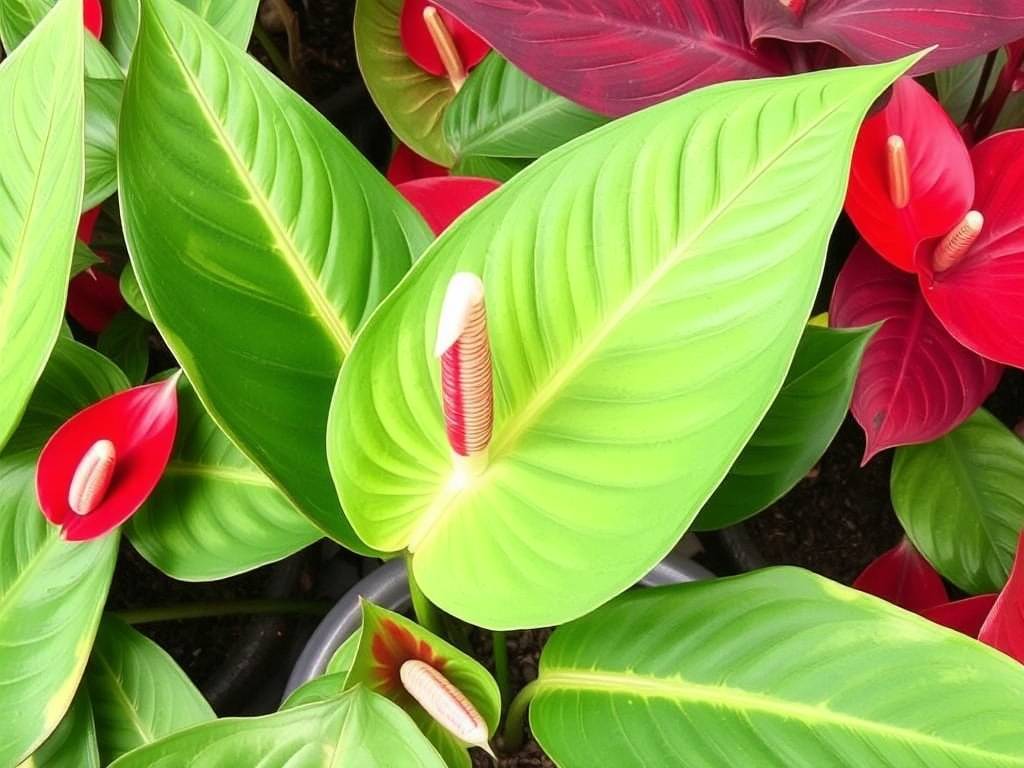
Spathe: The large, colorful “flower” you see is actually a modified leaf (spathe). It comes in various shapes (heart-shaped, oval, or pointed) and colors.
Spadix: The small, finger-like structure in the center of the spathe is the true flower cluster (spadix). Its color (often white, yellow, or green) and texture can help identify varieties.
Foliage: The leaves of anthuriums vary widely—some are glossy and heart-shaped, while others are ruffled, lobed, or even have variegation (stripes or spots). Foliage shape and texture are key ID clues.
How to Identify Common Anthurium Varieties
Red Spathe Anthurium Varieties (The Classic Types)
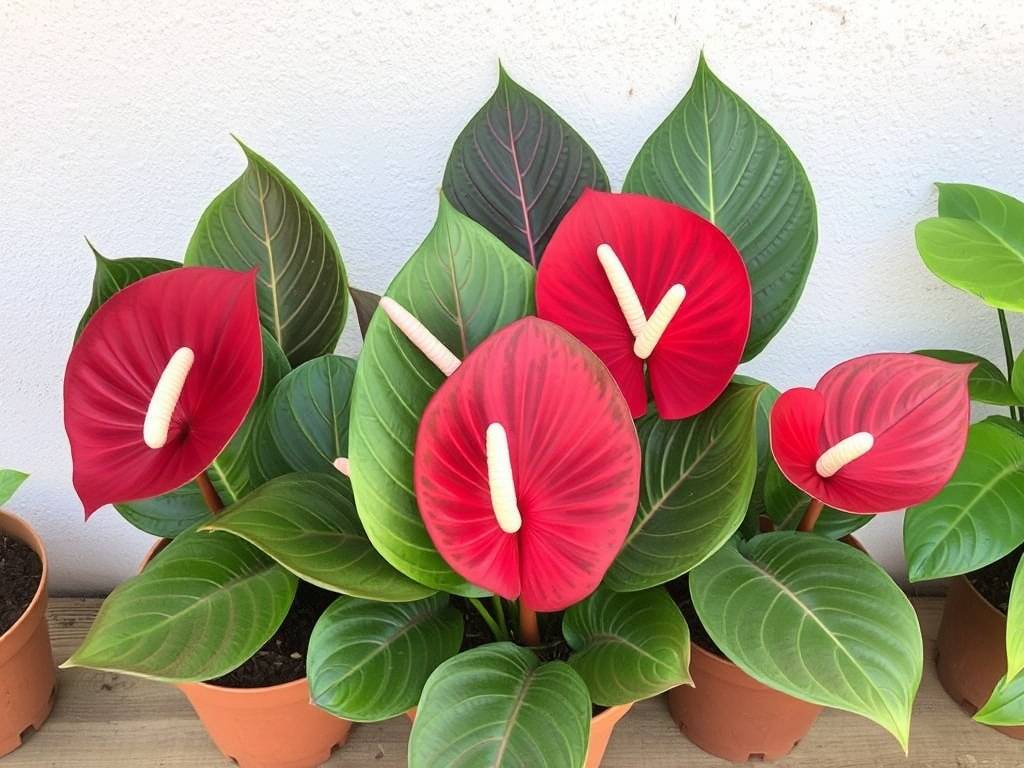
1. Anthurium ‘Red Dragon’
Spathe: Large (4–6 inches wide), heart-shaped, and a deep, rich red color. The spathe has a glossy, waxy texture that catches light.
Spadix: Thick, cylindrical, and bright yellow—this contrasts sharply with the red spathe, making it easy to spot.
Foliage: Dark green, glossy, and oval-shaped with a slightly pointed tip. Leaves grow 8–12 inches long and are sturdy, with visible veins.
2. Anthurium ‘Royal Red’
Spathe: Medium-sized (3–5 inches wide), heart-shaped, and a deep burgundy-red (darker than ‘Red Dragon’). The spathe edges may have a subtle purple undertone.
Spadix: Slender, dark purple-brown—this darker spadix differentiates it from ‘Red Dragon’s yellow one.
Foliage: Dark green, leathery, and slightly ruffled along the edges. Leaves are 6–10 inches long and grow in a dense, bushy shape.
3. Anthurium ‘Cherry Blossom’ (Not to Be Confused with Pink Varieties)
Spathe: Small to medium (2–4 inches wide), heart-shaped, and a bright, cherry-red color (lighter than ‘Red Dragon’ and ‘Royal Red’). The spathe has a softer, less waxy texture.
Spadix: Thin, pale yellow—almost cream-colored.
Foliage: Light green, glossy, and oval-shaped with a rounded tip. Leaves are 5–8 inches long and grow in a more delicate, airy pattern.
Other Color Anthurium Varieties (Beyond Red)
1. Pink Spathe Varieties: Anthurium ‘Pink Champion’ and ‘Pink Lady’
Spathe: Large (4–6 inches wide), heart-shaped, and a bright, bubblegum pink. The spathe is thick and waxy, with a slight curve.
Spadix: Medium-sized, pale pink—matching the spathe’s hue.
Foliage: Dark green, glossy, and broad (8–12 inches long). Leaves have a leathery texture and grow upright.
Spathe: Medium (3–5 inches wide), oval-shaped, and a soft, blush pink (paler than ‘Pink Champion’). The spathe edges may fade to white.
Spadix: Thin, white—creating a subtle contrast with the pink spathe.
Foliage: Light green, delicate, and slightly ruffled. Leaves are 6–9 inches long and grow in a more cascading pattern.
2. White Spathe Varieties: Anthurium ‘White Heart’ and ‘Snow White’
Spathe: Medium (3–5 inches wide), heart-shaped, and pure white. The spathe has a glossy finish and holds its color well (doesn’t yellow easily).
Spadix: Thick, yellow—providing a striking contrast to the white spathe.
Foliage: Dark green, glossy, and oval-shaped. Leaves are 7–10 inches long and grow in a dense, bushy shape.
Spathe: Small to medium (2–4 inches wide), pointed oval-shaped, and a creamy white (slightly off-white). The spathe is thinner than ‘White Heart’s.
Spadix: Thin, greenish-white—blending more with the spathe than contrasting.
Foliage: Light green, slightly variegated (subtle white edges on some leaves). Leaves are 5–8 inches long and grow in a more open, airy pattern.
3. Green Spathe Varieties: Anthurium ‘Green Goddess’ and ‘Emerald Star’
Spathe: Large (5–7 inches wide), oval-shaped, and a deep, emerald green. The spathe has a matte texture (less glossy than red or pink varieties).
Spadix: Thick, dark green—almost matching the spathe color, making it less prominent.
Foliage: Dark green, leathery, and broad (10–14 inches long). Leaves have a ruffled edge and grow upright, creating a tropical look.
Spathe: Medium (4–6 inches wide), heart-shaped, and a bright, lime green (lighter than ‘Green Goddess’). The spathe has a slight sheen.
Spadix: Medium-sized, yellow-green—providing a subtle contrast to the lime green spathe.
Foliage: Light green, glossy, and oval-shaped. Leaves are 8–12 inches long and grow in a bushy, compact shape.
4. Orange and Yellow Spathe Varieties: Anthurium ‘Orange Flame’ and ‘Yellow Sunset’
Spathe: Medium (3–5 inches wide), pointed heart-shaped, and a bright, tangerine orange. The spathe has a waxy texture and fades slightly to a softer orange over time.
Spadix: Thin, orange-red—darker than the spathe, creating a “flame-like” contrast.
Foliage: Dark green, glossy, and 7–10 inches long. Leaves grow in a compact, upright shape.
Spathe: Medium (3–5 inches wide), oval-shaped, and a warm, golden yellow. The spathe edges may have a slight orange tint (like a sunset).
Spadix: Thick, yellow-brown—matching the spathe’s warm tone.
Foliage: Light green, leathery, and 6–9 inches long. Leaves grow in a more open, spreading pattern.
5. Rare Color Varieties: Anthurium ‘Black Queen’ (Dark Spathe) and ‘Variegated Pink’ (Variegated Spathe)
Spathe: Medium (3–5 inches wide), heart-shaped, and a deep, almost black burgundy (often called “black” in nurseries). The spathe has a velvety texture (not glossy) and looks dramatic in low light.
Spadix: Thin, dark purple—blending with the spathe for a sleek, monochromatic look.
Foliage: Dark green, almost black, and leathery. Leaves are 8–12 inches long and grow in a dense, upright shape.
Spathe: Medium (3–5 inches wide), heart-shaped, and pink with white variegation (stripes or spots). The variegation pattern is unique to each spathe.
Spadix: Thin, pink-white—matching the spathe’s variegation.
Foliage: Light green with white variegation. Leaves are 6–9 inches long and grow in a delicate, airy pattern.
Care Differences: Red Spathe vs. Other Color Varieties
1. Light Requirements: How Color Affects Light Needs
Red Spathe Varieties: Moderate Bright Indirect Light
Ideal Spots: East-facing windows (morning sun, which is gentle), north-facing windows (consistent, soft light), or south/west windows with a sheer curtain (filters harsh midday sun).
What to Avoid: Direct sunlight (can fade the red spathe to a dull pink or cause leaf burn) or low light (can make spathes smaller and less vibrant, and slow growth).
Pink, White, and Variegated Spathe Varieties: Brighter Indirect Light
Ideal Spots: East-facing windows (morning sun + afternoon shade), south-facing windows with a sheer curtain (filtered all-day light).
What to Avoid: Direct sunlight (can bleach white spathes to yellow, fade pink spathes to white, or burn variegated foliage) or low light (can cause variegation to fade and spathes to become small).
Green, Orange, and Yellow Spathe Varieties: Brightest Indirect Light
Ideal Spots: East-facing windows (1–2 hours of morning sun + afternoon shade), south-facing windows with a thin sheer curtain (filtered sun all day).
What to Avoid: Direct afternoon sun (can scorch green spathes or fade orange/yellow to pale versions) or low light (can make green spathes look dull and slow blooming).
Rare Varieties (Black, Variegated Pink): Most Precise Light Control
Ideal Spots: North-facing windows (stable, soft light) or east-facing windows with a thick sheer curtain (blocks even morning sun).
What to Avoid: Any direct sun (can fade the black spathe to burgundy or cause variegation to disappear) or fluctuating light (can stress the plant and stop blooming).
2. Humidity Needs: Subtle Variations by Variety
Red, Green, and Orange Varieties: More Humidity Tolerant
Humidity Tips: If humidity drops below 50%, use a pebble tray or mist the leaves 1–2 times per week. You don’t need a humidifier unless humidity is consistently low (below 40%).
Pink, White, and Variegated Varieties: Moderate Humidity Needs
Humidity Tips: Use a pebble tray year-round, and mist the leaves 2–3 times per week. In dry months (winter with heaters), add a small humidifier near the plant.
Rare Varieties (Black, Variegated Pink): Highest Humidity Requirements
Humidity Tips: Use a humidifier set to 70%+ year-round. Place the plant on a pebble tray filled with water, and mist the leaves (avoiding the spathes) 3–4 times per week. Grouping them with other humidity-loving plants (like ferns or calatheas) can also help maintain moisture.
3. Watering: Adjustments for Foliage and Spathe Type
Red, Green, and Black Varieties (Thick Foliage): Less Frequent Watering
Soil-Grown: Water when the top 1.5–2 inches of soil are dry (every 7–10 days in summer, 14–21 days in winter).
Hydroponic: Change water every 10–14 days (summer) or 14–21 days (winter).
Key Tip: Avoid overwatering—thick leaves are slower to show signs of overwatering, so it’s easy to let soil stay too wet (which causes root rot).
Pink, White, and Variegated Varieties (Thin Foliage): More Frequent Watering
Soil-Grown: Water when the top 1–1.5 inches of soil are dry (every 5–7 days in summer, 10–14 days in winter).
Hydroponic: Change water every 7–10 days (
summer) or 10–14 days (winter). - **Key Tip**: Check soil moisture regularly—thinner leaves wilt quickly when underwatered, so don’t let the soil dry out completely. Avoid getting water on the spathes, as this can cause spotting (especially on white or variegated varieties). #### Orange and Yellow Varieties (Moderate Foliage Thickness): Balanced Watering These varieties have foliage that’s thicker than pink/white types but thinner than red/green types, so their watering needs fall in the middle. - **Soil-Grown**: Water when the top 1.2–1.8 inches of soil are dry (every 6–8 days in summer, 12–18 days in winter). - **Hydroponic**: Change water every 8–12 days (summer) or 12–16 days (winter). - **Key Tip**: These varieties are sensitive to both overwatering and underwatering—consistent moisture is key. If the soil feels slightly damp, wait 1–2 days before watering. ### 4. Fertilizing: Tailoring Nutrients to Color and Growth Rate Fertilizer needs vary based on a variety’s growth rate and color retention needs. Faster-growing varieties and those with bright colors need more frequent fertilization to support growth and maintain vibrancy. #### Red, Green, and Black Varieties (Slower Growth): Less Frequent Fertilizing These varieties grow at a moderate to slow pace, so they don’t need as much fertilizer. Overfertilizing can lead to salt buildup in the soil, which damages roots. - **Soil-Grown**: Use a balanced, water-soluble fertilizer (10-10-10) diluted to half strength every 6–8 weeks during the growing season (spring–fall). Stop fertilizing in winter. - **Hydroponic**: Add a diluted hydroponic fertilizer (1/4 strength) to the water every 8–10 weeks during the growing season. Flush the system with clean water every other fertilizer application to prevent salt buildup. - **Key Tip**: Avoid high-nitrogen fertilizers, as they can cause foliage to grow at the expense of blooms—red and black varieties rely on blooms for their visual appeal. #### Pink, White, and Variegated Varieties (Moderate Growth): Regular Fertilizing These varieties grow moderately and need consistent nutrients to maintain their delicate colors and support new growth. - **Soil-Grown**: Use a balanced fertilizer (10-10-10) diluted to half strength every 4–6 weeks during the growing season. For variegated varieties, add a fertilizer with trace elements (like iron and magnesium) every 8 weeks to preserve variegation. - **Hydroponic**: Add diluted hydroponic fertilizer (1/4 strength) every 6–8 weeks during the growing season. Include a micronutrient supplement once per month to keep variegation bright. - **Key Tip**: If white spathes start to turn yellow, reduce fertilizer frequency—this is often a sign of excess nutrients. #### Orange and Yellow Varieties (Faster Growth): More Frequent Fertilizing These varieties grow faster than other types, especially in bright light, so they need more frequent fertilization to keep up with growth and maintain their warm colors. - **Soil-Grown**: Use a balanced fertilizer (10-10-10) diluted to half strength every 3–5 weeks during the growing season. For extra color support, use a fertilizer with a slightly higher phosphorus content (like 10-20-10) once every 8 weeks—phosphorus helps with bloom production and color intensity. - **Hydroponic**: Add diluted hydroponic fertilizer (1/4 strength) every 5–7 weeks during the growing season. Supplement with a phosphorus-rich fertilizer once per month to boost blooms. - **Key Tip**: These varieties may continue growing slightly in winter (if light is sufficient). If you see new growth, fertilize once every 8–10 weeks in winter (at half the usual strength) to support it. ### 5. Temperature Tolerance: Minor Differences Between Varieties All anthuriums prefer temperatures between 65°F (18°C) and 80°F (27°C), but some varieties can tolerate slight temperature fluctuations better than others. #### Red, Green, and Orange Varieties (Hardier): Slightly Wider Temperature Range These varieties have thicker foliage and stronger root systems, so they can tolerate brief dips or spikes in temperature. - **Tolerance Range**: Can handle temperatures as low as 60°F (15°C) for short periods (up to 2–3 days) and as high as 85°F (29°C) without significant stress. - **What to Avoid**: Prolonged temperatures below 60°F (15°C) (can cause leaf yellowing) or above 85°F (29°C) (can dry out foliage and wilt blooms). - **Winter Care**: Keep these varieties away from cold drafts (like windows or doors) but don’t worry if the temperature drops to 62°F (17°C) at night—they’ll recover quickly once temperatures rise. #### Pink, White, and Variegated Varieties (More Sensitive): Narrower Temperature Range These varieties have delicate foliage and spathes, so they’re more sensitive to temperature changes. - **Tolerance Range**: Thrive best between 67°F (19°C) and 78°F (26°C). Temperatures below 63°F (17°C) or above 82°F (28°C) can cause stress. - **Signs of Stress**: Wilting spathes, brown leaf edges, or slowed growth. White spathes may turn slightly yellow if temperatures are too low. - **Winter Care**: Place these varieties in a warm spot away from windows, doors, and air vents. Use a thermometer to monitor the area—if temperatures drop below 65°F (18°C), consider using a small heat mat (set to low) under the pot. #### Rare Varieties (Black, Variegated Pink): Most Temperature-Sensitive These rare varieties are the most finicky about temperature, as even small fluctuations can damage their unique colors and foliage. - **Tolerance Range**: Require consistent temperatures between 68°F (20°C) and 77°F (25°C). Any temperature below 65°F (18°C) or above 80°F (27°C) can lead to color loss or leaf damage. - **Signs of Stress**: Black spathes may fade to burgundy, variegated patterns may disappear, or leaves may develop brown spots. - **Winter Care**: Keep these varieties in a temperature-controlled room (like a bedroom or home office) where temperatures stay stable. Avoid placing them near any sources of heat or cold, and use a humidifier to maintain moisture—dry air combined with temperature fluctuations is especially harmful. ### 6. Repotting: Timing and Soil Mixes by Variety Repotting needs depend on a variety’s root growth rate—faster-growing varieties need repotting more often, and some varieties require specific soil mixes to support their root systems. #### Red, Green, and Black Varieties (Slower Root Growth): Less Frequent Repotting These varieties have slower-growing root systems, so they don’t need repotting as often. - **Repotting Schedule**: Soil-grown varieties: Every 2–3 years, or when roots start to grow out of the drainage holes (but not before). Hydroponic varieties: Every 3–4 years, or when roots become overcrowded in the container. - **Soil Mix for Soil-Grown**: Use a well-draining mix of 50% orchid bark, 30% peat moss, and 20% perlite. This mix provides enough aeration for slow-growing roots and prevents waterlogging. - **Key Tip**: When repotting, choose a pot that’s only 1–2 inches wider than the current one—these varieties don’t like excess space, which can lead to overwatering. #### Pink, White, and Variegated Varieties (Moderate Root Growth): Regular Repotting These varieties have moderately fast-growing roots, so they need repotting to prevent root bound. - **Repotting Schedule**: Soil-grown varieties: Every 1.5–2 years. Hydroponic varieties: Every 2–3 years. - **Soil Mix for Soil-Grown**: Use a lighter mix of 40% orchid bark, 35% peat moss, 20% perlite, and 5% worm castings. The worm castings provide gentle nutrients to support new growth, and the lighter mix helps with drainage (these varieties are sensitive to overwatering). - **Key Tip**: Repot in spring, just as new growth starts—this gives the plant time to adjust before the growing season. Be gentle with the roots, as they’re more delicate than red or green varieties. #### Orange and Yellow Varieties (Faster Root Growth): Frequent Repotting These fast-growing varieties need regular repotting to accommodate their expanding root systems. - **Repotting Schedule**: Soil-grown varieties: Every 1–1.5 years. Hydroponic varieties: Every 1.5–2 years. - **Soil Mix for Soil-Grown**: Use a nutrient-rich mix of 45% orchid bark, 30% peat moss, 20% perlite, and 5% compost. The compost provides extra nutrients to support fast growth, and the well-draining mix prevents root rot. - **Key Tip**: If the plant becomes root bound (roots circling the pot), gently tease the roots apart before repotting—this encourages new root growth into the fresh soil. ### 7. Pest and Disease Susceptibility: Variations in Resistance While all anthuriums are susceptible to common pests (spider mites, aphids) and diseases (root rot, leaf spot), some varieties have higher resistance due to foliage thickness or natural defenses. #### Red, Green, and Black Varieties (Higher Resistance): More Tolerant to Pests/Diseases These varieties have thick, leathery foliage that’s harder for pests to penetrate. Their stronger root systems also make them more resistant to root rot. - **Pest Resistance**: Less likely to get spider mites (which prefer thin foliage) but may still attract mealybugs (which target leaf axils). Inspect leaf axils and root systems during repotting. - **Disease Resistance**: More tolerant of slight overwatering (thicker roots can handle damp soil for short periods) but still at risk of root rot if soil stays wet. Leaf spot is rare, but if it occurs, it’s usually on older leaves. - **Prevention Tip**: Wipe leaves with a damp cloth every 3–4 weeks to remove dust and deter pests. Avoid overwatering, but don’t let soil dry out completely. #### Pink, White, and Variegated Varieties (Lower Resistance): More Susceptible to Pests/Diseases These varieties have thin, delicate foliage that’s easy for pests to feed on. Their roots are also more sensitive to overwatering, making them prone to root rot. - **Pest Susceptibility**: Highly prone to spider mites (dry air worsens this) and aphids (which target new growth). Variegated varieties may also attract scale insects, which hide on variegated edges. - **Disease Susceptibility**: Very sensitive to overwatering (root rot can develop in 1–2 weeks of wet soil). Leaf spot is common if leaves stay wet (from misting or overhead watering). - **Prevention Tip**: Mist leaves regularly (to deter spider mites) but avoid getting water on spathes. Use a well-draining soil mix and empty saucers immediately after watering. Treat pests with insecticidal soap at the first sign of infestation. #### Rare Varieties (Black, Variegated Pink): Highest Susceptibility These rare varieties have unique foliage and spathes that make them more vulnerable to pests and diseases—their delicate structure offers less natural defense. - **Pest Susceptibility**: Spider mites, mealybugs, and scale insects all target these varieties. The velvety foliage of ‘Black Queen’ traps dust and pests, making infestations harder to spot. - **Disease Susceptibility**: Extremely sensitive to overwatering (root rot can kill the plant in days). Leaf spot and powdery mildew are common in high humidity (which these varieties need), so air circulation is critical. - **Prevention Tip**: Quarantine new rare varieties for 4–6 weeks before placing them near other plants. Use a humidifier but pair it with a small fan (on low) to improve air circulation. Inspect leaves and spathes weekly for pests—early treatment is key to saving the plant. ## Final Tips for Identifying and Caring for Anthurium Varieties Identifying and caring for anthurium varieties becomes easier with practice—here are a few final tips to help you succeed: - **Take Photos for Reference**: When you buy an anthurium, take photos of the spathe, spadix, and foliage. Compare them to the descriptions in this guide to confirm the variety. - **Keep a Care Journal**: Note how each variety responds to light, water, and fertilizer. For example, if your ‘Pink Lady’ wilts when watered every 7 days, adjust to every 6 days. - **Observe Seasonal Changes**: All anthuriums slow growth in winter, but some varieties (like orange and yellow) may still produce small blooms. Adjust care accordingly—reduce watering and fertilizing in winter. - **Don’t Fear Experimentation**: If a variety isn’t thriving in its current spot, try moving it to a brighter or more humid area. Most anthuriums recover quickly if care is adjusted promptly. By understanding the unique traits of each anthurium variety—from red spathe classics to rare variegated types—you can create a tailored care routine that keeps your plants healthy and vibrant. Whether you’re a beginner or an experienced plant parent, the key is to observe your plants closely and respond to their needs—each variety will “tell” you what it needs with subtle cues (like wilting leaves or faded spathes). With time, you’ll become an expert at identifying and caring for these beautiful tropical plants.